


Cat behavior explained starts with one useful idea: cats communicate through patterns, posture, sounds, and choices. A single tail flick or meow rarely tells the whole story. Look at what happened before, what your cat's body is doing, and whether the behavior is new or familiar. That context helps you respond thoughtfully without assuming every signal has one fixed meaning.
How can you read a cat's body language?
Read the whole cat, not one feature. Ears, eyes, body tension, tail position, distance, and the situation work together. Give a cat room to move away rather than forcing contact.
Start with the overall posture. A loose body, soft eyes, and a tail held neutrally often fit a comfortable moment. A crouched body, tense muscles, flattened ears, or a tucked tail may signal that a cat is wary or uncomfortable. These are clues, not a translation chart. A cat's usual posture and the setting matter.
- Ears: Ears facing forward may show attention. Ears turned sideways or pinned back can accompany unease, irritation, or intense focus. Consider the rest of the body before deciding which.
- Eyes: A relaxed gaze and slow blink can occur when a cat is at ease. Wide eyes may reflect excitement, surprise, or fear. Avoid staring directly for a long time, especially if the cat is already tense.
- Tail: A high tail can be a social greeting for some cats. A puffed tail or a low, tucked tail can appear with alarm. Repeated, sharp tail swishes are a reason to pause petting or play and give space.
- Body and whiskers: A cat leaning in may be inviting investigation, while leaning away or shifting weight back can mean it wants distance. Forward whiskers may accompany interest; whiskers held close to the face can appear when a cat is guarded.
- Movement: A cat that approaches and then retreats may be curious but cautious. Let the cat set the pace instead of reaching after it.
For a simple consent check, offer a hand low and still, then wait. If the cat comes closer and rubs against it, try a brief touch around the cheeks or chin if welcomed. Stop after a few strokes and see whether the cat seeks more. Turning away, moving off, freezing, or swishing the tail means pause. A cat should be able to end an interaction without being followed or restrained.
What do common cat sounds and actions mean?
Vocalizations and everyday actions are best understood as communication in context. A meow can be a greeting, a request, or a learned way to get a person's attention. Some cats are naturally more vocal than others. Notice the time, location, and what usually happens next. If a cat meows at a closed door, for example, the relevant detail may be access to the room, not a universal meaning of that sound.
Purring often happens during comfortable social contact, but it does not prove that a cat is comfortable in every situation. Watch the cat's posture and willingness to stay. Hissing and growling are clear reasons to stop approaching and create distance. They are warnings, not invitations to scold. Punishing warning signals can make interactions less predictable and does not address why the cat feels threatened.
Scratching is normal feline behavior. Cats may scratch to stretch, maintain their claws, and leave visual or scent marks. If a cat scratches a sofa, consider whether a suitable scratching surface is stable, easy to reach, and placed near the area the cat already uses. Offer a permitted alternative and reward interest in it. Avoid frightening or punishing the cat at the scratching spot.
Kneading, rubbing against furniture or people, hiding, and bringing toys around can all be part of an individual cat's routine. Avoid assigning a single meaning to these actions. Record when they happen and what the cat does next. A short behavior log can show useful patterns, such as a cat hiding when guests arrive or becoming active before a usual meal.
Why does a cat's behavior change?
Changes in behavior can have several explanations, including a changed routine, a new stressor, or a health concern. If a change is sudden, persistent, or worrying, contact a veterinarian rather than trying to diagnose it from a behavior guide.
Changes at home can affect a cat's sense of safety. Moving furniture, construction noise, visitors, a new animal, a different feeding schedule, or a change in access to favorite resting places may all alter what a cat does. Some cats respond by hiding or avoiding a room. Others may vocalize more, scratch in a new place, or become less interested in play.
Health can also affect behavior. A cat that suddenly avoids touch, hides more, stops using a familiar area, or changes its usual habits may be uncomfortable or unwell. Behavior alone cannot identify the cause. If the change is abrupt, continues, or comes with other concerning signs, contact a veterinarian. Avoid waiting for a behavior explanation online to settle a health question.
Research offers a reminder that cats are individuals. A Penn Today article discussing feline behavior reports findings that cats can recognize their names and form secure bonds with owners. That does not mean every cat will respond to its name in the same way, or that a familiar behavior has only one explanation. Read the Penn Today overview of feline behavior.
A 2023 journal study examined cat owners' perceptions of behaviors they found problematic, including aggression and urine spraying. Owner experience is useful context, but a behavior that is difficult for a household still deserves careful assessment of its circumstances and possible causes. See the study on owners' perceptions of cat behavior.
Building a routine that supports calmer behavior
Predictable daily patterns can make a home easier to navigate. Keep feeding, play, and quiet time reasonably consistent where possible. Set up resting places where the cat can observe or retreat without being disturbed. In a home with more than one cat, provide separate places for essential resources so one cat cannot easily block another's access.
Play gives many cats a useful outlet for stalking and chasing actions. Try short, regular sessions with a toy that lets the cat pursue and catch something safely. Move the toy away from the cat in small, unpredictable motions rather than waving it directly at the face. Let the cat pause or stop. Put string, ribbon, and other objects that could be swallowed away after play, and supervise toys that have small parts or detachable pieces.
Watch for the kind of play your cat chooses. One cat may follow a toy along the floor, while another prefers a slower game that includes pauses and hiding the toy behind an object. If the cat walks away, ends the chase, or starts grooming, let the session end. The goal is a safe activity the cat can choose, not a fixed exercise target. If the cat seems frustrated by a game, change the movement or switch to a different activity next time.
Enrichment does not need to involve a new purchase every week. A cardboard box with safe openings, a paper bag with handles removed, or a rotated set of existing toys may offer a different experience. Check household items for staples, string, sharp edges, and small pieces before letting a cat investigate. Supervise exploration, particularly with unfamiliar objects, and remove anything that becomes damaged or could trap the cat.
For cats that spend time indoors, think about the whole day rather than one play session. Provide places to climb or observe when safe, quiet resting areas, and opportunities to scratch. Move the setup gradually if a cat is reluctant to use it. Putting a new bed or scratch surface in a busy walkway may make it less appealing than placing it in a calm location the cat already visits. Let the cat's choices guide small adjustments.
Offer variety without overwhelming the cat. Rotate a few safe toys rather than leaving every item out all the time. Scratching posts, simple hiding spots, and opportunities to look out a window may add interest to the day. Explore interactive cat toys and scratch posts as options, then choose based on your cat's play style, size, and ability to use the item safely.
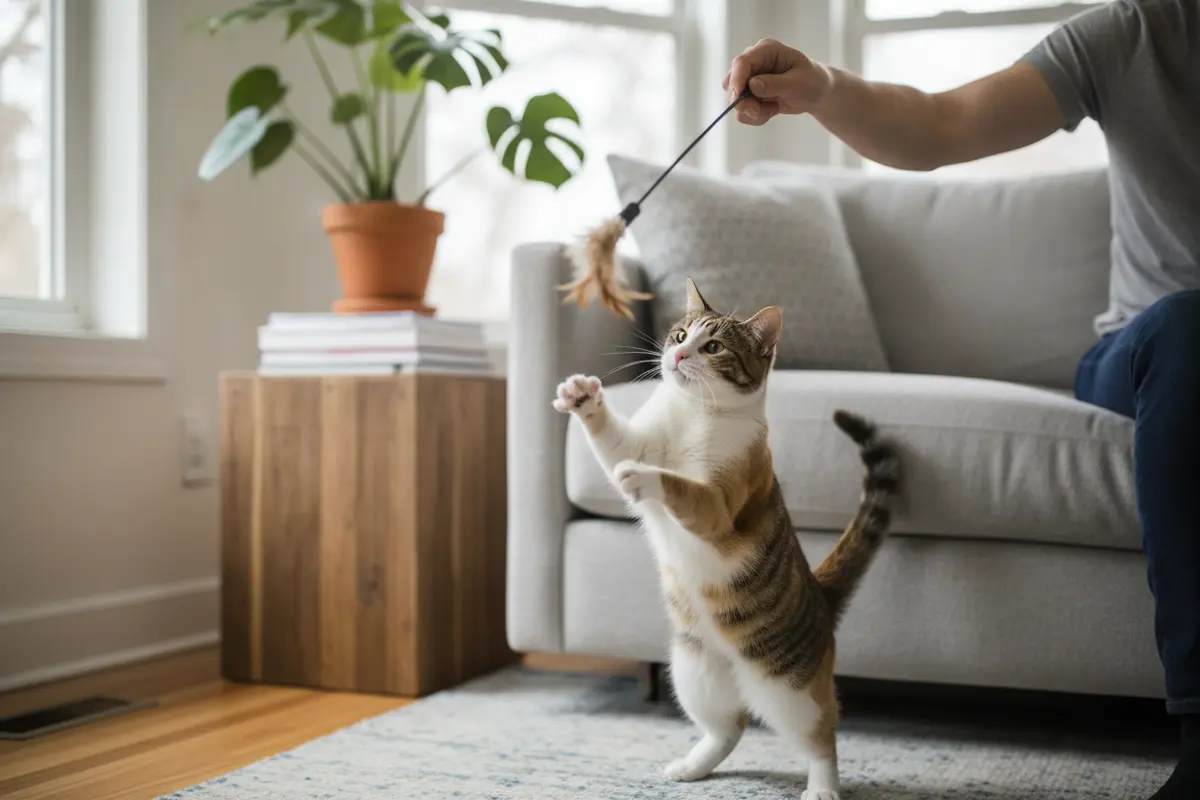
During play, keep hands and feet out of the target role. If a cat grabs or bites during a game, pause movement and redirect to a suitable toy when the cat is calm. Do not use a toy in a way that encourages unsafe leaps from high surfaces or collisions with furniture. Check toys often and remove damaged items.
Practical ways to respond to unwanted behavior
When a behavior causes a problem, start by describing it precisely. “The cat scratches the corner of the sofa after dinner” gives more useful information than “the cat is being bad.” Note the time, location, nearby people or animals, what happened just before, and what followed. This record can reveal whether the cat is seeking play, reacting to a disturbance, or repeating an action that has worked before.
- Make the area safer. Prevent immediate injury or damage without cornering or frightening the cat. Separate animals calmly when needed.
- Look for the pattern. Track the behavior for several days, unless the situation is urgent or the cat seems unwell. Note changes in routine and household activity.
- Adjust the setup. Add access to appropriate scratching, resting, hiding, or play options near the place the cat uses. Keep food, water, and litter access easy and undisturbed.
- Reward the alternative. Notice and reward a safe behavior you want to see, such as using a scratching post or approaching calmly. Keep rewards small and suitable for the cat.
- Ask for help when needed. Contact a veterinarian about new or persistent behavior changes, signs of discomfort, or questions about health. A qualified behavior professional can help with a behavior plan when health concerns have been considered.
Do not punish a cat for hiding, hissing, scratching, or eliminating outside a usual area. Punishment can increase fear and may make it harder to notice the original trigger. Clean soiled areas with an appropriate cleaner and consider what changed around the time the behavior began. If the behavior may involve pain or illness, seek veterinary guidance first.
Choosing toys and enrichment with safety in mind
Choose enrichment for your cat's size, play style, and supervision needs. Inspect items regularly, put away toys that could be swallowed, and offer a safe way to stop or retreat.
A good toy is one your cat can use safely and that fits the way it likes to play. Some cats enjoy chasing a moving toy, while others prefer batting, pouncing, or investigating a puzzle. Start with a simple option and watch the cat's response. Interest can vary from day to day, so a lack of immediate enthusiasm is not proof that a cat dislikes every toy of that type.
| Enrichment option | May suit | Safety and setup check |
|---|---|---|
| Wand or teaser toy | Cats that enjoy chasing movement with a person | Supervise play, keep the toy away from faces, and store strings after use. |
| Ball or lightweight batting toy | Cats that like to chase or bat objects across the floor | Choose a size that cannot be swallowed and check for loose parts. |
| Scratching post or pad | Cats that scratch or stretch in a particular area | Make sure it is stable and placed where the cat can reach it easily. |
| Food puzzle or treat activity | Cats that enjoy investigating food-based challenges | Use an appropriate portion of the cat's usual diet and keep the puzzle clean. |
| Box, tunnel, or covered resting place | Cats that like hiding, exploring, or watching from cover | Keep exits clear and position it away from hazards and unwanted disturbance. |
Introduce one new item at a time. Let the cat investigate without pushing it toward the object. For toys with moving parts, inspect seams and attachments before each session. Discard items that are torn, frayed, or small enough to swallow. For additional options, browse cat toys and scratch posts and choose with supervision and your cat's habits in mind.
How can you tell when a behavior needs professional attention?
Consider how different the behavior is from your cat's normal pattern, how long it lasts, and whether it affects eating, drinking, movement, rest, or litter habits. A sudden change, repeated distress, aggression that risks injury, or persistent elimination changes deserves professional advice. Contact a veterinarian for health concerns. For behavior help, ask the veterinarian whether a qualified feline behavior professional is appropriate.
Keep observations factual. Record dates, triggers, duration, and what helped or made things worse. If safe, a short video can help a veterinarian or behavior professional understand what happens, but do not provoke the behavior to capture footage. If another animal or person could be hurt, prioritize separation and safety, then seek professional guidance.
Some owners notice skin or ear concerns alongside a change in how a cat reacts to touch. Those observations do not establish the cause of a behavior. Ask a veterinarian to assess the concern before using a product. If a veterinarian recommends an appropriate product for a specific need, you can review the Zymox pet care collection and follow professional guidance and product directions.
Cat behavior is easier to understand when you combine patient observation with a safe environment and realistic expectations. Give your cat choices, make small changes one at a time, and get professional help when behavior changes are sudden, persistent, or concerning.
Shop cat toys and scratch posts today
Frequently Asked Questions
Why does my cat stare at me?
A cat may watch you because it is attentive, curious, waiting for a familiar routine, or simply resting nearby. Look at its posture and the setting. A relaxed body differs from a tense, fixed stare paired with flattened ears or a crouch.
Does purring always mean a cat is happy?
No. Purring often occurs during comfortable interactions, but it does not prove that the cat feels fine in every situation. Check whether the cat stays relaxed and chooses to remain close. If purring appears with an unusual behavior change or other concern, ask a veterinarian.
Why does my cat bite during petting?
Some cats reach a point where they want the interaction to stop. Watch for turning away, skin twitching, tail movement, a tense body, or ears shifting back. Keep petting brief, pause often, and let the cat leave. A new or escalating response merits veterinary advice.
Is hiding normal for cats?
Many cats use covered or quiet places to rest and feel secure. Make sure the cat can access food, water, and its litter area without being trapped or disturbed. If hiding is new, persistent, or accompanied by other changes, contact a veterinarian.
How can I stop my cat from scratching furniture?
Provide a stable scratching post or pad near the furniture the cat chooses, and reward use of the alternative. Try a suitable texture and orientation, and protect the furniture while the new option becomes familiar. Avoid punishment, which can add fear without meeting the cat's need to scratch.
When should I call a veterinarian about behavior?
Contact a veterinarian when a behavior change is sudden, persistent, distressing, or paired with changes in health, eating, movement, or litter habits. A behavior guide cannot diagnose the reason. Keep notes about what changed and when it happens to support the conversation.
Every cat has its own habits and boundaries, so patient observation is more useful than expecting one signal to explain everything.


