

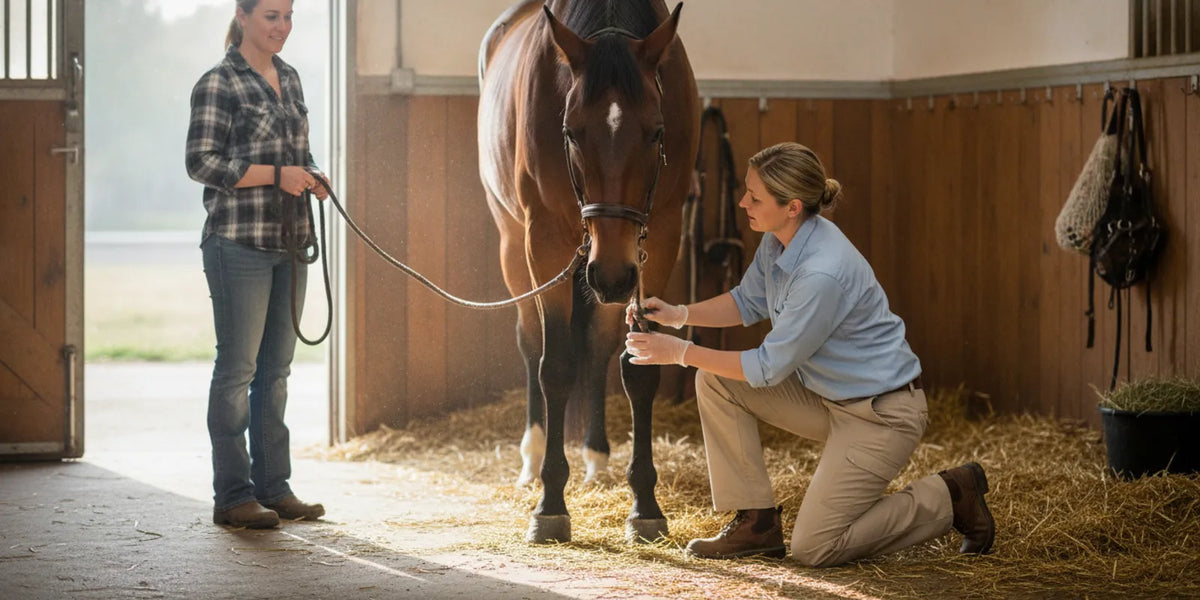
Horse dental care is more than checking whether a horse can chew. A horse’s mouth changes with age, and discomfort may show up as changes in eating, weight, behavior, or willingness to accept tack. Regular professional examinations help identify concerns. At home, your role is to notice changes and share them with an equine veterinarian, not to diagnose or treat the teeth yourself.
What does routine horse dental care include?
Quick Summary
A routine oral exam lets a qualified equine professional assess the whole mouth, discuss age and health history, and recommend an individual checkup plan. Home observation is useful, but it does not replace an examination.
Horses use their teeth to grasp and grind forage. Their teeth change over time, and wear is not always even. During an examination, a veterinarian can assess the teeth and surrounding tissues, look for abnormalities, and decide whether further care is appropriate. The process depends on the horse’s age, history, and findings.
Ask the professional to explain what they see and recommend. Which changes need attention now? When should this horse be checked again? Are there signs to monitor while feeding or riding? Does the horse need a follow-up appointment? Clear answers make it easier to track changes instead of guessing from appearance alone.
There is no single interval that fits every horse. Young horses may need closer monitoring while their mouths develop. Older horses may need a plan shaped by their dental condition and ability to chew. The University of Florida’s equine dental guidance describes developing an individual oral health plan for each horse. Discuss a schedule with your veterinarian rather than applying a calendar rule to every animal.
How can you spot a possible mouth problem?
Key Takeaway
Watch for changes from your horse’s usual eating, condition, or behavior. One sign does not identify a diagnosis, but persistent or worsening changes merit a call to the veterinarian.
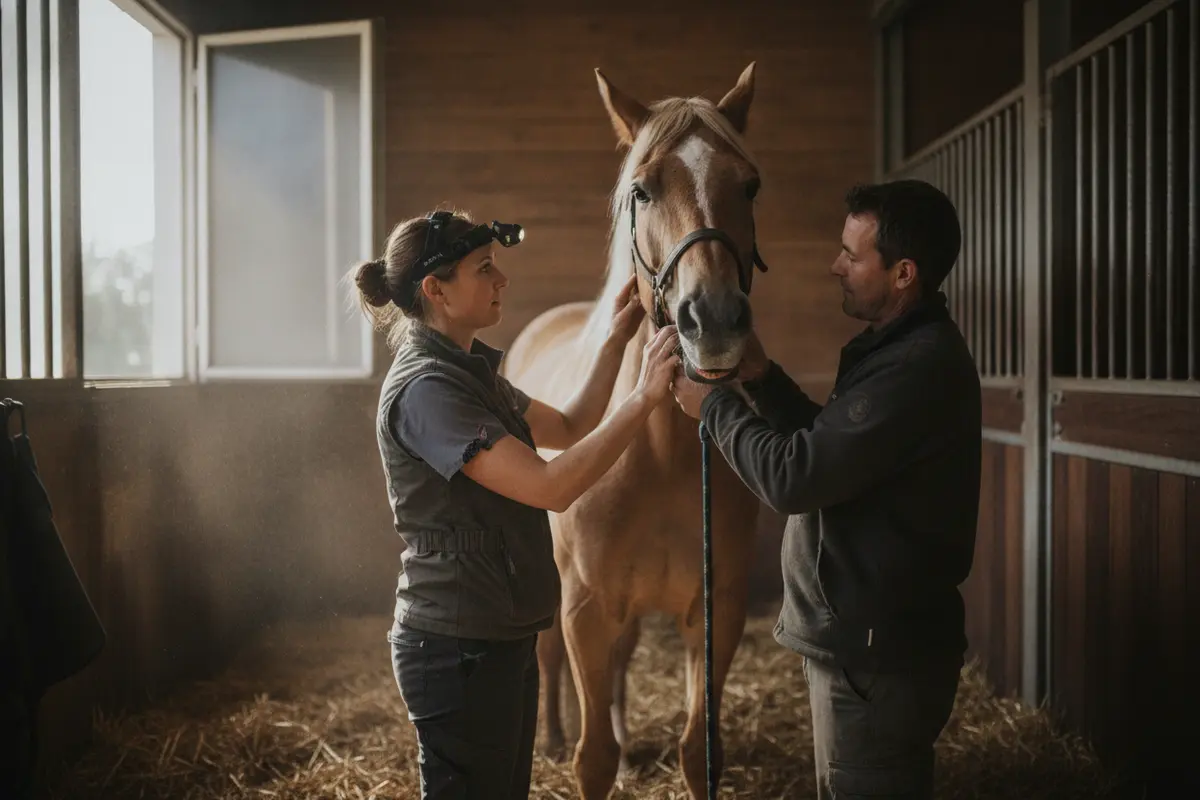
Notice patterns during normal feeding and handling. A horse with mouth discomfort may take longer to eat, drop partially chewed feed, leave food behind, or have trouble managing hay. Some horses chew unevenly or hold their head differently while eating. Watch whether your horse maintains its usual body condition and whether the change is new.
Other signs can include resistance to a bridle or bit, head tossing, trouble turning or stopping as usual, or reacting when the face is handled. These behaviors have many possible causes, including training, tack fit, pain elsewhere, and other health issues. Do not assume behavior is dental, and do not try to correct it by changing equipment before checking comfort with a professional.
Look for facial swelling, blood in the mouth, a persistent bad odor, or discharge from a nostril. These signs can have several explanations and need veterinary assessment. Contact an equine veterinarian promptly if your horse cannot eat or drink normally, appears to be in significant pain, has notable swelling or bleeding, or is rapidly getting worse. If you are unsure how urgent a sign is, call for advice rather than waiting for the next routine visit.
Keep a brief record if you notice a change. Write down when it began, whether it happens with hay, pasture, or other feed, and whether it is getting better or worse. A short video of an unusual chewing pattern may help the veterinarian understand what you observed, if you can record it without disturbing or risking the horse.
What should you expect at an examination?
Before the appointment, tell the veterinarian about changes in eating, weight, behavior, ridden work, or previous oral findings. Share relevant health history and ask whether the horse needs preparation. Do not withhold food, administer medication, or try to open the mouth unless the veterinary team gives instructions.
The professional will decide how to examine the horse safely. An oral examination may involve suitable restraint and equipment so the mouth can be assessed carefully. The veterinarian may consider sedation when needed for a safe, thorough examination or treatment. The decision belongs to the professional, who can explain the reason and discuss the horse’s circumstances.
Afterward, ask for a plain-language summary. Find out what was observed, what was done if treatment was needed, and what signs should prompt a call. Ask for the recommended recheck timing and whether feeding or routine needs to change. If instructions are unclear, ask before leaving or contact the clinic for clarification.
It can help to ask how findings fit with daily care. Should you watch for a particular change in chewing, appetite, or handling? Is there a reason to arrange an earlier recheck if a sign returns? Write down the answer and the clinic’s contact instructions. If more than one professional cares for the horse, share the dental summary so recommendations can be coordinated.
For young horses, dental development and changes as adult teeth come in can make regular professional monitoring especially useful. Best Friends Animal Society notes that veterinarians generally recommend oral exams twice a year until a horse reaches age five. This is general guidance, not a substitute for an individual plan. Confirm timing with your veterinarian, particularly if the horse has symptoms or a known dental issue. Read the equine dentistry overview and the University of Florida’s equine dental care guidance for more background.
At-home observation and professional care
Most owners do not need to inspect deep inside a horse’s mouth. That can be unsafe for horse and handler, and a quick look cannot rule out a problem. Instead, make observation part of ordinary care. Notice appetite, chewing, droppings, body condition, facial comfort, and shifts in behavior. Share concerns with a veterinarian, especially if several changes appear together.
| What you notice | Useful owner action | Who should assess it |
|---|---|---|
| Routine wellness with no obvious change | Keep prior findings and ask when the next check is due | Equine veterinarian or qualified equine dental professional working within local rules |
| New chewing difficulty, dropped feed, or slower eating | Note when it happens and arrange advice promptly | Equine veterinarian |
| Facial swelling, bleeding, marked pain, or trouble eating or drinking | Call promptly for triage; do not attempt treatment yourself | Equine veterinarian |
| Head tossing or resistance to tack | Record when it occurs and do not assume one cause | Veterinarian, with tack or training support as appropriate |
Keep feeding and grooming routines consistent unless your veterinarian advises a change. Dental discomfort can affect how a horse manages food, so ask for guidance if chewing seems difficult. Avoid improvised mouth checks, sharp tools, online remedies, or attempts to rasp teeth. Procedures inside the mouth require training, appropriate equipment, and a safe plan for the individual horse.
Everyday grooming is separate from dental care, but a familiar handling routine can help you notice changes around the face. For ordinary coat grooming, view a large Dandy wooden horse brush. Use grooming time to observe, not to probe the mouth or force a horse to tolerate distress.
How can you support comfort between visits?
Quick Summary
Keep care predictable, observe how your horse eats, and note changes. Do not make major feeding or equipment changes to address a suspected mouth problem without professional advice.
Daily observation is most useful when you know what is normal for your horse. Notice whether the horse approaches feed willingly, chews at its usual pace, and finishes its usual portion. Watch for a new preference, such as avoiding a type of forage, but do not assume the reason. Changes in appetite or chewing can come from several health or management issues, so tell your veterinarian what changed and when.
Keep access to clean water and maintain a consistent feeding routine. If the horse has trouble managing hay or other feed, ask the veterinarian what is appropriate while the cause is assessed. Do not make abrupt changes, soften or alter feed, or add supplements as a substitute for diagnosis. A horse that struggles to eat or drink needs prompt professional guidance, especially if the problem is worsening or occurs with other signs.
Pay attention to body condition over time. A gradual change can be easy to miss in a busy routine, so record observations in the same way each week. Note appetite, feed left behind, unusual chewing, and changes in energy or behavior. These notes do not diagnose a dental issue, but they give the veterinarian a clearer picture than a vague impression that the horse has seemed different.
Keep a simple dental record with the date of each examination, the professional’s findings, any treatment or follow-up instructions, and the recommended next check. If multiple people care for the horse, share the plan so changes are noticed and instructions remain consistent. Ask who to contact if symptoms appear between scheduled visits, and confirm how quickly the horse should be seen if a particular sign occurs.
- Record the date and reason for each dental visit.
- Write down changes in eating, weight, behavior, or tack tolerance.
- Save the veterinarian’s recommendations and follow-up timing.
- Call for advice if a new concern appears instead of trying a home procedure.
Horses differ in age, history, and ability to chew, so an individualized plan is more useful than a generic checklist. The plan can change as the horse grows older or if a new concern develops. At each visit, review what changed since the last examination, ask whether the current interval still makes sense, and clarify uncertainty about monitoring or treatment.
Bits, behavior, and comfort are related but not interchangeable
A horse’s response to a bit can be worth discussing when you plan dental care, but equipment does not diagnose or fix a dental problem. A horse may resist tack for many reasons, and dental discomfort is only one possibility. If a new behavior appears, pause and consider the whole picture with your veterinarian and, where appropriate, a knowledgeable tack professional.
Do not choose a stronger bit to overcome behavior that might signal discomfort. A different style of headgear cannot replace an oral examination. If you review equipment, read product details and seek experienced fitting guidance. For example, a Professional’s Choice shank bit is a tack item, not a dental-care tool. A hackamore option likewise does not establish that a horse’s mouth is healthy or resolve an underlying cause of resistance.
Good records help professionals work together. Tell the veterinarian what tack is used and when the behavior occurs. If the mouth appears comfortable but the horse still has difficulty with the bridle, ask whether another assessment is appropriate. The goal is to identify the cause and protect comfort, not mask a warning sign.
Common mistakes to avoid
- Waiting for a dramatic sign. Small changes in chewing or appetite can matter, even if the horse still eats.
- Assuming every behavior is dental. Head tossing or bit resistance can have different causes and should be assessed in context.
- Using a universal schedule. Age, history, and examination findings shape an individual plan.
- Trying to inspect or treat teeth yourself. Do not put hands or tools into a horse’s mouth or attempt dental procedures.
- Changing the bit to silence a symptom. Equipment changes do not replace veterinary assessment when discomfort is possible.
- Forgetting follow-up instructions. Record recommendations and recheck timing so the plan does not depend on memory.
Thoughtful horse dental care starts with consistent observation and an individualized professional plan. When you notice a change, record what you see and ask an equine veterinarian what to do next.
Shop horse-care supplies today
Frequently Asked Questions
How often should a horse have a dental examination?
The right interval depends on age, dental history, symptoms, and the veterinarian’s findings. Young horses may need closer monitoring. Ask your veterinarian for an individual schedule rather than applying one rule to every horse.
Can I tell if my horse’s teeth need attention by looking at the front teeth?
No. A view of the front teeth does not show the full mouth or rule out a problem. Watch for changes in eating and behavior, and leave a thorough oral assessment to a qualified professional.
Does dropping food always mean a dental problem?
No. Dropping food can have more than one cause. If it is new, persistent, or paired with weight change, pain, or difficulty eating, contact an equine veterinarian.
Should I stop riding if my horse tosses its head?
Head tossing has several possible causes. If it is new, persistent, or appears linked to pain, stop and seek professional advice before treating it as a training issue. A veterinarian can assess whether a health concern needs attention.
Can a new bit solve a dental issue?
No. A bit is not treatment or a substitute for an oral examination. Have possible discomfort assessed first, then discuss equipment choices with suitable professionals.
What information should I share with the veterinarian?
Describe when the change started, what the horse was eating or doing, how often it occurs, and whether it is worsening. Mention previous findings, changes in weight or behavior, and any difficulty with tack.
Regular observation and a professional plan help keep dental care practical. When something changes, take notes and ask an equine veterinarian for guidance.


