


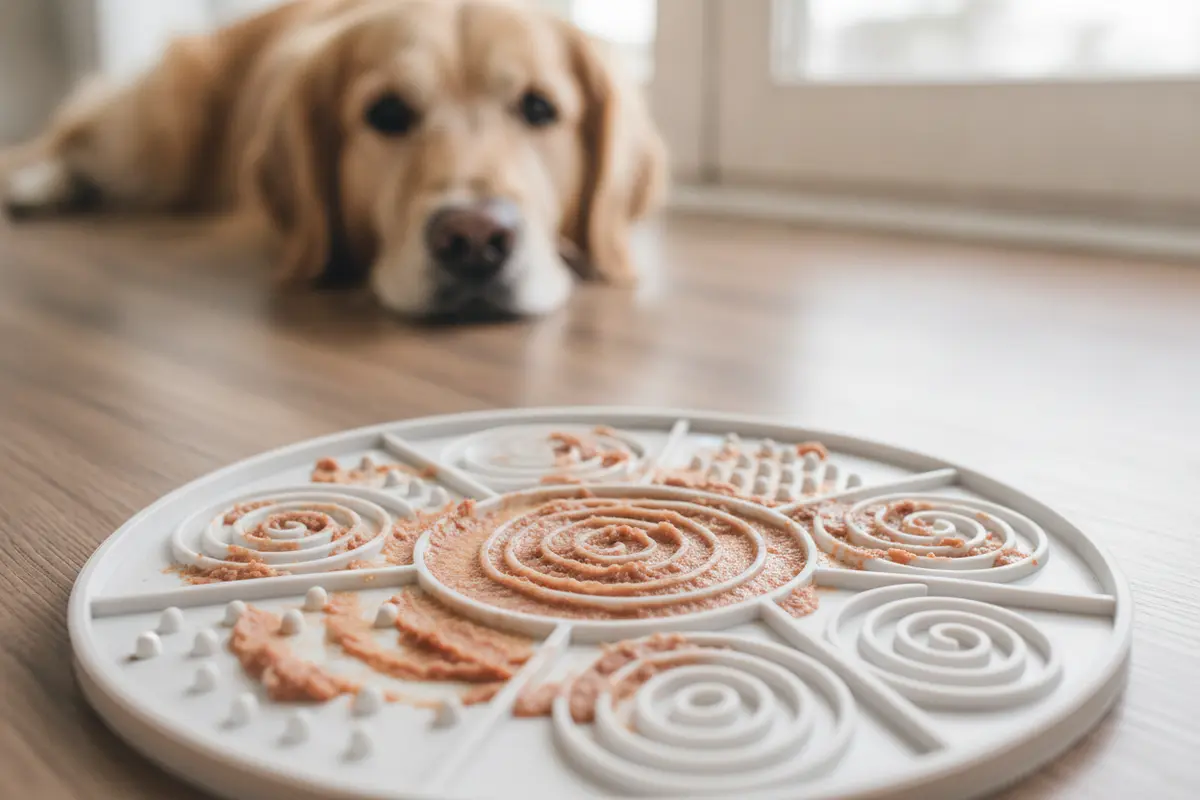
A lick mat for dogs is a textured surface that holds a thin layer of food or a soft treat in shallow grooves. Dogs lick the food from the pattern, turning a small snack into a hands-on activity. A mat can be useful for enrichment at home, but the right texture, portion, supervision, and cleaning routine matter more than the shape or color.
What should you look for in a lick mat for dogs?
Choose a mat that stays in place, has a texture suited to your dog, and is easy to inspect and clean. Start with a simple design and a small amount of familiar food before trying more elaborate patterns or recipes.
Start by considering the dog, not the product photo. A small, gentle licker may do well with shallow grooves, while a determined chewer may try to bite or carry a flexible mat. No mat is chew-proof. If your dog tends to destroy toys or swallow non-food items, use a lick mat only with close, hands-on supervision, or ask your veterinarian whether another activity is safer.
- Texture: Grooves should be deep enough to hold a thin smear but not so intricate that you cannot reach them while washing. A simple pattern also makes it easier to see whether food remains.
- Grip: A non-slip base or suction cups can help keep the mat from sliding on a smooth surface. Suction cups work only on compatible, clean surfaces. Check that they release without tearing the mat.
- Size: Pick a size that gives your dog room to lick without letting the mat fold or bunch. The dog should be able to reach the food without pushing the mat into a corner.
- Material and care: Read the maker’s material and cleaning instructions. Look for a surface that can be washed thoroughly and inspect it for splits, loose pieces, or damage before each use.
- Temperature use: If you plan to chill or freeze a prepared mat, confirm that the manufacturer says it is suitable for that use. Do not assume every mat tolerates a freezer, microwave, or dishwasher.
Marketing descriptions such as “slow feeder,” “calming,” or “indestructible” do not guarantee a particular result or make a product suitable for every dog. Treat the mat as an enrichment tool, not a substitute for exercise, training, dental care, or supervision. If shopping for other play options to rotate through, browse interactive dog toys and choose activities that match your dog’s play style.
Which foods can you spread on a lick mat?
Use a food your dog already tolerates, and keep the layer thin. The goal is to fill the grooves lightly, not bury the texture under a thick mound. Familiar food makes it easier to spot a reaction to a new ingredient and keeps the first session straightforward.
Depending on your dog’s established diet and any veterinary guidance, suitable options may include a little of the dog’s usual wet food or a softened portion of its regular food. Some owners use a small amount of plain, dog-safe food as a topper. Check ingredients carefully, avoid anything known to disagree with your dog, and do not use a human food unless you know it is safe for dogs. When in doubt about an ingredient, leave it out and ask your veterinarian.
Keep the whole serving in mind. Food spread on a mat still contributes to the dog’s daily intake. If the mat is part of a meal, take that food from the dog’s measured meal rather than adding an unplanned extra portion. If it is a treat, make the serving modest and account for it alongside other treats. Dogs with a prescribed diet, food sensitivities, or a health condition may need a veterinarian-approved topping and portion.
A useful way to prepare a mat is to portion the food before you spread it. For example, measure a small part of your dog’s usual meal into a dish, then use only that portion on the mat. If some food stays in the grooves, you can return it to the dog’s bowl only if it has remained clean and your veterinarian’s feeding instructions allow it. Avoid adding several new ingredients at once. If your dog has a reaction, a simple ingredient list makes it easier to identify what changed.
Consider the texture as well as the ingredient. A very runny topping may slide off a vertical surface or pool beneath the mat, while a firm or sticky food may be difficult to spread and clean. A thin, even coating lets you see the pattern and keeps the task manageable. Start by covering only one section. If your dog uses the mat gently and finishes comfortably, you can decide whether to cover a larger area next time. There is no need to fill every groove to make the activity worthwhile.
Take your dog’s routine into account. A mat can be offered as part of a meal or as a modest treat, but it should not displace a complete diet or become a reason to offer extra food. If you use it before an activity, allow enough time to supervise and clean up afterward rather than leaving it out as you rush away. When multiple dogs share a home, prepare and serve each portion separately so you can track what each dog eats and prevent competition.
Avoid ingredients that are toxic to dogs, heavily seasoned foods, and toppings with ingredients you cannot identify. Do not use a product containing xylitol, also called birch sugar, which is dangerous to dogs. Read the full ingredient label on packaged foods and treats rather than relying on a flavor name. If your dog eats an ingredient that may be unsafe, contact a veterinarian or an animal poison-control service promptly.
Shop This Post

Featured in this article
Ducky World Yeowww! Juguete de hierba gatera orgánica de 7" para gatos de granja
$12.11
Shop Now →

How do you introduce a lick mat safely?
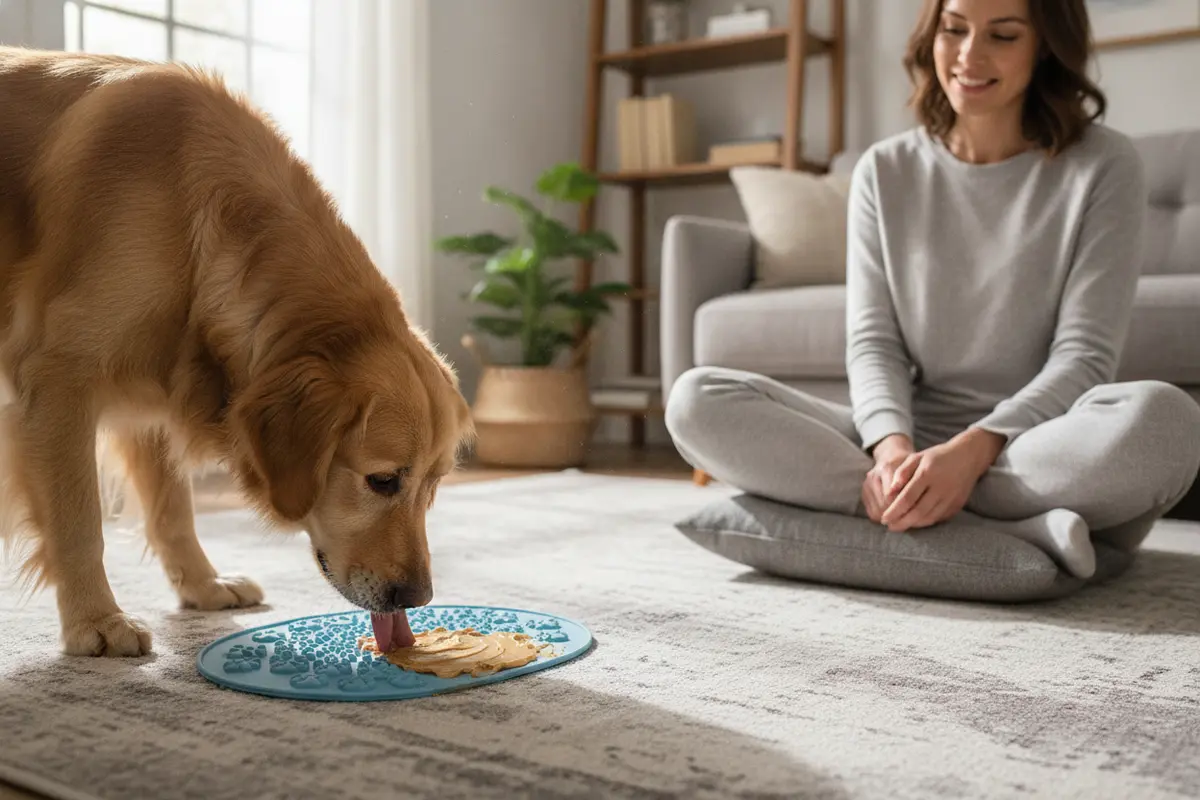
Make the first session brief and supervised. Let your dog investigate a small amount of familiar food, then remove the mat while it is still intact and the dog is still using it appropriately.
- Inspect and wash the mat. Follow the maker’s instructions, rinse away any residue, and check for damage before placing food on it.
- Set it on a suitable surface. Use a flat, washable area. If the mat has suction cups, press them onto a clean, compatible surface and confirm it is secure.
- Offer a small amount of familiar food. Spread a thin layer over part of the mat. A new dog does not need a heavily loaded or complicated pattern.
- Stay close and observe. Watch how the dog uses it. Licking is the intended behavior; biting, chewing, pawing hard, carrying, or trying to swallow the mat are signs to end the session.
- Remove and clean it promptly. Do not leave the mat as an unsupervised chew toy. Wash it after use and let it dry fully before putting it away.
Keep the first attempt short enough to learn how your dog responds. Some dogs start licking right away; others may sniff, walk away, or need time to explore. Do not force the dog to use the mat. You can offer it again another day, or try a simpler enrichment activity instead.
For a dog that gulps food, keep the portion modest and stay beside the dog. A lick mat changes how food is presented, but it does not ensure a dog will eat slowly or safely. Stop if your dog becomes frustrated, guards the mat, chews it, or shows any unusual response. Separate pets during use if competition over food could be an issue.
How can you compare common lick mat options?
There is no single best pattern for every dog. Compare the practical trade-offs before choosing, then let a supervised first session tell you whether the design is a good fit.
| Option | May suit | What to check |
|---|---|---|
| Shallow, simple grooves | First-time users and easy cleanup | Whether the food stays in the pattern and whether residue is easy to see |
| Deeper or more varied texture | Dogs that already use a mat gently | Whether the dog can reach the food and whether every groove can be washed |
| Flexible flat mat | Use on a stable, washable surface | Whether the dog tries to lift, fold, or chew it |
| Mat with suction cups | Use on a compatible smooth surface | Grip, release, surface compatibility, and any damage around the cups |
| Freezer-compatible design | Owners who want to prepare a chilled activity | Written manufacturer guidance for freezing and whether the frozen food is manageable for the dog |
Rather than choosing by the number of ridges, think about cleanup, stability, and your dog’s habits. If your dog is new to food puzzles, a simple mat gives you a clear view of how it behaves. If it has a history of chewing flexible items, a mat may not be the right format at all. A different supervised activity, such as a suitable toy from the plush dog toy selection, may be more appropriate for some dogs, though toys also need to match the individual dog and be checked for wear.
Food preparation and product suggestions
About a third of the way into your planning, it helps to decide how you will portion, serve, and clean the activity before buying supplies. A lick mat itself is not listed in the product options provided here, so do not assume a related dog toy is a mat. Use the product information and fit details on each item page to confirm what you are buying.
If you use small food rewards during training or enrichment, a treat pouch can keep portions close at hand. The Mackey treat bag is a storage option for treats, not a food-safe lick surface. Keep human foods and dog treats separate, and follow the instructions for the mat and each food item.
It can also help to rotate different activities rather than making one mat the answer to every need. A walk with appropriate walking equipment, a short training game, sniffing opportunities, or a suitable toy may fit better on a given day. If a walk is part of your routine, review the features of a rope dog leash and select equipment appropriate for your dog’s size and handling needs. No one activity replaces your dog’s usual care and interaction.
How do you clean and store a lick mat?
Clean the mat after every use. Food can remain in grooves even when the surface looks clear, so inspect the entire pattern rather than rinsing only the center. Use the cleaning method permitted by the manufacturer, wash with an appropriate dish soap, rinse thoroughly, and allow the mat to dry fully. If the instructions permit a dishwasher, follow their placement and temperature guidance.
Do not scrape the mat with a sharp tool or use cleaning chemicals that could damage the material or leave unsafe residue. Pay special attention to suction cups, corners, and textured channels where food can collect. If you cannot remove residue, or if the mat has cracks, tears, a rough edge, or missing pieces, stop using it and replace it according to the manufacturer’s guidance.
Store the clean, dry mat where your dog cannot chew it. A flexible food mat can look like a toy to a curious dog, but it is meant for supervised feeding activity. Before each session, check it again. Regular inspection is especially important if your dog mouths the edge or tries to pull it off the floor.
What does the evidence say about lick mats and dental care?
The American Kennel Club’s guide to lick mats describes textured grooves and ridges as a way to hold food and notes that licking across them may scrape residue from a dog’s teeth. That does not make a lick mat a dental treatment or a replacement for brushing and veterinary dental care. The amount and location of contact vary with the mat, food, and dog, so do not rely on a mat to prevent dental disease.
Use the mat for its basic purpose, offering a supervised food activity. For oral-health concerns, changes in eating, bad breath, visible discomfort, or a question about your dog’s teeth, speak with your veterinarian. Read the AKC overview of lick mats for dogs for additional general background, and ask your own veterinary professional how it applies to your dog.
Common mistakes to avoid
- Loading too much food: A thick layer can cover the texture, add more food than intended, and make cleanup harder. Start with a smear and account for the serving.
- Leaving a dog alone with the mat: A dog that shifts from licking to biting can damage the mat or ingest pieces. Supervise every session and remove it afterward.
- Assuming “natural” means safe: Ingredients still need to be checked. Use known dog-safe food and ask a veterinarian if a diet restriction applies.
- Ignoring the cleaning instructions: Heat, detergents, or tools not approved by the manufacturer may harm a mat. Follow the care directions.
- Using it to distract through every stressful event: A mat may not be appropriate for every dog or situation. Do not use food to override signs of distress, fear, pain, or illness. Address the cause and seek professional advice when needed.
- Keeping a damaged mat: Replace a mat that is cracked, torn, or shedding pieces. Do not patch it for continued food use unless the manufacturer specifically advises a safe repair.
A lick mat is one optional way to present a snack. Some dogs enjoy the activity, while others are uninterested or prefer another type of enrichment. A practical routine is one your dog can use safely, that fits its diet, and that you can clean thoroughly.
Shop interactive dog toys today
Frequently Asked Questions
Can puppies use a lick mat?
A puppy may be able to use a suitable mat with direct supervision, but age, size, chewing habits, and diet matter. Choose a simple design, offer a small amount of familiar food, and remove the mat if the puppy bites or tries to carry it. Ask your veterinarian if you are unsure what foods are appropriate.
Can I leave my dog alone with a lick mat?
No. Stay with your dog for the entire session. A mat is a food activity, not an unsupervised chew toy. Remove it when the food is gone or if your dog starts biting, tearing, or swallowing any part of it.
How much food should go on the mat?
Begin with a thin smear over part of the grooves. Use food your dog already tolerates, and count it as part of the dog’s meal or treat allowance. A veterinarian should guide portions when your dog has a prescribed diet or health-related feeding needs.
Can I freeze a lick mat?
Only if the manufacturer says that the specific mat is suitable for freezer use. Follow its instructions, and supervise your dog while using a chilled or frozen serving. If the texture is too hard for your dog to manage, remove it and offer food in a safer form.
How often should I wash a lick mat?
Wash it after each use, following the maker’s care instructions. Check grooves and suction cups for food residue, rinse thoroughly, and dry the mat fully before storing it. Inspect it for damage before using it again.
Does a lick mat clean a dog’s teeth?
No. Textured grooves may contact teeth as a dog licks, but a mat should not replace brushing or veterinary dental care. Ask your veterinarian for guidance about your dog’s oral health and an appropriate home-care routine.
Choose a lick mat that fits your dog’s habits, serve a modest amount of familiar food, and supervise and clean it every time. If the mat is not a safe or enjoyable fit, choose another activity and ask your veterinarian about any diet or behavior concerns.


