

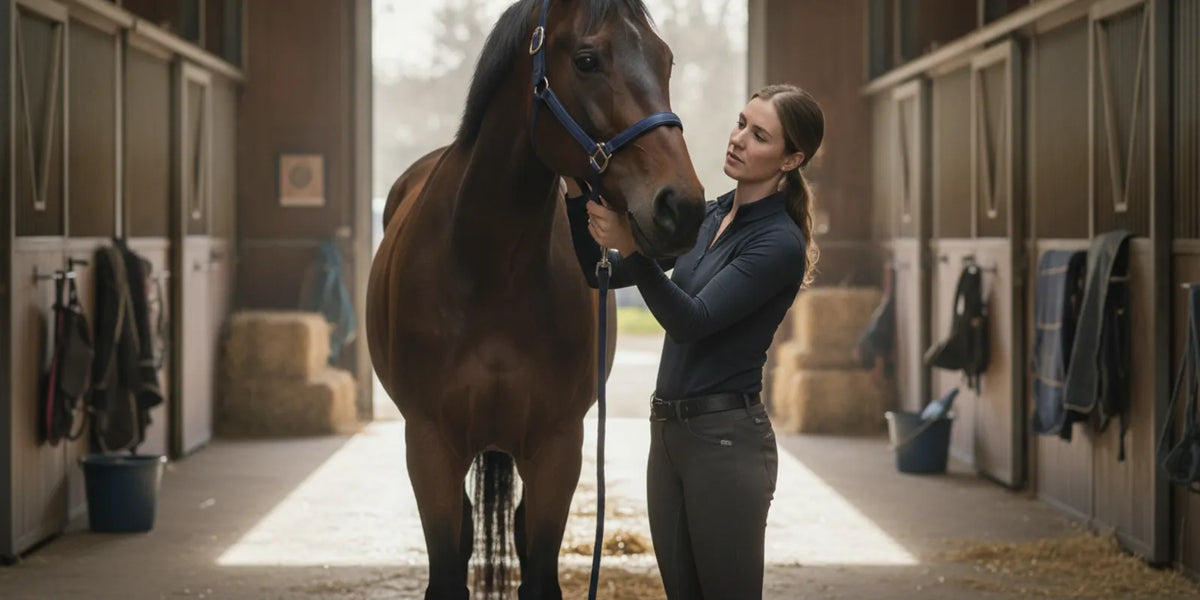
Finding a strong horse halter with fast shipping starts with two separate checks: the halter must suit your horse and intended use, and the seller must confirm a realistic shipping timeline for your address. A durable-looking strap alone cannot guarantee a safe fit or a delivery date. Use this guide to compare materials and hardware, measure carefully, and plan your purchase without rushing an important safety decision.
Call to ask about halter availability and shipping options
Strong construction starts with the whole halter
Key Takeaway
Strength depends on the whole construction: appropriate webbing or leather, secure stitching, sound adjustment points, and hardware suited to everyday handling. Choose for your horse and use, not for appearance alone.
A halter has several parts that work together. The crownpiece passes behind the ears, the cheekpieces connect it to the noseband, and the throatlatch or connecting strap helps keep the halter in position. Buckles and rings take repeated handling. A weak seam or corroded fitting can undermine otherwise sturdy material.
When you assess construction, examine the places where parts join. Stitching should look even, with no loose threads or gaps. Straps should lie flat and be free of cuts, thin spots, or rough edges. Move each buckle and ring gently to see whether it closes and sits as expected. A clean, new-looking surface is not enough if a fitting is loose or the stitching is uneven. For a halter already in use, compare both sides and inspect areas hidden when it is buckled.
Think about the specific job. A simple halter used for short, supervised walks from stall to grooming area may need different features from one used for routine barn handling. If the horse is known to pull back or rub equipment, choosing a thicker strap alone does not address the underlying handling or environment risk. Ask a knowledgeable equine professional to help match equipment and management to that horse.
Start by considering the horse, the frequency of use, and the environment. A halter used for routine leading and grooming has different demands from one exposed to rain, mud, and daily turnout. A horse that pulls, rubs, or is hard on equipment may need more frequent inspection and a different management plan. No halter is indestructible, and no material makes tying or turnout risk-free.
- Webbing: Nylon is commonly chosen for everyday use because it is easy to clean and available in different thicknesses and constructions. Check the edges, stitching, and buckle holes rather than judging only by thickness.
- Leather: A well-maintained leather halter can be a practical choice for handling and presentation. Inspect it for dry, cracked, stretched, or weak areas, especially around holes and stitching.
- Hardware: Look for buckles and rings that sit flat, move as intended, and have no sharp edges, deep corrosion, bent sections, or loose attachment points.
- Construction: Reinforced stitching and neatly finished edges are useful signs to assess. They do not replace regular checks or correct sizing.
For routine care around the face, remove the halter when it is appropriate and safe to do so, then check for dirt, dampness, rub marks, or tenderness. A soft grooming brush can help with general coat care around contact areas; see the horse grooming brush as one example of a grooming tool. Do not brush over a sore or irritated area.
How do you choose the right halter material?
There is no single best material for every horse or barn. Compare likely care needs, handling conditions, and the horse's behavior. For example, a horse that is turned out in wet weather may put more wear on equipment than one wearing a halter briefly for supervised grooming. A leather halter requires appropriate cleaning and conditioning, while webbing should be cleaned and dried according to its care guidance.
| Choice | Useful considerations | Checks before use |
|---|---|---|
| Nylon or other webbing | Often convenient for routine handling and straightforward cleaning | Inspect seams, edges, adjustment holes, and hardware for wear or damage |
| Leather | Can suit handling and presentation when maintained correctly | Check for dryness, cracks, stretching, weak stitching, and damaged holes |
| Breakaway design | Includes a designated component intended to release under some conditions | Understand the maker's instructions and check the breakaway part regularly |
A breakaway design is not a promise that entanglement cannot happen, nor does it make unsupervised tying safe. Follow the manufacturer's use instructions and your barn's established safety practices. If you are uncertain which style fits a particular horse or situation, ask an experienced equine professional who knows the horse.
One practical way to compare halters is to picture the routine rather than a best-case scenario. Will you put it on and remove it several times a day? Will it be damp after turnout? Is it easy to notice a loose buckle during a quick inspection? Does the horse have a wide or narrow head that makes standard sizing difficult? These questions help identify whether easy adjustment, simple cleaning, or a more specific fit range should guide your choice.
Keep intended use in view as well. A halter is for suitable handling, not a solution for every activity or behavior. If your horse needs specialized equipment, base that choice on advice from someone qualified to assess the horse and the task. Equipment descriptions can explain features, but they cannot determine what is safe for an individual animal.
Fit checks that protect comfort and control
Fit matters as much as material. A halter that is too loose can shift, catch, or allow the horse to get a foot or jaw into an unsafe position. One that is too tight can rub, pinch, or restrict comfortable movement. Product sizing labels vary, so use the maker's measurement instructions and compare actual measurements rather than relying on a familiar size name.
- Measure carefully. Use a soft tape and record the measurements requested by the maker, commonly around the nose and behind the ears. Keep the tape level and comfortably snug, not tight.
- Compare the size chart. Check the listed measurements and any notes about breed, head shape, or adjustability. If your horse falls between sizes, contact the seller or manufacturer for guidance instead of guessing.
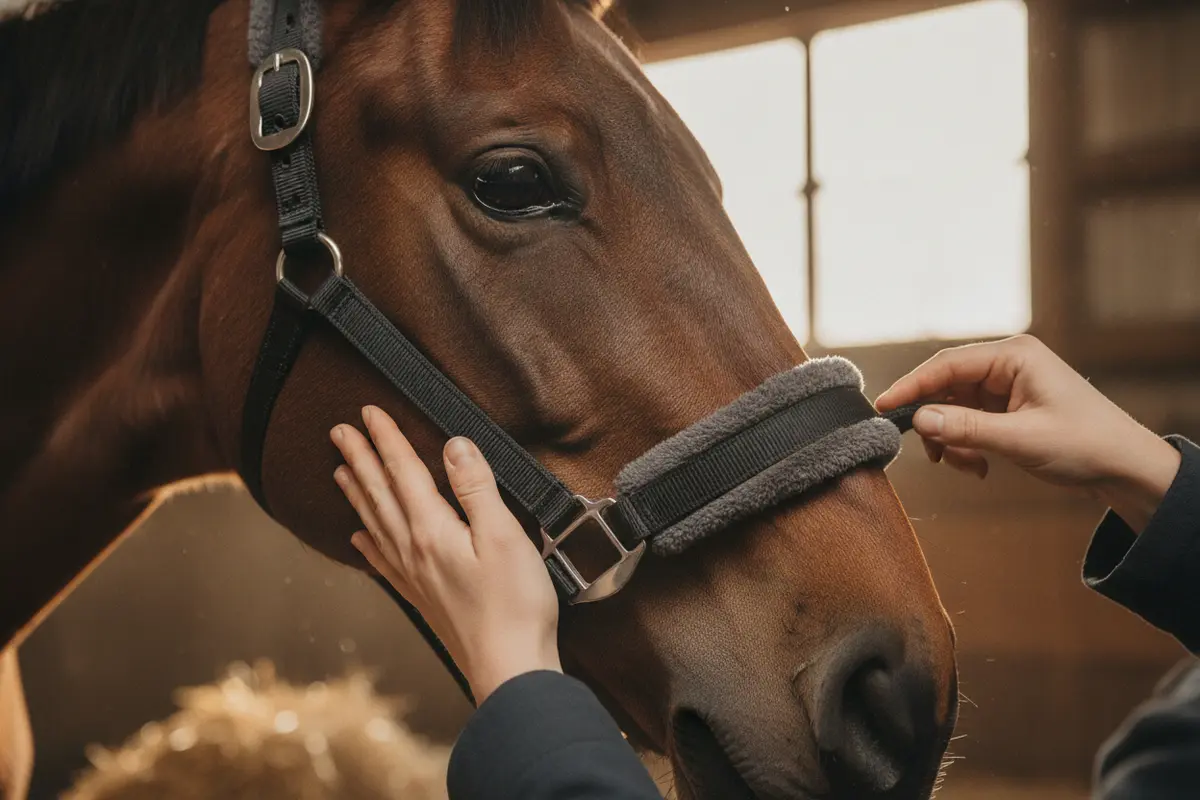
- Adjust evenly. After putting the halter on, check that the noseband is not too low or pressing on sensitive areas. The crownpiece should sit comfortably behind the ears, without pinching.
- Check movement and contact. Look for gaps that allow the halter to rotate, pressure points, trapped hair, and rubbing. Recheck after the horse moves its head and after a short period of wear.
- Reassess over time. Recheck fit after growth, weight change, a change in coat, or adjustment to the halter. Inspect the skin and equipment as part of routine handling.
A halter is not a bridle. It is designed for appropriate handling, not for riding or substituting for discipline-specific equipment. For broader horse-care questions, ask your veterinarian; the American Association of Equine Practitioners is a professional resource for horse owners. If you are preparing riding tack, keep the distinction clear and choose a suitable browband headstall for its intended riding setup rather than attaching reins to a halter. For training or controlled exercise, use equipment suited to the activity; the store's training and lunging gear collection is a separate place to explore those needs.
Which features matter for everyday use?
Choose features that solve a real handling need. Multiple adjustment points can help accommodate different head shapes, but only if the straps can be fitted securely and remain in good condition. A simple design may be easier to inspect and clean. Padding can affect comfort in some situations, but it does not compensate for a poor fit or an unsuitable material.
Before purchase, consider these questions:
- Will the halter be used mainly for leading, grooming, or supervised handling?
- Will it be exposed to rain, dust, mud, or frequent washing?
- Does the horse tend to rub, pull, or test equipment?
- Can you identify every buckle, ring, seam, and adjustment point for inspection?
- Does the maker explain care and intended use clearly?
Do not select a halter solely because it is described as heavy duty. Product descriptions can help you identify materials and construction, but the fit and condition of the actual halter still need checking. Never leave a horse tied unattended unless the location, method, and equipment are suitable and follow your established safety guidance. If a horse has a history of pulling back or entanglement, seek advice from a qualified equine professional before changing equipment or tying practices.
How can you check shipping speed before ordering?
Quick Summary
Fast shipping is specific to the item, order processing, destination, and carrier. Check current availability and shipping information before placing the order, and do not treat an estimated transit time as a guaranteed arrival date.
When timing matters, verify these details at checkout or with the retailer before you buy:
- Availability: Confirm that the exact size and color you need can be ordered. A product page or cart status can change, so do not assume every variation is ready to ship.
- Processing and transit: Ask whether the stated estimate covers order processing, carrier transit, or both. Weekends, holidays, weather, and carrier delays may affect arrival.
- Destination: Enter your full delivery address and review the available shipping methods and estimates for that location.
- Order timing: If you need the halter by a particular day, ask before ordering whether the current estimate leaves enough time. Avoid relying on a general shipping statement as a date guarantee.
- Fallback plan: If you need equipment immediately, check with your local tack shop or barn network while you confirm online options. Do not use damaged or poorly fitting gear simply to fill a short-term gap.
Hooves and Paws is a family-owned online retailer serving equestrian and pet owners since 1994. The retailer offers free shipping within the continental United States and same-day shipping, but availability, order handling, destination, and carrier timing can affect an individual order. Confirm current details for the item and address rather than assuming a delivery date or cutoff.
If timing is urgent, prepare the details before contacting a retailer: the halter size or measurements you need, the delivery ZIP code, and the date by which it must arrive. Ask whether the exact variation is available and which estimate applies to your address. This focused check can help you compare a realistic online option with local alternatives. Keep the horse's current safe equipment in service while you wait; do not substitute a halter with a damaged strap or uncertain fit.
Care and replacement checks
Inspect the halter before use, especially if it has been stored or used in wet or muddy conditions. Check the full length of the straps, not just the part most visible when the halter is on. Look for fraying, cuts, brittle or cracked leather, stretched holes, loose stitching, bent rings, corrosion, and buckles that do not close securely.
Clean materials according to the manufacturer's instructions. Let wet equipment dry fully before storing it, and keep it away from conditions that can damage the material. Avoid using a cleaner or conditioner unless it is appropriate for that material. Store the halter where it will not be crushed, chewed, or exposed to unnecessary moisture.
Remove a halter from service if a strap is damaged, stitching is coming apart, hardware is bent or unreliable, or the fit cannot be adjusted safely. A quick repair may not restore the original strength. If you are unsure whether a defect is safe to use, choose a sound replacement and seek expert advice.
Call Hooves and Paws to ask about halter options and shipping today
Frequently Asked Questions
What is the strongest material for a horse halter?
There is no universally strongest choice for every horse and use. Compare the material, stitching, hardware, fit, care requirements, and the conditions in which the halter will be used. Regular inspection matters regardless of material.
How tight should a horse halter be?
It should sit securely without pinching, rubbing, or restricting comfortable movement. Follow the maker's fit guidance, check the noseband and crownpiece, and recheck after the horse moves. If the fit is uncertain, ask an experienced equine professional.
Can a horse wear a halter all day?
That depends on the horse, halter design, setting, and risk of rubbing or entanglement. A halter is not risk-free when left on. Follow the manufacturer's instructions and barn safety practices, and ask a qualified professional about the safest choice for your horse and environment.
Does a breakaway halter prevent every accident?
No. A breakaway feature is designed to release in some circumstances, but it cannot eliminate every risk or replace supervision and safe handling. Inspect the component and follow the manufacturer's directions.
How can I get a halter delivered quickly?
Check the exact size's availability, the order-processing estimate, shipping methods for your address, and the current delivery estimate before ordering. If you have a firm deadline, contact the retailer first. Carrier estimates are not the same as a guaranteed arrival date.
When should I replace a horse halter?
Replace it when straps are cut or badly frayed, stitching is loose, leather is cracked or weakened, adjustment holes are stretched, or hardware is bent or unreliable. If it no longer fits correctly or you cannot confirm its condition, do not rely on it for handling.
Choosing carefully means matching the halter to your horse, checking its condition and fit, and confirming current shipping details before you order. Those steps help you prioritize dependable equipment without relying on an uncertain delivery promise.


