


Summer hoof care for horses is less about adding complicated treatments and more about noticing changes, keeping a steady routine, and adjusting to your horse’s footing and turnout. Heat, dry ground, rain, mud, and increased riding can all change what you see from one week to the next. Use this guide to build practical daily and weekly checks, and to recognize when a farrier or veterinarian should take a closer look.
What changes in summer hoof care?
Quick Summary
Summer conditions vary. Check each hoof regularly, clear debris, keep the living area as clean and consistent as you can, and ask your farrier about trimming or shoeing intervals for this horse. Do not treat a crack, odor, heat, or lameness as a routine seasonal issue without checking with a professional.
There is no single summer routine that suits every horse. A horse living on dry, hard ground may experience different wear and dryness than a horse turned out in damp grass or a muddy lot. Workload, conformation, existing hoof conditions, shoeing, and local weather matter too.
Start by observing the horse’s normal pattern. Notice how the hoof wall and sole look after cleaning, whether the feet feel different from their usual state, and whether the horse moves comfortably on familiar footing. A change is more useful information than a one-time observation. If you are unsure what is normal for your horse, ask your farrier to explain what to monitor at the next visit.
The University of Kentucky’s overview of horse hoof care notes that balanced hooves matter and gives a general summer trimming or shoeing interval of six to eight weeks. Treat that as a planning reference, not a fixed appointment rule: your farrier should set the schedule for your horse.
How do you make a useful daily hoof check?
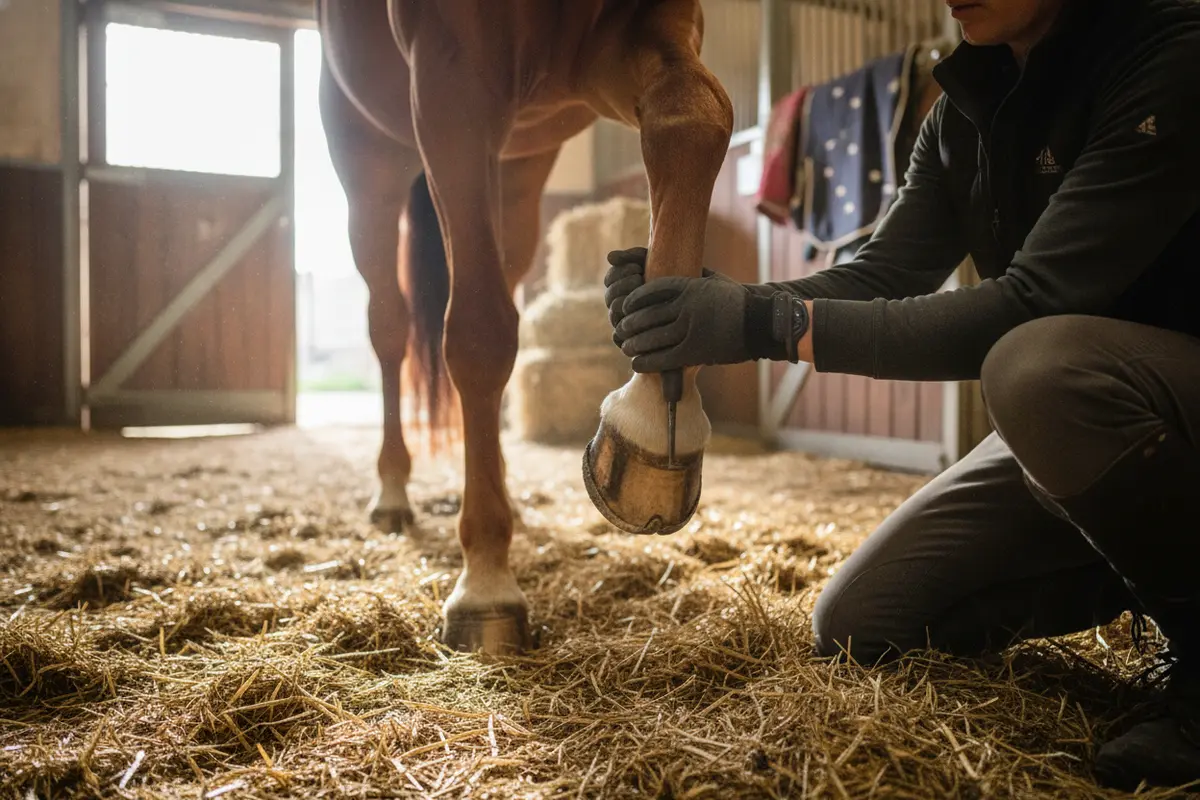
A brief check before or after riding can help you catch a loose shoe, a stone, or a change in comfort before it becomes an overlooked problem. Use the same calm sequence each time so you do not rush through one foot or skip a check when the barn is busy.
- Choose a safe place. Stand on level footing, use your usual safe handling position, and ask for help if the horse is unsettled or you are not confident lifting a foot. Do not put yourself in a position where you could be trapped or kicked.
- Pick up each foot calmly. Follow the handling method you have been taught. If the horse resists, becomes distressed, or cannot comfortably hold the foot up, stop and get appropriate help rather than forcing the check.
- Look before you clean. Notice packed dirt, gravel, manure, bedding, or plant material. Check the shoe and hoof wall for anything visibly loose, newly damaged, or different from the other feet.
- Clean gently. Use a hoof pick to remove debris, working carefully and avoiding forceful digging into sensitive tissue. A well-made hoof pick is a simple tool for this regular task. Clean tools after use and do not share equipment between horses without cleaning it.
- Check the horse moving. After the feet are down, watch the horse walk a short distance on safe, level ground. Any new unevenness, reluctance, or obvious discomfort deserves attention. Do not ride through a sudden change in soundness.
Keep the check observational. It is not a substitute for a farrier’s work or a veterinary examination. Avoid cutting, trimming, or digging into the hoof unless you are trained and the action is part of professional guidance for that horse.
Shop This Post


How do heat, dry ground, and wet weather affect the routine?
Summer is not always hot and dry. Some regions have long dry spells; others get frequent rain, irrigation, or humid conditions. A horse may also move between pasture, a wash area, a dry stall, and arena footing in one day. Rather than trying to make every hoof look identical, track how changing conditions relate to what you observe.
For a useful record, write down where the horse has been standing, the kind of footing used for work, and whether there was a notable change in weather. Note whether you found packed mud or gravel, and whether your horse moved as usual after turnout. Keep observations factual: “left hind shoe shifted” or “hesitated on firm ground” is clearer than a guess about the cause. If you see a difference, take a photo only if it is safe and does not delay a call for help. Share the notes with your farrier or veterinarian, especially when several small changes appear together.
Try not to change several parts of the routine at once in response to one observation. A new product, a different cleaning method, and a sudden change in work can make it harder to tell what helped or worsened the situation. Ask your horse-care professional which adjustment, if any, is appropriate and when you should reassess.
Dry or hard footing
On hard or abrasive ground, monitor comfort and the condition of the hoof and shoeing more closely, especially if the horse’s workload changes. Do not assume a dry-looking hoof needs a particular dressing, oil, or soaking routine. Ask your farrier whether a product or management change makes sense for your horse, and follow the product label if one is recommended.
Wet or muddy periods
After rain, check that feet are free of packed mud and foreign material. If the horse spends time in a wet area, also notice whether the skin around the pastern looks irritated and whether the horse is comfortable. Keeping a clean, reasonably dry place to stand when possible can make regular inspection easier. Persistent odor, discharge, pain, or damaged tissue is a reason to seek professional advice, not to keep scraping or applying several products in succession.
Seasonal transitions
Weather patterns can change hoof conditions over time. Cornell Cooperative Extension’s article on seasonal changes in horses’ feet discusses the transition from summer to winter. The practical takeaway is to keep communicating with your farrier as conditions shift instead of assuming one seasonal routine will remain right all year.
What belongs in a weekly hoof-care routine?
Key Takeaway
Daily checks help you notice changes; weekly review helps you see patterns. Keep a simple record of footing, workload, farrier visits, and any changes in comfort so you can share useful details with your care team.
Once a week, take a few minutes to review what you have noticed rather than relying on memory. A notebook or phone note can include the date, recent weather, turnout conditions, work level, and whether each foot looked and felt typical for your horse. Add a brief note if a shoe looks loose or a change appears between appointments.
- Review all four feet. Look for differences between feet and for changes since your last check. A photo taken from a similar angle can help you explain a change, but it does not diagnose a problem.
- Check the environment. Note areas where the horse stands for long periods. Remove obvious hazards and keep the footing as clean and well maintained as your facility allows.
- Review equipment. Make sure the hoof pick is clean and in good condition. If your horse wears shoes, note any movement or damage and contact your farrier instead of trying to reset a shoe yourself.
- Confirm the next farrier visit. Ask whether the current interval still fits the horse’s growth, wear, use, and footing. A calendar reminder can help prevent visits from slipping during a busy season.
- Share patterns, not guesses. Tell your farrier or veterinarian what changed, when it began, and whether it appears on one or more feet. This is more useful than trying several unverified remedies first.
Many owners find it useful to keep the cleaning tool where routine grooming happens. If you need to replace one, the Deluxe Hoof Pick is an option to review. Choose a tool you can handle safely and clean after use; a product cannot replace careful handling or skilled hoof care.
How should you plan farrier visits during summer?
Hooves continue to grow and wear, but the pace and the appropriate care interval are individual. The University of Kentucky resource above gives six to eight weeks as a general summer interval for trimming or shoeing. Your farrier may recommend a different schedule based on the horse’s needs, shoeing plan, hoof balance, work, and local conditions.
At the appointment, mention changes in terrain, increased riding, a change in turnout, or any recent tenderness or shoe loss. Ask what signs should prompt an earlier call, and whether the next appointment should be scheduled sooner or later. If the horse has a history of hoof problems or a prescribed care plan, follow that plan rather than a general article.
Do not wait for the calendar if a shoe is loose, a hoof is newly damaged, or the horse becomes lame. Contact your farrier or veterinarian for direction. A sudden or severe problem may need veterinary attention; do not use a product, soak, or home remedy to delay an assessment.
Which summer hoof-care approaches should you avoid?
More products do not automatically mean better hoof care. Avoid applying a treatment simply because the weather is hot or because another horse owner uses it. Products can have different purposes and directions, and a problem that looks minor may need an accurate diagnosis.
- Do not trim or pare the hoof yourself unless you are trained and following professional guidance. Incorrect trimming can cause discomfort or other problems.
- Do not dig deeply at a suspected stone or sore spot. If the horse reacts, stop and call a professional.
- Do not use an unprescribed topical product or soak on a damaged or painful hoof. Ask a veterinarian or farrier what is appropriate and follow label directions.
- Do not keep riding a horse with new lameness. Stop work and arrange an assessment. If your veterinarian recommends a specific cooling product for a separate injury, follow their directions; a stifle ice wrap is not a hoof treatment.
- Do not use a generic schedule as a diagnosis. An interval that suits one horse may not suit another.
These limits matter because hoof discomfort can have different causes. Prompt advice from the right professional is safer than guessing from appearance alone.
How can you compare basic summer hoof-care tasks?
This table is a planning aid, not a treatment protocol. The frequency can change with your horse’s care plan, environment, and professional advice.
| Task | Typical timing | What to notice | When to ask for help |
|---|---|---|---|
| Visual hoof check and gentle cleaning | Regularly, often before or after work | Debris, visible damage, a loose shoe, or a change from normal | If the horse is painful, the hoof is damaged, or you cannot safely handle the foot |
| Review turnout and footing | Weekly and after weather changes | Mud, hard or rough areas, hazards, and where the horse stands | If conditions or comfort concerns persist despite reasonable management |
| Farrier trim or shoeing | On the schedule set for the individual horse; six to eight weeks is a general summer reference from the University of Kentucky | Growth, wear, balance, shoe condition, and comfort | For a loose shoe, sudden change, or a schedule adjustment |
| New pain, heat, discharge, or lameness | As soon as noticed | Whether it is sudden, worsening, or affecting movement | Contact a veterinarian or farrier promptly; urgent or severe signs warrant veterinary guidance |
Shop a hoof pick for your grooming kit today
Frequently Asked Questions
How often should I pick out my horse’s hooves in summer?
Check and clean the hooves regularly, often as part of grooming or before and after riding. The right frequency depends on turnout, footing, and the horse. Ask your farrier if you need a routine tailored to a specific hoof condition.
Should I apply hoof oil when the weather is hot?
Not automatically. Hot weather alone does not establish that a product is needed. Ask your farrier or veterinarian before adding a topical product, and follow its directions if they recommend one.
Is six to eight weeks the right farrier schedule for every horse?
No. It is a general summer reference noted by the University of Kentucky, not a universal schedule. Your farrier should consider your horse’s hoof growth, wear, work, shoeing, and individual needs.
What should I do if my horse is suddenly lame?
Stop riding and contact a veterinarian or farrier for guidance. Do not dig into the hoof or apply a treatment to delay an assessment. Seek prompt veterinary advice for severe or worsening signs.
Does rain mean I should soak my horse’s hooves?
No. Wet weather by itself is not a reason to soak. Monitor the hoof and surrounding skin, keep the standing area as clean as practical, and ask a professional about a specific concern.
Can I manage a loose shoe until the next appointment?
Contact your farrier and follow their advice. Do not try to reset or remove a shoe unless you have been trained to do so. If the horse is uncomfortable or lame, mention that when you call.
A steady routine beats guesswork
Build summer hoof care around careful observation, gentle cleaning, suitable footing, and a farrier schedule tailored to your horse. When a new change appears, share what you observed with your farrier or veterinarian and follow their advice.


