

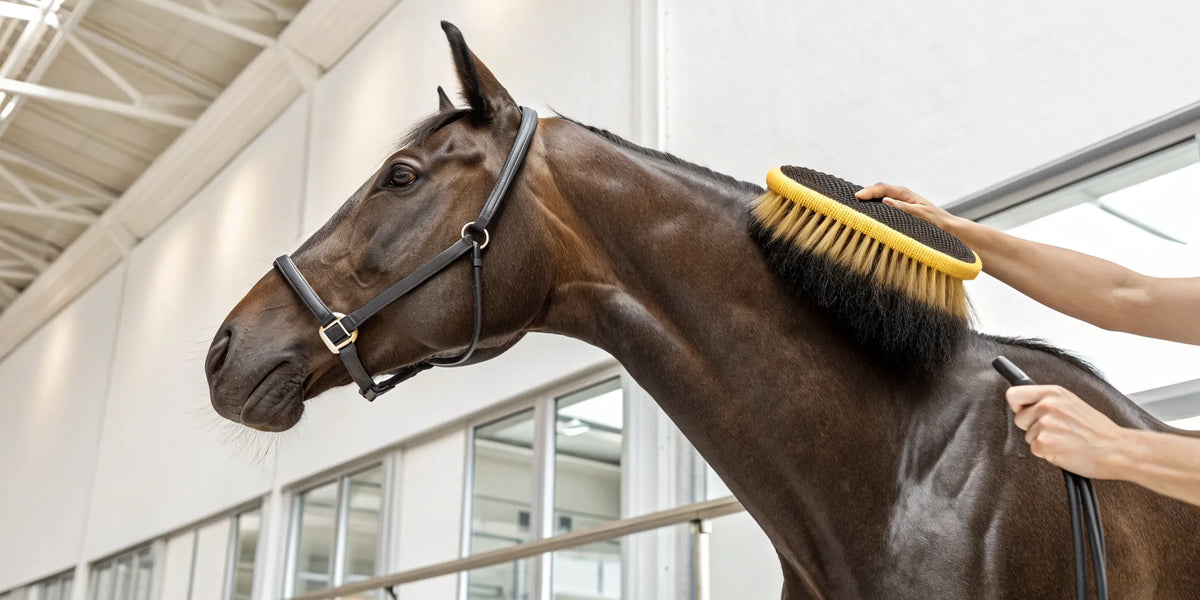
The best curry brush for most horses is a flexible rubber curry used in firm circles over the neck, body and hindquarters to loosen dirt, mud and shedding hair. Add a firmer curry or shedding blade for thick winter coats, and a soft mitt for the face and legs, where a standard curry is too harsh.
A gleaming coat starts with getting the dirt and dead hair out from underneath, and that is the curry's job. While a finishing brush polishes the top layer, the humble curry brush is the tool that does the deep cleaning. Its rubber nubs or teeth lift grime and loose hair up to the surface so your other brushes can sweep it away, and most horses find the circular motion feels like a good scratch. Before you reach for any other tool, the curry is the first step to a clean, shiny horse.
Key Takeaways
- It's the first tool in the routine: A curry brush starts every grooming session. Use it in circular motions to lift dirt, mud and shedding hair so the dandy and body brushes can finish the job.
- Match the brush to your horse: The best curry depends on your horse's coat and sensitivity. A flexible rubber curry is a good all-around choice, a firmer curry or shedding blade helps with thick mud and winter coats, and a soft mitt suits the face and other sensitive areas.
- Groom with care: Use firm circles on the muscled parts of the body, switch to a softer tool on the face and legs, and keep your brushes clean. Dirty or shared grooming tools can carry skin infections such as ringworm from horse to horse.
What Is a Curry Brush? (And Why Your Horse Needs One)
If you want your horse to have that clean, show-ring shine, your grooming kit isn't complete without a good curry brush. A curry brush, or curry comb, is your first line of defense against the dirt, mud and loose hair that build up in your horse's coat. Usually made from rubber or plastic, it is used in a circular motion against the body. That movement lifts stubborn grime and shedding hair to the surface, making it easier for your other brushes to sweep it all away.
Think of it as the deep-cleaning step in your grooming routine. Not only does it tackle the mess, but most horses also enjoy the feel of the circular scrubbing, which helps turn a daily chore into a pleasant experience for both of you. It prepares the coat for the next steps, so your finishing brushes can do their job and leave a smooth, clean finish. For an overview of every brush in the kit and what each one does, see our guide to choosing the right horse grooming brush.
The Secret to a Clean, Shiny Coat
Using a curry brush is about more than just getting your horse clean on the surface. The circles bring up the dirt, dust and dead hair that sit close to the skin, where a flicking brush alone can't reach them. Once that layer is out of the way, the soft body brush that follows can lift the last fine dust and bring out the coat's natural oils, which is what gives a well-groomed horse its sheen.
That two-part process is the real secret to a shiny coat. The curry does the heavy lifting underneath, and the finishing brush does the polishing on top. Skip the curry and the finishing brush ends up pushing dirt around; skip the finishing brush and the coat looks clean but dull. Used together, every day if you can, they keep the coat clean and glossy.
More Than Skin Deep: Why Regular Currying Matters
Regular currying does more than make a horse look good. By consistently removing trapped dirt, dust and loose hair, you keep the coat and skin clean, which is part of keeping your horse comfortable. A clean coat is easier to check, easier to tack up without rubs, and simply nicer to ride.
Grooming time is also valuable for your relationship. This quiet, focused activity gives your horse a chance to relax with you and gives you a chance to learn what is normal for your horse, from the way they stand to the spots they love having scratched. That knowledge makes it much easier to notice when something has changed.
Removing Scurf, Dander and Loose Hair
A curry brush is your best tool for a clean that goes beyond surface dirt. As you work in circles, it lifts flakes of dead skin, often called scurf, along with dander and dust. This matters most during shedding season, when loose hair can mat into the coat. Getting that buildup out regularly clears the way for the dandy brush and body brush, and it is the true starting point for a natural, lasting shine.
A Chance to Check for Cuts and Scrapes
Your daily grooming routine is the perfect opportunity for a hands-on check. As you move the curry across your horse's body, you're not just cleaning; you're also feeling for anything out of the ordinary. It is your chance to find small cuts, scrapes, insect bites, ticks, or new lumps or swelling early. If you find something that worries you, such as a wound, a hot or painful area, or patches of hair loss, stop currying that spot and ask your vet to take a look.
A Scratch Most Horses Enjoy
For many horses, a session with a rubber curry is a highlight of the day. The flexible nubs reach itchy spots your horse can't scratch alone, and you'll often see a horse lean into the pressure, stretch their neck or wiggle their lip, which is a clear sign you're doing it right. When grooming is a pleasant experience, your horse is more relaxed about being handled, which makes everything from tacking up to vet visits easier.
Which Curry Brush Is Right for Your Horse?
Walking into a tack shop or browsing online can feel overwhelming with all the different curry brushes available. They come in many shapes, sizes and materials, and it's easy to wonder if there's really a difference. The short answer is yes. The right curry makes your grooming sessions more effective and more comfortable for your horse. Choosing one depends on your horse's coat, how sensitive their skin is, and what you're trying to do, whether that is a quick dust-off or getting dried mud out of a thick winter coat.
Think of the curry as the foundation tool in your kit. It is the first step that lifts dirt and loosens dead hair, and each type does that job a little differently. Some are gentle enough for sensitive, fine-coated horses, while others are firm enough for a thick winter coat after a good roll in the pasture. Let's look at the common types so you can find the right match.
Curry Brush Types at a Glance
| Type | Best for | Go carefully |
|---|---|---|
| Rubber curry | Everyday currying of the neck, body and hindquarters; mud and shedding hair | Choose a softer one for sensitive horses |
| Plastic curry | Stubborn dirt and lots of loose hair; easy to clean | Stiffer than rubber, so use a lighter touch and keep it off bony areas |
| Curry mitt or glove | Face, legs, belly and nervous or ticklish horses | Check the maker says it suits the face before using it there |
| Metal curry comb | Cleaning your other brushes | Generally too harsh for the horse's coat |
| Shedding blade | Thick winter coats in shedding season | Gentle hand on muscled areas only; not the face, legs or bony areas |
The sections below go through each type in more detail.
The Classic: Rubber Curry Brushes
The rubber curry is a classic for a reason. It is one of the most versatile grooming tools you can own. With flexible rubber teeth or nubs, it loosens dirt, mud and shedding hair, and because the rubber gives, it follows the shape of the horse's body. Most rubber curries are gentle enough for daily use on the neck, shoulders, back, barrel and hindquarters. A soft, flexible round curry such as the Professionals Choice Circle Comfort Curry is a good everyday choice that bends with the body and is easy on your hand.
Soft vs. Firmer Rubber
Not all rubber curries are created equal, and you'll often find them in softer and firmer versions. A soft rubber curry is your go-to for sensitive horses and for daily grooming. Its flexible nubs are comfortable on fine coats and on the less muscled parts of the body. A firmer curry has more bite for tackling a thick winter coat or stubborn dried mud, getting deeper into the coat to lift grime a softer brush might miss. Many owners keep both: the firmer one for the first deep clean and the soft one for touch-ups and sensitive spots.
Light and Tough: Plastic Curry Brushes
Plastic curry brushes are another popular choice, valued for being lightweight, durable and very easy to clean. They usually have firmer teeth than rubber curries, which can be effective for removing stubborn dirt and a lot of loose hair, especially in shedding season. Because they are stiffer, use a lighter touch, particularly on horses with sensitive skin, and keep them off bony areas. Their simple, sturdy design makes them a practical addition to any grooming tote.
Get Hands-On: Curry Mitts and Gloves
If you want a more hands-on feel, a grooming mitt or glove is an excellent option. These fit over your hand, so you can feel the contours of your horse's body as you work. That makes them handy for areas where a traditional brush feels awkward, such as the face, legs and belly. Shires says its Shires Cactus Mitt has cactus cloth on one side to help shed dust and sweat stains and towelling on the other for polishing, and that it is soft enough to use on any part of the horse, including the face. Many horses find a mitt feels like being petted, which makes it a good tool for nervous or ticklish horses.
For Tough Jobs: Metal Curry Combs
Metal curry combs are the heavy-duty workers of the grooming world. Their main job isn't working on the horse's coat but cleaning your other brushes, such as body brushes and dandy brushes. A few strokes against the metal teeth pull the hair and dirt out of the bristles. They are generally too harsh to use on the horse, so keep them in the tack box for brush cleaning and reach for rubber or a shedding blade for the coat.
Shedding Blades for Winter Coats
When your horse is losing a thick winter coat or is caked in dried mud, you sometimes need a tool with more power. That is where a shedding blade comes in. These looped metal blades are designed to pull out large amounts of loose, shedding hair. Because they are much firmer than rubber or plastic curries, use them with a gentle hand on the muscled parts of the body, avoid bony areas, the face and the legs, and watch your horse's reaction. Options include the Professional's Choice Soft Touch Shedding Blade and the Shires Shedding Blade. Used carefully during shedding season, a blade saves a lot of time and gets the old coat out so the new one can come through clean.
Shop This Post

Featured in this article
Professional's Choice Pony Paints - 4.4oz Non-Toxic Washable Horse Coat Paint
$22.71
Shop Now →


Curry Brushes We Carry (And Why)
Our Picks for Everyday Grooming
Grooming is more than making your horse look good; it is part of their daily care and a great bonding time. A good curry brush is the first step to loosening dirt and shedding hair. With so many options, finding the right one can be tough, so here are a few curries and related tools from the brands we stock, grouped by what they do best.
Two Tools in One: Combination Curries
If you love a tool that does double duty, a combination curry is a smart addition to your kit. Weaver Leather describes its Weaver Leather 2-in-1 Sweat Scraper and Curry Comb as two tools in one, with a curved rubber blade on one side and coarse curry teeth on the other. Use the curry side to loosen dirt before you ride, then flip it over to scrape off water after a bath or sweat after a hot ride. It is a handy tool to keep in a trailer or show box where space is tight.
Built for Comfort: Palm-Held Curries
For a tool you use every day, comfort in the hand matters. Weaver says its Weaver Leather Palm Curry Comb has small rubber bristles and a palm-held design, with a handle that slides between your index and middle fingers for less fatigue. That kind of grip lets you hold the curry securely without squeezing it, which makes a long grooming session easier on your hand. A small, fine-bristled palm curry is also easy to control around the less muscled parts of the body.
Gentle Touch: Curries for Sensitive Skin
Some horses have sensitive skin that calls for a gentler touch. For them, a flexible curry that bends with the body is ideal. The Professional's Choice Tail Tamer Soft Touch Flex Curry has a flexible rubber backing, so it can follow the contours of the body rather than digging in, which makes it useful around bony areas where a rigid curry is uncomfortable. For the face and lower legs, a soft grooming mitt is another good option: it lets you gently remove dirt and loose hair by hand, turning a tricky job into a pleasant one.
How to Choose the Right Curry Brush for Your Horse
Picking a curry brush can feel like a small decision, but it makes a big difference to your grooming routine. The right brush gets your horse clean and makes the session more enjoyable for both of you. When you're shopping, consider your horse's coat, their skin sensitivity, and how well the brush is made. Getting those three things right will help you find a tool you'll both like for years.
Match the Brush to Your Horse's Coat
Just like you wouldn't use the same brush on thick, curly hair as on fine, straight hair, your horse's coat has its own needs. A horse with a thick winter coat caked in mud will need a firmer curry with longer teeth to lift the dirt, or a shedding blade in spring. For a horse with a fine, clipped coat, or in the summer months, a softer, more flexible rubber curry will do the job without being too aggressive. Using the right tool for the coat keeps your horse comfortable and helps you groom more effectively.
Don't Forget Skin Sensitivity
Every horse is an individual, and some are simply more sensitive than others. A firm plastic curry might feel great to one horse and be irritating to another with thinner skin. Watch your horse's reaction when you introduce a new brush. If they pin their ears, swish their tail or move away, the brush may be too harsh or you may be pressing too hard. It is a good rule of thumb to keep a standard curry off sensitive, bony areas such as the face and lower legs. For those spots, a soft mitt or a gentle face brush is a better and safer option.
What Makes a Quality Curry Brush?
When you're ready to buy, a few features separate a great curry from a mediocre one. First, look for durable materials that will stand up to daily use without cracking or losing teeth. Ergonomics matter too: a brush with a comfortable grip or hand strap will save your hands and wrists during long sessions. Some designs combine two tools, such as a curry and a sweat scraper. Most importantly, a good curry should be comfortable on your horse's coat, designed to lift loose hair and dirt without pulling.
Grip and Comfort: Look for a Strap or Palm Grip
Grooming can be a workout, and the last thing you want is for your hand to cramp halfway through. That is why ergonomics are so important when choosing a curry brush. A comfortable grip isn't just a nice extra; it helps you groom well. Look for a curry with a hand strap, a palm-held design or a shaped handle. These let you hold the tool securely, giving you better control as you work in circles, and they save your hand and wrist from fatigue so you can focus on your horse.
A secure grip also means you can apply firm, even pressure where it is needed and ease off where it isn't. When your hand is comfortable, you can pay more attention to your horse's reactions and adjust as you go. Many rubber curries and mitts include a strap or palm grip for this reason. It turns the brush into an extension of your hand, which makes the whole process feel more natural.
How to Use a Curry Brush the Right Way
Once you've picked your curry, getting the technique right is the next step. Used correctly, it gets your horse properly clean and turns grooming into something your horse looks forward to. The right approach lifts dirt and loose hair and sets up the rest of the routine. Here is how to do it.
How to Curry Your Horse: Step by Step
Start on one side of your horse at the neck. With your curry, apply firm but comfortable pressure and work in brisk circles. This movement lifts stubborn dirt, mud and loose hair from deep in the coat. Continue the circles down the shoulder, across the back and along the barrel and belly, taking care around the girth area and belly if your horse is ticklish. Finish with the flank, loin and hindquarters, then repeat on the other side. You'll see dust and hair come to the surface, which you'll brush away in the next step. Keep the curry off the face, the lower legs and any bony points.
Curry the Saddle and Girth Area Before You Tack Up
Take extra time where the tack sits. University of Arkansas Extension advises grooming before saddling, especially in the saddle and girth areas, and says it is very important to clean and brush the back and girth area so the horse won't get sores from the saddle or cinch. Curry the back, withers and girth area to loosen dried sweat and grit, brush it away, then run your hand over the area to check nothing is left before the pad goes on. Arkansas Extension also notes that dirty saddle blankets can cause sores, so a clean pad finishes the job. If you find a sore, a raw patch or a tender spot, don't saddle over it; ask your vet.
Currying Through the Seasons
Your curry earns its place all year, but the job changes with the weather.
- Spring shedding: work the curry in firm circles to lift the loose winter undercoat, tap it clean often, and bring in a shedding blade for the thickest patches (see the shedding blade section above).
- Summer: a softer rubber curry is usually enough for a short coat. After a sweaty ride, let the coat dry, then curry away the dried sweat.
- Winter under blankets: take the blanket off to groom so you can curry the whole body and see the coat underneath. Penn State Extension notes that horses can develop rub marks or sores where blanket straps fit poorly, so check wherever the straps and blanket sit, and ask your vet about any sore. Penn State also advises not putting a blanket on a wet horse, so finish grooming on a dry coat before the blanket goes back on.
- Mud season: let mud dry before you curry it. A firm rubber curry breaks up dried mud far more easily than it lifts wet mud, which tends to smear into the coat.
The Complete Grooming Process
The curry does the heavy lifting, but it is just the first step in a full routine that leaves your horse looking and feeling great. Each tool has a specific job, and using them in the right order makes all the difference. Following these steps gives you a clean coat and a daily chance to look your horse over from head to hoof. If you're putting a kit together from scratch, the Hooves & Paws Daily Grooming Kit puts a rubber curry, a soft goat-hair finishing brush and a hoof pick in one tote. For a full step-by-step routine, see our complete horse grooming routine.
Step 1: Loosen Dirt with a Curry Comb
The curry is your first line of defense against the dirt, mud and loose hair that build up in the coat. Working in circles lifts stubborn grime and shedding hair to the surface, which makes it far easier for your other brushes to sweep it away. Take your time here, especially in shedding season or after a muddy turnout, because every bit of dirt you loosen now is dirt your finishing brush won't have to fight later.
Step 2: Remove Debris with a Hard Brush
Once the curry has brought the dust and hair to the surface, it is time to sweep it away. That is where a hard brush, often called a dandy brush, comes in. With stiffer bristles, it flicks away the debris you just loosened. Use short, firm strokes in the direction the hair grows to whisk the dirt off the coat. A brush such as the Professional's Choice Large Dandy Wooden Horse Brush works well for this step, which gets the body clean and ready for finishing.
Step 3: Smooth and Shine with a Soft Brush
With the deep dirt gone, you can focus on the shine. A soft brush, or body brush, is used for this finishing step. Its finer, softer bristles remove the remaining surface dust and smooth the hair down, and they bring out the coat's natural oils, which is where that healthy sheen comes from. Long, smooth strokes work best. Natural fibers such as goat hair are a popular choice for finishing, as in the Professional's Choice Goat Hair Finishing Brush.
Step 4: Detangle the Mane and Tail
A clean coat deserves a tidy mane and tail to match. Using a wide-tooth comb such as the Weaver Leather Mane and Tail Comb, gently work through any knots, starting at the bottom and working up. This keeps you from pulling on tangles and breaking the long hairs. Taking your time here keeps the mane and tail looking good and keeps your horse comfortable. Stand to the side of the hindquarters, not directly behind, when you work on the tail.
Step 5: Clean the Hooves with a Hoof Pick
No grooming session is complete without the hooves. Pick out the dirt, stones and manure packed into the sole and around the frog, working from heel to toe. It is also a chance to check for stones, injuries, a loose shoe, or anything unusual such as a strong smell or discharge around the frog; if you find something like that, ask your farrier or vet. A combined tool such as the Shires EZI-Groom Hoof Brush and Pick lets you pick the hoof and brush it clean in one go.
Avoid These Common Currying Mistakes
A curry is great for large, muscled areas, but it can be too harsh for delicate spots. The biggest mistake is using a standard curry on the face or lower legs. These areas are bony with less padding over them, so a firm curry can be uncomfortable there. Another common error is pressing too hard. Watch your horse's reactions; if they flinch or pin their ears, lighten your touch. And always use a clean brush so you aren't rubbing old dirt back into the coat.
How to Curry Sensitive Areas Safely
So how do you clean those sensitive spots? For the face and legs, switch to a softer tool. A grooming mitt, a flexible curry with soft nubs or a dedicated face brush all work well. Use gentle, sweeping strokes instead of brisk circles around the eyes and muzzle and down the legs. Taking the extra minute to switch tools shows your horse you're paying attention to their comfort and keeps the whole session positive. University of Arkansas Extension puts it plainly: never use the curry comb on the horse's face or below the knees or hocks.
Making Your Curry Brush Last
A good curry brush works best when you take care of it. A clean, well-kept brush is better at lifting dirt and lasts longer. Keeping your grooming kit clean also matters for your horse's health: the UC Davis Center for Equine Health notes that ringworm, a fungal skin infection, can spread on tack and grooming equipment, and advises giving each horse its own equipment and disinfecting tools that may be contaminated. Making brush care part of your routine is a simple habit that pays off.
How to Clean Your Curry Brush
Keeping a curry clean is easy. After each session, give it a few firm taps against a solid surface to knock out loose hair and dirt. For a deeper clean, wash it with mild soap and warm water, using your fingers or another brush to scrub out grime. The most important step is to let it dry completely before putting it away so mold and mildew don't take hold. If you're dealing with a skin problem in the barn, ask your vet what to use to disinfect brushes. Store clean, dry brushes in a grooming tote so they're ready for next time. During a session, tap the curry against a solid surface every so often so it keeps lifting dirt instead of spreading it back over the coat. Our guide on how to clean horse brushes covers washing every type of brush.
Know When It's Time for a New Brush
Even with good care, curry brushes don't last forever. It is time for a replacement if you see cracked plastic, a broken handle, torn rubber, or nubs and teeth worn down so far they no longer grip. A damaged brush can have rough or sharp edges against your horse's skin. It is also a good moment to ask whether the brush still suits your horse. If your horse has become more sensitive or their coat has changed, a softer or more flexible design may be a better fit.
Finding the Best Curry Brush for Your Budget
Getting good value from a curry brush means more than picking the cheapest one. It is about finding a durable, effective tool that makes grooming easier for you and more comfortable for your horse. A well-made brush can last a long time, which makes it a sensible buy. Whether you shop online or at your local tack shop, knowing what to look for helps you choose well.
What to Expect From Different Price Points
Curry brushes are among the most affordable items in any grooming kit. Simple plastic curries cost very little, which makes them an easy addition to any tote. Spending a bit more usually buys softer, more flexible rubber, a better grip or a mitt design that is more comfortable for sensitive horses. Lower-priced options get the job done, but a sturdier curry with a comfortable grip is often the one you'll still be using a few seasons from now.
Should You Buy Online or at a Tack Shop?
Shopping online gives you a wide selection, and you can compare styles and read other riders' reviews. The downside is that you can't hold the brush to test its grip or flexibility first. A local tack shop lets you feel the products before you buy, and staff who know horses can help you match a brush to your horse. Both have their perks, so it comes down to whether you value range and convenience or hands-on inspection.
Smart Shopping Tips for Your Next Curry Brush
To get the most for your money, pay attention to a few details. Look for features that make the job easier, like a comfortable grip that won't tire your hand or a design that combines two tools. It is also worth thinking about whether a complete grooming kit is a better buy. Getting the essentials together, a curry, dandy brush, body brush and hoof pick, is often more economical than buying them one at a time.
Consider Grooming Kits for Better Value
If you're just starting out or refreshing your whole tote, a grooming kit is often the easiest way to go. A kit bundles the essentials into one package and gives you a set of tools designed to work together. Weaver lists a comb, a hoof pick, a palm-held curry comb, a palm-held face brush, a mane and tail brush, a dandy brush and a sweat scraper and coarse curry combo in its Weaver Leather Horse Equine Grooming Kit, packed in a nylon tote with six exterior pockets. For a full grooming tools list and what a premium or show kit adds, see our guide to horse grooming bags and kits, or browse our horse grooming and coat care collection for individual tools.
Are Curry Brushes Just for Horses?
After learning how a curry brush can transform your horse's coat, you might be looking at the other furry members of your family and wondering if it works for them too. If you have a dog that sheds, it is a fair question. Many grooming tools are surprisingly versatile, and a soft rubber curry is one of the best examples.
The key is choosing a gentle, flexible curry and using a lighter touch than you would on a horse. Before you share brushes between your horse and your dog, give the dog its own brush, for the same hygiene reasons you keep a separate set for each horse.
Using a Curry Brush on Dogs
Yes, many owners use a soft rubber curry on their dogs. For short-coated dogs, a gentle rubber curry can be a handy tool for lifting loose hair during shedding season, and many dogs enjoy the feel of the soft nubs. Use light pressure, keep sessions short at first, and stop if your dog seems uncomfortable. If you notice skin problems such as redness, sores or hair loss, see your vet rather than brushing over them. Our guide on using a horse brush for dogs covers which horse brushes suit which dog coats.
Frequently Asked Questions
How often should I use a curry brush on my horse?
Ideally, curry your horse every day you groom, which for most owners is before and after riding. It isn't just about keeping them clean; it is a chance to check their skin, look for new bumps or scrapes, and spend time together. If daily grooming isn't possible, aim for a few times a week to keep dirt from building up.
My horse seems to hate being curried. What should I do?
First, check your brush. It might be too firm for your horse's skin, so try a softer, more flexible rubber curry or a grooming mitt. Then check your pressure: start with a light touch and watch your horse's body language to see what they enjoy. Some horses are sensitive around the flanks, girth and belly, so be extra gentle there. If a horse suddenly becomes sore or touchy in one area, ask your vet to check it.
Can I use a curry brush when my horse's coat is wet?
For general grooming, a dry coat gives the best results. A curry on a soaking wet coat tends to drag at the hair and smear the dirt rather than lift it. If your horse is covered in mud, let it dry first and then use a firm curry to break up the dried patches before moving on to your other brushes.
Where should you not use a curry brush on a horse?
Keep a curry off the face and the lower legs. University of Arkansas Extension says never to use the curry comb on the face or below the knees or hocks. Go lightly over bony points too, and use a soft brush, mitt or cloth in those areas instead.
What is the difference between a curry comb and a dandy brush?
Think of them as a two-step system. The curry comb goes first, used in circles to loosen dirt and loose hair and bring them to the surface. The dandy brush goes second, with stiff bristles used in short, flicking strokes to whisk away everything the curry brought up. You need both for a thorough clean, and a soft body brush to finish.


