


Choosing among the best cat litter boxes is not only about shape or appearance. Your cat needs enough room to enter, turn, dig, and leave, while you need a setup that fits your home and is realistic to clean every day. Start with your cat’s size, mobility, habits, and the available space, then compare box styles against those needs.
Call for help with your cat-care shopping
What makes a litter box a good fit?
A useful litter box makes ordinary behavior easy. A cat should be able to enter without squeezing, turn around without bumping into the sides, choose a spot, dig, cover waste if desired, and exit without getting trapped or startled. For the person caring for the cat, the box should also be reachable for scooping and simple to wash.
Those needs can pull in different directions. A covered box may look neater and contain some scatter, but some cats dislike its enclosed space or concentrated smells. An open pan is easy to inspect and clean, but litter may be kicked beyond its edges. The right answer depends on the individual cat and the room, not on a single feature being best for every household.
Key Takeaway
Prioritize comfortable access, enough interior space, and a location your cat will use. Treat lids, high sides, and specialty designs as options to test, not automatic upgrades.
Research can help frame the choice, but it cannot predict every cat’s preference. A study about litter-box preference compared covered and uncovered styles and notes that a covered design may intensify litter fragrance for some cats. Read the study, Litter box preference in domestic cats: covered versus uncovered, as background rather than a rule for every home.
How large should a cat litter box be?
Think about usable floor area, not just the outside dimensions. The box should leave enough room for your cat to turn and position comfortably. A small kitten may fit in a compact pan today but outgrow it, and a large-bodied cat may need considerably more turning space than a small one. Measure your cat from nose to the base of the tail as a practical starting point, then look for a box with a generous interior relative to that measurement.
Height matters too. The sides need to hold litter and limit scatter, yet the entry should not become an obstacle. A young, healthy cat may step over a tall wall with ease. A senior cat, a cat with limited mobility, or a kitten may find a low entry easier. Some boxes have a lowered entry on one side and taller walls elsewhere, offering a compromise. Check that the low opening still contains litter as your cat enters and exits.
Do not assume that a larger box will be inconvenient for the cat. A 2025 study of litter-box size and litter type reports a preference in its sample for boxes measuring at least 50 centimeters. That finding is a helpful prompt to compare roomy options, not a universal minimum or a guarantee of preference. The study is available as Litter box size and litter type preference and their associated factors.
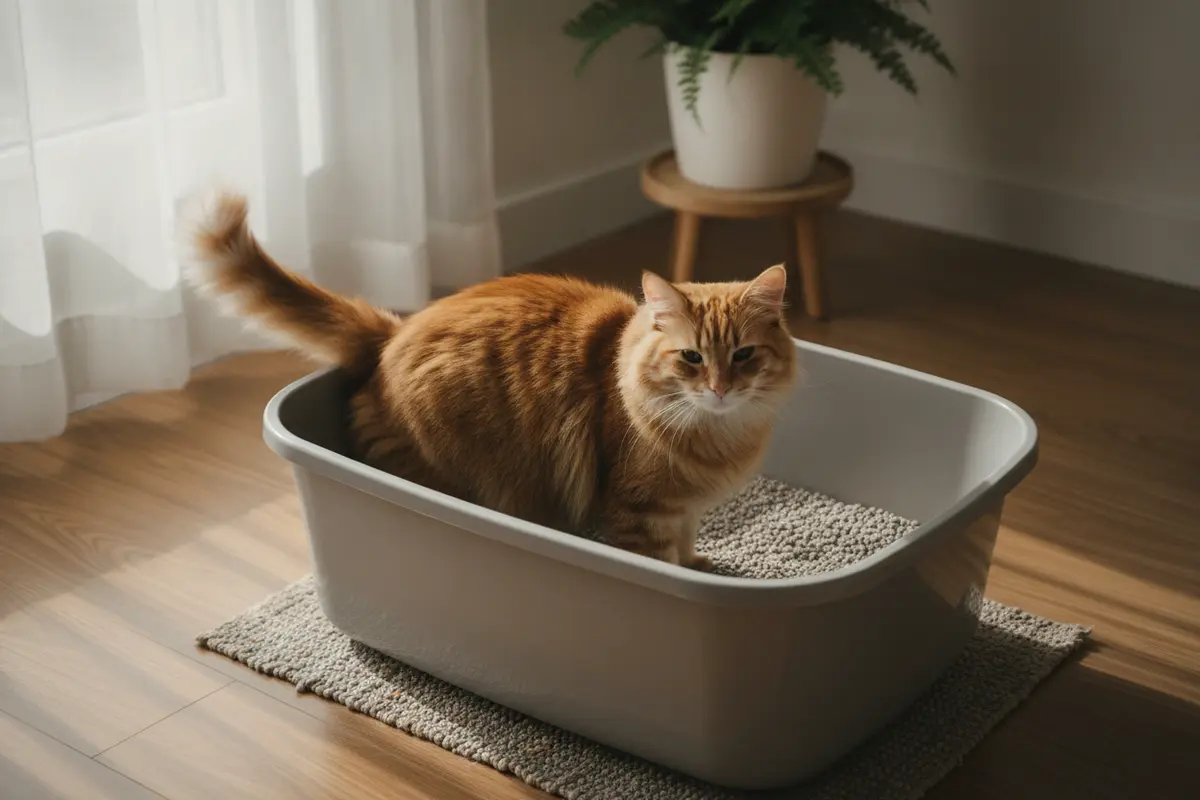
When you shop, check the product’s interior measurements if provided. Overall length can be misleading if a sloped wall, molded corner, or covered hood takes up usable room. If the cat currently turns with difficulty, perches on the rim, or avoids digging because the space feels tight, try a larger option when your room allows. Keep the current setup available during the transition so you can observe which box the cat chooses.
Which litter-box style should you compare?
Each style solves some practical problems and may create others. Compare what matters most for your household before buying.
| Style | Potential advantages | Check before choosing | May suit |
|---|---|---|---|
| Open pan | Easy to inspect, scoop, and wash; simple entry | Litter can scatter; the box is visible | Cats that prefer an open space and caregivers who want easy access |
| Covered box | Can provide a more enclosed appearance and may reduce some visible scatter | Interior room, entry size, ventilation, and whether the cat accepts a lid | A cat that willingly uses an enclosure and a home where the fit is roomy |
| High-sided pan | Can help contain litter kicked over the sides | Whether the cat can step in and out comfortably | Confident adults that scatter litter but do not need a low entry |
| Low-entry pan | Easier step-in access for kittens or cats with mobility limits | Whether the lower wall allows extra litter to spill | Cats that need an easier entrance |
| Large storage-style container | May offer a broad interior when a standard pan is too small | Safe, smooth entry cutout, stable placement, and edges without sharp burrs | Caregivers who can modify and maintain a container safely |
A covered box is not automatically cleaner or more comfortable. It can make it harder for a person to spot waste between cleanings, and the enclosed interior may retain odor. If you try one, check that it is large enough inside, easy to take apart, and simple to wash. A removable lid or door can give you a way to test the enclosure gradually instead of changing every feature at once.
High walls and a top-entry design can reduce some outward scatter, but they demand more effort to enter. Watch how your cat moves rather than choosing based only on the mess. If the cat hesitates, misses the opening, or has to jump awkwardly, switch to an easier entry. A litter mat outside the box may catch loose granules, but keep it flat and stable so it does not become a tripping or slipping hazard.
Shop This Post




Where should you put the litter box?
Choose a calm, accessible location with enough room for your cat to approach, turn, and leave. Avoid placing the box beside loud appliances that start suddenly, in a narrow dead end, or somewhere the cat can be cornered. A private-feeling spot is useful, but the box should not be so hidden that the cat has difficulty reaching it or you forget to clean it.
Consider how people and other animals use the home. A dog that investigates the box, a busy hallway, or a door that is often shut can make a location less suitable. Keep food and water away from the litter area. Make sure the route remains open, including at night, and avoid shifting the box frequently once the cat has accepted its location.
For a home with multiple cats, observe whether each cat can reach the box without being blocked or ambushed. More than one accessible box in separate places may help when cats avoid sharing, but do not treat a count as a substitute for watching their behavior. A box that is technically present but guarded by another pet is not practically available.
How many litter boxes do you need?
The right number depends on the number of cats, the layout of the home, and whether each cat can reach a box easily. A common starting point for multi-cat households is one box per cat plus an additional box, placed in separate accessible locations. Treat that as a planning guide, not an unbreakable formula. A single cat may also benefit from an additional location in a large or multilevel home, particularly if stairs or closed doors limit access.
Two boxes placed side by side may function more like one location than two separate choices. Spread them out where possible, and avoid putting every box in a room the cat may be unable to enter. If one cat consistently uses only one box, or another cat blocks access, the arrangement may need to change even if the number seems adequate.
How do litter and box design work together?
A box does not work in isolation. The litter’s texture, scent, depth, and tendency to track can affect whether a cat accepts the setup and how much cleanup the person must do. If your cat already uses a particular litter reliably, avoid changing the box and litter at the same time. When an adjustment is needed, change one variable at a time and give the cat a familiar option alongside the new one.
Unscented litter is a reasonable starting point for cats that avoid a strongly fragranced box. Add litter according to the product directions and the cat’s digging habits. Too little may leave the pan uncomfortable to use; too much can increase scatter. Scoop regularly, remove waste in a way that suits the litter type, and wash the box on a routine that keeps it fresh without leaving a strong cleaner smell.
Research on litter management describes recommendations that include adapting box size to the cat. Its findings should not replace your own observations, but they reinforce why both the box and the surrounding routine matter. See Litter Management Practices and House-Soiling in Italian Cats for more context on litter management and house-soiling.
Set up a cleaning routine you can maintain
Frequent, consistent cleaning is easier on both the cat and the person doing the work. Scoop at least daily, and more often when household needs or the litter product call for it. Remove waste promptly, keep a scoop nearby, and use a lined waste container or another method that is suitable for the litter you use. Avoid flushing litter unless its packaging and local plumbing guidance explicitly say it is appropriate.
Wash the pan on a regular schedule based on the litter instructions and how quickly it becomes soiled. Use mild, unscented soap, rinse thoroughly, and dry the box before refilling. Avoid ammonia-based cleaners and strongly scented products around the box. Never mix cleaning products. If the pan has deep scratches that hold odor or cannot be cleaned well, replacement may be more practical than repeated scrubbing.
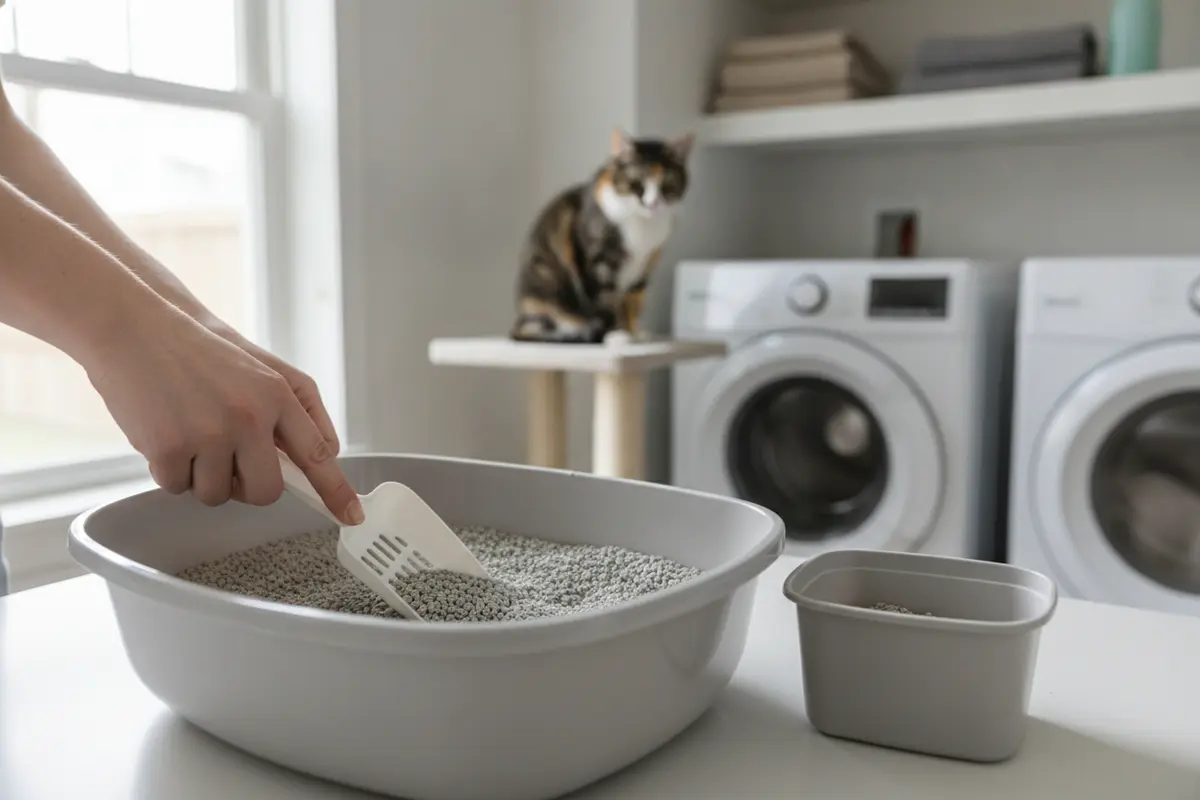
Put supplies where they are easy to reach, but keep them away from curious cats and children. A small hand broom or a mat can help manage scatter. If you use a mat, clean it regularly and check that it stays in place. Keep the path around the box clear, and do not use a scent product to cover an unpleasant odor instead of finding and removing its source.
Introduce a new box without confusing your cat
- Keep the familiar box available. Place the new box nearby or in another accessible location rather than removing the old one immediately.
- Keep familiar litter at first. This helps you test the box style without also changing the litter experience.
- Make the entrance easy to find. Leave the lid or door off initially if the design allows, and make sure the route is not blocked.
- Observe without forcing. Notice which box the cat chooses, whether it enters comfortably, and whether there is scatter or hesitation.
- Adjust one thing at a time. If the cat avoids the new setup, consider its location, size, entry, or litter separately. Retain the option the cat is using while you troubleshoot.
Do not punish a cat for avoiding a box. Stress, access, cleanliness, box design, or a medical issue can contribute to a change in toileting behavior. If avoidance begins suddenly, continues despite practical adjustments, or comes with signs of pain or illness, contact a veterinarian. Straining to urinate or producing little or no urine can be urgent, so seek veterinary advice promptly rather than treating the litter box as the whole problem.
What should you check before buying?
- Interior dimensions: Confirm the usable area, not only the outer measurement.
- Entry height: Match the step-in to the cat’s age, size, and mobility.
- Wall shape: Look for edges that contain litter without narrowing the space where the cat turns.
- Cleaning access: Make sure you can reach all corners and remove a lid or insert easily.
- Stability: The box should sit flat and not wobble when the cat enters.
- Placement: Measure the intended spot, including room for the cat to approach and for you to scoop.
- Replacement plan: Consider whether the material can be kept clean over time and whether the box is easy to replace if scratched.
Look at product information carefully. A product photo may make a pan appear roomy, but dimensions and entry details are more useful. If the listing does not answer a practical question, ask before ordering rather than assuming a feature from the image. Keep the packaging and review the return terms before setting up a new item, especially if the cat has a strong preference.
How can you manage tracking and odor?
First, identify where the mess starts. If granules are kicked over the rim, a slightly taller wall or a larger pan may help, as long as the cat can enter easily. If litter sticks to paws, try placing a washable mat just outside the exit and sweep the surrounding floor routinely. Avoid placing the mat where a door catches it or where it slides underfoot. A mat can collect loose litter, but it does not replace scooping or washing the box.
Odor is best handled at the source. Scoop regularly, remove waste, and wash the pan as needed. Keep the area ventilated without putting the box in a drafty or startling spot. Strong fragrances, sprays, and deodorizers can mask smells for people without improving the cat’s experience, and some cats may avoid a heavily scented area. If the room smells bad soon after cleaning, check whether the box is too small, the litter is saturated, the schedule needs adjustment, or the pan has scratches that retain residue.
When should you replace a litter box?
There is no single replacement date that fits every box. Inspect the surface during routine cleaning. Deep scratches, cracks, warped sides, or seams that trap waste can make thorough washing difficult. Replace a damaged pan rather than relying on stronger cleaners or a lingering fragrance. Also reassess the size as a kitten grows, or if a cat’s mobility changes. A box that worked well last year may no longer be comfortable if getting over the rim has become difficult.
When replacing a familiar box, keep the old one available until the cat has accepted the new setup, if space allows. A gradual transition helps separate a preference for the box itself from a reaction to a new location or litter. Review the pan periodically even when there is no obvious odor, since wear is not always clear from a quick glance.
Shopping for a household with more than one kind of animal
Some households shop for cats alongside dogs or horses. Keep each animal’s supplies separate and choose each item for its intended use. For horse owners, the stable supplies and accessories collection is a separate route for barn needs. Dog owners can browse interactive dog toys or the Weaver Leather flying disc for dog play. These are not litter-box alternatives; they are distinct supplies for other members of an animal household.
If you are comparing secondhand options for a separate pet need, review condition closely and use the gently used pet supplies collection as its own shopping category. For animal-care products beyond litter equipment, the Zymox pet care collection is another separate category. Check product details and suitability for the specific animal before purchasing. A litter box should still be selected on its own dimensions, access, cleaning, and the cat’s response.
Quick Summary
For most comparisons, begin with an easy-to-clean box with generous interior space and an entry your cat can manage. Test covered or specialty styles gradually, keep the location accessible, and judge success by comfortable, consistent use.
Call Hooves and Paws for shopping help today
Frequently Asked Questions
Are open or covered litter boxes better?
Neither style suits every cat. An open pan is easy to see and clean, while a covered design can look more enclosed and may reduce some visible scatter. Some cats prefer the open space, so compare the cat’s comfort and use rather than choosing by appearance alone.
How big should a litter box be for a cat?
Choose a box with enough usable room for the cat to enter, turn, dig, and exit without crowding. Compare interior measurements and account for the cat’s current size and movement. If the cat struggles to turn or avoids digging, try a roomier option when feasible.
Should I choose a low-entry litter box?
A low entry may help a kitten or a cat with limited mobility step in more easily. It can also allow more litter to spill, so consider a stable mat and a location that is simple to sweep. Make sure the cat can enter and leave comfortably.
How often should I scoop a cat litter box?
Scoop at least once a day as a practical baseline, and more often when needed for the number of cats, the litter type, or household conditions. Follow litter-product directions and keep the box consistently clean so that waste does not build up.
How can I tell if my cat dislikes its litter box?
Watch for hesitation, reluctance to enter, avoiding the box, or toileting elsewhere. Check access, location, cleanliness, space, and recent changes, and keep a familiar box available while adjusting the setup. Sudden or persistent changes, especially with signs of discomfort, warrant veterinary advice.
Can I change the litter box and litter at the same time?
It is usually easier to identify the cause of a reaction if you change one thing at a time. Keep the familiar litter when first introducing a different box, then consider a gradual litter change separately if needed.
The best choice is the box your cat can use comfortably and you can keep clean on a dependable routine. Measure the space, make access easy, and let your cat’s response guide any changes.


