

The riskiest holiday foods for dogs and cats are chocolate, anything sweetened with xylitol, cooked bones, fatty turkey skin and trimmings, grapes and raisins, onions and garlic, alcohol and raw yeast dough. ASPCA Animal Poison Control and the FDA both warn about them. If your pet eats one, call your vet or a pet poison control line right away.
Which holiday foods are most dangerous for dogs and cats?
Holiday kitchens and tables put a lot of these foods within easy reach at once. Here is what the ASPCA and the FDA say about each one.
- Chocolate, coffee and caffeine. The ASPCA explains that these contain methylxanthines, which can cause vomiting, diarrhea, hyperactivity, abnormal heart rhythm, tremors and seizures. Darker chocolate is more dangerous: baking chocolate and cocoa powder have the most, white chocolate the least. The FDA says to treat chocolate a dog has eaten as an emergency and call your vet right away.
- Xylitol. This sweetener turns up in candy and chewing gum, some peanut butters, baked goods, toothpaste and mouthwash, according to the FDA. The ASPCA warns it can cause low blood sugar and liver damage. Check labels on anything you share or leave out.
- Cooked bones. The FDA warns that turkey carcasses and steak bones can lodge in the throat, stomach or windpipe, and sharp pieces can injure the mouth, esophagus and stomach.
- Fatty scraps. Turkey or chicken skin and fat trimmings can upset the stomach and cause pancreatitis, the FDA says. In cats, the signs can be subtle, such as eating less.
- Grapes and raisins. The ASPCA links them to kidney damage in dogs. Watch for raisins in stuffing, fruitcake, cookies and trail mix.
- Onions, garlic and chives. These can irritate the gut and damage red blood cells. The ASPCA notes cats are more susceptible, though dogs are at risk too. They hide in gravy, stuffing and casseroles.
- Alcohol. The ASPCA and FDA both list vomiting, loss of coordination and trouble breathing; severe cases can be fatal. Unattended glasses on a coffee table are the usual culprit.
- Raw yeast dough. Rising dough can expand in the stomach and cause dangerous bloating, and the yeast produces alcohol as it ferments, the ASPCA explains.
- Macadamia and other nuts. The ASPCA says macadamia nuts can cause weakness, vomiting and tremors in dogs, and that high-fat nuts like pecans and walnuts can cause stomach upset and possibly pancreatitis.
Shop This Post

Is a little bit of turkey okay for my dog or cat?
Plain, cooked, boneless white meat with no skin, seasoning, gravy or stuffing is a different thing from a plate of scraps. The problems the FDA describes come from fat, skin and bones, and the ASPCA's list adds the onions and garlic often cooked into holiday dishes. If you want your pet included in the meal, the simplest rule is no plate scraps, no bones, and nothing with seasoning. Our sweet potato guide shows how a plain food can be fine while the holiday version of it is not. If your pet has a health condition or a sensitive stomach, ask your vet before sharing any people food.
Which holiday plants and decorations are risky for pets?
Food isn't the only holiday hazard. The FDA and ASPCA flag these:
- Lilies (cats). The FDA warns that true lilies and daylilies, including Easter, Stargazer, Tiger and Asiatic lilies, can cause kidney failure in cats. Every part of the plant is toxic, including pollen and the water in the vase. Holiday bouquets often include them, so keep lilies out of any home with a cat. The FDA says true lilies usually give dogs only a minor upset stomach, but lily of the valley and gloriosa lilies are dangerous to dogs as well as cats.
- Poinsettias. The FDA says they can irritate the mouth and stomach, causing drooling, vomiting or diarrhea.
- Mistletoe and holly. The FDA notes that serious mistletoe poisoning is uncommon but possible if a pet eats a lot, and holly can cause drooling, vomiting and diarrhea.
- Tinsel, ribbon and string. Cats in particular love these. The FDA warns they can cause serious damage to the stomach and intestines if swallowed. Skip tinsel and pick up ribbon after gifts are opened.
- Salt-dough ornaments and homemade play dough. The FDA warns these are very high in salt and can be fatal to pets.
- Snack bags. The FDA notes that thin chip and snack bags can trap a dog's nose and mouth and cause suffocation. Keep them closed and out of reach.
How do you keep pets safe during holiday meals and parties?
Most holiday poisonings happen in a busy, distracted moment. A few habits cover most of the risk:
- Tell guests the rule. No feeding the dog or cat from the table, even "just a bite".
- Clear and secure the trash. The FDA recommends putting bones and scraps in a bin your pets can't get into. Take carcasses outside right away.
- Keep counters clear. Cool pies, dough and chocolate where a counter-surfing dog can't reach.
- Check bags and coats. Guests' purses often hold gum, mints or medicine. Put them in a closed room.
- Give your pet a job. A treat-dispensing toy or a new catnip toy in a quiet room keeps noses busy while the food is out.
- Watch the drinks. Pick up glasses before you go to bed.
- Have numbers ready. Save your vet's after-hours line and a pet poison control number in your phone before the holiday, not during an emergency.
What should you do if your pet eats something toxic?
Act fast and call for advice. The FDA treats chocolate eaten by a dog as an emergency, and its lily guidance says to call a vet or pet poison control center immediately if a cat touches any part of a lily or drinks vase water. The FDA's lily guidance lists two pet poison lines:
- ASPCA Animal Poison Control Center: (888) 426-4435
- Pet Poison Helpline: (855) 764-7661
The ASPCA suggests noting how much your pet ate. Keep the wrapper, package or a photo of the plant to help identify it. Then follow the vet's or poison control's instructions. Our Pet Poison Control guide walks through the call and what happens next. A few health basics, like wound and eye care, live in our dog health essentials collection.
Safer ways to include pets in the holidays
Pets don't need people food to feel part of the day. Some ideas:
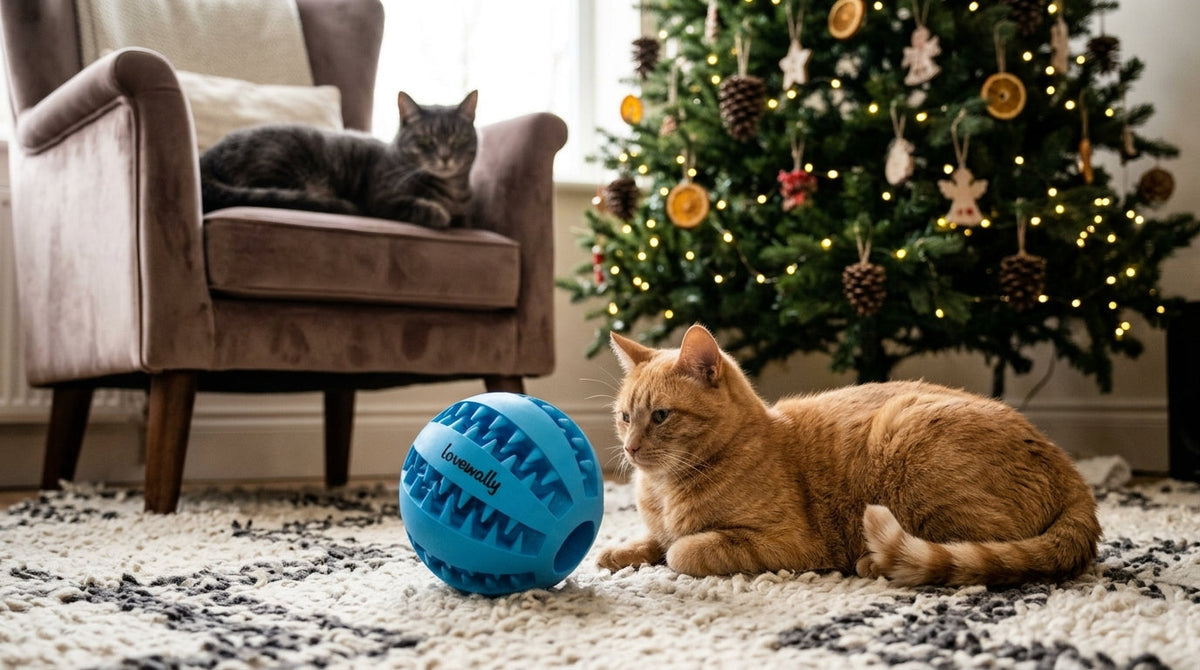
- Lovewally WallyBall: a rubber fetch ball you can fill with your dog's own treats, to keep a dog busy during dinner.
- Chuck It Fetch Ball, large: a game of fetch in the yard before guests arrive.
- Jojio Cherry Knot Tug and Play: a tug toy that gives a dog something to grab instead of the tablecloth.
- Yeowww! Organic Catnip Kicker: a new toy for cats who would otherwise play with ribbon.
- Yeowww! Stinkies Catnip Toy: a small stocking stuffer for cats.
- Giddy Kitty Cat Toys and Treats: wand and treat toys for supervised play.
Browse more in dog toys and cat supplies.
Frequently Asked Questions
Can dogs eat turkey at Thanksgiving?
Skip the scraps. The FDA warns that turkey skin and fat can cause pancreatitis and that bones can lodge in the throat or stomach. Ask your vet before sharing even plain meat.
Is white chocolate safe for dogs?
It has the least methylxanthine, the ASPCA says, but it is still not a treat. Call your vet if your dog eats chocolate of any kind.
Are holiday lilies dangerous to dogs too?
The FDA says true lilies cause kidney failure in cats and usually only a minor upset stomach in dogs, though lily of the valley is dangerous to both. Keep lilies out of homes with cats.
Which foods contain xylitol?
The FDA lists candy, chewing gum, some peanut butters, baked goods, toothpaste and mouthwash. Check every label.
What number do I call if my pet eats something toxic?
Your vet, or ASPCA Animal Poison Control at (888) 426-4435 or the Pet Poison Helpline at (855) 764-7661.


