


Choosing calming supplements for dogs starts with understanding what is behind your dog’s behavior and what a product actually contains. A supplement may be one part of a broader plan, but it is not a substitute for veterinary advice, training, or changes to a stressful environment.
What can calming supplements for dogs do?
Products marketed for calm may contain different ingredients and are not guaranteed to change behavior. Evaluate the label, ask your veterinarian about suitability, and track your dog’s response.
Dogs may show unease in different situations, such as unfamiliar settings, changes in routine, or loud sounds. A supplement label may describe a product as supporting relaxation, but that wording does not establish that it will address a particular cause of distress. Results can vary by dog and product.
Start by noting what happens before, during, and after the behavior. Record the setting, timing, visible signs, duration, and what helps your dog settle. This information can help distinguish an occasional response to a predictable event from a recurring problem that deserves professional assessment.
For example, a dog that paces briefly when guests arrive presents a different question from a dog that cannot eat, rest, or move away from a repeated trigger. A dog that reacts only during a storm may need a plan for predictable events. A dog that suddenly hides every day may need an examination before any calming product is considered.
Do not use a supplement to mask sudden behavior changes, pain, or signs of illness. If your dog’s behavior changes abruptly, or distress is intense or persistent, contact a veterinarian rather than trying products one after another.
How do you choose an appropriate product?
Begin with the dog, not the marketing language. Consider age, size, health history, current diet, medications, and the situation you hope to manage. Share those details with your veterinarian before introducing a product, especially if your dog has a diagnosed condition or takes medication.
Read the full label. Look for the ingredient list, amount per serving, directions, warnings, manufacturer contact information, lot identification, and expiration or best-by date. A clear label makes it easier to discuss the product with a veterinary professional and to use it consistently.
- Identify the intended use. Check whether directions fit your dog’s size and the situation, rather than assuming one formula suits every dog.
- Review every ingredient. If a name or amount is unclear, ask your veterinarian or the manufacturer before use.
- Check serving instructions. Follow the label and professional guidance. Do not increase the amount because you do not see an immediate change.
- Look for quality information. Prefer transparent labeling and a way to contact the manufacturer about sourcing or quality controls.
- Consider format and routine. Choose a form your dog can take reliably, and check whether it fits everyday feeding.
- Check the complete package. Confirm that the seal, print, serving information, and storage directions are intact before opening it.
Be cautious of bold promises, vague proprietary blends, or language that suggests a supplement will cure anxiety or replace veterinary care. A package cannot diagnose the reason for a dog’s behavior. For a range of dog wellness products, compare the dog health essentials collection and review each product’s own label and directions.
What ingredients might appear on the label?
Formulas differ. Some products use individual ingredients, while others combine several. The American Kennel Club notes that some calming treats rely on ingredients such as melatonin and chamomile flower, while also discussing alternatives in Dog Calming Treats: Uses and Alternatives. That overview is not a recommendation for a specific dog or product. Ask a veterinarian whether an ingredient is suitable for your pet.
Do not infer safety from an ingredient being familiar or plant-derived. Dogs can have individual sensitivities, and an ingredient may be inappropriate in combination with a health condition or medication. The full formula matters, not just the most prominent ingredient on the front of the package.
When comparing options, write down ingredient names and amounts, if provided. If the label does not provide enough detail to assess the formula, pause and seek clarification before buying or giving it to your dog. Keep a photo of the label so you can share the exact product with the veterinary team.
Pay attention to serving units. A product may list an amount per chew, scoop, capsule, or measured volume. Package size alone does not tell you how much of an ingredient your dog receives. Write down the serving size and the number of servings in the container, then compare products using the same units.
It is also useful to record overlapping ingredients. If two products both contain a familiar component, using both can make the total amount harder to track. Do not stack formulas simply because each one has a different front-label claim. Ask your veterinarian to review the entire list before combining products.
Shop This Post

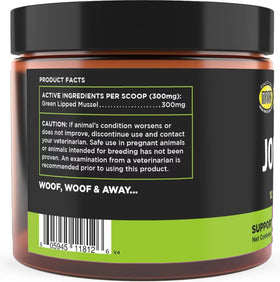
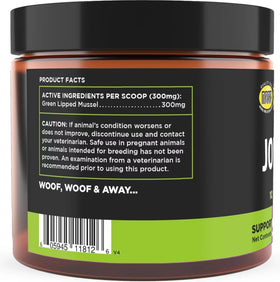

Compare common formats before buying
Format affects convenience and how easy it is to follow directions. It does not by itself show that a product will work better. Use the label and veterinary guidance to compare actual ingredients and serving instructions.
| Format | What to check | Practical consideration |
|---|---|---|
| Chew or soft treat | Ingredients, serving guidance, and whether it is a treat or supplement | May be convenient if your dog accepts it readily. Account for treats in the daily routine. |
| Powder | How to measure and whether it can be mixed with food | Can suit dogs that eat meals consistently, but accurate measuring matters. |
| Liquid | Concentration, measuring device, storage, and directions | Check that you can administer the measured amount as instructed. |
| Capsule | Serving directions and whether it may be given with food | Consider whether your dog can take it without added stress. |
Compare products on label clarity, suitability, and ease of consistent use. Price per package alone may not tell you the cost of following directions, and a larger container is not useful if the product is unsuitable or difficult to administer. Check the number of servings and the stated serving size rather than comparing package weights alone.
Before you add a product to your routine, browse the pet supplements and wellness collection as a starting point, then verify the formula and directions on the individual product listing. Do not assume that every item in a broad collection is intended for calming.
A practical comparison can include four columns: exact product name, ingredient and amount, directions, and questions for your veterinarian. Add a fifth column for format and a sixth for storage. This makes it easier to compare a chew with a powder without treating their package sizes as equivalent.
Safety checks before giving a supplement
Before use, verify the product and serving with your veterinarian, check for medication or health-condition concerns, and follow package directions. Store it securely and stop if you notice a concerning reaction.
Keep the container and ingredient list available when you speak with your veterinarian. Tell them about prescriptions, over-the-counter products, other supplements, and relevant changes in health. Do not combine products with overlapping ingredients unless a professional has reviewed the plan.
- Confirm that the product is intended for dogs and appropriate for your dog’s age and size.
- Review the complete ingredient list and directions with your veterinarian when there is any uncertainty.
- Use only the amount and schedule directed by the label or veterinary professional.
- Introduce one new product at a time so you can observe what changes.
- Keep the product in its original package, out of reach of pets and children.
Check the seal and package condition before use. Do not use a product with missing labeling, unclear storage instructions, or an expired date. Store it as directed, since heat, moisture, and access by curious pets can affect safe handling. Avoid transferring supplements into an unmarked container, because the original package has the ingredient and manufacturer information you may need later.
Plan how the product will be handled before the first serving. Decide which adult will measure it, where the label will be kept, and how the serving will be recorded. If several people care for the dog, tell everyone what was given and when. A simple written log helps prevent a missed serving from becoming an accidental repeat serving.
If you suspect your dog has eaten too much, or develops an unexpected reaction, contact a veterinarian or an animal poison-control service promptly. Have the package, amount, and time of exposure available. For severe or rapidly worsening signs, seek urgent veterinary care.
How should you track your dog’s response?
Set a simple baseline before starting: describe the behavior and when it occurs. Then keep a short daily record of the situation, product and amount used, appetite, energy, and any changes you observe. This helps avoid relying on a vague impression after several days.
Use specific observations rather than labels such as “better” or “worse.” For example, note whether your dog was able to settle after a visitor arrived, how long the behavior lasted, and whether anything else in the routine changed. If more than one variable changes at once, it can be difficult to tell what contributed to the difference.
Follow the label’s timing instructions and the veterinarian’s advice. Do not give extra servings for an event or combine products to try to speed up a result. If there is no useful improvement, or behavior worsens, stop and consult your veterinarian about what to do next.

A calm routine can also support your dog: keep predictable meal and rest times, provide an appropriate place to settle, and reduce exposure to known triggers where practical. If the behavior is recurring, a veterinarian can help determine whether medical evaluation, a qualified behavior professional, or another plan is appropriate.
Make the routine practical for the household. Keep a quiet resting place available, give your dog time to adjust to small changes, and avoid forcing interactions with a trigger. For some dogs, a familiar bed, regular walks suited to their needs, and calm handling can be useful parts of everyday care. These steps do not replace professional help when distress is significant, but they can make the environment more predictable.
Enrichment can be part of that predictable routine when it suits the dog. A calm sniffing walk, a familiar resting area, or a safe interactive activity may give the dog an appropriate outlet. For ideas about choosing a durable activity item, review a dog flying disc, but introduce any toy gradually and supervise use. A toy is not a treatment for distress, and a high-energy game may not suit every stressful situation.
Observe the setting as well as the dog. Note whether the room is crowded, whether the dog can retreat, whether food or water is available, and whether a person is approaching too quickly. Small environmental changes can make a product trial easier to assess because they reduce avoidable variation.
When is a veterinarian especially important?
Seek veterinary guidance before using a supplement if your dog is very young or old, pregnant or nursing, has a health condition, takes medication, or has had a reaction to a product. Also check in when behavior changes suddenly, distress is persistent, or the dog may be at risk of injury.
Supplements do not replace evaluation of possible pain or illness. They also do not replace gradual behavior support when a dog is frightened by a particular situation. A professional can help you decide what the behavior may indicate and whether a product belongs in a safe, realistic plan.
Prepare for the conversation by noting when the behavior began, what seems to precede it, and whether you have seen changes in appetite, sleep, movement, or social behavior. Bring the package or a clear label photo, plus a list of medications and other products. This helps the veterinarian discuss the actual formula rather than a general product category.
Also describe the dog’s normal day, including exercise, time alone, visitors, feeding, and sleep. A timeline can reveal patterns that are easy to miss in a brief conversation. If a certain sound or event seems connected, note how close it was, how long it lasted, and whether the dog had a safe place to retreat. These details can guide a discussion of realistic management steps while a cause is assessed.
Ask what signs would mean you should stop the product or seek urgent care. Clarify whether the veterinarian wants you to monitor a particular behavior, change one environmental factor, or return for follow-up. A clear plan helps prevent guesswork, especially when a stressful event is expected and the household is tempted to change several things at once.
Practical ways to compare options at home
A short comparison sheet can make shopping and follow-up more straightforward. Write down the exact product name, active and other ingredients, amount per serving, directions, warnings, package size, number of servings, and storage needs. Leave space for the veterinarian’s comments and the date you reviewed it.
Then compare products against the same questions instead of judging them by package design. Is the product intended for dogs? Is the full formula legible? Can you follow the serving directions with your dog’s routine? Can you contact the maker with questions? Does the package clearly state how to store it and when it expires? If important information is missing, do not fill in the blanks based on a similar product.
Think through the practical moment of use. A chew is not convenient if your dog refuses it, and a powder is not simple if meals are frequently skipped. A measured liquid may require a tool and a calm way to give it. Choose only after checking suitability, and do not alter the form or mix it into food unless the directions or veterinarian allow it.
Consider the household’s ability to keep the routine consistent. Decide who will give the product, where the record will be kept, and how the dose will be logged so that two caregivers do not accidentally repeat it. Keep the original container near the record, but stored safely away from children and animals. Consistent handling makes it easier to report what happened accurately.
Review the plan after a reasonable interval set by the product directions and veterinarian. Bring the notes to the veterinary team, including any days you skipped a serving or encountered a different trigger. A thoughtful review can help determine whether to continue, stop, investigate another cause, or focus more on behavior and environment instead.
Do not let a shopping decision become a substitute for a care decision. If your dog’s needs change, reassess the whole plan rather than moving to a stronger-looking label. A product that is easy to order is not automatically a product that fits your dog’s health history, routine, or current behavior.
How can you build a low-stress routine around a product?
Introduce the routine when the household is calm, not for the first time during the most difficult event. Read the directions in advance, prepare the measuring tool if one is required, and decide where your dog will rest. This reduces hurried handling and gives you a clearer starting point.
Keep the dog’s resting area accessible and avoid using it as a place for punishment. If visitors, travel, or noise are common triggers, plan how the dog can move to a familiar space without being chased or physically forced. Use gradual exposure and reward-based guidance when appropriate, and ask a qualified professional for help if the response is intense.
Keep a second record for environmental changes. Note visitors, travel, weather, schedule changes, exercise, meals, and sleep. You do not need a long diary. A few consistent observations can show whether a change in behavior occurred alongside a new trigger or a different daily routine.
It can also help to tell everyone in the household what the product is and what it is not. A supplement should not be treated as permission to ignore warning signs, force contact, or leave a distressed dog in an unsafe situation. Clear expectations make the plan safer for the dog and easier for caregivers to follow.

Comfort items can support the environment when they are appropriate for the dog. A washable bed, familiar blanket, or quiet room may make settling easier. If you are comparing a rest surface or travel option, inspect the product for fit, durability, and safe use rather than assuming any new item will calm your dog. Keep the dog’s response as the guide.
Shop pet wellness supplements today
Frequently Asked Questions
Are calming supplements for dogs right for every dog?
No. Suitability depends on the dog, the product, its ingredients, and health circumstances. Ask your veterinarian before starting, particularly if your dog has a condition or takes medication.
How quickly should a supplement work?
There is no single timeline for all products or dogs. Follow the label and veterinary instructions, and do not give extra servings if you do not notice an immediate change.
Can I give a calming supplement with my dog’s medication?
Do not assume that combining them is safe. Share the complete ingredient list with your veterinarian and get guidance before giving the supplement.
Can I use a supplement instead of training or veterinary care?
No. A supplement should not replace medical assessment or a suitable behavior plan. Persistent or sudden distress deserves professional attention.
What if my dog refuses the product?
Do not force it or hide it in a way that conflicts with the label. Ask your veterinarian about an appropriate alternative format or another approach.
What should I do if my dog has an unexpected reaction?
Stop giving the product and contact your veterinarian for advice. If signs are severe or rapidly worsening, seek urgent veterinary care and keep the packaging available.
Choose with care, keep your veterinarian involved, and build any supplement into a broader plan that supports your dog’s comfort and wellbeing.


