


A well-planned horse barn makes daily care easier and helps you notice changes in the horse and surroundings. This guide covers the practical decisions behind a dependable routine: movement, feeding and water, storage, ventilation, drainage, cleaning, and equipment. Start with the jobs you do every day, then shape the space around the horse, property, climate, and care schedule.
What should a horse barn support every day?
Build the layout around safe movement, clean water, sensible feed handling, healthy airflow, and a cleaning routine you can repeat. Give each task a clear place and order.
Write down the work in a normal day: leading horses in or out, feeding, refilling water, grooming, mucking, checking equipment, and putting supplies away. Add occasional jobs such as receiving feed, moving bedding, and cleaning water containers. This list shows what people carry, where they walk, and where tasks might conflict.
Sketch routes between stalls or shelter, turnout, grooming space, feed storage, and water. Mark doors and gates, including their swing. Keep a clear path for leading a horse and moving a wheelbarrow or feed container. Think about two people working at once. A route that works for one handler may become crowded when another carries supplies through the same point.
Consider a busy, wet day as well as ideal conditions. Note where rainwater collects, where mud forms, and whether an entrance becomes slick. Fix the source of drainage trouble instead of covering it with more bedding. For structural changes, electrical work, or questions about safe construction, ask a qualified local builder or equine professional.
How should stalls, aisles, and storage fit together?
Organize the barn in zones for horse care, feed, tack, grooming, cleaning, and turnout transitions. These zones need not be separate rooms. In a small barn, labeled shelves, closed bins, and a designated cabinet can keep supplies grouped. Put frequently used items within reach, but not where a horse can chew them or they can fall into an aisle.
Measure before choosing bins, racks, or equipment. Check that stall doors and gates open fully, a wheelbarrow can pass, and storage does not narrow a route. Secure shelving and hooks so equipment cannot swing or drop when bumped. Keep sharp tools, chemicals, medications, and cleaning products secured and apart from feed and grooming items. Follow product labels for storage and handling.
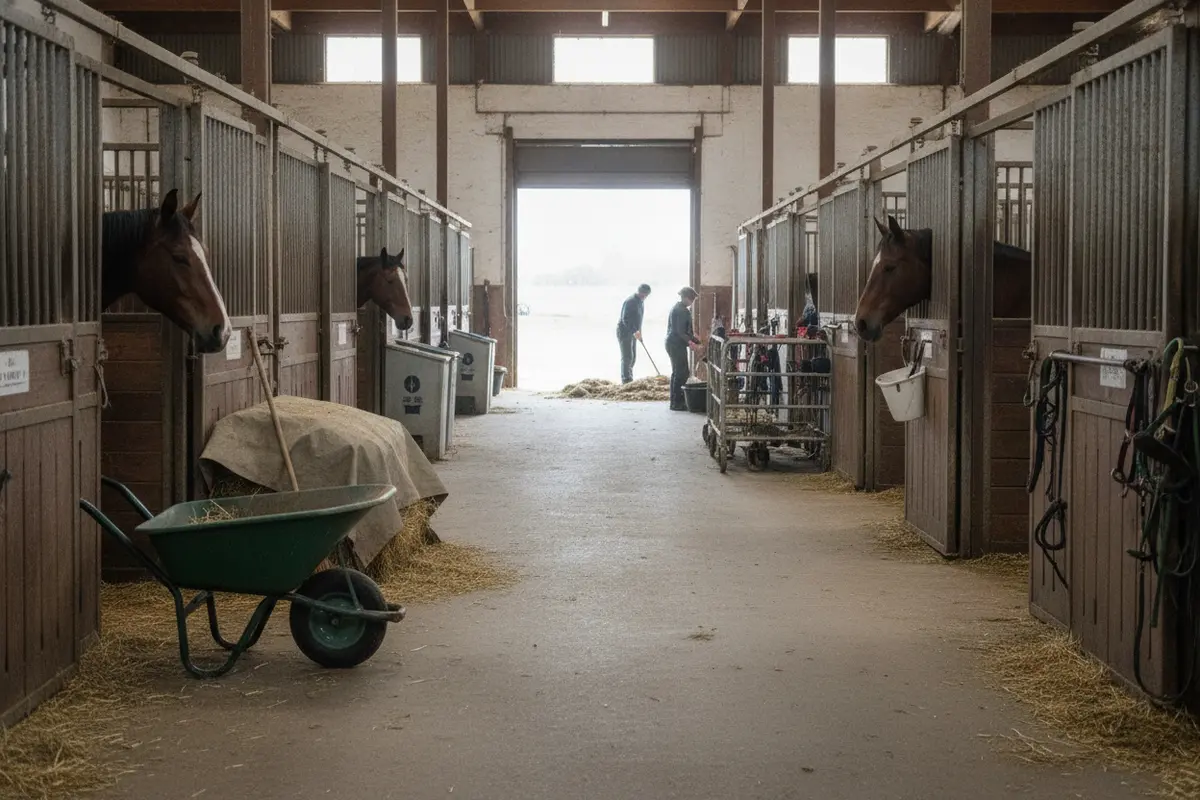
Labels help when several people share chores. Identify the horse, feed container, or tool location so no one has to rely on memory. If feed is prepared in advance, keep containers closed and labels easy to read. Do not use an aisle as overflow storage: even a bucket or rake left in a traffic path can turn an ordinary task into a trip hazard.
Make storage match the actual sequence of work. For example, if grooming happens before turnout, keep the grooming kit accessible near the appropriate work area, while feed remains in a closed, separate location. Avoid placing items in a way that requires a handler to leave a horse unattended to retrieve something. When a room or corner serves multiple purposes, return it to its intended state after each task.
Compare common horse barn setups
No single arrangement suits every property. Compare how each setup handles shelter, movement, storage, and maintenance, then adapt it to the horse and local conditions.
| Setup | May suit | Plan for | Check carefully |
|---|---|---|---|
| Stall-focused barn | Horses needing individual shelter or managed feeding | Stall access, airflow, bedding, cleaning, and aisle movement | Stale air, damp spots, blocked doors, and clutter |
| Run-in shelter with storage | Routines centered on outdoor living with shelter available | Drainage, weather protection, water access, and secure storage | Mud, crowding at entry, and exposed supplies |
| Barn plus turnout | Care that moves between indoor and outdoor areas | Gate placement, paths, water checks, and equipment locations | Congested transitions or slippery footing |
The table is a planning aid, not a design standard. A stall-focused barn still needs a workable route to turnout; an outdoor-centered setup needs secure, weather-appropriate storage. Walk the route during the wettest or busiest conditions you expect, not only when the space is quiet and dry.
How can you plan feeding and watering?
Make feed identification, clean water, and secure storage part of the layout. Choose equipment that is stable, reachable, easy to clean, and suitable for the horse using it.
Set up feeding so the intended ration can be delivered consistently and the horse can eat without unnecessary disturbance. Store feed dry in closed, labeled containers and separate it from chemicals, medications, and cleaning products. If horses have different rations, establish a repeatable method to prevent mix-ups. Observe each horse during feeding. Consult a veterinarian or equine nutrition professional before diet changes or when addressing special needs.
Water equipment should be stable, reachable, and practical to empty and clean. Check the source daily and inspect containers for cracks, sharp edges, or contamination. In freezing weather, confirm that water remains accessible; in hot conditions, check often enough to catch an empty or fouled container. Include the path to water in the inspection, since mud or ice can make access difficult.
If hay is stored in the barn, keep it dry and prevent loose material from accumulating in walkways. Plan how feed and hay move from storage to the horse without crossing a crowded route. In a shared barn, a written feeding chart can record each horse’s established routine; confirm changes with the responsible caregiver.
For practical equipment options, browse horse supplies and compare products by purpose, fit, and ease of cleaning. Equipment that works in one stall may not suit a different horse or location, so consider how it will be used and inspected before buying.
Ventilation, drainage, and footing need regular attention
A barn can look tidy and still have trouble spots. Notice whether dampness persists after routine cleaning, dust gathers in still corners, or odors linger. Treat these observations as prompts to investigate airflow, moisture, bedding, and cleaning practices. They are not a substitute for professional assessment when a health or building concern arises.
Walk the routes horses and handlers use, especially around doors and transitions. Look for uneven or slick surfaces, standing water, loose mats, and drainage that carries runoff toward a stall or feed area. Seasonal changes matter: a path that is firm when dry may become muddy after rain, and a sheltered entrance can become slick in winter. Address the cause and seek qualified advice when footing or construction needs repair.
Inspect fans, vents, doors, and windows if the facility has them. Keep airflow openings clear of stored equipment. Powered equipment should be installed and maintained appropriately. Do not improvise electrical repairs in a damp barn environment; use a qualified professional.
Ventilation planning is not just about adding a fan. Check whether air can move through the space without creating a route blocked by stacked supplies or closed openings. Look at the barn at different times and notice whether the same corners remain damp or dusty. If changes in the environment coincide with coughing, unusual discharge, or other health concerns, contact a veterinarian rather than trying to diagnose the cause from the building alone.
Build a repeatable cleaning and safety routine
A routine is easier to follow when checks happen at a predictable time. Pair them with feeding or turnout, and use a written checklist when chores are shared. Keep it concise enough to use, but specific enough to record what was checked and what needs attention.
- Before handling: Clear the aisle, check doors and gates, and notice unexpected footing changes or obstructions.
- At feeding: Confirm the horse and ration, inspect feed storage, and make sure clean water is accessible.
- During stall care: Remove waste and soiled bedding as appropriate to the horse and routine. Keep wet material out of traffic areas.
- After grooming or handling: Return tools and buckets to designated places, secure gates, and put away hoses.
- On a regular schedule: Inspect latches, stall hardware, flooring, containers, shelves, and supplies for damage or wear.
- When something changes: Record the issue, tell the next caregiver, and arrange appropriate help rather than assuming someone else noticed it.
Cleaning frequency varies with turnout, bedding, weather, and the horse’s needs. Focus on the condition of the stall and paths, not a one-size-fits-all timetable. A useful handoff note might say which area was cleaned, whether water was checked, and whether a latch needs repair. This prevents duplicate work and makes it less likely an observation is lost between shifts.
For broader guidance on equine care and facility practices, consult the National Farm Animal Care Council’s Code of Practice for the Care and Handling of Equines. It provides a reference for care and handling; apply it alongside local requirements and advice from qualified equine professionals, since the right implementation depends on the facility and horses.
Choose equipment for the routine, not just the room
List what the routine uses: feed and water containers, cleaning tools, grooming supplies, tack storage, and suitable feed containers. Select durable items for their intended use that can be cleaned and inspected. Avoid buying duplicates before you understand the layout. A week of noting where people pause, reach, or carry equipment may reveal more than guessing from a floor plan.
Grooming and handling areas should give the handler room to work without blocking traffic. Use tie points only when appropriately installed and safe practices are followed. Never leave a tied horse unattended. Keep sharp tools and chemicals secured, and store emergency supplies in a known, accessible place. For injury or sudden illness, contact a veterinarian rather than relying on supplies alone.
When choosing an item, ask four practical questions: Does it fit the horse and space? Can it be secured? Is it simple to clean? Can you inspect it for wear? A product that answers these questions may serve the routine better than a larger or more complicated option. Hooves and Paws is a family-owned online retailer serving horse, dog, and cat owners since 1994, with curated animal-care supplies and practical buying guidance.
Common horse barn planning mistakes to avoid
- Using the aisle as storage: Keep the route clear for horses, handlers, and equipment.
- Mixing feed and chemicals: Use separate, secure storage and follow product directions.
- Ignoring persistent moisture: Investigate drainage and wet areas rather than covering them.
- Choosing equipment before measuring: Check dimensions, door swings, and access routes first.
- Relying only on memory: Use a short checklist to support consistent shared care.
- Waiting for failure to inspect: Routine checks can reveal loose hardware or damaged containers before they disrupt daily work.
- Planning only for ideal weather: Consider muddy, icy, or busy transitions relevant to the property.
Make a layout plan before buying supplies
Turn the daily task list into a simple plan. Draw the barn and nearby turnout area, then mark each horse’s route, feed and water points, storage, grooming space, and waste-removal path. Use arrows for the movement of people and equipment. If arrows overlap at a narrow doorway, decide whether tasks can happen at different times or whether the route needs a different arrangement.
Test the plan against real chores. Walk it while carrying a feed container. Imagine leading a horse while another person pushes a wheelbarrow. Check that gates can open without trapping someone in a corner and that commonly used tools can be retrieved without leaving a horse unsecured. These simple walk-throughs can expose a bottleneck before you move shelves or buy equipment.
Make a short list of changes in priority order. First address hazards such as blocked paths, loose hardware, or slippery areas. Next resolve recurring problems such as feed mix-ups, misplaced tools, and water checks that are easy to forget. Only then consider convenience upgrades. Keep construction, electrical, and veterinary questions with qualified professionals rather than treating them as do-it-yourself layout decisions.
After a week or two, review what still causes extra trips or confusion. Ask everyone who does chores which steps are awkward and whether the checklist is realistic. Adjust labels, storage locations, and handoff notes based on what happens in practice. A plan should support consistent care, not become a complicated system that nobody uses.
For guidance on care and handling, see the National Farm Animal Care Council’s Code of Practice for the Care and Handling of Equines. Use the code as a reference, and check local requirements for your own facility.
Frequently Asked Questions
What should I plan first in a horse barn?
Begin with daily care tasks and the routes horses and people use. Map feeding, water, grooming, cleaning, storage, and turnout before choosing fixtures or buying equipment.
How can I organize a small horse barn?
Use designated, labeled storage for feed, tack, grooming, and cleaning supplies. Keep aisles clear and put frequently used items somewhere accessible but secure from horses and traffic.
How often should a horse barn be cleaned?
Cleaning needs depend on the horse, bedding, turnout, and conditions. Set a consistent routine for waste and soiled bedding, and check daily for wet or unsafe areas.
Where should horse feed be stored?
Keep feed dry, contained, labeled, and protected from pests. Separate it from chemicals and cleaning products, and use a clear system for horses with different rations.
What supplies belong in a barn?
Many routines use feed and water containers, grooming and cleaning tools, tack storage, and secure places for supplies. Choose items for the horse and space, and ask an equine professional about specialized needs.
How do I make a barn safer?
Keep paths clear, inspect gates and stall hardware, secure storage, and address slippery or damaged surfaces. Supervise handling and seek qualified help for structural or veterinary concerns.
A thoughtful horse barn is defined less by size than by how well it supports daily care. A clear layout, steady checks, and supplies chosen for the horse and space make routines more manageable and help you notice problems sooner.


