


Knowing how to keep a dog entertained does not require a room full of toys or hours of nonstop activity. Dogs can enjoy a useful mix of sniffing, movement, problem-solving, social play, and quiet rest. The best routine is one your dog can safely enjoy and you can repeat in ordinary life.
Shop dog walking and play gear
What counts as good entertainment for a dog?
A helpful activity gives a dog an appropriate outlet for natural behavior, such as sniffing, exploring, chewing, playing, or learning, without creating fear, frustration, or exhaustion.
Entertainment does not have to mean vigorous exercise. A slow walk with time to investigate, a short search game, or a few minutes practicing a familiar cue may engage a dog in different ways. Rest belongs in the plan too. An activity is not better simply because it lasts longer or makes a dog more tired.
Start with what your dog already chooses. Does your dog carry toys, sniff every corner, follow a moving toy, or prefer being close while you practice? Offer one new activity at a time. Notice whether your dog stays relaxed and interested, needs help, or walks away. Those responses are more useful than assumptions based only on breed, age, or energy level.
Also consider the setting. A game that works in a quiet room may be too difficult in a busy yard. A dog who is comfortable searching for food may not enjoy a noisy or unfamiliar toy. Make the first version easy, keep the surroundings safe, and let your dog pause or opt out.
How do you create a simple daily routine?
Think in short activity blocks rather than a single long session. A routine could include a morning walk with sniffing time, a brief training game during a break, and a calm food activity later. The exact mix depends on your dog's health, age, temperament, and normal schedule. Some days call for more gentle exploration; others may suit a little more play.
| Activity | What it offers | Simple starting point | What to monitor |
|---|---|---|---|
| Sniffing walk | Exploration and gentle movement | Pause at safe spots and allow investigation | Comfort, leash control, and surroundings |
| Food search | Nose work and problem-solving | Hide a few pieces of regular food in easy places | Swallowing hazards or frustration |
| Training game | Attention and communication | Practice a familiar cue for a few minutes | Engagement and ability to pause |
| Interactive toy play | Movement and shared play | Use a suitable toy in a clear space | Overexcitement and toy damage |
| Quiet chew or food toy | Calm occupation | Choose an appropriate item and supervise at first | Chewing, wear, and swallowed pieces |
For example, if your dog tends to pace while you prepare dinner, try a short sniffing activity before that time, then give the dog a comfortable place to settle. If your dog becomes wound up after fetch, shorten the game and finish with a slower search for a few pieces of kibble. Make one change at a time so you can tell what helps.
There is no universal number of minutes that suits every dog. Keep sessions short enough that your dog can remain comfortable and responsive. Build in water and rest as appropriate, and adjust for weather and the dog's condition. If a health issue or mobility limit affects activity, ask your veterinarian what types and amounts are suitable.
Use sniffing and searching to add variety
Sniffing can turn familiar places into a source of new information. On a walk, allow time for your dog to investigate safe spots instead of treating every outing as a race to cover distance. Keep your dog under control, avoid areas with obvious hazards, and move on when the surroundings are not safe.
At home, scatter a small portion of the dog's regular food on a clean floor or hide a few pieces in easy-to-find locations. Begin with visible hiding places, such as beside a chair or at the edge of a mat. Invite your dog to search, and make the next round only slightly harder if the first one stays fun and straightforward.
Supervise food searches. Keep them away from cleaning products, small objects, other pets' food, and places where a dog could become trapped or climb unsafely. If your dog starts chewing the mat or tries to swallow objects, stop and clear the area. Use foods that fit the dog's established diet, especially if your pet has dietary restrictions.
Shop This Post

Choose play and toys that fit your dog's style
Dogs vary in the ways they like to play. One may enjoy carrying or retrieving a toy, another may prefer a short tug game, and another may be more interested in searching for a hidden object. Pick a game that matches the dog's comfort and your surroundings. Keep play under control and pause before excitement becomes difficult to manage.
- Hide and seek: Ask your dog to wait, hide a familiar toy in an easy place, then invite the dog to find it. Use simple hiding spots at first.
- Fetch: Choose a clear, safe space and keep throws brief. Take breaks, and stop if your dog seems tired or uncomfortable.
- Tug: Use an appropriate toy, keep hands clear, and pause if the play becomes too intense. Teach a calm start and finish routine if your dog responds well to it.
- Gentle exploration: Let your dog investigate a new safe room, surface, or object at their own pace. Do not force contact with something that worries them.
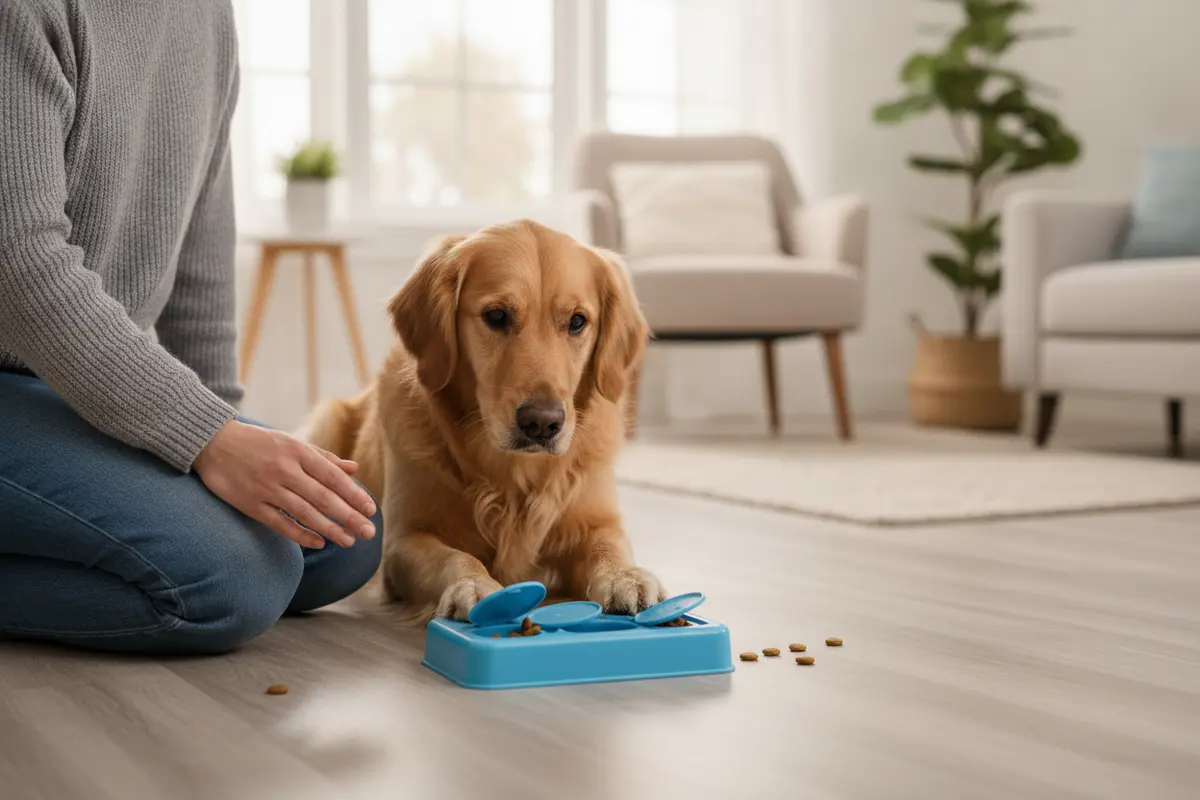
- Food toy: Start with an easy design and use a portion of a meal when appropriate. Stay nearby until you know how your dog uses it.
If your dog enjoys retrieving, you can compare the play style and size of a suitable option such as the Chuck It Zipflight toy. A product is not a substitute for checking whether the size, material, and use suit your individual dog. Inspect toys before and after play, and remove any item that tears, develops sharp edges, or has pieces small enough to swallow.
Rotate a few safe toys rather than leaving every option out all the time. Rotation can make familiar items feel more interesting, but it is not a guarantee that a dog will like a particular toy. Do not leave a toy unsupervised unless you already know it is appropriate for that dog's chewing habits and the item remains intact.
Can training make a good enrichment activity?
Brief, clear practice can give a dog a thinking task and strengthen everyday communication. Keep the steps manageable, reward progress, and pause when either of you is losing focus.
Training can turn a few spare minutes into a shared activity. Practice familiar cues, such as coming when called or settling on a mat, in a quiet space first. Use a reward your dog enjoys and give the dog time to respond. If a task seems confusing, make it easier instead of repeating the same cue over and over.
For a small challenge, ask for two familiar behaviors in sequence, or practice a known cue in another calm room. Change only one part of the exercise at once. For example, keep the cue familiar while adding a mild distraction, rather than changing the location, duration, and difficulty together.
Keep training positive and short. Allow breaks, and do not use a session to push a fearful dog toward something they are avoiding. Persistent behavior concerns deserve individual help. If a sudden change in behavior or apparent discomfort is involved, consult a veterinarian; for training support, look for a qualified professional whose methods suit your dog's welfare.
Adapt activities to age, health, and confidence
A puppy may do best with very short play and frequent rest. An older dog may prefer a slow sniffing outing or a simple search instead of repeated jumping or fast turns. A dog recovering from an injury or living with a medical condition may need specific limits. Ask the veterinarian who knows your dog's history before introducing an activity that could strain the dog.
Confidence matters as much as fitness. A shy dog may need time to approach a new toy, sound, or surface without pressure. Place an unfamiliar object at a comfortable distance and allow the dog to investigate or move away. If your dog chooses not to engage, try a familiar activity instead. The goal is a safe opportunity, not a forced performance.
For dogs who get overstimulated, use slower searches, easy food activities, or a few calm cues. Keep active play brief and provide a quiet place afterward. If your dog seems restless, consider whether they need a toilet break, a change in routine, more sleep, or a different type of activity. Restlessness alone does not prove boredom.
Stop an activity if your dog shows signs of pain, unusual fatigue, breathing difficulty, limping, distress, or a sudden change in behavior. Contact your veterinarian for advice rather than trying to solve a possible health issue with more exercise. For general animal health and pet-owner resources, the American Veterinary Medical Association is an authoritative starting point; a veterinarian can advise on your own dog's situation.
Make food activities practical and safe
Food puzzles and search games can make part of a meal more engaging. Start with an easy task so your dog understands how to get the food. Use food that fits the dog's usual diet and account for treats as part of the day's intake. If a puzzle is too difficult, simplify it or put food in an easier location.
Watch closely the first few times. Some dogs work calmly while others chew the equipment, flip it aggressively, or become frustrated. Take the item away if it breaks or your dog tries to swallow pieces. Clean reusable food toys following their care directions and allow them to dry fully before storing.
In a home with more than one pet, separate food activities if competition or guarding could arise. Give each dog a place to work without interruption. If a dog has dietary restrictions, a history of swallowing objects, or a medical concern affected by food, ask the veterinarian before adding edible rewards or chews.
Set up a calm place to rest between activities
Entertainment works best when it fits alongside downtime. Give your dog a comfortable, quiet place where they can rest without being repeatedly called into a game. Keep children and other pets from disturbing the dog when they are settling. A bed can help define a rest area; choose a location and setup your dog can use comfortably. For example, see the Weaver Leather Dog Camp Bed as one product option, then check its details against your dog's needs.
After lively play, offer a calm transition rather than immediately starting another stimulating game. You might put toys away, provide water, and let the dog lie down in a familiar area. If the dog cannot settle after an activity, consider whether the game was too intense or went on too long. Next time, shorten it and add a quieter ending.
Common enrichment mistakes to avoid
- Doing too much at once: Introduce one new activity at a time so you can see what your dog enjoys and tolerates.
- Choosing only high-energy play: Mix movement with sniffing, easy thinking games, and rest.
- Making a puzzle too difficult: Begin with an obvious solution. Increase difficulty only if your dog remains relaxed and engaged.
- Assuming every dog wants the same thing: Offer options and notice which one the dog chooses.
- Leaving damaged toys available: Inspect items and remove anything with loose parts, sharp edges, or torn sections.
- Ignoring discomfort: Stop when the dog seems tired, worried, or physically uncomfortable.
- Using activity to dismiss a health concern: A sudden behavior change or persistent restlessness may need professional advice.
Keep a simple note for a week: what activity you offered, how long your dog stayed interested, and what happened afterward. If your dog settled easily after a sniffing walk but became wound up after a long game of fetch, that pattern can guide the next day's choices. You do not need a formal schedule. A few observations can make the routine more personal and easier to maintain.
Build a realistic plan for a busy day
When time is tight, use small opportunities rather than trying to recreate a full exercise session. Before a busy period, offer a short walk or supervised search. During a break, practice a cue for a few minutes. Later, give the dog a quiet place to rest. For a dog who is not safe to leave alone with a toy, do not rely on a food puzzle as an unsupervised solution. Use an activity you can supervise, or ask a trusted caregiver to help.
A simple example might look like this: in the morning, take a walk that allows sniffing; at midday, hide a few pieces of regular food in an easy-to-check area; in the evening, play a short game with a familiar toy and then settle. Adjust each part to your dog's condition and preferences. If a walk is not appropriate that day, ask your veterinarian about alternatives that suit your dog's situation.
Choose practical supplies based on the activity rather than collecting gear for its own sake. A suitable walking item, a durable toy that fits your dog's play style, or a comfortable resting spot may be more useful than several complicated options. Browse pet walking and everyday gear when you are considering supplies, and check product details before choosing.
Frequently Asked Questions
How long should I entertain my dog each day?
There is no single duration for every dog. Offer suitable chances for movement, sniffing, learning, and quiet occupation, then adjust based on your dog's age, health, preferences, and ability to settle.
How can I keep my dog entertained while I am busy?
Before leaving your dog, use only an activity you know is safe for that dog's habits and the setting. If you are unsure about an item, choose a supervised activity before your busy period and provide a comfortable resting place instead.
Are food puzzles right for every dog?
No. Some dogs enjoy them, while others become frustrated or chew the equipment. Start with an easy design, supervise at first, use suitable food, and stop if the puzzle is damaged or your dog tries to swallow it.
What if my dog loses interest in toys?
Try a different type of activity, such as sniffing, a simple search, gentle exploration, or a short training game. If disinterest is sudden or comes with other behavior changes, contact your veterinarian.
Can a dog have too much play?
Yes. Intense or prolonged play can leave a dog tired or overexcited. Pause regularly, watch how your dog responds, and include calmer activities and rest.
What should I do if my dog seems bored or restless all the time?
Review the daily routine and offer safe variety, but do not assume boredom is the only cause. If restlessness persists, is new, or appears with signs of discomfort, ask your veterinarian for guidance.
Start with one safe activity your dog already enjoys, keep it manageable, and adjust the routine as you learn what helps your dog stay engaged and relaxed.


