


Extra large bell boots are bell boots sized for horses with big front feet, such as many warmbloods and drafts. Choose by the maker’s size chart rather than your horse’s height: the boot should cover the heel bulbs, sit snugly at the pastern without rubbing, and not hang so low that your horse steps on it.
There’s a certain sinking feeling that comes with bringing your horse in from the pasture only to find a fresh cut on their heel or a shoe sprung loose. These overreach injuries are not just frustrating—they can be painful for your horse and costly for you. A reliable pair of bell boots acts as a shield. But on a horse with big feet, finding a pair that offers enough coverage without being too bulky can be a real challenge. This guide covers what matters in extra large bell boots for horses—fit, material and durability—plus the larger-sized bell boots we carry, so you can find a pair that stays put and keeps your horse protected.
Key Takeaways
- Getting the fit right is non-negotiable: A proper fit prevents rubbing and tripping. The boot should cover your horse's heel bulbs without hanging so low that your horse steps on it, with enough room to slide one finger comfortably between the top of the boot and the pastern.
- Choose features based on your horse's daily routine: A simple rubber pull-on is perfect for turnout, but high-impact activities require tougher materials like ballistic nylon. Matching the boot to the job ensures your horse gets the right protection.
- A little daily care makes a big difference: Prevent skin irritation and make your boots last longer by rinsing them after use and removing them daily to let your horse's skin breathe. Regularly check for cracks or failing closures to know when it's time for a new pair.
What Are Extra Large Bell Boots & Why Does Your Horse Need Them?
If you’ve ever noticed a horse wearing what looks like a rubber cup around each front hoof, you’ve seen bell boots. Also known as overreach boots, this simple piece of gear plays a huge role in protecting your horse from self-inflicted injuries. Their job is to shield the sensitive parts of the front hoof—like the heel, coronary band, and pastern—from the hind hooves.
This protection is crucial because of a common issue called overreaching, which happens when a horse’s hind foot strikes the back of its front foot. It often occurs during riding, lunging, or even just turnout in the pasture. An overreach can cause anything from a minor scrape to a serious injury that could lead to lameness or a pulled shoe. Bell boots act as a buffer, taking the impact so your horse’s heels don’t have to.
Bell boots are a smart choice for many horses, and extra large sizes exist for horses with larger-than-average front feet, which often includes warmbloods, drafts and draft crosses. A standard size simply won’t provide enough coverage for them, leaving the heel bulbs exposed. Bell boots are also a smart idea for horses wearing studs, since a horse that overreaches with studs in can cut or bruise itself more seriously. Think of them as an inexpensive insurance policy that helps keep your horse safe, sound, and ready for your next ride. For a wider look at leg protection, see our guide to leg protection boots.
How to Find the Perfect Fit
Finding the right bell boots is about more than just picking a color you like. A proper fit is the key to protecting your horse without causing discomfort or creating a new hazard. If the boots are too loose, your horse could trip. If they're too tight, they can rub and chafe. Getting it just right ensures your horse stays safe and comfortable, whether they're out in the pasture or working in the ring. Let's walk through how to measure correctly and what to look for to confirm you've found the perfect pair.
Measure Your Horse's Hooves Correctly
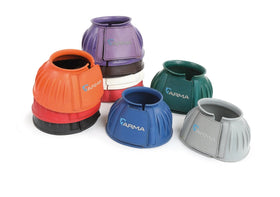
Before you start shopping, check the maker’s own size chart, because sizes are not standard across brands. Professional’s Choice, for example, makes its Ballistic Overreach Boots from XSmall up to XXX-Large and says Medium fits most average-size horses, while Shires sizes its ARMA over reach boots Pony, Cob, Full and Extra Full. A Large from one maker may fit like an X-Large from another. Once the boots are on, the bottom back edge should cover the heel bulbs without dragging on the ground when your horse is standing squarely. If you’re between sizes, compare the chart with how your current boots fit and where they rub or gap.
Spotting a Good Fit vs. a Bad One
Once you have the boots on, do a quick check. A well-fitted bell boot should have enough room at the top for you to easily slide a finger between the boot and your horse's pastern. This ensures it’s not too tight, which could cause painful rubbing or restrict movement. If the boot is so large that it spins freely or gaps significantly, it’s a tripping hazard. On the other hand, if you can’t fit a finger in at all, it’s too small and will likely cause abrasions. The goal is a snug, secure fit that offers protection without interference.
Key Features to Look For in Bell Boots
Once you’ve nailed down the right size, the next step is to look at the features that make a pair of bell boots truly great. The market is full of options, and it’s easy to get overwhelmed. But don't worry—it really comes down to three key things: the material they're made of, how they fasten, and the balance between weight and comfort. Thinking through these elements will help you find a pair that not only protects your horse but also holds up to their daily activities, whether that’s a quiet day in the pasture or a demanding training session. Choosing the right features ensures your horse stays comfortable and you get the best value from your horse tack. Let's break down what you should be looking for in each of these areas.
Find the Most Durable Materials
Durability is non-negotiable when it comes to bell boots. After all, they’re meant to take a beating so your horse’s hooves don’t. You’ll find boots made from a variety of materials, each with its own benefits. Traditional rubber is a classic for a reason—it’s tough and effective. For horses with sensitive skin, you might prefer a soft, fleece-lined fabric. If your horse is particularly hard on their gear, look for options made from strong ballistic nylon, which is designed to resist rips and tears. The best choice depends on your horse’s needs and how much wear and tear they’ll be putting on their boots.
Compare Closure Types: Pull-On, Velcro, or Buckle?
How bell boots fasten is a bigger deal than you might think. The most secure option is the pull-on style. Since there are no openings, they’re less likely to get snagged or allow mud and debris to get inside. They can be a bit of a workout to get on and off, but many riders swear by them for their reliability. Velcro closures are incredibly convenient and easy to adjust, but they can lose their stickiness over time, especially with exposure to mud and water. Buckle closures offer a secure fit that’s easier to manage than pull-ons, but they are less common. Think about what’s more important for you and your horse: the unmatched security of a pull-on or the convenience of Velcro.
Balance Weight and Comfort
The best bell boots offer solid protection without weighing your horse down or causing discomfort. A heavy, clunky boot can interfere with your horse's natural movement. Ideally, you want something lightweight yet strong. The fit is just as important for comfort. A well-fitted bell boot should sit snugly around the pastern but still leave enough room for you to slide one finger between the boot and your horse’s skin. This ensures the boot stays in place to do its job without rubbing or chafing. Finding this perfect balance means your horse gets the protection they need without any of the irritation.
Shop This Post

Our Top Picks for Extra Large Bell Boots
Finding the perfect pair of bell boots can feel like a never-ending quest, especially when you have a horse with larger hooves. You need something that offers serious protection without rubbing, stays put through turnout, and doesn’t fall apart after a few weeks. That’s why we’ve put together this list of five bell boots we carry that come in larger sizes. Each one is described from its maker’s own product page.
Our selections cover the main styles: pull-on rubber, hook-and-loop rubber, ballistic nylon no-turn boots and a shock-absorbing neoprene option. Whether your horse lives outside or needs extra protection during training, there’s a boot on this list that can suit them. Stock in the largest sizes changes, so check the size options on each product page. You can also browse our Bell Boots That Stay Put collection.
Professional’s Choice Ballistic Overreach Boots: Widest Size Range
The Professional’s Choice Ballistic Overreach Boots are our first pick for big feet because Professional’s Choice makes them in seven sizes, from XSmall to XX-Large and XXX-Large, with the two largest sizes in a smaller choice of colors. Professional’s Choice describes a ballistic nylon outer cover and binding that make the boots especially tough, an UltraShock lining that absorbs energy from overreaching to protect the hoof, coronet band and heel bulbs, and a soft no-turn knob that keeps the boot from spinning. They are sold in pairs.
Professional’s Choice Ribbed Rubber Pull-On Bell Boots: For Turnout
For a horse that loses hook-and-loop boots in the mud, a pull-on boot has no closure to fail. Professional’s Choice says its Professional’s Choice Ribbed Rubber Pull-On Bell Boots are made from rubber that stretches for easy application yet is resilient, with a rolled collar for comfort and 360-degree protection against overreaching. It says the pull-on design stays on during exercise and turnout and can also be used in the trailer or stall, and that the rubber won’t attract burrs, stickers or grass. We stock them in sizes up to X-Large. Pull-ons take some effort to get over a big hoof; many riders turn the boot inside out before pulling it on.
Professional’s Choice Spartan II Bell Boots: Hard Shell Protection
For horses that strike hard, the Professional’s Choice Spartan II Bell Boots use a TPU shell that Professional’s Choice describes as flexible yet protective against impact. It lists a no-turn knob, a recessed ballistic binding that prevents fraying, double hook-and-loop closures and a soft lining that will not rub, and says the boot is shaped to fit securely over the bulb of the heel. We carry them up to XX-Large.
Weaver Leather No-Turn Bell Boots: Ballistic Nylon With Neoprene
The Weaver Leather No-Turn Bell Boots combine 2520D ballistic material with a shock-absorbing neoprene lining. Weaver says an anatomical positioning bulb helps prevent turning and a double-ply hook-and-loop closure gives a secure fit, and it makes them in sizes from Small to XX-Large. They are a good middle ground between a light rubber boot and a hard shell.
Shires ARMA Neoprene Over Reach Boots: Shock Absorbing and Smooth
If your horse is sensitive to rubber rubbing at the pastern, a neoprene boot is worth a look. Shires describes the Shires ARMA Neoprene Bell Boots as dense, flexible neoprene that absorbs shocks, fabric covered for a smooth finish, with a bound lower edge and a double touch-close fastening. Shires sizes them Pony, Cob, Full and Extra Full, so for a horse with big feet, start with Extra Full. Shires is a British maker, and “over reach boot” is the usual British name for a bell boot.
A note on brands you may have seen recommended elsewhere: we don’t carry Davis, KL Select or Dover’s Italian pull-on bell boots, so they aren’t on this list. If you’re comparing them, go by each maker’s own size chart.
Common Mistakes to Avoid When Choosing Bell Boots
Choosing the right bell boots can feel like a small decision, but it makes a big difference in your horse's comfort and safety. We’ve all been there—staring at a wall of options, wondering which one is truly the best. To make it easier, let’s walk through some of the most common missteps we see horse owners make. A little bit of know-how can save you from dealing with rubbing, lost boots, or even injuries.
Getting the right pair is about more than just picking a color you like. It’s about understanding how sizing, activity level, and daily care all play a role in how effective the boots will be. By avoiding a few key mistakes, you can ensure your horse gets the protection they need without any of the frustrating side effects. Let’s get it right from the start.
Avoid Sizing Errors That Cause Discomfort
Getting the size right is the most important step, and it’s also where things most often go wrong. Bell boots that are too tight can rub the pastern, leading to sores and hair loss. On the other hand, boots that are too loose are just as problematic. They can spin around, get filled with mud and debris, or cause your horse to stumble if they step on them. Even worse, a loose boot can easily get pulled off in a muddy pasture, leaving you searching for a single boot.
A well-fitted bell boot should cover the entire hoof down to the heel. You should be able to slide one finger between the top of the boot and your horse’s pastern. This ensures it’s snug enough to stay put without constricting movement or causing irritation.
Match the Boots to Your Horse's Activity Level
Not all bell boots are created equal, and the pair that’s perfect for a quiet day in the pasture might not hold up to a rigorous training session. Think about what your horse will be doing while wearing them. For light turnout, a simple, flexible pull-on or rubber boot might be all you need. These are often lightweight and offer basic protection against forging or shoe-pulling.
However, for high-impact activities like jumping, cross-country, or reining, you’ll want something more substantial. Look for boots made from durable, shock-absorbing materials like ballistic nylon. Many of these heavy-duty styles also feature a no-turn design, which keeps the boot correctly positioned for maximum protection over the heel bulbs. Using the wrong boot for the job can lead to it wearing out quickly or failing to protect your horse when it matters most.
Know When to Take Them Off
While it might seem convenient to leave bell boots on 24/7, it’s generally not the best practice for your horse’s skin. Boots left on continuously can hold moisture, dirt and grit against the pastern, which can lead to rubs and skin irritation. Your horse’s skin needs to breathe and stay dry to stay healthy.
We recommend removing your horse’s bell boots at least once a day. Take the opportunity to clean their pasterns and check for any signs of rubbing or irritation; if you find sores or scabs, ask your vet. Unless your vet or farrier has recommended constant wear for a specific reason, it’s best to use them only when needed—during riding, lunging, shipping, or turnout. This simple habit is a key part of responsible horse care, something our team has valued for over 30 years.
How to Make Your Bell Boots Last Longer
You’ve invested in a great pair of bell boots to protect your horse, so it only makes sense to get as much life out of them as possible. With the amount of mud, sweat, and friction they endure, bell boots take a serious beating. The good news is that a little bit of care can go a long way in extending their lifespan, saving you money and ensuring your horse stays comfortable and protected. By building a few simple habits into your post-ride routine, you can keep your bell boots in top shape for many seasons to come. It all comes down to a consistent cleaning schedule, proper storage, and knowing the signs of wear and tear.
Follow a Simple Cleaning Routine
One of the easiest ways to preserve your bell boots is to keep them clean. Think about it—mud, manure, and sweat can be corrosive over time, breaking down the materials and stitching. A quick rinse after each ride is your best defense. You don't need a complicated process; just hose them off to remove the daily grime. For caked-on mud, a soft brush can help loosen it without damaging the boot. This simple step prevents dirt from grinding into the fabric or rubber, which can cause premature wear. A clean boot is also healthier for your horse, reducing the risk of skin irritation around the pastern.
Store and Dry Them Properly
How you store your bell boots is just as important as how you clean them. Tossing damp boots into a dark tack trunk is a recipe for mold and mildew, which will quickly ruin the material and create a funky smell. After rinsing your boots, always allow them to dry thoroughly before putting them away. The best way to do this is to hang them on a tack hook or lay them flat in a well-ventilated area. Try to keep them out of direct, harsh sunlight, as prolonged UV exposure can make rubber and synthetic materials brittle and prone to cracking. Proper storage keeps them in ready-to-use condition and preserves their integrity.
Know When It's Time for a New Pair
Even the most durable bell boots won't last forever. For your horse's safety, it’s crucial to recognize when a pair is past its prime. Regularly inspect the boots for signs of significant wear, such as deep cracks, tears, or material that has become thin and flimsy. Pay close attention to the closures—if the Velcro is losing its grip or buckles are bent, the boot can easily come off during turnout or a ride. Using a worn-out boot is risky because it no longer offers reliable protection and an improper fit can cause stumbling or rubbing. When you spot these issues, it’s time to invest in a new pair.
Where to Find Extra Large Bell Boots
Finding the right bell boots can feel like a quest, especially when you need an extra-large size for a horse with bigger hooves or a tendency to overreach. The good news is that you don’t have to settle for a poor fit. Several makers offer extended sizing: Professional’s Choice makes its Ballistic Overreach Boots up to XXX-Large, Weaver makes its Ballistic No-Turn Bell Boots up to XX-Large, and Shires makes its ARMA neoprene boots up to Extra Full.
Your best bet is to compare styles from a few of these makers in one place. Start with the job the boots need to do: a pull-on rubber boot for turnout, a ballistic nylon or hard-shell no-turn boot for harder work, or a neoprene or fleece-lined boot for a horse whose pasterns rub easily. Professional’s Choice also makes Professional’s Choice Fleece Lined Bell Boots in rubber with double hook-and-loop closures and a rolled collar, which we stock in X-Large. If you’re still deciding between styles, our bell boots buyer’s guide compares the main types in more detail.
Related Articles
- Bell Boots vs Overreach Boots: Which Does Your Horse Need?
- Bell Boots for Horses: A Complete Buyer’s Guide
- Leg Protection Boots: A Complete Rider’s Guide
Frequently Asked Questions
How do I know if my horse needs bell boots?
The clearest sign is scrapes or cuts on the front heels or pasterns. You might also hear a distinct “clicking” sound when your horse moves, which is the sound of the hind hooves striking the front ones. Bell boots are also a smart idea for a horse that tends to pull its front shoes off or one that wears studs.
My horse keeps losing bell boots in the pasture. What can I do?
First, double-check that the boots aren’t too loose, as a sloppy fit makes them easy to step on and pull off. If the fit is correct, the closure might be the issue, because hook-and-loop can clog with mud and lose its grip. For a horse that lives outside or is tough on their gear, a pull-on rubber boot is often the most secure choice.
How tight should extra large bell boots be?
Snug but not restrictive, whatever the size. You should be able to slide a finger between the top of the boot and your horse’s pastern, and the boot should cover the heel bulbs without dragging on the ground. If it’s too tight, it will rub; if it’s too loose, it can spin or be stepped on. Use the maker’s size chart, since an X-Large varies from brand to brand.
Is it okay to leave bell boots on my horse 24/7?
It’s best to avoid leaving bell boots on around the clock unless your vet or farrier has recommended it. Boots left on continuously can hold moisture and grit against the skin and cause rubs or irritation. Take them off at least once a day to clean and check your horse’s legs, and ask your vet about any sores.


