

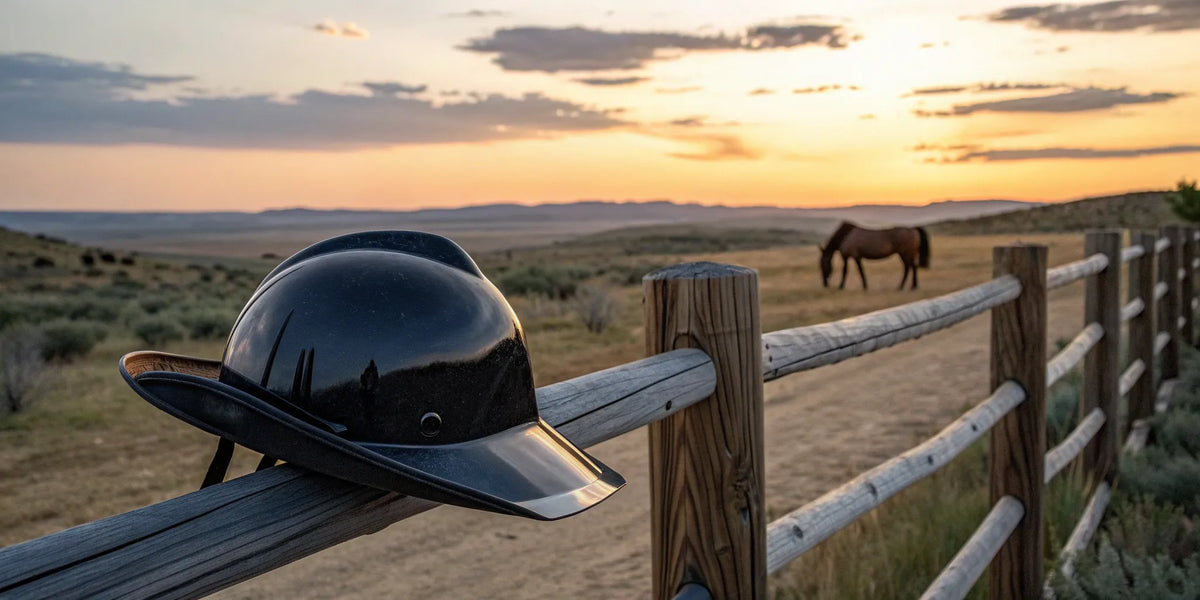
A helmet cowboy hat is a riding helmet built to look like a felt or straw Western hat. It counts as head protection only when the maker certifies it to ASTM F1163 through SEI, so check the maker's page and the SEI tag inside, fit it snugly with the harness buckled, and replace it after any fall.
Let's be honest: the main reason many western riders hesitate to wear a helmet is the look. A traditional helmet just feels jarring next to tooled leather and silver buckles. But what if you could get certified head protection that looks exactly like your favorite felt or straw hat? That’s the magic of the helmet cowboy hat. The best are so well designed that most people won't notice you're wearing one. When a model is certified, you get an equestrian helmet's impact-absorbing shell and liner while keeping the classic silhouette you love. It's proof that safety and style can finally go hand-in-hand.
Key Takeaways
- Get Safety Without Sacrificing Style: Cowboy hat helmets offer the best of both worlds, combining the classic western look you love with the certified head protection you need. Choose a certified model and you can ride with gear that is both authentic and certified.
- Always Check for ASTM/SEI Certification: In the US, the standard to look for is ASTM F1163, certified through the Safety Equipment Institute (SEI). The maker's page should say so, and the SEI tag should be inside the helmet. Without it, a western-shaped hat is just a hat.
- Prioritize a Proper Fit and Replace After Impact: A helmet's effectiveness depends on a snug, secure fit and its structural integrity. Ensure your helmet doesn't shift, and always follow the golden rule: replace it after any fall, even if it looks undamaged.
What is a Cowboy Hat Helmet, Anyway?
For years, western riders have faced a tough choice: stick with the iconic look of a traditional cowboy hat or switch to a certified helmet for safety. It often felt like you couldn't have both. Thankfully, that's no longer the case. Cowboy hat helmets are exactly what they sound like: riding helmets designed to look just like a classic cowboy hat, and the ones worth buying are certified. This means you can finally get the best of both worlds: the authentic western style you love and the critical head protection you need.
These helmets are thoughtfully designed to blend in seamlessly at the rodeo, on the trail, or in the show ring. Resistol's RideSafe, for example, comes as a felt or straw hat over a helmet shell, according to Resistol's RideSafe page, so you can match your helmet to the season and your personal style. They’re a brilliant piece of equestrian gear that respects tradition while embracing modern safety standards. Whether you're a seasoned competitor or a weekend trail rider, choosing a certified cowboy hat helmet is a smart way to wear certified headgear without sacrificing the look that defines western riding. It’s about riding with confidence in gear that is certified as well as stylish.
What Do Those Safety Ratings Mean?
When a helmet has a safety certification, it has passed a series of standardized tests of how it handles an impact. For equestrian helmets in the US, look for ASTM F1163, the ASTM International standard for protective headgear used in horse sports and horseback riding, certified through SEI. ASTM sets the performance standard, and SEI certifies that helmets meet it. Resistol's RideSafe FAQ explains that SEI certifies headgear to ASTM F1163 and audits the maker yearly, and Resistol's product page says the RideSafe is designed to meet ASTM safety standards. It’s not just a sticker; it’s how you know the helmet was tested for riding.
What the 2026 USEF Rules Say About Cowboy Hat Helmets
If you show at US Equestrian licensed competitions, two rules matter. GR801.1 in the 2026 USEF Rule Book makes properly fastened protective headgear, meeting the testing standards USEF publishes and carrying the testing tag or label, compulsory for everyone mounted anywhere on the grounds, unless the division rules say otherwise. USEF's list of accepted standards includes ASTM F1163 (2011 or later) certified through SEI.
The 2026 Western Division chapter does say otherwise. WS104.4 states that protective headgear is not required in any Western Division class unless the rules say otherwise, and that its use cannot be penalized. WS104.2 requires riders to wear a Western hat, and adds that protective headgear may be worn without penalty and does not have to be Western style. Breed associations and local shows set their own rules, so read the prize list before you go.
In plain terms, you can wear a certified cowboy hat helmet in USEF Western classes, and a judge can't mark you down for it. Where a class or another division does require headgear, a cowboy hat helmet counts only if it meets a standard on USEF's list and carries its testing tag or label. GR801.1 also makes the rider, or a junior exhibitor's parent or guardian, responsible for the headgear being properly fitted and in good condition. Rules outside USEF vary, and our article on whether western riding helmets are required goes through them.
Cowboy Hat vs. Helmet: What's the Difference?
We all love the look of a traditional cowboy hat. It’s a powerful symbol of western heritage and a staple for riders everywhere. But a felt or straw hat offers little more than shade from the sun; it simply wasn't designed to absorb the force of a fall from a horse. A certified helmet, on the other hand, is engineered with an outer shell and impact-absorbing foam and tested to the equestrian standard. The cowboy hat helmet bridges this gap, giving you certified headgear without asking you to give up your identity as a western rider.
Not All Cowboy-Style Headwear is for Riding
It’s fantastic that more riders are embracing helmets, but this trend has also created a confusing market filled with lookalikes. Just because a helmet has a western shape doesn't automatically make it safe for riding. What counts is its certification label, which shows the model was certified to a specific equestrian standard. Different activities come with different risks, which is why helmets are engineered for specific types of impact. A hard hat certified for a construction site isn't certified for falls from a horse, and vice versa. Using the wrong type of helmet can give you a false sense of security. Knowing what to look for—and what to avoid—is the key to making a truly safe choice.
Equestrian Helmets (ASTM/SEI Certified)
When you're shopping for any piece of equestrian gear, safety should always be your top priority. For helmets in the US, the label to look for is ASTM F1163 certified through SEI. ASTM International wrote that standard specifically for protective headgear used in horse sports and horseback riding, and SEI certifies that a helmet model meets it. If you plan to show, USEF also accepts a few other equestrian standards, such as PAS 015, VG1 01.040 and Snell, under the conditions on its published list. Make one of these a non-negotiable part of your checklist.
Other Lookalikes to Avoid (DOT and ANSI Approved)
You might come across cowboy-style hard hats with other certifications, like DOT or ANSI, but these are not riding helmets. A DOT label means the helmet was made to the US motor vehicle standard for motorcycle helmets, and an ANSI-labeled hard hat is made for work sites. Neither is certified to the equestrian standard, which was written for the falls and impacts that happen around horses. After decades of outfitting riders, our advice is simple: a helmet with the wrong certification gives you a false sense of security. Always stick with an equestrian certification for riding.
Should You Switch to a Helmet Cowboy Hat?
The classic cowboy hat is an undeniable symbol of the western world, but when you're in the saddle, safety should always be your top priority. While tradition is important, protecting yourself from a potential fall is crucial. Thankfully, you no longer have to choose. Certified cowboy hat helmets and Western-styled helmets wrap a certified helmet in an authentic western look, giving you the best of both worlds.
Why Head Protection is Non-Negotiable
A fall can happen to anyone, at any time, on any horse. Even the most seasoned riders face unpredictable moments. A traditional felt or straw hat offers shade, but it isn't designed to absorb an impact in a fall. An ASTM/SEI-certified helmet, however, is engineered with impact-absorbing materials and tested to the equestrian standard, though GR801.1 of the USEF rules rightly cautions that no helmet can protect against all foreseeable injuries. Choosing to wear one isn't about fear; it's about being a smart, responsible equestrian who values their well-being. It’s the single most important piece of safety gear you can own.
Stay Safe Without Losing Your Western Look
Worried a helmet will make you stick out? That’s a thing of the past. Today’s designs blend helmet construction with the timeless western aesthetic. Cowboy hat helmets like the RideSafe are crafted to look like traditional hats, complete with shapeable brims and classic crowns, and low-profile Western helmets add leather hat bands, conchos and tooled-leather coverings. You can wear certified headgear without sacrificing your personal style or your complete horse tack ensemble.
Building Confidence for Adults and Kids
Confidence in the saddle comes from more than just skill—it also comes from feeling like you belong. For many adult riders, a standard helmet can feel out of place in a sea of traditional cowboy hats. Cowboy hat helmets solve this problem beautifully. They allow you to maintain your authentic look and fit in with the community, which can be a huge confidence builder, especially in competitive settings. Knowing you’re wearing certified headgear lets you ride with less hesitation and more focus, whether you're on the trail or in the ring. It’s about feeling secure in both your appearance and your safety.
This confidence boost is even more noticeable with young riders. If you're a parent, you've probably heard the classic protest: "But cowboys don't wear helmets!" These helmets are the perfect answer. Kids are often excited to wear a "hat" that looks just like what their heroes wear, turning a safety argument into a non-issue. When children feel cool and proud of their gear, they're more likely to wear it without a fuss. It helps them embrace safety as part of their western identity, building good habits and confidence from their very first ride with their complete horse tack setup.
The Culture Shift in Western Riding
For generations, the cowboy hat has been more than headwear. In rodeo and ranch work it is practically part of the uniform, and many riders grew up watching their heroes ride in nothing but a hat. That history is why some riders still hesitate: a helmet can feel like giving up part of who they are, and an old idea lingers that going without protection shows toughness.
Attitudes are changing. When experienced riders and trainers wear certified headgear in the arena and on the trail, it tells everyone watching that a helmet is a smart, professional choice, not a sign of fear or inexperience. The rules have room for that choice too: under WS104.2 and WS104.4, protective headgear can't be penalized in USEF Western classes. Younger riders are growing up seeing helmets as normal, and hat-shaped helmets remove the style barrier for riders who want to keep the look. The heart of western riding is skill and care for the horse, not what's on your head.
Common Helmet Cowboy Hat Myths, Busted
Let's clear the air on a few outdated ideas. First, the notion that a helmet isn't "cowboy enough." Your skill comes from experience, not your headwear, and choosing certified headgear is the mark of a smart horseperson. Another myth is that helmets are just for beginners or English disciplines. A fall can happen in any saddle and at any skill level. The USEF rules reflect that: GR801.1 makes headgear compulsory at licensed competitions unless a division's rules say otherwise, and while the Western Division doesn't require it, WS104.2 lets you wear protective headgear without penalty in any style.
Another myth is that every cowboy hat helmet is too heavy and hot. Some can be warm: in a 2016 article, Troxel wrote that it once sold an SEI/ASTM certified western hat helmet, and that a black felt hat built into a helmet without ventilation may be extremely hot. That is a reason to look at vents, choose straw for summer and try the helmet on, not a reason to skip one.
Finally, a wide brim isn't all the sun protection you need. It shades your face and neck, but light also reflects up from the ground and your horse. Treat the brim as one part of your sun plan, alongside sunscreen, sunglasses and long sleeves on long days.
Shop This Post

Featured in this article
Troxel Dakota Western Riding Helmet - Matte Duratec, ASTM/SEI Certified, SureFit Pro - Multiple Sizes
$104.99
Shop Now →
Must-Have Safety Features to Look For
When you’re shopping for a western riding helmet, it’s easy to get focused on the style—the shape of the brim, the color, and the finish. And while looking the part is important, what’s on the inside is what truly counts. A good helmet is a piece of safety equipment first and a fashion statement second. Understanding the key safety features will help you choose a helmet that not only looks great but provides the protection you need when it matters most.
Why ASTM/SEI Certification is a Must
This is the most important feature to look for, period. If a helmet isn’t certified to an equestrian standard, it’s not a riding helmet. In the US that means ASTM F1163: ASTM International sets the performance standard, and SEI certifies that the helmet model meets it. The SEI tag, usually found inside the helmet under the headliner, is your proof that it passed tests for things like impact absorption and harness strength. Troxel's certification page notes that certified helmets carry the SEI seal and the date of manufacture there. Don’t even consider a helmet without it.
A Tough Outer Shell for Your First Line of Defense
The hard exterior of your helmet is its armor. This outer shell, typically made from a durable ABS plastic or composite material, serves as your first line of defense in a fall. It’s engineered to do two critical jobs: first, it spreads the force of an impact over a wider surface area, preventing the energy from concentrating on one spot. Second, it resists penetration, which is how Resistol describes the RideSafe's ABS shell, and shields the inner foam from the everyday bumps and scrapes that happen around the barn. This tough layer is essential for maintaining the helmet's structural integrity.
Impact-Absorbing Foam: The Unsung Hero
Tucked beneath that tough outer shell is the helmet's real hero: a layer of impact-absorbing foam, usually made of Expanded Polystyrene (EPS). This is the component that does the most critical work during a fall. It’s designed to crush and compress upon impact, absorbing and redirecting the dangerous energy away from your head. Because this foam crushes, its job is a one-time deal; Troxel says equestrian helmets are made for one impact event only. Once it has been compressed, it won't offer the same level of protection again. This is why it's absolutely essential to follow the golden rule of equestrian helmet safety: always replace your helmet after any fall, even if it looks perfectly fine on the outside.
Don't Forget Ventilation and a Snug Fit
A helmet can’t protect you if it’s not on your head, and comfort is key to making sure you wear it every time you ride. A proper fit is also a crucial safety feature. A helmet that is too loose can shift during a fall, leaving critical areas of your head exposed. Look for models with an adjustable dial or interchangeable pads to create a snug, secure fit. Good ventilation is also a must, especially for long summer rides; the Troxel Dakota Western Riding Helmet, for example, has seven large mesh-covered vents and an extended sun visor. Vents allow air to flow through the helmet, keeping you cool and comfortable so you can focus on your ride, not on being overheated.
Adjustable Fit Systems
A helmet only works if it fits correctly, and that’s where adjustable systems come in. Many modern western helmets feature a dial-fit system, such as the DialFit on the Troxel Spirit Low Profile Western Riding Helmet, which lets you fine-tune the fit with a simple twist. This is more than just a comfort feature—it’s a critical safety component. A helmet that’s too loose can shift or even come off during a fall, leaving you unprotected when you need it most. Paired with a secure harness or retention system, these adjustable features help your helmet stay where it should be, no matter the gait or terrain. It’s this attention to detail that allows you to achieve a proper fit and ride with confidence, knowing your gear is working for you.
Straps, Coverage and Balance
A helmet can only protect you if it stays on and covers the right places. Resistol says the RideSafe's adjustable retention straps keep the hat securely on your head, and its warnings say to always get a good fit and buckle the chinstrap. Under the brim, the shell has to cover your forehead, temples and the back of your head; Resistol points to the RideSafe's crown foam for the top of the head and a lower guard for the lower back of the head. The wide brim is there for style and shade, so make sure the helmet itself sits low and level rather than perched on top.
Weight and balance matter too. A hat-shaped helmet carries more material than a low-profile one, so try it on and notice how the weight sits, not just the total. A helmet that is well balanced and fits snugly feels lighter and steadier on a long ride.
What About Mips?
Mips, short for Multi-directional Impact Protection System, is a low-friction layer inside some helmets. Mips describes it as designed to move slightly in an impact to help redirect rotational motion away from the head. It is an added feature, not part of the ASTM F1163 standard and not a replacement for certification. Resistol's RideSafe page doesn't mention Mips, but Troxel offers it on low-profile models such as the Troxel Terrain MIPS Riding Helmet.
Our Favorite Cowboy Hat Helmet Brands
When you’re looking for a helmet that offers certified protection without sacrificing your Western style, a few key brands lead the pack. These companies blend tradition with safety, creating helmets that look the part while meeting crucial standards. From well-known equestrian helmet brands to legendary hat makers, here are the names to know, and what each maker says about certification.
Our Favorites at Hooves and Paws
Here at Hooves and Paws, we believe your gear should be as tough and reliable as you are. We don't currently carry a cowboy-hat-shaped helmet, but we do carry certified low-profile Western helmets from Troxel that are built to match western tack. The Troxel Cheyenne Western Safety Riding Helmet wraps a certified helmet in handcrafted brown leather with stitching, the Troxel Sierra Western Riding Helmet combines leather and nylon for a western look, and the Troxel Dakota Western Riding Helmet adds a leather hat band and concho. You can see the full range in our riding helmets for Western and English riding.
Troxel
Troxel is a name many riders already know for equestrian helmets, and Troxel states that all Troxel helmets are ASTM/SEI-certified. Their Western models are low-profile rather than hat-shaped, with features like DialFit or SureFit Pro adjustment, mesh-covered vents and removable, washable headliners. Comfort matters, because if a helmet isn't comfortable, you’re less likely to wear it. That makes Troxel a great first step into combining certified headgear with everyday riding style. Troxel no longer sells a hat-shaped helmet; in its 2016 article it said heat was a main reason it stopped selling its western hat helmet. If you want a brim on a compatible Troxel helmet, Troxel's Helmet Brimmer is the maker-made route.
Resistol RideSafe
If you want a helmet that truly looks like a classic cowboy hat, the Resistol RideSafe is in a class of its own. Resistol, a legendary name in cowboy hats, puts a felt or straw hat made in Garland, Texas, over a rigid ABS shell and EPS foam liner, with a comfort dial and an adjustable retention system. Resistol says the RideSafe is designed to meet ASTM safety standards and lists ASTM and SEI on its product page, and it warns that no headgear can protect the wearer against all possible impacts. It merges the authentic look of a felt or straw hat with a modern helmet structure. Hooves and Paws doesn't currently carry the RideSafe.
Other Great Brands to Consider
Beyond the big names, interest in western-style headgear is growing, and riders often ask for a cowboy hat with a real helmet inside. That demand is pushing more makers to try new designs. Whatever brand you look at, check the maker's own page for ASTM F1163 certification through SEI, and check for the SEI tag when the helmet arrives. As more riders choose certified headgear, we can expect to see more options.
Low-Profile Helmets for Schooling
Not every ride calls for a hat-shaped helmet. Many western riders train in a low-profile helmet and save the western look for shows or trail days. The Troxel Sport 2.0 Western Helmet is a matte, low-profile option, and the Troxel Spirit Low Profile Western Riding Helmet adds DialFit adjustment. Because Troxel certifies all of its helmets to ASTM/SEI, either is a reasonable everyday choice for riders who value certified headgear and good airflow.
How Do They Compare to Regular Riding Helmets?
For years, Western riders faced a tough choice: wear a traditional felt or straw hat that completed their look, or opt for a certified helmet that protected their head. It often felt like you had to pick between safety and style. Thankfully, those days are over. A certified cowboy hat helmet combines an equestrian helmet's construction with the iconic silhouette of a Western hat. This means you no longer have to choose between appearance and certified headgear.
Certified models are built on the same kind of shell and foam liner as standard helmets, but finished with the materials and shape that define the Western look. Here are the key differences.
The Look: Brim and Style Options
The most obvious difference is the brim. A standard riding helmet has a small, fixed visor designed to shield your eyes from the sun without obstructing your view. A cowboy hat helmet, however, features a wide, shaped brim that looks just like a classic cowboy hat. This design gives more shade for your face and neck and helps you maintain an authentic Western appearance, so you can wear certified headgear without sacrificing the style that defines Western riding. For more on choosing any helmet, see our guide to equestrian helmet safety and style.
Shapeable Brims for a Custom Look
One of the best features of a high-quality cowboy hat helmet is the ability to personalize it. It’s not just about having a wide brim; it’s about making it your brim. Resistol says the RideSafe's brim can be shaped to your style. Whether you prefer a classic flat brim, a slight curve, or a more dramatic rodeo roll, you can adjust it to match your personal style. This level of customization is what truly makes the helmet feel less like a piece of safety equipment and more like a part of your signature look. It helps your helmet blend in with the rest of your horse tack, so you don't have to sacrifice your identity for certified headgear.
Can You Get Both Felt and Straw Styles?
Traditional riding helmets are typically covered in materials like microfiber, velvet, or a matte plastic finish. Cowboy hat helmets take a different approach by using materials you’d find on a standard cowboy hat. The Resistol RideSafe, for example, comes in both felt and straw options. A felt finish offers that classic, polished look perfect for shows or cooler weather, while a straw version provides a lighter, more breathable choice for hot summer days on the trail. This versatility allows you to choose a helmet that not only feels comfortable but also suits the season and the occasion perfectly.
How Authentic Do They Really Look?
At the end of the day, it all comes down to looking and feeling like a Western rider. Cowboy hat helmets are carefully designed to preserve that authentic look. From the crown shape to the brim curve, every detail is crafted to mimic a traditional hat. The result is a helmet that feels both stylish and genuine, so you can confidently wear certified headgear and still look like you belong in a crowd of cowboy hats.
Finding Your Perfect Helmet Cowboy Hat
Once you’ve decided to invest in a cowboy hat helmet, the next step is finding the one that’s perfect for you. This choice comes down to a few key factors: a secure fit, a style that makes you feel confident, and practical features suited to your riding environment. Think of it like choosing any other piece of essential gear—it needs to be functional, comfortable, and something you’ll actually want to wear every time you saddle up. Taking the time to consider these elements will ensure you end up with a helmet you love for years to come.
Getting the Fit Just Right
A helmet only works if it fits correctly, so this is the most important step. A well-fitting helmet should be snug all around your head without any pressure points or gaps. When you try it on, it shouldn't rock forward, backward, or side-to-side. To check, gently shake your head—the helmet should stay put. Next, fasten the chin strap. You should only be able to fit one or two fingers between the strap and your chin. A loose strap can cause the helmet to shift or come off during a fall. Since sizing can vary between brands, it’s always a good idea to measure your head and consult the manufacturer’s size chart before buying. Troxel's Dakota, for example, runs from Small (hat size 6 5/8 to 7) to X-Large (7 3/8 to 7 3/4), while Resistol lists RideSafe sizes from X-Small (6 1/2 to 6 5/8) to Large (7 1/4 to 7 3/8).
Understanding Standard Helmet Sizing
Helmet sizing is a safety matter, not just comfort. Measure with a soft tape, about an inch above your eyebrows, and check the chart for the exact model, because sizing varies between brands. If you land between two sizes, follow the maker's advice: Troxel's FAQ says it's best to go up to the next size, since further fit adjustments can be made inside the helmet. Whatever size you choose, it should feel snug all around and stay put when you shake your head with the harness fastened.
Choosing a Style and Color You'll Love
This is the fun part! Gone are the days when safety helmets meant sacrificing your western style. Modern cowboy hat helmets come in a wide range of designs, from classic straw for a sun-safe trail ride to sleek felt for the show ring. You can find options that look so authentic, many people won't even realize you're wearing a helmet. Choose a color and brim shape that complements your look and makes you feel great. After all, you’re more likely to wear a helmet you genuinely like.
Factoring in Your Local Climate
Where you do most of your riding plays a big role in which helmet will be most comfortable. If you’re in a hot, sunny climate, a straw-style helmet with plenty of ventilation will help keep you cool and protected from the sun. The lightweight design and airflow can make a huge difference on long summer rides. For those in cooler regions, a felt helmet might be a better choice, offering a bit more insulation. Regardless of the material, always check for ventilation ports. Good airflow is key to comfort, and as a family-owned company that has outfitted riders since 1994, we know that a comfortable rider is a happy rider.
Your Final Cowboy Hat Helmet Checklist
Rider reviews are useful for comfort, sizing and how a helmet holds up, but a review can't tell you whether a helmet is certified; that comes from the maker's page and the label inside. Before you buy, run through these checks:
- Confirm ASTM F1163 certification through SEI on the maker's page for that exact model, and look for the SEI tag when it arrives.
- Measure your head and check that maker's size chart.
- Try the fit: snug but not tight, level, and steady when you move your head.
- Buckle the chin strap so only one or two fingers fit underneath.
- Check the rules for any show you plan to enter.
How Much Do They Cost (and Where to Find Them)?
Finding the right cowboy hat helmet is a balance between your budget and the features you want. Here is what to expect as you move up the range.
Great Choices for a Smaller Budget
You don’t have to spend a fortune on certified headgear. Entry-level certified helmets are a fantastic choice for casual riders, growing kids, or anyone who wants a certified helmet without a hefty price tag. Every helmet certified to ASTM F1163 through SEI has passed the same standard as its more expensive counterparts. While they may have simpler designs or fewer ventilation ports, they provide the core impact-absorbing structure. They are the perfect entry point for making certified headgear a non-negotiable part of your riding gear.
When You're Ready to Invest in a Premium Model
If you spend long hours in the saddle or compete, investing in a premium helmet can make a world of difference in your comfort and performance. These models often feature advanced materials that make them lighter, more breathable, and more comfortable. You’ll find features like superior ventilation for hot days, moisture-wicking liners, and dial-fit systems for a truly customized feel. Plus, premium helmets often come in a wider variety of finishes and styles, so you can get a certified helmet that matches your personal aesthetic.
Our Go-To Shops for Helmet Cowboy Hats
When you’re ready to buy, shop with a retailer you trust and buy from the maker's authorized dealers, so you know the helmet is genuine and new. At Hooves and Paws, a family business since 1994, we’ve picked certified Western helmets from Troxel, a brand we believe in. Whichever helmet you choose, measure your head first and check the maker's size chart. You can explore our full riding helmets for Western and English riding to compare models.
How Do They Feel to Wear?
Product descriptions can tell you a lot, but the real test of any piece of gear is how it performs out on the trail or in the arena. Here is what to expect on the three things that matter most: how they fit, how they last, and how they’re being received in the western community.
What to Expect From the Fit
Nothing will make you leave a helmet in the tack room faster than a poor fit. The goal is a helmet so comfortable you forget you’re wearing it. Look for adjustable fit systems, like Resistol's comfort dial or Troxel's DialFit and SureFit Pro, plus padding and a removable headliner, so you get a secure, customized fit without pressure points, whether you’re training for a few hours or out on an all-day ride.
Durability and Performance in the Real World
Your helmet needs to be tough enough for real life at the barn. The hard outer shell shields the impact-absorbing foam inside from everyday bumps and scrapes, but treat the helmet gently anyway, and inspect it after any drop. Beyond physical durability, they also hold up from a style perspective: you can wear certified headgear and still fit in with a crowd of traditional cowboy hats. This blend of modern protection and classic style means you don’t have to choose between your safety and your place in the western riding world.
Do They Pass the Style Test with Other Riders?
For a long time, helmets in the western world felt out of place. But that attitude is quickly changing as more riders prioritize their well-being. The community is embracing the idea that while traditional hats are a cherished part of our heritage, safety has to come first. Cowboy hat helmets are bridging that gap beautifully. As more riders wear them at shows, rodeos, and on trail rides, they are becoming a more common and accepted part of the western look. This shift allows riders to wear certified headgear without feeling like they’re sacrificing their identity, which is a huge win for everyone.
Keeping Your Helmet in Top Shape
Your western riding helmet is one of the most important pieces of gear you own. Taking proper care of it not only keeps it looking great but also ensures it can do its job effectively when you need it most. A little routine maintenance will protect your investment and, more importantly, your head. Follow these simple steps to keep your helmet in top condition for every ride.
Easy Ways to Keep Your Helmet Clean
To keep your helmet in prime condition, a gentle cleaning is all it takes. Stick to the basics: a soft cloth with mild soap and water is your best bet, which is also what Resistol's RideSafe page recommends. It can be tempting to use household cleaners or add a personal touch with paint or stickers, but these can do more harm than good. The chemicals in harsh cleaners, some hair products, and adhesives can weaken the helmet's materials, compromising its structural integrity. Always check the manufacturer's care instructions before applying anything to your helmet. Proper care ensures all your horse tack is ready for the ride.
Know When It's Time for a New Helmet
This is the golden rule of helmet safety: if you experience a fall and your helmet takes an impact, you must replace it. It doesn't matter if it looks perfectly fine on the outside. The internal, impact-absorbing foam is designed to crush upon impact to protect your head, and it only works once. After a fall, that foam may be compromised even if you can't see it. You should also inspect your helmet regularly for signs of aging or wear, like cracks or frayed straps, and replace it with age as well: Troxel recommends every five years, and Resistol says within five years from the date of purchase. When it's time, our riding helmets for Western and English riding is a good place to start.
Use your helmet only for what it was made for: Resistol says the RideSafe is designed for equestrian use only. Resistol's FAQ also advises against loaning or borrowing headgear, because you can't know whether it was impacted, misused or stored near harmful chemicals, and the same thinking applies to a used helmet. Buy new from the maker or an authorized dealer.
How to Store Your Helmet Correctly
Where you store your helmet between rides can significantly affect its lifespan and performance. Find a cool, dry place that’s out of direct sunlight. Extreme temperatures, like the inside of a hot car or a freezing barn, can warp the shell and degrade the protective foam over time. Using a protective helmet bag or its original box is a great way to prevent accidental scuffs, scratches, and dings. Proper storage helps you get the most out of your gear. A wall rack such as the Cowboy Magic Equestrian Horse Helmet & Hat Holder keeps a helmet off the floor and out of the way in the tack room or trailer.
A Note on Paints and Stickers
It’s natural to want to personalize your gear, but your helmet is one piece of equipment you should leave as is. Unless the manufacturer specifically gives you the green light, you should never paint your helmet or cover it with stickers. The chemicals found in many paints and adhesives can react with the helmet's outer shell, potentially weakening the material and compromising its ability to protect you in a fall. Think of it this way: the helmet's integrity is a carefully engineered system, and introducing unknown chemicals can disrupt it. Always check the user manual first. If you want to add a personal touch, consider accessories that don't alter the helmet itself.
Complete Your Look with the Right Accessories
Once you've found the perfect helmet, the right accessories can complete your look and add an extra layer of comfort and convenience to your ride. This is about more than just style; it’s about building a complete system of gear that works for you. The market for western riding accessories is huge, from gloves that match your tack to bags that carry your helmet. It’s a great way to express your personal style while adding practical function to your setup. Think about what would make your time in the saddle more enjoyable—maybe it’s a liner to keep you cool or a sturdy bag to protect your helmet during travel.
Helmet Covers and Sweat Liners
A cowboy hat helmet cover is not the same as a cowboy hat helmet. A cover goes over a certified helmet you already own to change its look, and it isn't a helmet on its own. Only use one your helmet's maker makes or approves for your model; Troxel's FAQ, for example, says Troxel-branded helmet covers and accessories can be used on Troxel helmets when the user instructions are followed. The same caution applies to under-hat shells worn inside a regular hat: unless the maker states the shell is certified to an equestrian standard, it isn't a riding helmet. Our guide to cowboy hat helmet covers covers fit, vents and care in detail.
While helmet covers are more common in English disciplines, sweat liners are a must-have for any rider, especially during warm weather. These removable, washable liners fit inside your helmet to absorb moisture, keeping you cooler and more comfortable on long rides. They also make cleaning your helmet a breeze and help extend its life by protecting the inner padding from sweat and oils. Investing in a few good liners is a small, affordable way to make a big difference in your everyday comfort.
Storage Solutions
How you store your helmet is just as important as how you clean it. Tossing it in the back of your car or leaving it on a fence post can expose it to damage that compromises its safety. Always store your helmet in a cool, dry place away from direct sunlight. Heat can damage helmet materials over time. A bag that carries your helmet is a fantastic investment; the Shires Aubrion Equestrian Back Pack, for example, is made to carry riding gear and a helmet. It not only keeps your helmet clean and dust-free but also protects it from accidental scratches, dings, and drops, ensuring it stays in good condition.
Related Articles
- Safe & Stylish: The Best Cowboy Hat Helmets for Kids
- How to Choose the Best Horse Riding Helmet
- How to Choose a Western Riding Helmet You'll Love
- Cowboy Hat Helmet vs Traditional Riding Helmet Guide
Frequently Asked Questions
Are cowboy hat helmets as safe as traditional riding helmets?
A certified one is. Look for ASTM F1163 certification through SEI on the maker's page and the SEI tag inside the helmet. That shows it was certified to the same equestrian standard as any other certified riding helmet. The cowboy hat exterior is about style; the shell and foam liner underneath do the work, and no helmet can protect against every injury.
How do I find the right size without trying it on first?
Finding your fit online is easier than you might think. Use a soft measuring tape to measure the circumference of your head, placing the tape about an inch above your eyebrows and keeping it level all the way around. Compare that measurement to the manufacturer's sizing chart, as each brand can fit a little differently. A proper fit should feel snug everywhere, with no gaps or uncomfortable pressure points.
Will I still look like a real western rider if I wear one?
Yes, and that’s the whole point of their design. Top brands have perfected the look, from the curve of the brim to the shape of the crown, making them nearly indistinguishable from a traditional hat. More western riders are choosing certified headgear, and the USEF Western Division rules (WS104.2) let you wear it without penalty. You can maintain your style while making a responsible choice.
Why is it so important to replace my helmet after a fall, even if it looks fine?
The real protection is in the helmet's inner foam layer, which is designed to crush and absorb the force of one major impact. After a fall, that foam may be compromised even if the hard outer shell looks unscathed. Troxel says equestrian helmets are made for one impact event only, and Resistol says headgear involved in an accident should be replaced immediately.
What's the difference between a Resistol RideSafe and a Troxel Western helmet?
The RideSafe is hat-shaped: Resistol builds a felt or straw hat over an ABS shell and EPS foam liner and says it is designed to meet ASTM safety standards. Troxel's current Western helmets are low-profile, with leather, nylon or matte finishes, and Troxel states that all its helmets are ASTM/SEI-certified. We carry Troxel's Western helmets; we don't carry the RideSafe.


