

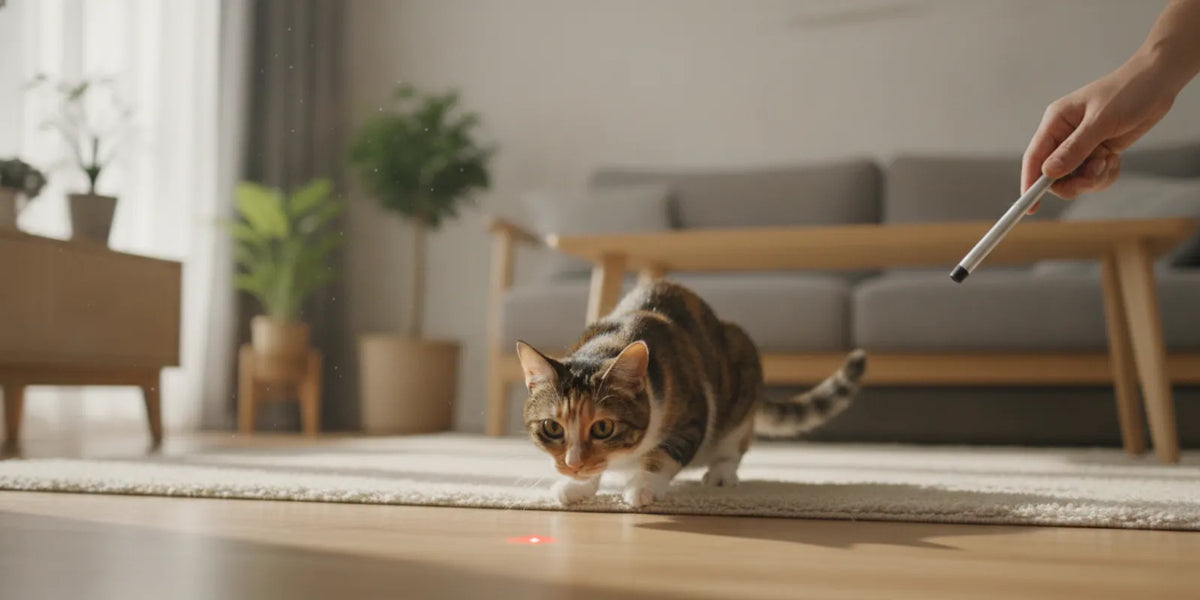
Are laser toys bad for cats? Not necessarily. A laser pointer can prompt a cat to move and chase, but it does not offer the physical catch many cats expect at the end of a hunt. With careful use and a satisfying finish, laser play may fit into a varied routine. Keep the beam out of your cat’s eyes, watch their response, and switch to another activity if the game seems stressful.
Ask our team for help choosing cat play supplies
Are laser toys bad for cats, or does how you use them matter?
Key Takeaway
A laser toy is not automatically harmful. The main considerations are safe beam direction, a short session that suits your cat, and a real toy or treat at the end so the chase does not always end with nothing to catch.
Cats often pursue moving objects as part of play. A small light moving across a clear floor may encourage chasing, turning, and pouncing. The pointer itself does not provide a toy the cat can grab, however. Some cats appear unbothered by that difference; others keep searching after the light disappears or become overexcited. Watch the cat in front of you rather than assuming every cat enjoys the same game.
Laser play is best treated as one option, not the whole enrichment plan. Add toys the cat can touch, bat, bite, and capture. Rotate activities and let the cat disengage. If a cat starts fixating on reflections or shadows outside play sessions, or seems unable to settle after a chase, stop using the pointer and ask a veterinarian for guidance.
There is a difference between a toy causing harm by itself and a play session that is poorly managed. Directing a bright beam into an eye is unsafe. Repeatedly teasing a cat with an unreachable target can also be an unhelpful experience for some cats. A thoughtful routine lowers these avoidable risks without making an ordinary play tool sound dangerous in every situation.
What risks should you watch for during laser play?
The clearest safety rule is to never aim the beam at a cat’s eyes or face. Keep it on the floor or another safe surface, and move it away from stairs, glass, hot surfaces, fragile objects, or places where a cat could collide with furniture. Do not shine it at people or other animals either. Store the pointer where children cannot use it unsupervised.
Another concern is frustration. Chasing a dot that can never be caught may leave some cats still searching when play stops. Look for persistent scanning of the floor or walls, repeated pawing at the spot where the dot vanished, agitation, vocalizing, or difficulty moving on to another activity. One moment of interest is not automatically a warning sign. A repeated pattern that seems to interfere with rest or ordinary behavior is a reason to stop and reassess.
- Eye exposure: Never direct the beam toward the eyes, even briefly.
- Unsafe chase paths: Avoid slick, cluttered, elevated, or breakable areas.
- Overexcitement: Pause if your cat is panting, frantic, or no longer responding to normal cues.
- Unfinished play: Do not end every session by switching the light off while your cat is still searching.
- Compulsive-looking behavior: Stop the laser game if fixation continues outside the session.
If a beam has accidentally entered an eye, or your cat shows squinting, redness, discharge, a change in vision, or unusual discomfort afterward, contact a veterinarian promptly. Do not try to diagnose an eye injury at home. For general veterinary information and help finding professional guidance, see the American Veterinary Medical Association; a veterinarian who knows your cat is the right person to advise on an individual concern.
Shop This Post

Featured in this article
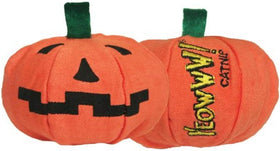
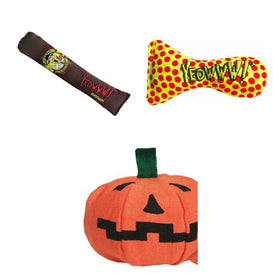
Ducky World Yeowww! Juguete de hierba gatera orgánica de 7" para gatos de granja
$12.11
Shop Now →
How can you make a laser play session safer and more satisfying?
Quick Summary
Choose an open floor area, move the dot at a pace your cat can follow, keep it away from the face and hazards, then guide the game onto a tangible toy or another reward before you stop.
Set up the room before you switch the pointer on. Clear loose objects from the route and choose a surface where your cat can turn without slipping. Keep the light low on the ground. Avoid leading the cat up a wall, onto a narrow ledge, or toward furniture that invites a risky leap. A play area does not need special equipment; a few minutes of clearing space can make the chase more predictable.
- Start with a brief invitation. Move the dot slowly across the floor rather than flashing it suddenly near your cat. Let the cat choose whether to join in.
- Use natural movement. Let the light pause, dart, and travel away like something the cat can stalk. Avoid moving it so fast that your cat cannot track it.
- Keep a safe route. Direct the chase across open floor, not toward steps, high furniture, windows, or breakable objects.
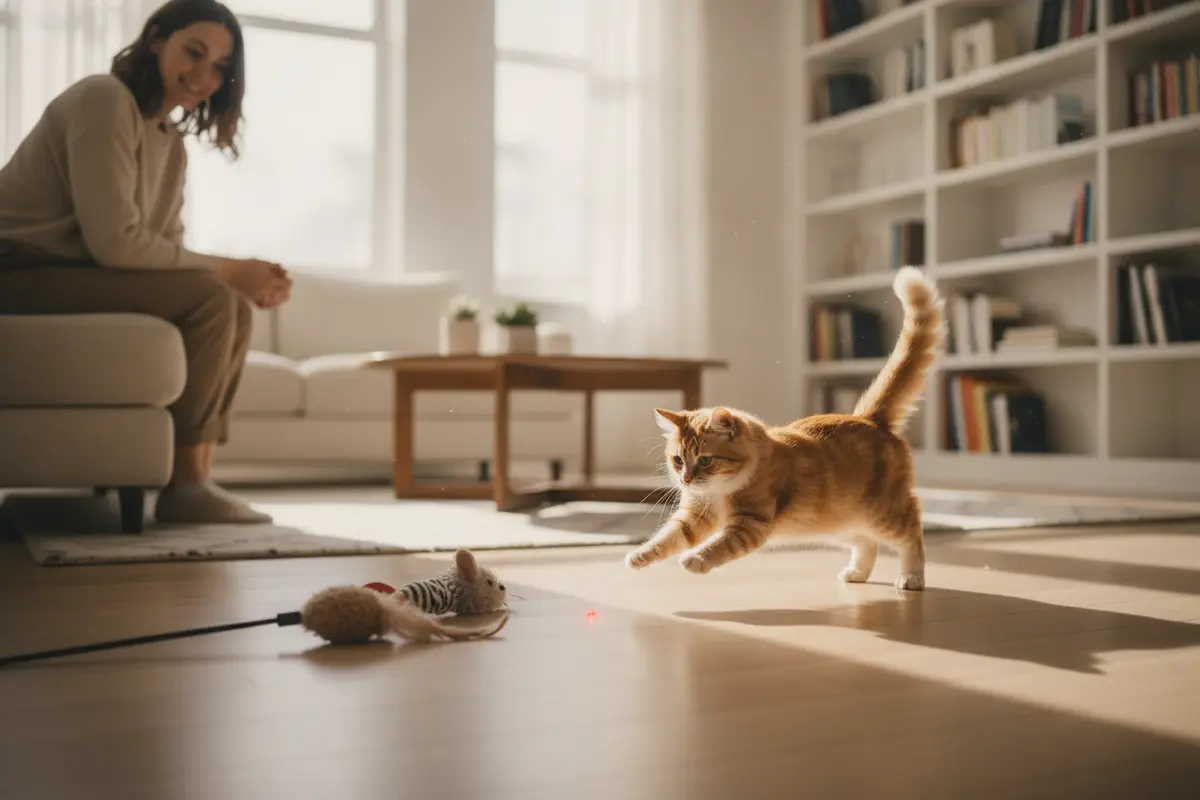
- Let your cat catch something real. Near the end, move the dot onto a toy your cat can grasp, such as a wand toy or soft kicker. Turn the pointer off while your cat is engaged with the tangible toy.
- End calmly. Offer a short pause, praise, or a small part of the cat’s usual meal if appropriate. Keep treats modest and account for them in the daily feeding plan.
- Check the response. If your cat loses interest, looks tense, or keeps searching after the game, stop and choose a different activity next time.
The catch does not have to be complicated. A toy placed at the end of the chase gives the cat something solid to grab. Some cats prefer a wand toy that moves along the ground, while others enjoy batting a lightweight toy or exploring a food puzzle. Keep small items and strings put away when you are not supervising. Choose an object large and sturdy enough for the individual cat, and remove anything damaged.
Which play option fits your cat?
Laser pointers are only one way to invite movement. A cat who enjoys stalking may like a wand toy that can be dragged along the floor. A food puzzle or treat-dispensing toy can give a curious cat something to investigate. A soft toy may suit a cat who likes to grab and kick. Try options one at a time and notice which ones your cat chooses, rather than buying a large set before you know their preferences.
| Play option | What the cat can do | What to supervise | Good fit when |
|---|---|---|---|
| Laser pointer | Chase a moving light | Beam direction, clear footing, and a tangible end to play | Your cat follows moving targets without becoming fixated |
| Wand or teaser toy | Stalk, pounce, grab, and bite the toy | Keep the toy and any cord in your control; put it away after play | Your cat enjoys interactive play and a physical catch |
| Soft toss or kicker toy | Bat, carry, bite, or kick an object | Check for loose parts or damage and remove unsafe toys | Your cat likes solo batting or wrestling play |
| Puzzle or treat toy | Explore, paw, and work for a small food reward | Use suitable food portions and check the toy for wear | Your cat prefers a slower activity or needs variety |
Each option has tradeoffs. A laser is easy to move and does not require you to wave a toy close to your cat, but it cannot be caught. A wand toy offers a real target but needs your attention and safe storage. A puzzle can occupy a cat without a moving target, but some cats need an easy introduction before they understand how it works. Match the activity to your cat’s age, mobility, confidence, and current interest.
For an example of a tangible cat play item, browse the Yeowww! catnip cigar toy. Product interests and play styles differ, so observe how your cat responds and supervise new toys. If a purchase is not right for your household, review the store’s item exchange information for applicable details.
Build variety into a simple weekly play routine
A predictable routine can make play easier to fit into the day without relying on one toy. You might offer a short interactive session before a meal, then leave an appropriate solo toy for later. On another day, use a puzzle or hide a few pieces of the cat’s regular food in a safe, easy-to-find spot. Keep the activity suitable for your cat and avoid leaving small, string-like, or damaged toys unattended.
Variety does not mean adding more and more toys. Rotate a few safe options so they remain interesting, and set aside toys your cat ignores. If the laser is part of the rotation, use the same finish every time: lead the dot to a tangible toy, let your cat catch it, and end before the cat becomes frantic or tired. Some cats will not enjoy the laser at all. That is useful information, not a problem to solve.
Consider the cat’s physical comfort too. A kitten may chase readily but need frequent breaks. An older cat or one with mobility concerns may prefer a slower target close to the ground. If a cat has a medical condition, pain, or a sudden change in activity, ask a veterinarian which forms of play are suitable. Do not use a toy to push a cat beyond its comfortable pace.
It also helps to plan the end before you begin. Put a soft toy or wand within reach, so you do not have to leave the room or keep the beam moving while you search for one. If you plan to use a food reward, measure a small amount from the cat’s regular daily food rather than adding an unplanned large treat. These small preparations make it easier to keep the routine calm and consistent.
Keep track of what you notice for a few sessions. Does your cat approach willingly, follow at a comfortable pace, and settle once the tangible toy appears? Or does the cat stop playing and continue to scan the room after the light is gone? A brief note about the activity and the cat’s response can help you recognize a pattern instead of judging by one unusually energetic evening. Use what you observe to decide whether to shorten the session, change the route, or leave the pointer out of the rotation.
Households with more than one cat should also consider how each animal responds. A confident cat may take over the chase while another stays back, and a fast-moving game can create tension in a crowded space. Offer separate play opportunities if needed, and do not direct the beam so cats race into one another. Keep the option of walking away open to every cat. If play repeatedly leads to chasing between cats, hiding, or conflict, discontinue the laser activity and ask your veterinarian for advice about a calmer setup.
When should you stop using a laser pointer?
Stop the session as soon as you notice distress, unsafe movement, or loss of interest. Do not keep trying to make a cat participate. If your cat repeatedly searches for the beam after it is off, watches reflections for long periods, or becomes harder to settle following play, put the pointer away and use other activities instead.
Talk with a veterinarian if the behavior is persistent, new, intense, or interfering with eating, sleep, or normal interaction. The same applies if your cat seems injured, unusually fearful, or less willing to move than before. A veterinarian can help distinguish ordinary excitement from a health or behavior concern and suggest a plan based on your cat’s history.
When you do use a pointer, keep the game optional and brief. Your cat should be able to walk away without being pursued. Never use the light to tease, frighten, or punish a cat. If you cannot supervise closely, choose a safe activity that does not depend on a moving beam.
Shop a tangible cat play toy today
Frequently Asked Questions
Can laser toys cause behavior problems in cats?
Some cats may become frustrated or keep searching after a session, especially if the light is never followed by something they can catch. Watch your cat’s behavior. End the chase with a tangible toy and stop using the laser if fixation or distress continues.
Can I shine a laser pointer near my cat’s eyes?
No. Keep the beam away from your cat’s eyes and face at all times. Aim it at a clear floor or another safe surface. If accidental eye exposure is followed by squinting, redness, discharge, or a change in vision, contact a veterinarian promptly.
How should I end a laser play session?
Guide the dot to a physical toy your cat can grab, such as a wand toy or soft toy, then switch the pointer off while your cat has that object. A calm transition helps the activity feel complete instead of leaving your cat searching for the light.
How long should a cat play with a laser toy?
There is no single duration that suits every cat. Keep sessions brief, pause when your cat needs a break, and stop if the cat looks tired, stressed, or overexcited. A veterinarian can advise if your cat has health or mobility needs that affect activity.
What can I use instead of a laser toy?
Try a supervised wand toy, a soft toy to bat or carry, or an appropriate puzzle feeder. Choose an option that matches your cat’s play style, check toys for damage, and put away items with strings or small parts when play ends.
Should I avoid laser toys for a kitten or senior cat?
Not necessarily, but adjust the game to the individual cat. Keep movement low and gentle, allow breaks, and do not encourage high jumps or sudden turns. For a kitten, senior cat, or cat with a medical condition, ask your veterinarian if you are unsure what activity is appropriate.
Laser play can be one part of a safe, varied routine when you protect your cat’s eyes, keep the chase on a clear surface, and finish with something your cat can actually catch. Let your cat’s response guide whether the pointer belongs in your play rotation.


