

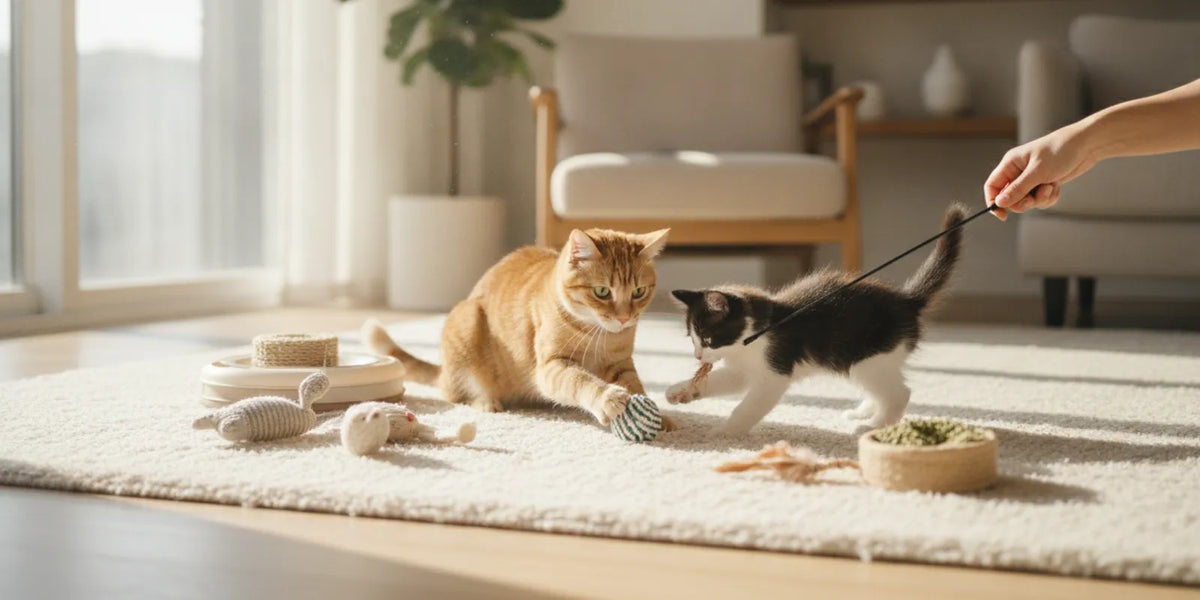
Choosing cat and kitten toys starts with observing what your animal enjoys, then matching options to age, size, and habits. A useful selection supports chasing, batting, pouncing, carrying, or shared play without relying on one toy to suit every mood.
What makes a toy a good fit for a cat or kitten?
Consider the animal’s play habits, physical ability, and the place where play happens. Inspect toys regularly and put away items with loose parts or damage.
Cats have individual preferences. One may stalk and pounce on movement, while another enjoys batting a ball or investigating a textured object. Some cats like to carry soft toys; others prefer a person to make a teaser move. Kittens may be energetic while still developing coordination. An older or less active cat may prefer gentler movement and shorter sessions. Offer a small variety and notice what the cat chooses, rather than assuming appearance predicts interest.
Also consider your space and routine. A rolling toy needs a clear floor and a place where it will not disappear beneath heavy furniture. A wand toy needs enough room for its handler to move it without hitting shelves or people. If toys are easy to store safely, it is simpler to bring out an interactive option and put it away after play.
Think about how the cat handles objects. A gentle paw-batterer may use a lightweight ball differently from a cat that bites and pulls at every toy. Observe the first sessions with unfamiliar items. If the cat chews through fabric, targets attachments, or tries to swallow pieces, stop the activity and choose a different format.
Which toy styles invite different kinds of play?
Build a small mix of toy styles instead of buying several items that all move or feel the same. The cat’s response and the toy’s construction matter more than novelty alone.
The comparison below is a starting point, not a safety guarantee. Read product directions and inspect each item before use. A toy that is suitable for supervised play may not be appropriate to leave out while you are away.
| Toy style | Play it can invite | What to assess | Typical use |
|---|---|---|---|
| Wand or teaser | Stalking, chasing, leaping | Secure attachment, intact handle and line | Interactive play; store afterward |
| Soft plush toy | Carrying, kicking, wrestling | Seams, stuffing, eyes, and small details | Observe the cat and check condition |
| Lightweight ball | Batting and chasing | Size, material, and detachable pieces | Only leave out if safe for that cat |
| Crinkle or textured toy | Exploring and pawing | Whether material sheds, tears, or separates | Inspect before and after play |
| Treat puzzle | Foraging and problem-solving | Opening size, cleanability, directions | Use an appropriate food portion |
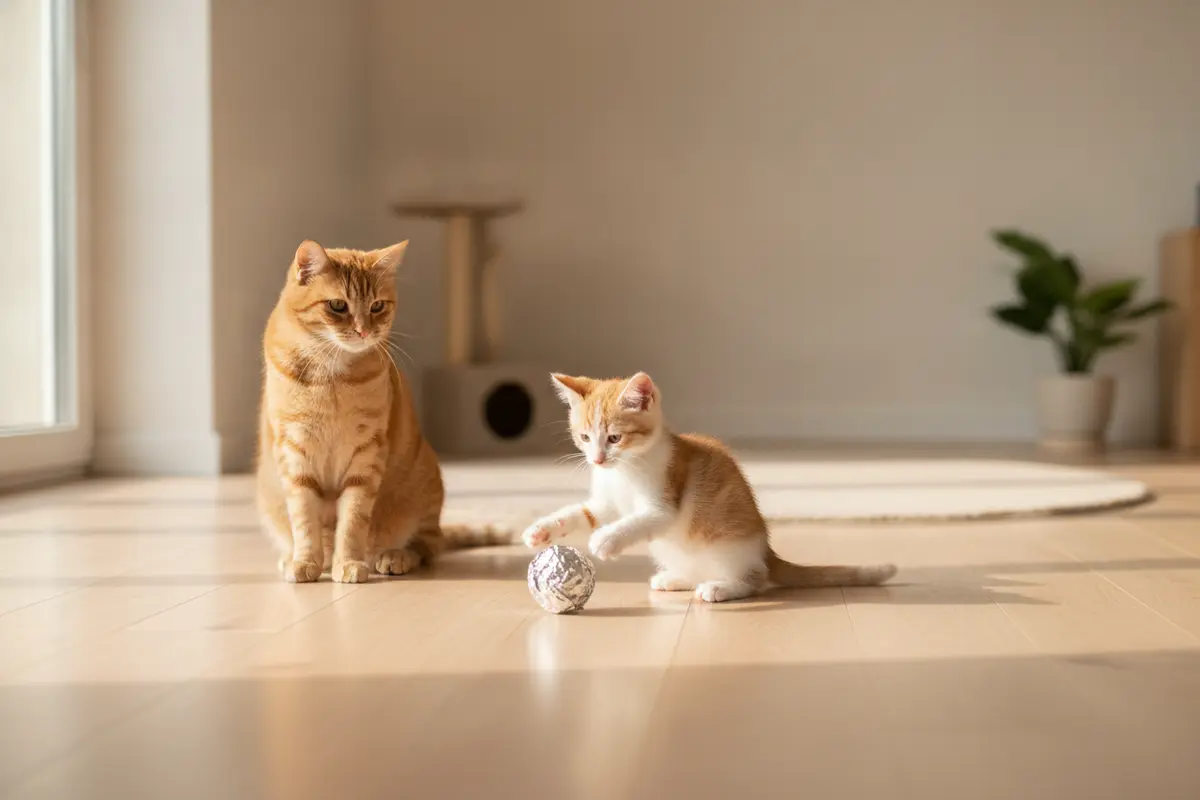
A teaser lets you control direction and speed. Move it along the floor, pause behind a safe obstacle, and let the cat catch it at times. Keep the line away from people’s feet and avoid whipping it near the cat’s face. When the session ends, put the wand and any string or ribbon attachment where the animal cannot reach it. Loose strands can invite chewing and are not a good unattended activity.
For independent play, choose only items that remain intact under that particular cat’s normal handling. There is no universal toy that is safe for every unsupervised situation. A cat that shreds fabric or chews plastic may need closer monitoring than one that bats objects gently. Remove anything that develops a hole, exposed filling, a sharp edge, or a loose component.
Treat-dispensing toys add a food-seeking task, but keep the amount of food in the cat’s regular feeding plan. Follow product directions, clean the toy as directed, and start with an easy setup. If the cat paws at the puzzle without success, simplify the task before increasing difficulty. The aim is a rewarding activity, not a frustrating test.
Shop This Post

Featured in this article
Ducky World Yeowww! Juguete de hierba gatera orgánica de 7" para gatos de granja
$12.11
Shop Now →
How should you choose toys for a kitten?
For kittens, prioritize appropriate size, sturdy construction, and direct supervision. Their curiosity makes regular inspection especially important.
Kittens explore with paws and mouths, so examine small attachments, loose fibers, bells, plastic details, and long strands with particular care. Choose products that are too large to swallow and do not have parts that can readily come away. Labels can guide you, but the kitten’s actual behavior is important too. Watch how it treats the new item, and put it away if it bites off or tries to ingest a part.
Keep play sessions short enough for the kitten to remain engaged. Use a teaser to invite movement across the floor rather than encouraging jumps from unsafe heights. Let the kitten catch the toy and pause. If attention fades, end the session instead of repeatedly stimulating the animal. Avoid using hands or feet as moving targets; redirect nipping to an appropriate toy so those body parts do not become part of the game.
End interactive play calmly. Slow the toy, allow a final catch, then put it away. This gives the kitten a clear finish and prevents a dangling attachment from remaining available after the person stops supervising. For a household with an adult cat as well, provide separate play opportunities. Their pace and preferences can differ, and the adult cat should be able to opt out rather than being crowded by an enthusiastic kitten.
As the kitten grows, revisit the size and condition of its toys. A toy that once seemed too large may become manageable, while a small object may become easier to mouth. Check seams and attachments as play gets more vigorous. Replace items that cannot be cleaned or maintained as directed.
How can you make play safer?
Make a brief pre-play check part of the routine. Look at seams, fasteners, cords, edges, and small attached pieces. After play, check again, especially if your cat bites or pulls. Do not improvise a repair that leaves an exposed thread, hard edge, or chewable patch. If you cannot restore the toy according to its directions, retire it.
- Put away wand toys, string, and ribbon after supervised play.
- Remove toys with loose parts, exposed filling, sharp edges, or broken components.
- Choose a size and construction the cat cannot swallow or readily tear apart.
- Clear the play area of breakable objects, unstable furniture, and trip hazards.
- Introduce unfamiliar items while watching how the cat handles them.
- Keep food puzzles clean and use them according to their instructions.
The U.S. Consumer Product Safety Commission advises consumers to check toys for small parts and hazards appropriate to a child’s age; although its guidance is written for children’s products, the general principle of inspecting small components is relevant when assessing objects an animal may mouth. See the agency’s toy safety guidance at CPSC Toy Safety. This is not a pet-toy standard, so use it only as a general reminder to check construction, and follow the pet product’s own instructions.
No toy choice can remove every risk. If a cat persistently chews or swallows non-food objects, or has a sudden change in activity, appetite, or play, ask a veterinarian for advice. Toys can enrich daily routines, but they do not replace veterinary care, rest, or positive interaction with people.
How can you tell whether a toy is suitable for independent play?
Choose unattended toys conservatively. If an item includes a line, small attachment, battery compartment, or piece the cat can remove, keep it for supervised use or put it away.
Independent play is not just a question of whether a toy is labeled for cats. It depends on the individual animal and the object’s condition. Consider what happens after repeated biting, scratching, or chewing. Could a component detach? Could the material fray? Is there a gap where a claw might catch? If you are uncertain, keep the toy for an interactive session when you can observe closely.
Before leaving a few items out, watch your cat use each one over several sessions. Notice whether the cat bats it, carries it, mouths it, or tries to dismantle it. Then make a simple household rule: only items that remain intact and are handled calmly go into the independent-play basket. Wand toys and string-based items stay in a closed drawer or cupboard.
For a multi-cat home, consider whether one animal guards or monopolizes a toy. Provide more than one option and ensure each cat has room to disengage. A toy that prompts chasing can create competition in a narrow hallway, while a quiet ball may work better in an open area. Supervise when play becomes rough or one cat repeatedly corners another.
Build a simple play routine and rotate toys
Rotation can help keep a familiar toy interesting without requiring a large collection. Leave out a few appropriate options, store the rest, and switch them when attention fades. Keep interactive toys separate from items offered for independent play. A basic container system can make this easy: one place for supervised toys, one for safe-to-leave-out items, and a discard or repair check before anything returns to use.
Use the cat’s behavior as feedback. If a cat ignores a stationary toy but follows one that moves slowly around a corner, motion and concealment may be the useful features. If the cat approaches a crinkle toy but startles at its sound, offer a quieter texture. If it enjoys a ball only when rolled gently, use a clear space and a moderate pace. These small observations turn toy selection into a practical process rather than guesswork.
Try a simple weekly rotation. Choose one chasing option for interactive sessions, one object the cat can bat or carry safely, and an optional puzzle for food-based enrichment. After several days, replace one option rather than changing everything at once. That makes it easier to learn which change affected interest. There is no need to follow a strict calendar: rotate when the cat loses interest or when an item needs cleaning.
Keep sessions flexible. Some households prefer a brief play period at a predictable time; others fit several shorter opportunities into the day. Stop when the cat turns away, hides, pants, or appears distressed. A play routine should suit the animal in front of you, not an ideal schedule.
Match the toy to your home and household
Room layout affects which formats are practical. A long hallway can offer a safe path for a rolling ball, while a small room may be better for slow teaser movements close to the floor. Move fragile decorations and close doors to spaces where a toy could become trapped. In a home with young children, store small components and supervised toys securely, and explain that a cat’s toy is not for tugging or pulling without an adult.
Consider noise and flooring. A hard ball can skitter loudly across tile and may slide under appliances. A soft object may be quieter but can collect dust or hair. If a toy is difficult to retrieve or clean, it may not fit your household even if the cat likes it. Check the maker’s cleaning directions and avoid soaking electronic or battery-operated items unless instructions specifically allow it.
For cats with limited mobility or a cautious temperament, keep movement low and predictable. Let the animal approach rather than bringing a toy directly toward its face. For an energetic cat, vary the direction and add pauses rather than simply increasing speed. If mobility or play tolerance changes, consult a veterinarian before assuming a new toy will address the change.
Where can you compare cat toy options?
When you have identified the kind of play your cat enjoys, compare products by construction, size, and directions rather than choosing by appearance alone. View the cat toys and scratch posts collection for options, and use the same checklist for every item: Is it suitable for the cat’s size? Are attachments secure? Can it be inspected and cleaned? Will it be used only with supervision?
For an example of a product-focused option, review Giddy Kitty cat toys and treats. To explore motion-led play in more detail, read about interactive toy choices. Hooves and Paws is a family-owned online retailer serving horse, dog, and cat owners since 1994, with a handpicked selection and practical product guidance for animals treated as family.
Use the product details and your own observations together. A toy that fits one cat’s habits may not suit another’s, even in the same home. Compare options, follow the instructions, and choose a format you can supervise and maintain comfortably.
Frequently Asked Questions
How many toys should a cat have?
There is no fixed number for every cat. A small set with varied play styles can be more useful than many similar items. Rotate choices and keep only intact toys that the cat handles safely.
Can kittens use toys made for adult cats?
Check size, construction, and the product’s age guidance rather than relying on the label alone. Supervise a kitten with unfamiliar toys and remove anything it can chew apart or swallow.
Are string toys safe for cats?
Use them only for interactive play when a person controls the movement. Put them away afterward because loose string or ribbon can be chewed or swallowed.
Should I leave toys out when I am away?
Leave out only intact items that are appropriate for that cat’s independent play. Store wand toys and anything with strings, small parts, or damage when you cannot supervise.
What if my cat ignores a new toy?
Try changing the movement, location, or time of day, then give the toy a break. Cats have individual preferences, and a lack of interest does not mean you should force a game.
How often should I inspect cat toys?
Check toys before play and after vigorous sessions, and make a regular close inspection part of cleaning or rotation. Remove any item with loose pieces, holes, exposed filling, or damage.
What should I do if my cat swallows part of a toy?
Contact a veterinarian promptly for guidance, especially if the cat is distressed or unwell. Do not try to treat a suspected ingestion at home without veterinary direction.
A thoughtful mix, regular inspections, and play that follows your cat’s cues can make everyday activity more engaging for kittens and adult cats alike.


