


A cat heating pad can offer a warm resting place, but choosing one is only part of the job. The pad must suit your cat, be used as directed, and be checked regularly. This guide explains what to compare, how to set it up, and when warmth is not a substitute for veterinary advice.
Call us for help finding pet supplies
What should you look for in a cat heating pad?
Key Takeaway
Choose a pad specifically designed for pets, follow its instructions, and make sure your cat can move away from the warm area. A product label is not a substitute for supervision or an individual safety check.
Start with the intended use. A cat-specific warming pad is designed for a pet environment. The Cat Fanciers’ Association notes that heating pads made for pets are intended to warm cats or dogs to a safe temperature, unlike human heating pads that can become much hotter: The Pet Owners Corner. This is a useful distinction, not a promise that every pad is suitable for every cat. Read the full instructions for the exact product you are considering.
Check the product details before buying. Look for clear guidance on where and how the pad may be used, whether it is intended for indoor use, how its temperature is controlled, and how to clean it. The manufacturer should explain whether it belongs under or over bedding. Do not guess based on appearance, and do not use a product if its instructions are missing or unclear.
- Pet-specific design: Avoid using a human heating pad as a substitute. Its heat settings and intended use may not suit a cat’s resting space.
- Temperature control: Look for clear operating directions and the manufacturer’s stated safety features. Do not assume a pad is safe simply because it feels comfortable to your hand.
- Size and shape: The warm surface should fit the resting spot without forcing your cat to lie in one position. Leave room for the cat to reposition or step away.
- Cover and cleaning: Check whether the cover can be removed and washed, and how the pad itself may be cleaned. Keep liquids away from electrical parts unless the instructions specifically allow otherwise.
- Cord placement: Consider whether the cord can be routed out of reach and away from scratching, chewing, foot traffic, and bedding.
- Condition and support: Buy a product with legible instructions and a clear way to ask the maker about use or care. Stop using it if the pad, cord, plug, or cover becomes damaged.
Think through the actual resting spot before choosing dimensions. Measure the bed or shelf where you plan to place the pad, then compare those measurements with the usable heated area listed by the maker. A pad that fills an entire small bed may leave no cool section. A pad that is much smaller than the bed may shift or bunch if the design is not meant to sit loose. The product directions should clarify whether it needs a flat, firm surface or may be used with a particular kind of bed.
Consider your household routine as well. If you cannot keep a cord away from a curious kitten or a persistent chewer, a powered option may not be a sensible match for that location. If the cat sleeps in several places, a fixed powered bed may not be used consistently. A simple mat or blanket can be easier to move and wash, although it does not add powered warmth. List what you need the product to do, then rule out any model whose directions or care routine do not fit your home.
How do cat warming pad options compare?
Product labels use terms such as warming pad, heated bed, and self-warming mat. They do not all describe the same kind of product. Compare the source of warmth, setup requirements, and care instructions rather than choosing by the name alone.
| Option | How it provides warmth | What to check | Good fit when |
|---|---|---|---|
| Electric pet warming pad | Uses a powered heating element according to its own directions | Pet-specific use, controls, placement, cord routing, and cleaning instructions | You can follow the instructions and supervise the cat |
| Self-warming mat | Uses insulating or reflective materials rather than a powered heat source | Material, cleaning method, size, and whether the surface stays dry and intact | You want a non-powered resting layer and your cat chooses to use it |
| Heated cat bed | Combines a bed and a powered warming element, depending on the model | How the unit is assembled, washed, positioned, and powered | The whole bed fits the cat’s space and instructions are clear |
| Blankets or ordinary bedding | Provide a soft layer without a powered heating element | Washability, dryness, and whether the cat can move freely | You want a simple cozy resting place without adding a heat source |
This table is a starting point, not a product ranking. A non-powered mat avoids an electrical cord but still needs routine checks for wear and cleanliness. A powered model adds setup and monitoring steps. In either case, let your cat choose whether to use the spot instead of placing the cat on it.
When comparing product pages, note the instructions in writing instead of relying on a short name or a single feature badge. Make a small checklist: intended animal, approved placement, allowed cover, washing method, power requirements, and what the maker says about continuous use. If one listing answers these questions and another does not, ask the second maker before buying rather than filling gaps with assumptions.
It can also help to compare the complete routine, not only the purchase. A removable cover may simplify washing, but check whether the heating element itself can be separated and how it should be stored. A compact pad may fit a carrier or favorite bed only if its intended use and instructions allow that setting. Avoid improvising a use case. A product used in a place or manner its maker does not permit is not made appropriate by its size.
Shop This Post

Featured in this article
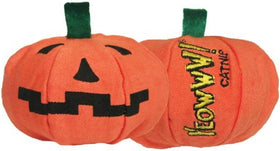
Ducky World Yeowww! Juguete de hierba gatera orgánica de 7" para gatos de granja
$12.11
Shop Now →

How should you set up a cat heating pad?
Quick Summary
Follow the product’s placement directions, create a nearby unheated resting area, secure the cord, and test the setup while you are present. Recheck the surface and your cat rather than relying on a one-time setup.
- Read the whole instruction sheet. Confirm how long the pad may be used, which side faces up, what bedding is allowed, and whether it should be plugged directly into a wall outlet or used another way. Follow the product directions over general tips.
- Pick a stable, dry location. Put the pad in a quiet place where the bed will not tip, be stepped on, or get wet. Avoid placing it where the cat could become trapped or where other pets may disturb it.
- Make an unheated way out. Arrange the bed so the cat can lie partly on or entirely away from the warm area. Do not wrap the cat in bedding or block the path out. A cat should be able to change position without needing your help.
- Route the cord carefully. Keep it away from the cat’s mouth and claws, avoid tight bends or pinch points, and do not run it under a rug or where it may be crushed. If your cat chews cords, do not leave a powered pad accessible without a safe solution approved by the product maker.
- Check the cover and surface. Use only the cover or bedding permitted by the manufacturer. Extra layers can change how heat is felt. Do not add a thick blanket unless the instructions allow it.
- Stay nearby during the first use. Observe whether the cat approaches, leaves, changes position, or seems unsettled. Recheck the pad for unusual heat, odor, noise, or damage. Disconnect it if anything seems wrong.
- Inspect it regularly. Before use, look for frayed cords, cracked housings, loose seams, dampness, and damaged covers. Follow the manufacturer’s cleaning and storage directions.
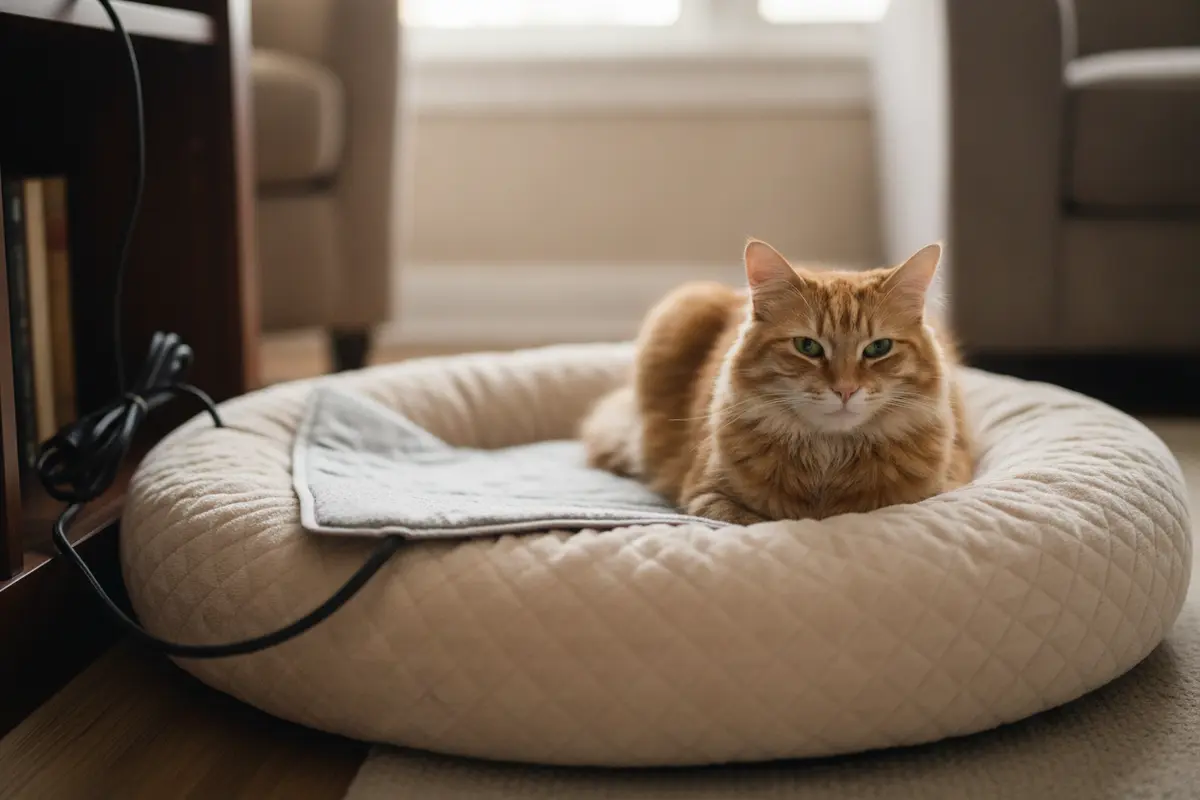
Give the cat time to investigate the resting place voluntarily. Some cats prefer a familiar blanket or a different location. Do not hold a cat on a pad to make it stay, and do not use warmth to restrict movement. If the cat is unable to move normally, has reduced awareness, or cannot leave the warm area independently, ask a veterinarian before using a warming product.
Before the first session, arrange the space while the pad is unplugged. Check that the bed sits flat, the cord route remains clear if the bed shifts slightly, and the cat has an unobstructed route to a cooler spot. Then connect and operate the product exactly as directed while you stay in the room. Do not place a cat directly onto a newly set-up pad. Let the cat approach at its own pace, and note where it chooses to settle.
For the first few uses, observe the whole setup rather than watching only the cat. Check whether bedding has folded over the heated area, whether the pad has slid, and whether a second pet can block the exit. Look for ordinary, relaxed behavior such as choosing a position, shifting, and leaving freely. If the cat ignores the bed, that is useful information: do not coax or restrain it. Try a different approved location or use an unheated bed instead.
In a home with several cats, give each animal enough space to leave without being crowded or guarded. A cat that is comfortable sharing an ordinary bed may still avoid a heated spot if another animal controls the route. Make sure the electrical connection and cord cannot be pulled by one pet as another rests nearby. If you cannot create a safe, freely accessible arrangement, do not use the powered product in that shared spot.
When is a warming pad not the right answer?
A warm bed may make a resting spot more inviting, but it does not explain why a cat seeks warmth or seems uncomfortable. Do not use a heating pad to manage an injury, illness, pain, or a sudden change in behavior unless a veterinarian has advised you to do so. Heat can distract from a problem and should not delay assessment.
Contact a veterinarian if your cat is unusually lethargic, weak, reluctant to move, eating or drinking differently, breathing abnormally, or showing signs of pain. Seek prompt professional advice for a sudden or severe change. This article is general buying and care information, not a diagnosis or treatment plan.
Age, health, mobility, and temperament matter. A cat that has trouble moving may not be able to leave a warm surface quickly. A kitten, senior cat, or cat with a known health concern may need individual guidance. Ask your veterinarian before adding a heat source if you are uncertain whether your cat can use it safely.
Keep the distinction between a comfort choice and a health concern clear. A cat choosing a sunny windowsill or a warm-looking bed does not, by itself, explain a medical condition. But a new pattern combined with a change in movement, appetite, energy, or breathing deserves attention from a veterinarian. Do not try to assess the cause by adjusting the pad temperature or by increasing the time your cat spends on it.
If a veterinarian recommends a warming product for an individual cat, ask for practical details: whether a powered pad is appropriate, what placement is acceptable, how long the cat may use it, and how often you should check the cat. Write those directions down and compare them with the product instructions. If they appear to conflict, ask the veterinarian and manufacturer to clarify before use. General guidance cannot replace advice based on your cat’s health and mobility.
What should you know about pet and equestrian warming products?
Products intended for one species or use should not be repurposed for another. A horse sheet or cooler is not a cat heating pad, and it should not be placed on a cat or used as a substitute for a cat-specific product. For example, the Classic Equine horse sheet, Theramic therapy sheet, and Bucas cooler are horse products. Their intended animal and instructions are different. Do not infer that a product is suitable for a cat because it looks like a blanket or has a warming-related name.
The same care applies to other animal supplies. A dog walking item or a supplement for a separate health need does not replace a safe cat resting area. If you are comparing general supplies for a multi-pet household, Hooves and Paws also carries pet supplements for dogs and cats; ask your veterinarian before starting a supplement, and do not treat it as a warming product.
For horse owners shopping for more than one animal, keep the purpose and care instructions for each item easy to identify. Store cat bedding and warming products separately from horse sheets, coolers, and other stable equipment. When checking a product, look for the species and use stated by its maker, not only its fabric or shape. A versatile appearance does not mean that an item can safely serve every animal.
How do you clean and maintain a warming pad?
Care varies by product, so use its own label as the final authority. Unplug a powered pad before handling or cleaning it if the directions say to do so. Remove only parts that are designed to come off. Never immerse an electrical component unless the maker expressly says it is safe to do that. Let cleaned pieces dry fully as directed before reconnecting power.
Make a quick check part of your routine. Look for damage to the cord, plug, seams, and cover. Note whether the pad behaves differently, gives off an unusual odor, or feels uneven. If you find damage or cannot tell whether the unit is working correctly, stop using it and contact the manufacturer. Do not repair electrical parts yourself unless the manufacturer provides an approved process.
Keep the sleeping area dry and wash the cover at the interval that suits your household and the product’s care label. If your cat has an accident or the pad gets wet, disconnect it and follow the maker’s instructions before using it again. Store it clean, dry, and protected from chewing or crushing when it is not in use.
A simple routine makes inspections easier. Before each use, take a moment to look over the cord and plug, confirm that the pad lies flat, and check that the cover is dry and secure. At cleaning time, inspect seams and connectors in good light. After a move, wash, or storage period, set the pad back up according to the instructions and recheck the cord route. These checks do not replace the maker’s maintenance directions, but they can help you notice visible changes before the next use.
Do not keep using a pad because a defect seems minor or because the cat still likes the bed. A frayed cord, damaged plug, exposed inner material, unusual odor, unexpected noise, or wet electrical area is a reason to stop and consult the maker. If the product cannot be returned to the condition described in its care instructions, retire it. Keep the manual or product label available so you can check the exact cleaning and storage rules instead of relying on memory.
How can you make a cozy space without a powered pad?
A heating pad is only one way to make a comfortable resting place. A clean bed in a quiet, draft-free part of the home may be enough for a cat that simply wants a familiar spot. A washable blanket or self-warming mat can add a soft layer without a powered cord. Keep bedding dry, check it for wear, and let the cat choose where to settle.
Think about the whole setting: whether the cat can enter and leave easily, whether the bed is away from busy foot traffic, and whether other pets share the space peacefully. Do not place a bed near a heater, stove, fireplace, or other hot surface. Keep it away from areas where it might be knocked over or become damp. If your cat consistently avoids the bed, try a different location rather than forcing a change.
For households with dogs as well as cats, choose each animal’s comfort items for that animal and its routine. Hooves and Paws has separate options such as interactive dog toys and a dog walking leash. These are examples of dog supplies, not heating products for cats. Keep species-specific gear clearly separated so a product is used only as intended.
To make an unpowered resting nook, start with a clean, dry bed in a location the cat already visits. Add a familiar blanket or a suitable self-warming mat, then leave enough open space for the cat to stretch and change position. Avoid placing several thick layers in a way that traps the cat or makes it hard to tell whether the bedding is damp. Wash or replace layers according to their labels, and check for pulled threads or torn material that could catch claws.
Location can matter more than extra accessories. A quiet corner away from a draft, door traffic, and noisy appliances may be more appealing than a new bed in a busy room. Put the bed where the cat can approach and leave without squeezing past furniture or another pet. If the cat chooses a different resting place, observe that preference and make the alternate location comfortable when practical. Comfort should remain voluntary.
Explore pet wellness supplies today
Frequently Asked Questions
Can I use a human heating pad for my cat?
Do not assume a human heating pad is suitable. Its heat settings and intended use may not be appropriate for a cat’s bed. Choose a product specifically made for pets and follow its directions. The Cat Fanciers’ Association describes pet heating pads as designed to warm cats or dogs to a safe temperature, unlike human pads that can become much hotter. That general description does not replace the specific product instructions or veterinary advice.
Should a cat heating pad go under or on top of a bed?
There is no one placement rule for every model. Follow the manufacturer’s directions about which side faces up and whether the pad belongs under a bed, inside it, or beneath an approved cover. Do not add layers or place the pad in a position the instructions prohibit.
Can I leave a cat on a warming pad overnight?
Use it only for the duration and circumstances allowed by the product instructions. Consider whether your cat can leave the warm area freely and whether you can inspect the pad and cord. If the product directions do not clearly address extended use, ask the manufacturer instead of guessing.
How can I tell if my cat is too warm?
Watch your cat’s behavior and provide a clear route to an unheated place. If the cat repeatedly moves away, seems unsettled, or shows any concerning change, turn off the pad and contact a veterinarian if symptoms persist or appear serious. Do not rely on touch alone to judge the cat’s comfort.
Are self-warming mats safer than electric pads?
They work differently and have different tradeoffs. A self-warming mat does not use a powered heating element, but it still needs to be kept clean and checked for damage. An electric pet pad requires correct setup, power and cord precautions, and adherence to the maker’s directions. Neither option is automatically right for every cat.
Should I ask a veterinarian before buying a heating pad?
Ask first if your cat has a health concern, limited mobility, or difficulty changing position, or if the cat’s behavior has changed. A veterinarian can advise whether a warming product is appropriate for your individual cat. For a healthy cat choosing its own resting spot, still follow the product directions and observe how it responds.
For other pet needs, see pet wellness supplies.
A cat heating pad should be selected for pet use, set up according to its instructions, and monitored with your cat’s comfort and ability to move freely in mind. When health or safety questions remain, ask your veterinarian before using a warming product.


