


Choosing a horse feed bucket is about more than finding a container that holds a meal. The right setup should suit the horse, the feed routine, and the place where the bucket will be used. This guide to a horse feed bucket explains what to compare, how to think through attachment and placement, and what to check before and after feeding.
Contact us for help choosing horse supplies
What should a horse feed bucket do?
A feed bucket should hold the intended portion while giving the horse a practical place to eat. It should be easy for the caregiver to fill, inspect, and clean, and it should suit the feeding location. A bucket that works well on a stall door may not be the best option for a paddock or for carrying feed between storage and feeding areas.
Start by writing down how and where the bucket will be used. Is it for a single meal in a stall, a small portion during a lesson, or feeding in a shared area? Will it remain in one place, or does it need to be carried? Who will fill and clean it? These basic details help narrow the choice before you compare shape, material, capacity, and mounting.
Choose for the routine and location first. The useful bucket is one that holds the intended meal, can be secured appropriately, and is simple to inspect and clean.
Which features matter when choosing a bucket?
Material and condition
Look for a bucket made for animal feeding and check its construction before use. The rim, base, handles, seams, and any mounting hardware all deserve a close look. Avoid using a container that has sharp edges, cracks, splits, loose parts, or damage that could catch equipment or injure the horse. A damaged bucket should be taken out of use rather than patched in a way that creates an uncertain edge or attachment.
Consider how the material will handle the conditions where you keep it. A bucket left outdoors may face sun, weather, dust, and repeated movement. A bucket inside a stall may be protected from weather but could be bumped or pulled. Follow the maker's instructions for use and cleaning, and replace a container when wear makes it difficult to keep clean or secure.
Shape, capacity, and access
Capacity should match the feed portion and the way it is measured. A very large container is not automatically better: it can take up space, be awkward to handle, or make it harder to judge the portion at a glance. A small bucket may be inconvenient if feed can spill while it is being carried or stirred. Before buying, consider the actual volume and form of the meal rather than relying on a vague description such as small or large.
Shape also affects access. A wide opening may be easier to fill and inspect, while a deeper shape might contain feed during carrying. Think about the horse's normal feeding position and the bucket's stability where it will be used. Do not assume that any shape is right for every horse or setting. Observe the horse using it, and change the arrangement if the horse struggles to reach the feed or the container moves in an unsafe way.
Handles and attachment
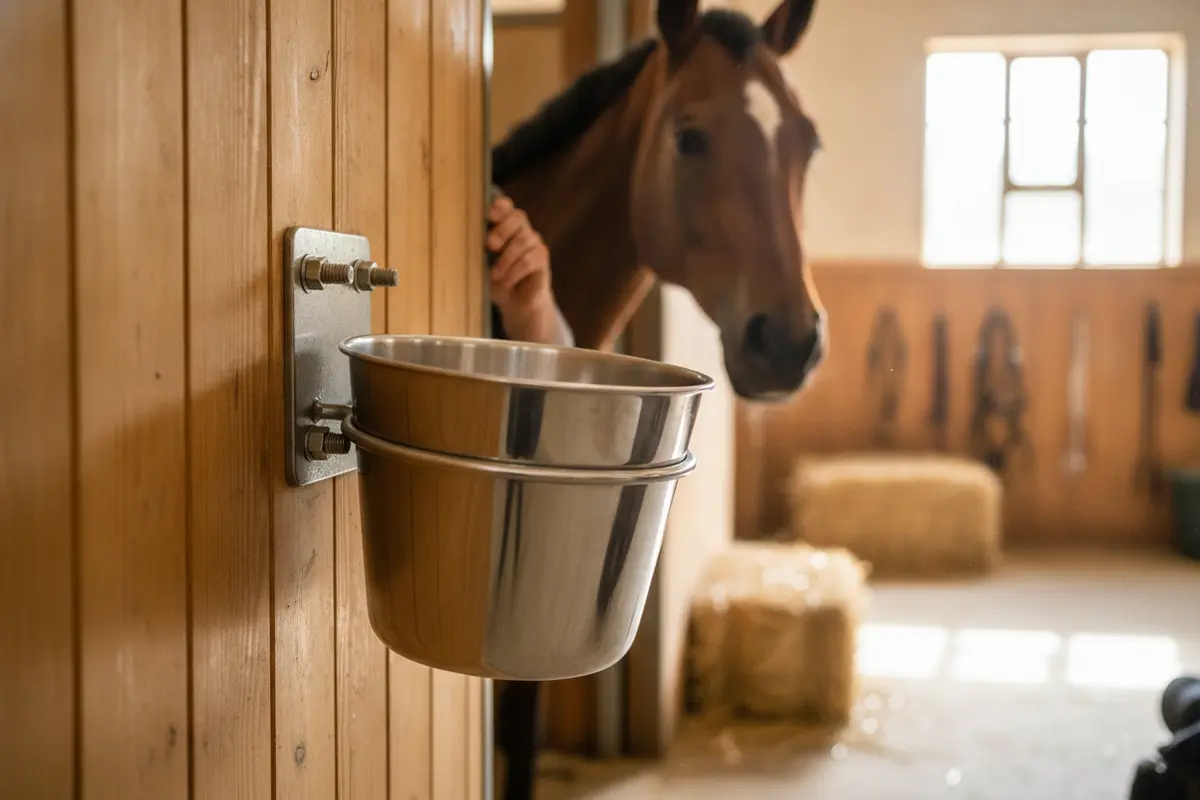
Handles can make a bucket easier to carry, but they also need to be considered in the feeding area. A loose handle or a freely swinging bucket may move unexpectedly. If you need a fixed feeding point, select a mounting approach intended for that use and make sure the bucket is attached as directed. Inspect the connection itself, not only the bucket.
For example, a dedicated corner feeder may be worth comparing when the feeding location calls for a fixed corner setup. The important point is to match the product to its intended placement and to check the installation routinely. Do not improvise with a knot, wire, or fastening method that can create a sharp edge, trap a limb, or leave the container unstable.
Compare common feeding setups
There is no single bucket arrangement for every barn. Use this comparison to identify the trade-offs, then check the product's instructions and the horse's actual feeding space. The table is a planning aid, not a substitute for inspecting the installation.
| Setup | May suit | What to check | Routine consideration |
|---|---|---|---|
| Portable bucket | Carrying a measured meal or feeding where a container is not permanently installed | Handle, rim, base, and whether it can be set down steadily | Carry carefully, place on a stable surface, and remove it when the meal is finished |
| Stall-mounted bucket | A regular feeding point inside a stall | Attachment is secure, edges are smooth, and the position leaves room for normal movement | Check the mounting and nearby surfaces each feeding |
| Corner feeder | A feeding place designed around a stall or pen corner | Product instructions, fit to the corner, and secure installation | Inspect the attachment and look for feed residue in corners |
| Ground-level container | A situation where the caregiver has chosen ground feeding for that horse and area | Stable footing, cleanliness, location, and whether the container shifts | Check for dirt, bedding, water, and displacement before each use |
How do you set up a feed bucket safely?
Take a few minutes to check the feeding place before you fill the bucket. Remove objects that could interfere with the horse or catch on a handle. Make sure the bucket or feeder is stable and does not block a gate, water access, or the horse's ordinary movement. If the horse shares the space, consider whether another animal can push into the area or displace the container.
- Choose the location. Pick a place that fits the feeding plan and can be reached safely by the horse and caregiver.
- Read the product directions. Use only the mounting method and hardware intended for that feeder. Follow the maker's instructions rather than guessing at placement.
- Check the attachment. Give the bucket a careful stability check before adding feed. Look for movement, looseness, sharp edges, or anything that could snag.
- Measure the meal separately. Use the feeding directions established for the horse. A bucket is a container, not a measure of what the horse should eat.
- Observe the first uses. Watch how the horse approaches and eats. If the bucket tips, swings, or is difficult to reach, stop and reassess the setup.
A safer setup is one that remains appropriate as the horse, surroundings, or routine changes. Recheck after moving a feeder, changing its mounting, rearranging a stall, or introducing another animal to the area. If you are unsure whether a location or feeding method is right for your horse, ask your veterinarian or an experienced equine-care professional who knows the horse and setting.
Keep feed portions and equipment separate
It is easy to treat the bucket's capacity as a serving guide, but the container does not tell you how much a particular horse should receive. Feeding amounts depend on the horse and the overall ration. Use the instructions from the horse's care team and the feed's label, rather than adjusting a portion simply because a bucket looks empty or full.
For a consistent routine, use the same method to measure the meal each time. Labeling or dedicating a scoop can help caregivers follow the established plan, provided the scoop itself is used consistently. If more than one person feeds the horse, write down the portion and relevant instructions where they can be followed. Do not make sudden changes to the ration based only on a new container or a change in appearance.
Some barns use separate containers for different feeds, supplements, or horses. If that is part of your routine, keep the containers clearly identified and avoid using one bucket for multiple purposes without cleaning it. A simple separation system reduces mix-ups and helps each person prepare the intended meal. For questions about what belongs in a horse's ration or a change to it, consult the veterinarian or equine nutrition professional familiar with the horse.
Cleaning and inspection habits
Food residue, dust, moisture, and bedding can collect in and around a feed container. Empty it after feeding according to your routine, remove leftover material, and clean it as needed using a method appropriate for the product. Rinse away cleaning residue and allow the bucket to dry before storing or refilling it. Follow the maker's care instructions, especially if a cleaning product or disinfectant is being considered.
Make inspection part of the feeding routine, rather than waiting for a visible problem. Check inside for residue, foreign material, or signs that the bucket needs washing. Check outside for cracks, worn areas, and loose hardware. Also look at the mounting point and the surface around it. If the container cannot be cleaned properly or has damage that compromises safe use, replace it.
- Before filling, confirm the container is clean and dry enough for its intended use.
- Check that the attachment is secure and the bucket is positioned as intended.
- Remove spoiled, contaminated, or unexpected material rather than mixing it into a fresh meal.
- After feeding, remove leftovers and clean the bucket when needed.
- Keep the container in a place where it will not collect unnecessary dirt or be knocked over.
Choosing a bucket for a specific routine
For stall feeding, think about where the horse stands and how much space remains around the feeder. A fixed feeder may keep the feeding point consistent, but only if the installation is stable and appropriately placed. Confirm that the horse can approach without being crowded by a door, partition, or neighboring animal.
For a portable meal, carrying comfort and a secure grip matter. Check that the bucket is not so full or awkward that feed spills during transport. Set it down in a safe location and retrieve it after the meal if that is the routine. A portable container should not be left where it can become a tripping or snagging obstacle.
For shared spaces or multiple horses, observe the whole feeding area. One horse may push another away, or an unsecured container may be moved. Make feeding arrangements that suit the animals and follow the barn's management plan. Avoid assuming a single container or placement will work for every group. When an animal's behavior around feeding changes, review the setup and ask the appropriate professional for guidance.
For horses that eat slowly or have a veterinarian-directed feeding plan, do not choose a bucket as a substitute for discussing the plan. A new feeder may alter access or the ease of monitoring the meal. Keep the horse's care instructions central, and ask the care team whether a proposed equipment change fits those instructions.
Common buying mistakes to avoid
- Choosing by capacity alone. Consider the meal, handling, and position as well as volume.
- Ignoring the mounting hardware. A suitable bucket is not a safe setup if the attachment is unsuitable or loose.
- Leaving damage in service. Cracks, sharp edges, or worn parts are reasons to stop and inspect or replace the container.
- Using the bucket as a portion measure. Follow the established feeding plan and measure the ration consistently.
- Forgetting the surroundings. Check gates, footing, neighboring horses, and the space needed for normal movement.
- Skipping a trial observation. Watch the horse use a new arrangement and correct problems before making it part of the routine.
If the routine also requires a reliable attachment for a portable bucket, review a purpose-made bucket strap and follow the item's own instructions. Product choice and installation should always be appropriate to the location and the horse. Inspect the strap and its connection regularly, and discontinue use if it becomes damaged or no longer holds securely.
Build a simple repeatable routine
A written checklist can help keep feeding consistent across busy days and multiple caregivers. Keep it short enough to follow, but specific enough that another person knows what to do. Include the portion established for the horse, where the meal goes, any equipment check, and what to do with leftovers. Update the routine when the horse's care plan or feeding space changes.
- Confirm the horse and meal before preparing the feed.
- Measure the planned portion using the same method.
- Inspect the bucket, feeder, and attachment.
- Place the meal in the chosen location and watch for safe access.
- After feeding, clear leftovers and clean as needed.
- Record a concern and contact the appropriate caregiver or veterinarian when follow-up is needed.
For broader horse-care questions, consult your horse's veterinarian. The American Association of Equine Practitioners is a professional resource for equine health information. A general reference cannot replace advice based on your horse's health, ration, and living conditions.
Hooves and Paws is a family-owned online retailer serving horse, dog, and cat owners since 1994. Browse our horse supplies to explore equipment for your barn routine.
Contact us to choose a practical horse feeding setup
Frequently Asked Questions
How big should a horse feed bucket be?
Choose a capacity that holds the intended meal without making the container awkward to carry, fill, or clean. Consider the feed's volume and the feeding location, and follow the horse's established ration rather than using bucket size to determine the portion.
Is a portable or mounted bucket better?
It depends on where and how you feed. A portable bucket can be useful when a meal needs to be carried, while a fixed feeder may suit a regular feeding point. Check product directions, stability, and the horse's access before using either arrangement.
How often should I clean a horse feed bucket?
Inspect it as part of each feeding and clean it whenever residue or contamination is present, following the product's care instructions. Remove leftovers, rinse away cleaning residue, and let the container dry as appropriate before refilling.
Can I use the bucket to measure feed?
Do not assume the bucket represents a measured serving. Use the portion set for the horse and a consistent measuring method. If you have questions about the ration, ask the veterinarian or equine nutrition professional who knows the horse.
What should I do if my horse tips or avoids a new bucket?
Pause the new setup and check the location, stability, attachment, and access. Do not leave an unstable container in use. If the behavior continues or is a change for the horse, discuss it with the horse's care team.
When should I replace a feed bucket?
Take it out of service if it has a crack, sharp edge, loose or damaged hardware, or wear that makes it difficult to clean or secure. Replace it with a container suited to the intended feeding location and routine.
A thoughtful bucket choice combines a suitable container, a secure location, a consistent feeding plan, and regular inspection. Observe how the horse uses the setup and adjust it when the horse or the surroundings change.


