


A horse paddock can be a grass turnout area, a dry lot or a smaller space for controlled outdoor time. The right horse paddock is not defined by one universal size or surface. Its layout, fencing, footing, water and upkeep should fit the horse, the property and the way the area will be used. This guide gives you a practical way to assess a new site or identify changes to an existing one.
What is a horse paddock meant to do?
A paddock is a fenced outdoor area for horses. It may provide turnout, grazing, exercise or a place to manage access to grass. A pasture usually refers to grazing land, but the terms can overlap in everyday use. A dry lot is a turnout space with little or no forage. First, be clear about the job your area needs to do. That decision guides the rest of the plan.
For example, a grass turnout area needs attention to forage condition and ground wear. A dry lot needs an intentional feeding and manure routine, as well as a plan for dust and drainage. A small exercise paddock calls for clear paths, safe boundaries and enough room to avoid crowding. One space can serve more than one purpose, but competing needs may require changes in turnout schedules or separate areas.
Key Takeaway
Define the paddock's purpose before choosing materials or changing the ground. A setup that works well for grazing may need different maintenance from a dry lot.
How should you plan the layout?
Walk the site as if you were doing daily chores. Trace the route from the barn or holding area to the gate, then consider how you will reach water, shelter and feeding spots. Think through how a horse will enter and exit, and how you will clean, refill, inspect and repair the area. A good layout makes these routines practical without creating narrow traps or blind corners.
- Make gates workable. Choose an approach that gives you room to open, pass through and close the gate while handling a horse. Check that the gate swings freely and latches securely.
- Keep paths clear. Avoid pinch points between a gate, fence and fixed equipment. Repeated routes to water or shelter can become muddy or uneven, so plan to inspect these high-use lines.
- Notice the land. Look for low spots, slopes, natural drainage paths and areas that stay wet after rain. Observe the site in different weather if possible, rather than judging it on one dry day.
- Plan for chores. Make sure you can get to the perimeter and high-traffic areas to check and maintain them. Store tools and chemicals outside the horse's reach.
There is no single acreage figure that makes a paddock right for every horse. Available land, local rules, the number and temperament of horses, turnout time, forage and the ability to maintain the ground all matter. A compact area can accumulate manure and wear quickly. More land does not automatically solve problems if a gate, water source or shelter creates a congested spot.
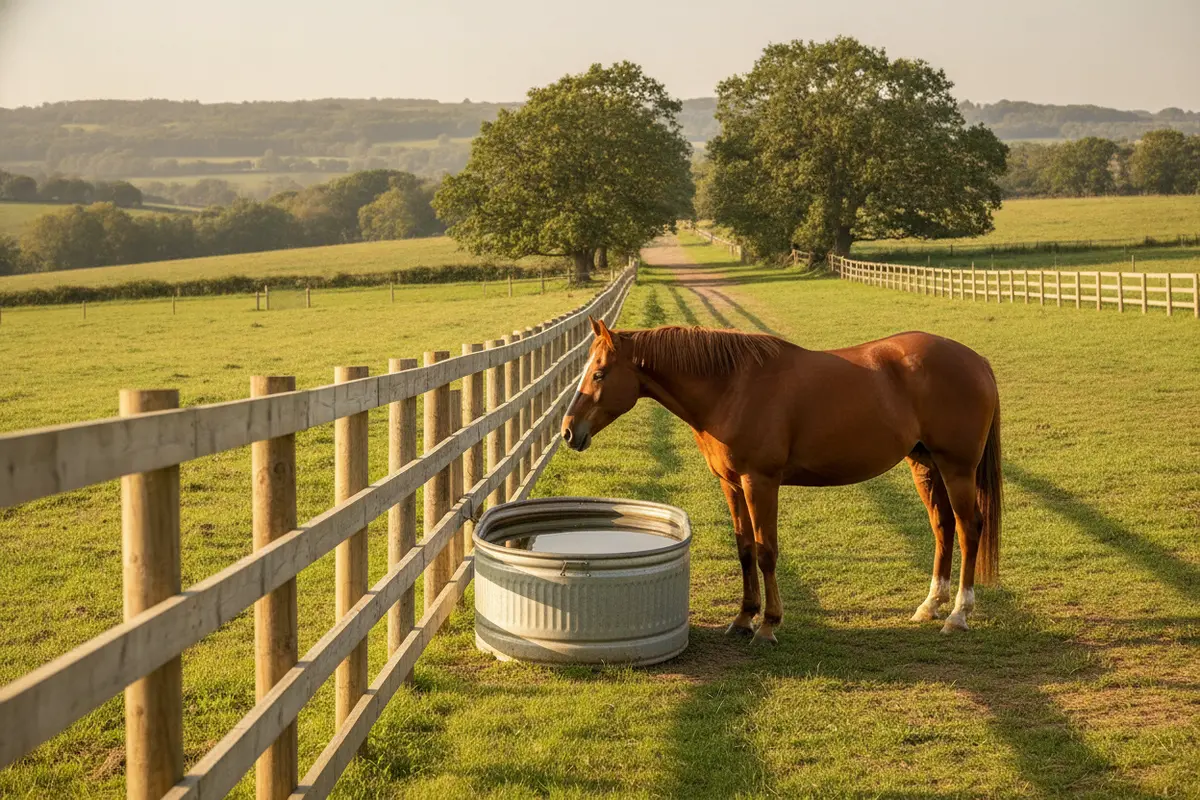
Choose fencing and gates you can inspect
A fence should be sturdy, visible, in good repair and suited to the horses it contains. No material is automatically safe in every installation. Look at construction, connections, gaps, horse behavior and nearby hazards together. Walk the whole boundary, including corners and sections hidden by vegetation. Check for broken boards, protruding nails, sharp edges, loose or sagging wire, damaged posts and places where a head or leg could become caught.
Pay special attention to gates. Confirm that the latch holds, the gate does not drag, and there is no hazardous gap when it is closed. Remove stored equipment and fallen branches from fence lines. If a horse repeatedly leans on, rubs or tests one section, inspect that area and consider what might be prompting the behavior. Do not treat a temporary repair as a lasting fix if it leaves a sharp edge or an unreliable boundary.
Electric fencing may be part of a planned system, but it must be installed, maintained and used according to its instructions and local requirements. It is not a substitute for a sound perimeter or routine checks. When you handle or lead a horse through a gate, use equipment that fits the horse and your routine. You can review the available horse halter styles and assess fit and use with an experienced horse professional.
What should you check about footing and drainage?
Footing changes with weather and use. Check the surface after rain and during dry periods. Look for deep mud, standing water, slippery patches, sharp stones, holes, exposed roots and abrupt changes in level. Pay particular attention to gateways, water stations and shelter entrances, because repeated traffic can churn or compact the ground there. Remove loose debris and address hazards promptly.
When a horse slips, avoids a section or changes the way it moves, do not assume the ground is the only possible cause. Observe the horse and contact a veterinarian if a change is concerning. For the site itself, start by identifying where water comes from and where it goes. Note whether a problem is limited to one low spot or follows a traffic path. Avoid moving soil or adding material before considering runoff, neighboring land and local requirements.
Soil, climate, use and drainage all affect what surface improvement is appropriate. For land-specific questions about runoff, erosion or conservation planning, the USDA Natural Resources Conservation Service provides conservation information and technical assistance. A qualified local contractor or agricultural extension resource may also help assess site conditions. Get advice suited to your property rather than copying a surface treatment used somewhere with different soil and weather.
Dust needs attention as well. A dry, bare area used often may become dusty, while excess water can create mud and uneven footing. Observe when and where the problem appears, then seek a site-specific solution. Avoid products or practices that could create a new hazard for horses, people or nearby water.
Quick Summary
Inspect actual ground conditions in more than one kind of weather. Find the source and path of water before attempting a drainage or footing change.
Water, shelter and feed need a practical plan
Make clean, usable water a daily check. Confirm that the container is stable, functioning and reachable. In a shared paddock, watch whether every horse can approach it without being driven away. Look more often during hot weather, freezing conditions or any period when equipment could fail. Seeing a trough in place is not enough; verify that it contains usable water.
Provide shelter or shade appropriate to local conditions and the horse's circumstances. Check the structure for loose parts, sharp edges, damage and accumulated debris. Think about access as well as the shelter itself. A narrow entrance can become a bottleneck, particularly if one horse guards the space. Observe how horses use it and whether all animals can move away safely.
Feeding arrangements should fit each horse's diet and management plan. Keep hay, feed containers and equipment out of travel paths, and avoid placing them where they block an exit or create a tripping hazard. If horses share a paddock, pay attention to whether one animal is pushed away from food, water or shelter. A change in grouping or feeding arrangement may be needed. Discuss significant diet or turnout changes with a veterinarian or equine nutrition professional when the horse has individual health needs.
How do common paddock setups compare?
These are planning categories, not fixed prescriptions. A property may combine them, and the right arrangement depends on site conditions and daily management.
| Setup | Common purpose | Main planning focus | Routine checks |
|---|---|---|---|
| Grass turnout | Outdoor time with forage available | Forage, boundaries and ground wear | Grazing condition, plant hazards, mud and fence line |
| Dry lot | Turnout with limited or no grazing | Water, feeding, manure, drainage and dust | Footing, water, high-traffic areas and waste removal |
| Small exercise paddock | Controlled outdoor movement in a limited area | Clear routes, safe footing and avoiding crowding | Gate function, obstacles, wear and horse interactions |
Use this comparison to decide what to monitor, not to assume that one type is automatically easier. A dry lot can limit access to grass but may need frequent attention to dust, manure and worn ground. Grass turnout provides forage but still needs observation for changes in grazing condition and ground wear. A smaller enclosure may suit a specific routine, but it can concentrate traffic and social pressure. Review the setup as conditions change through the year.
Build a repeatable daily inspection routine
A short, consistent check can help you notice changes before they become larger problems. Before turnout, scan the gate and visible fence, confirm water is available, and look over the ground for new debris or damage. Then observe the horse. Notice how it walks, whether it approaches resources normally and how it interacts with companions. A new injury, marked reluctance to move or unusual behavior deserves attention. Contact a veterinarian about serious, worsening or uncertain health concerns.
After storms, strong winds, freezing weather or other severe conditions, check again before assuming the paddock is ready. Look for fallen limbs, shifted fence sections, washed-out or slick ground, blocked drainage and a changed water supply. Inspect repairs after they are made. Keep a simple log if a particular location repeatedly becomes muddy, a gate sticks or a horse tends to crowd another at a resource. Dates and observations can help you identify patterns and explain the issue to a professional.
Manure management should match the size and use of the area. Remove manure regularly, especially where horses spend much of their time or where it accumulates. Check for wet, compacted or worn patches while cleaning. Paddock cleanup is only one part of parasite management; follow a veterinarian's guidance for an appropriate plan rather than assuming that cleaning alone replaces testing or treatment.
Keep the route in and out predictable. Have equipment ready before bringing a horse through the gate, close and latch the gate, and avoid leaving loose tools, wire, buckets or vehicles in the turnout area. If you use a halter for leading, inspect its condition and fit as part of your handling routine. If the paddock is part of a regular riding routine, store riding equipment outside the turnout area and review horse performance gear separately for its intended use.
Common horse paddock mistakes to avoid
- Judging the fence from a distance. Walk its full length and look closely at connections, gaps, surfaces and gate hardware.
- Making a ground change without understanding runoff. Trace where water travels and get site-specific guidance before changing drainage or adding material.
- Checking water only when filling the trough. Verify access and function as part of the daily inspection.
- Ignoring social pressure. Observe whether each horse can reach water, shelter and feed without conflict.
- Leaving high-traffic areas until they fail. Check the gate, shelter entrance and water station for early signs of wear.
- Assuming one size rule fits all. Consider the horse, land, purpose, local conditions and the time available for maintenance.
Keep a short written checklist near the place where you prepare for turnout. A useful version might include gate and latch, fence scan, water, footing, shelter access, manure and horse behavior. Adjust it for seasonal risks and your own property. A checklist is not a replacement for observation, but it can make routine checks less likely to be skipped on a busy day.
For horse-handling supplies that are relevant to moving a horse safely through its routine, review the available halter collection and confirm that any choice suits the horse and intended use.
Frequently Asked Questions
Is a paddock the same as a pasture?
Not necessarily. A paddock is a fenced outdoor area, and it may or may not have enough grass for grazing. Pasture usually refers to grazing land, although people may use the terms differently.
How large should a horse paddock be?
There is no universal size that suits every horse and property. Consider the horse's turnout routine, the number of horses, land, forage, terrain, local rules and your ability to maintain the area. Seek site-specific advice when planning a new enclosure.
Can a horse use a dry lot?
A dry lot can be part of a managed turnout routine, but it still needs safe footing, usable water, appropriate shelter or shade, manure management and a feeding plan that suits the horse. Ask a veterinarian about individual health or diet needs.
How often should I inspect a horse paddock?
Make a brief check part of the daily routine. Look at water, gates, fencing, visible hazards and the horse's behavior. Inspect again after severe weather and promptly address damage or unsafe footing.
What should I do about a muddy paddock?
First identify where water collects and whether the problem is tied to a low spot or repeated traffic. Soil, drainage and runoff affect the right fix, so consult a qualified local professional before changing grade or adding surface material.
What if my horse is injured in the paddock?
Keep yourself safe, avoid moving the horse unless it is safe to do so, and contact a veterinarian for a significant, worsening or uncertain injury. Follow the veterinarian's instructions rather than relying on a general care guide.
A well-managed horse paddock is planned around its purpose and checked in the conditions horses actually experience. Regular attention to water, boundaries, footing and behavior helps you spot issues and decide when local or veterinary advice is needed.


