


A cat perch gives your cat a dedicated place to rest, watch the room, stretch, and retreat when the household feels busy. The best cat perch is not simply the highest one or the softest one. It should match your cat’s size, age, habits, and available space while remaining stable during everyday use. This guide explains how to compare perch styles, check safety, set up the location, and keep the resting area clean.
What makes a cat perch a good choice?
A useful perch is stable, large enough for the cat to rest naturally, easy to clean, and placed where the cat feels secure. A perch should add choice and comfort without creating a fall, tipping, or entrapment hazard.
Cats often value control over their surroundings. A raised resting place can let a cat observe people, other pets, windows, and doorways from a comfortable distance. Some cats prefer a quiet corner, while others want a busy location near the family. Watch where your cat already naps before choosing a design. That observation is more useful than selecting a perch based only on appearance.
Look for a surface that supports the cat’s full body. The cat should be able to turn around, settle down, and adjust position without slipping off the edge. A small kitten may fit on a compact shelf, but a larger adult cat needs more room and a stronger support system. If more than one cat may use the perch, compare the combined space and weight rather than planning around one cat at a time.
Which cat perch style fits your space?
Cat perches come in several practical forms. The right choice depends on the room, mounting options, and your cat’s preferred activities.
| Perch style | Good fit for | What to check | Possible limitation |
|---|---|---|---|
| Window perch | Cats that enjoy watching outdoors | Secure attachment, window condition, and clear access | Sun, drafts, or a narrow surface may reduce comfort |
| Freestanding tower | Homes where wall or window mounting is not practical | Wide base, balanced height, and intact platforms | It takes floor space and may move on smooth floors |
| Wall-mounted shelf | Small rooms or cats that like climbing routes | Stud or anchor placement and secure hardware | Installation must match the wall structure |
| Heated or padded bed perch | Cats that seek extra warmth or softness | Manufacturer instructions, cord condition, and washable cover | Some cats prefer a firm surface instead |
| Scratching-tree platform | Cats that like resting and scratching in one area | Platform stability, post condition, and material wear | Loose fibers or worn parts need prompt attention |
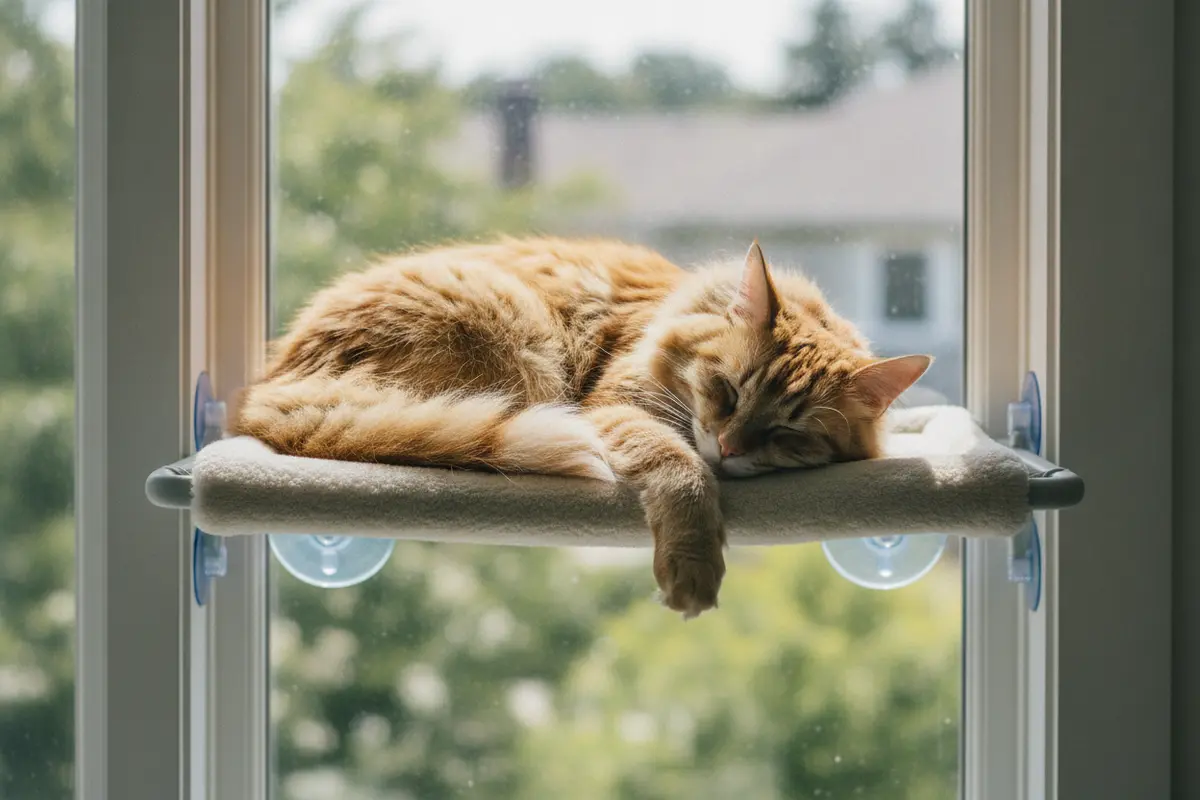
A window perch is appealing when your cat already spends time on a sill. Confirm that the attachment points are secure and that the window can remain safely closed or screened. A freestanding tower may be more flexible, but height alone is not a benefit if the base rocks when the cat jumps onto it.
Wall-mounted shelves can create a useful vertical route. They should be installed according to the product instructions and attached to a suitable surface. Do not assume that a decorative shelf can support a moving animal. The hardware, wall material, and load rating all matter.
How should you choose a cat perch by size and support?
Measure the resting surface, compare it with your cat’s body size, and prioritize a stable base or properly installed hardware over extra height.
Start with your cat’s normal resting position. A curled-up cat may use a smaller bed, but the cat should still have enough room to change position without placing paws over an unstable edge. For a cat that sprawls, stretches, or shares space with another cat, choose a wider platform.
Weight is only one part of support. A perch must also handle movement. Cats jump, turn quickly, and sometimes land off-center. A tall tower with a narrow base can be less stable than a shorter unit with a broad base. Gently test a freestanding unit before allowing access. It should not rock, slide, or tip when pressure is applied to different parts of the platform.
For a wall or window perch, inspect every attachment point. Follow the stated weight limit and account for the cat’s movement, not just a still body. Recheck screws, brackets, suction components, and seams after installation, then inspect them periodically.
What surface materials are practical?
Soft fabric can make a perch inviting, especially in a cool room. A firm surface may be easier for an older or less agile cat to use. Fleece, carpet, and removable cushions can offer different textures, but the most important feature is that the cat can grip the surface without catching claws in loose loops or damaged fibers.
Choose a cover that can be removed or wiped clean. Hair, dust, and small bits of litter collect quickly in resting areas. If the perch has a cushion, check whether it retains its shape after washing. A flattened or bunched cushion can create an uneven landing surface.
Shop This Post

Featured in this article
Ducky World Yeowww! Juguete de hierba gatera orgánica de 7" para gatos de granja
$12.11
Shop Now →


Where should you place a cat perch?
Placement can determine whether a cat perch becomes a favorite resting spot or an unused piece of furniture. Begin in a location your cat already chooses. Common options include a quiet corner, a room with family activity, or a window with a safe view.
- Offer a clear approach. Leave enough room for the cat to jump or climb onto the perch without colliding with furniture.
- Avoid unstable launch points. Do not place a tall perch beside a lightweight table that can shift under pressure.
- Consider temperature. Keep the perch away from strong drafts, direct heat, and areas that become uncomfortably hot in sunlight.
- Preserve an exit route. A cat should not feel trapped between a wall, another pet, and a narrow platform.
- Match the cat’s confidence. A timid cat may prefer a lower, covered location, while a confident climber may enjoy a higher route.
Do not force a cat to use the perch. Place a familiar blanket nearby or allow the cat to investigate at its own pace. Praise calm exploration, but avoid repeatedly lifting the cat onto the platform. The goal is to create a choice, not a required position.
In a home with dogs, children, or several cats, consider access and quiet time. A perch can provide distance, but it should not be used as a substitute for supervising interactions. Make sure the cat can leave the perch without passing through a crowded or blocked area.
How can you make a new perch more inviting?
Some cats investigate a new object immediately. Others need time. Keep the setup simple at first. Place the perch near a familiar resting area, use a washable blanket with a known scent, and leave space around the entrance. A favorite toy can encourage investigation without making the perch crowded.
Food can help create a positive association, but do not place a full meal on a high platform if it may spill or make the cat feel exposed. Short, calm introductions work better than moving the cat onto the perch again and again. If the cat ignores it, change the location or surface before deciding that the design has failed.
Vertical enrichment works best when it offers several choices. A perch near a scratching surface, a lower step, or a quiet bed can create a small routine of climbing, observing, and resting. Keep pathways clear and remove objects that could snag a collar or catch a paw.
What safety checks should you perform?
Before use, check the support, surface, edges, cords, openings, and route to the floor. Repeat the check after moving the perch or whenever you notice wobbling, fraying, or damage.
- Press down on each platform and check for movement.
- Inspect fasteners, brackets, suction cups, and seams.
- Look for exposed staples, sharp corners, splintered wood, or cracked plastic.
- Remove loose threads and damaged fabric that could catch claws.
- Keep cords secured and away from jumping paths.
- Check that openings are large enough for the cat to pass through comfortably.
- Place the unit away from hazards such as open windows, hot surfaces, and unstable furniture.
- Replace or repair a damaged component instead of covering it with a loose blanket.
A collar can catch on some narrow gaps, hooks, or decorative loops. If your cat wears a collar, inspect the perch with that possibility in mind. You should also consider whether another pet could knock the unit over or block the cat’s return path.
Older cats, kittens, and cats with limited mobility may need a lower platform or intermediate step. Avoid asking a cat to make a difficult jump just to reach a resting place. If your cat suddenly avoids a previously used perch, inspect the equipment and observe the cat rather than assuming the behavior is a preference.
How do you clean and maintain a cat perch?
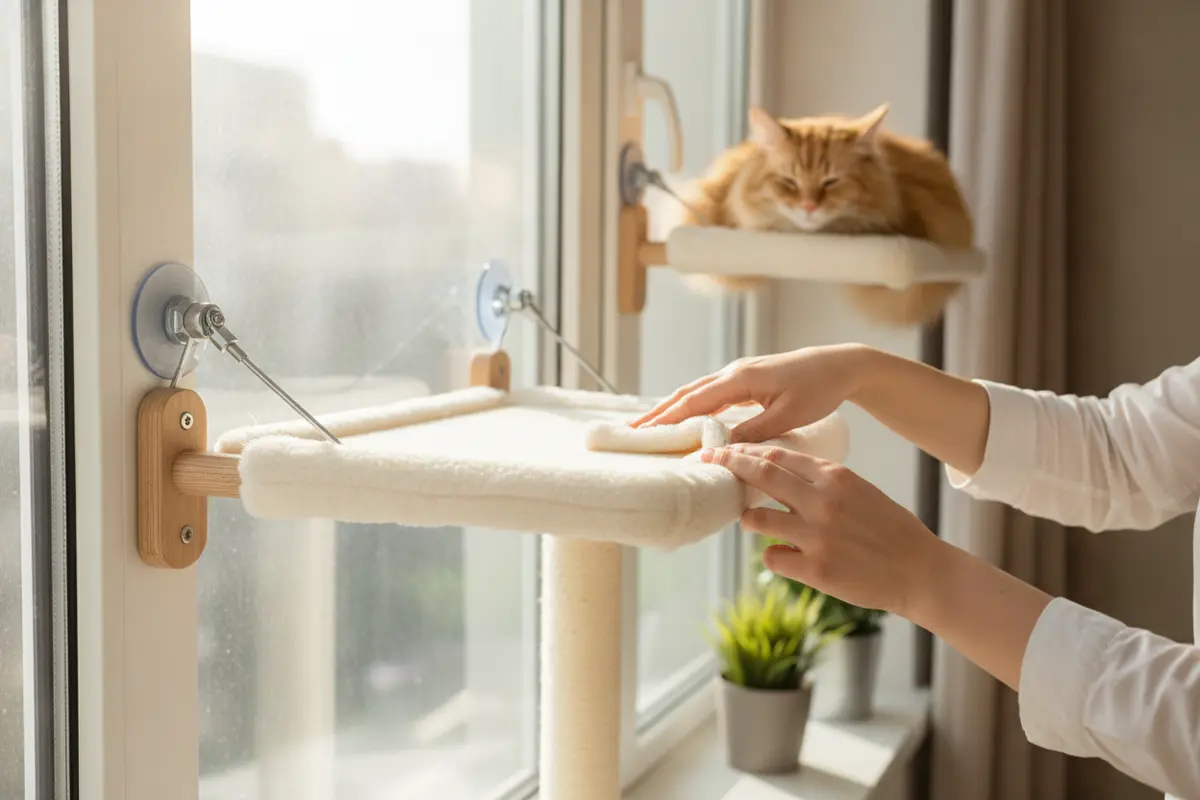
Use a regular maintenance routine. Vacuum or brush loose hair from fabric, wipe hard surfaces with a product suitable for the material, and follow the manufacturer’s washing instructions. Let washable parts dry completely before reassembly. Damp fabric can become unpleasant and may weaken over time.
Inspect the perch during cleaning. Look for loose stitching, compressed padding, worn scratching material, bent hardware, and changes in the base. A quick check is especially important after a move, a fall, or a period when multiple pets have used the unit.
Keep the surrounding area clean as well. Hair and dust can make a platform slippery, while clutter can obstruct the landing area. Place litter boxes and food according to your cat’s routine, but avoid crowding the perch with supplies. For other enrichment options, explore the interactive toy selection and choose only items appropriate for the animal using them.
What common cat perch mistakes should you avoid?
Choosing a perch based on height alone is a common mistake. Height can be useful, but stability, access, and the cat’s comfort come first. A high perch that wobbles may be ignored or may create an avoidable fall risk.
Another mistake is placing the perch where people rarely go, even though the cat wants to observe household activity. The opposite problem can happen when a timid cat is given no quiet option. If possible, offer more than one resting location at different heights or in different rooms.
Do not overlook cleaning and replacement. A perch can look attractive while its support or fabric is failing. Do not continue using a unit with cracked parts, loose hardware, or a damaged cover. Replacing one worn component may be possible, but only when the replacement is designed for that product.
Finally, do not assume every cat wants the same texture or location. Let behavior guide adjustments. If the cat sleeps beside the perch rather than on it, try moving it closer to that chosen spot or changing the surface. If the cat uses it briefly and leaves, check for drafts, glare, noise, or an uncomfortable landing.
Families who care for horses as well as cats may also want to organize animal supplies by daily routine. A university equine industry overview describes the scale and variety of horse ownership and management needs; it is available in this equine industry report. The same practical habit applies at home: select each item for the animal, environment, and task rather than treating one product as universal.
How can you compare cat perch options before buying?
Write down the decision factors before browsing. Measure the available area, note the cat’s approximate size and mobility, and identify whether you need floor-standing, wall-mounted, or window-mounted support. Then compare ease of cleaning and the availability of replacement parts.
- Space: Will the perch fit without blocking a walkway, window, or door?
- Support: Can the base or mounting system handle movement securely?
- Access: Can the cat reach it and leave it without a difficult jump?
- Comfort: Does the surface suit the cat’s preferred texture and temperature?
- Maintenance: Can you clean the fabric and inspect the hardware?
- Household fit: Will dogs, children, or other cats interfere with access?
Shopping for a multi-animal household may also mean checking materials and storage. Hooves and Paws is a family-owned online retailer serving horse, dog, and cat owners with curated supplies, practical guidance, personal service, free continental U.S. shipping with no minimums, and a 365-day satisfaction guarantee. Browse the animal supply bundles when comparing related needs for your household.
Shop cat enrichment supplies today
Frequently Asked Questions
What is the best location for a cat perch?
The best location is secure, accessible, and comfortable for your individual cat. Start near a spot the cat already uses, then check for drafts, heat, glare, noise, and a clear route on and off the perch.
Should a cat perch be high off the floor?
Not necessarily. Some cats enjoy height, but a stable lower perch can be a better choice for kittens, older cats, less agile cats, or cats that prefer quiet corners. Safety and access matter more than maximum height.
How large should a cat perch be?
The surface should allow the cat to turn, settle, and adjust position without slipping over the edge. Choose a wider platform for cats that stretch out or for a perch that may be shared.
How often should you clean a cat perch?
Remove loose hair and debris regularly, then wash or wipe the perch according to its care instructions. Inspect it during cleaning and address fraying, unstable hardware, or damaged padding promptly.
What should you do if a cat ignores a new perch?
Give the cat time, move the perch closer to a familiar resting place, or try a different surface. A familiar washable blanket may help. Avoid forcing the cat onto it, and check whether noise, drafts, glare, or an awkward approach is reducing its appeal.
Final checklist for choosing a cat perch
Before bringing a cat perch into regular use, confirm that it fits the room, supports the cat during movement, has a comfortable and cleanable surface, and provides an easy route on and off. Observe how your cat uses it, inspect the hardware often, and adjust the location when household needs change. A thoughtful perch gives your cat a dependable place to rest while fitting safely into daily life.


