


When a dog paces, trembles, hides, or tries to escape during a stressful event, it is natural to look for gentle support. A dog anxiety vest may help some dogs feel more settled when used alongside a calm environment and thoughtful training. Fit, introduction, supervision, and realistic expectations matter more than a product label.
Explore dog apparel and comfort options
A dog anxiety vest is a pressure-wrap garment designed to provide comfortable, even contact around a dog's torso. It may offer short-term comfort during triggers such as fireworks, thunderstorms, or separation, but it is not a cure and will not suit every dog. Choose the correct size from the manufacturer's chart, introduce it gradually with rewards, and stop if your dog shows distress, overheating, restricted movement, or skin irritation.
Before choosing a style, identify what is causing your dog's anxiety and consider how a vest could fit into a broader, welfare-focused plan.
What Can Trigger Anxiety in Dogs, and Where Does a Vest Fit?
Dogs can react to different situations in different ways. Fireworks and thunderstorms are well-recognized loud-noise triggers, while separation anxiety and generalized anxiety represent other common patterns described in veterinary behavior research. Travel, unfamiliar surroundings, and changes in routine may also be difficult for an individual dog, so pay attention to the setting and the signals your dog gives you.
A pressure-wrap vest may fit into a short-term comfort plan for some dogs. Its role is supportive, not curative: it does not identify the cause of anxiety, replace behavior work, or provide a diagnosis. A vest should be one tool used alongside a calm environment, thoughtful preparation, and professional guidance when needed.
A vest may offer comfort during a stressful event, but results vary. Use it as part of a broader plan that considers the trigger, your dog's response, environmental management, training, and veterinary care when appropriate.
Short-term support is different from long-term change
Research on noise fears recommends considering both short-term event management and longer-term training. For an unavoidable event, reducing startling sounds, giving your dog a predictable retreat, and keeping the environment calm can support welfare. Rewards involving food or play may also help create more positive associations during noise exposure when your dog is able to engage.
Longer-term work can include gradual behavior training rather than simply placing a vest on the dog when fear appears. A qualified professional can help you choose an appropriate approach, and our guide to dog training class options can help you think through available support. If anxiety is severe, persistent, sudden, or worsening, contact a veterinarian instead of relying on wearable gear alone.
Watch your dog's response each time. If the vest seems to add stress, restrict movement, or make your dog try to escape it, remove it and reassess the plan. Comfort should be judged by the individual dog, not by the product description.
How Does a Dog Anxiety Vest Work?
A dog anxiety vest is designed to apply gentle, even pressure around the torso. The snug sensation may feel reassuring to some dogs, much as a secure layer can help a person feel settled during an unfamiliar or stressful moment. The goal is comfort and support, not restraint. A properly fitted wrap should allow normal breathing, walking, sitting, and resting.
Researchers have proposed that consistent pressure may reduce outward signs of stress or help a dog feel more secure during a predictable trigger. However, that proposed mechanism should not be treated as a proven medical treatment. A pressure wrap cannot identify why a dog is anxious, teach coping skills, or address pain and illness that may be contributing to a behavior change.
What does the research show?
A systematic review identified 229 studies, but only four met its eligibility criteria. Those studies evaluated commercially available pressure wraps and a telemetry vest. The review found limited evidence that pressure wraps reduce anxiety in dogs, and it concluded that further research is needed before reliable conclusions can be made. You can read the full systematic review of pressure wraps for canine anxiety for its methods and findings.
The evidence also has important limitations. Risk of bias related to blinding, which helps prevent expectations from influencing results, was generally high in the reviewed studies. That makes it harder to separate the vest's effect from an owner's or observer's expectations. The studies also used different pressure-wrap designs and anxiety-provoking situations, so results from one product or setting may not apply to every dog.
How should you interpret your dog's response?
Watch your dog's body language rather than assuming the vest is helping. Relaxed movement, normal breathing, and willingness to eat or engage are more encouraging than simply remaining still. If your dog tries to escape the vest, pants heavily, freezes, becomes more agitated. Or shows any other sign of distress, remove it and reassess the fit and approach. A veterinarian can help investigate persistent, severe, sudden, or worsening anxiety and recommend behavior support when needed.
Shop This Post

Featured in this article
Chaqueta para perros Alpine All Weather de Doggie Design - Impermeable, con forro polar y reflectante - Múltiples tallas
$25.00
Shop Now →
How Do You Choose and Fit a Dog Anxiety Vest?
Start with the manufacturer's size chart, not your dog's breed or weight alone. Measure around the widest part of the chest, usually just behind the front legs, while your dog is standing naturally. Record the measurement and compare it with the product's chart. Sizing can vary between brands, and even a well-designed pressure wrap may fit differently from another. The research literature also shows that pressure-wrap types varied across the studies reviewed, so product construction and instructions matter.
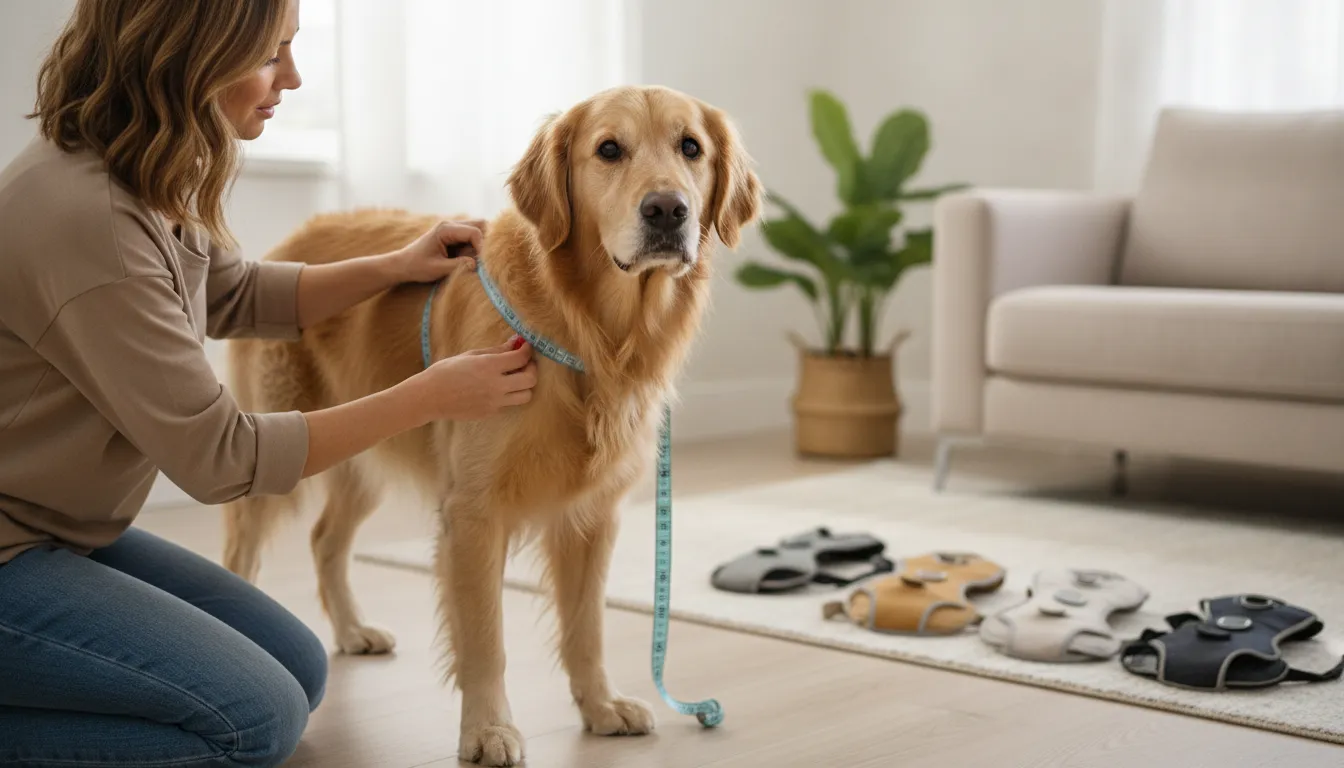
A suitable dog anxiety vest should feel snug and secure without restricting normal breathing, walking, sitting, stretching, or turning. After fastening it, slide your fingers beneath the material and watch your dog's movement. Check the chest, shoulders, neck, and underarms for pinching, rubbing, bunching, or exposed pressure points. Your dog should be able to pant normally and move freely. If the garment shifts, gaps, or causes repeated attempts to scratch or escape, remove it and reassess the size or design.
| Priority | What to check | Why it matters |
|---|---|---|
| Size | Chest measurement and the brand's current chart | Weight and breed labels can miss individual body shape. |
| Mobility | Walking, sitting, stretching, and turning | A calming garment should not interfere with ordinary movement. |
| Breathing and heat | Normal panting, airflow, and signs of overheating | Extra coverage can become uncomfortable, especially in warm conditions. |
| Closures | Secure fasteners that lie flat and do not pinch | A reliable closure helps prevent shifting while avoiding pressure points. |
| Fabric and care | Construction, cleaning directions, and label instructions | Care requirements and comfort vary by product. |
Consider the fabric and coverage for the setting where you expect to use it. A lighter design may be more comfortable in warm weather, while any garment should be removed if your dog seems overheated, distressed, or unusually uncomfortable. Never assume that more compression is better. Follow the label, supervise early wear, and inspect the skin and coat afterward.
Before ordering, review the return policy and confirm whether an unworn or tried-on garment can be exchanged. Product pages should give clear dimensions, specifications, images, and care information. For current wearable gear, browse dog apparel and accessories, then verify the individual product's size chart rather than assuming a dog anxiety vest is available.
Fit also matters for the rest of your dog's equipment. This dog gear fit and safety guide can help you review collar placement and general comfort before combining wearable items.
How Should You Introduce and Use a Calming Vest?
A calming vest should become a familiar piece of equipment before you ask your dog to wear it during a stressful event. Gradual, repeated introduction can help build comfort, while rewards can create a more positive association with challenging sounds or situations. Use the manufacturer's instructions for putting on and securing the vest, since designs and closures vary.
- Let your dog investigate it calmly. Place the vest nearby and allow your dog to look at and sniff it without pressure. Pair relaxed interest with a favorite food reward, play, or quiet praise. If your dog backs away, pause and try again later rather than forcing contact.
- Practice the fitting steps in a low-stress setting. Follow the product directions, which may involve several simple steps for positioning and fastening the wrap. Check that it sits securely without restricting breathing, movement, or normal behavior. Make adjustments according to the manufacturer's size chart and instructions.
- Build short, calm practice sessions. Put the vest on when your dog is already settled, then offer a reward or a familiar quiet activity. Increase exposure gradually, based on your dog's body language and comfort. The goal is relaxed familiarity, not completing a fixed number of minutes.
- Pair it with broader preparation. For noise-related fear, rewards during controlled exposure can support counterconditioning. Relaxation training and carefully managed audio-recording exercises may also help improve noise fears, according to a veterinary behavior review. Keep the sound level low enough that your dog can remain comfortable, and stop if distress increases. Read the review of noise-fear behavior strategies.
- Plan ahead for the real event. Use the vest during a calm trial before fireworks, thunderstorms, travel, or another predictable trigger. Confirm the fit and observe how your dog moves, rests, eats, and interacts while wearing it. A vest is a support tool, not a guarantee that every dog will feel calm.
- Monitor and remove it thoughtfully. Stay nearby during initial use and watch for signs of discomfort, overheating, restricted movement, or escalating fear. Remove the vest if your dog cannot settle or appears physically uncomfortable, and follow the manufacturer's care and use guidance. Ask a veterinarian for help when fear is severe, worsening, or unsafe.
Introduce the vest gradually, reward calm behavior, practice before a predictable stressor, and monitor your dog throughout use. Adjust or remove it when comfort or safety becomes a concern.
Will a Dog Anxiety Vest Work for Every Dog?
A dog anxiety vest can be a useful comfort tool for some dogs, especially during a predictable, situational stressor. It is not a guaranteed solution, and a dog's response depends on the cause and severity of the fear. The fit of the vest, and whether the dog accepts wearing it. A product guide notes that these vests may help some dogs with mild to moderate anxiety, but they do not work for every dog. Read the product guide's limitations before treating a vest as a complete plan.
Key Takeaway
A vest may add comfort, but it should support a broader plan that considers your dog's environment, behavior training, and veterinary needs.
Situational stress is different from severe fear
Some dogs may settle more easily with wearable support during a thunderstorm, fireworks display, travel, or another short-lived event. Others may dislike the sensation, remain distressed, or show little change. Do not force a vest onto a dog that is trying to escape it, freezing, panting heavily, or showing other signs of increased distress. Remove it calmly and reassess the fit and the situation.
When fear is intense, persistent, worsening, or interfering with eating, resting, safe movement, or daily life, a vest alone is unlikely to be enough. The research on pressure wraps remains limited, so an individual dog's positive response should be treated as useful observation, not proof of a universal effect. A systematic review of pressure wraps in dogs found limited supporting evidence and called for more reliable research.
Use the vest as one part of support
Environmental changes can reduce the immediate challenge. During a noise event, offer a familiar retreat, reduce startling sounds where possible, and keep your dog away from escape hazards. Longer-term behavior work may include reward-based counterconditioning, relaxation exercises, or carefully managed desensitization. A veterinary professional can help assess sudden or serious anxiety and discuss appropriate care options. A review of noise-fear treatment describes management, behavior training, and veterinary-directed medication as possible parts of care, depending on the dog and situation. Never give medication without veterinary guidance.
Track what happens when the vest is used: the trigger, your dog's body language, and whether recovery seems easier. That record can help you decide whether the vest is genuinely useful or whether your dog needs a different approach.
How Do You Care for the Vest and Know When to Ask a Veterinarian?
Good care protects both the garment and your dog's comfort. Start with the manufacturer's label, since washing, drying, and storage instructions can vary by material, lining, and closure design. Follow the stated care method rather than assuming the vest can be machine washed, soaked, bleached, or heat dried. When it is clean and completely dry, store it in a cool, dry place where it will not be crushed, chewed, or exposed to moisture.
Before each use, look over the seams, fasteners, hook-and-loop areas, straps, and any panels that sit against your dog's body. Fraying, loose stitching, damaged closures, or stretched fabric can change the fit. Recheck the fit as your dog gains or loses weight, and review the basic principles in this dog gear fit and safety guide. The vest should not interfere with normal movement, breathing, or your ability to observe your dog.
A dog anxiety vest is comfort support, not a substitute for veterinary care. Follow the product label, inspect the vest before use, supervise your dog, and remove it promptly if your dog overheats, struggles to breathe, or shows clear distress.
Supervise your dog whenever the vest is being worn, especially during an early trial or a stressful event. Stop using it if your dog pants heavily, seems unusually hot, attempts to escape the garment, becomes more agitated, or shows any other concerning change. Move your dog to a calm, comfortable setting and observe closely. Do not force continued wear simply because a storm, fireworks display, or other trigger is underway.
Ask a veterinarian for guidance when signs are severe, sudden, persistent, or getting worse. Veterinary input is also appropriate when fear disrupts daily life, creates a safety risk, or does not improve with responsible management. Research on pressure wraps has examined situations including recorded firecracker or thunderstorm sounds, owner separation. And naturally occurring storms at home, but a product response does not explain the cause of an individual dog's behavior. Longer-term approaches such as counterconditioning, relaxation training, and desensitization may help noise fears over time, with a plan tailored to the dog. You can also learn more about Hooves and Paws' family-owned approach to informed pet care.
Shop dog apparel and accessories today
Frequently Asked Questions
Do anxiety vests work for dogs?
Some dogs appear more comfortable with a pressure wrap, especially during predictable, mild situational stress, but results vary. A systematic review found limited evidence that pressure wraps reduce canine anxiety and said more research is needed. So a vest should be viewed as comfort support, not a guaranteed treatment. Read the evidence review.
How does a dog anxiety vest work?
Most anxiety vests are designed to provide gentle, even pressure around the torso. The intended effect is a secure, contained feeling, but the fit must never restrict breathing, movement, or normal behavior. Introduce the vest gradually with rewards, observe your dog closely, and remove it if your dog shows distress, overheating, or an attempt to escape it.
What are the most common dog anxiety triggers?
Common triggers include fireworks, thunderstorms, other loud noises, separation, travel, veterinary visits, unfamiliar people or dogs, and changes in the home. Fireworks and thunderstorms are documented examples of noise-related triggers, while separation anxiety is another recognized condition. See the veterinary review.
What is the best treatment for anxiety in dogs?
There is no single best option for every dog. A veterinarian can help identify the cause and build an individual plan that may combine environmental management, behavior training, and, when appropriate, prescription medication. Rewards, relaxation training, and gradual desensitization can support longer-term improvement, while a vest may provide short-term comfort during a specific event.
When should I ask a veterinarian about my dog's anxiety?
Contact your veterinarian when fear is severe, persistent, sudden, worsening, or causing escape attempts, self-injury, appetite changes, or major disruption to daily life. Seek guidance before relying on a vest for serious anxiety. Veterinary-directed care may include behavior support and medication when indicated, rather than treating the wearable as a substitute for diagnosis or treatment. Review noise-fear treatment guidance.
Ready to Browse Dog Wearable Accessories?
A thoughtful fit and clear care instructions can make choosing wearable gear simpler for you and more comfortable for your dog. Review the available options, then compare each product's size chart and care guidance before making a choice.


