


Choosing farm supplies is easier when you begin with the work you do every day, not a long shopping list. For a horse owner, useful essentials support feeding, water access, grooming, safe handling, turnout, and barn upkeep. This guide helps you identify what belongs on your list, decide what to buy first, and set up a practical routine for a home barn or a small multi-animal property.
What should farm supplies help you do?
Build a list around recurring tasks: feeding and watering, grooming, handling, turnout, cleaning, and property maintenance. Choose supplies for your real setup and care routine.
Farm supplies mean different things on a small hobby property, a boarding barn, or a home with a horse, dog, and cat. Begin by writing down the tasks that happen daily and weekly. Note who does each task, which tools they use, where those tools are kept, and what is missing, hard to use, or due for replacement. This changes a vague shopping trip into a plan based on actual needs.
- Animal care: grooming tools, appropriately sized halters and lead ropes, feed and water equipment, and safe storage.
- Handling and turnout: equipment matched to the animal, environment, and intended use.
- Barn upkeep: gloves, brooms, containers, and basic tools suited to the property.
- Pet care: necessities for dogs and cats stored separately from horse feed, chemicals, and equipment.
Separate the list into daily-use essentials, periodic replacements, and optional convenience items. A brush used every day belongs in a different priority group from a specialty tool used once a season. If more than one person handles care, record who needs access and where each item should return. Shared equipment can be useful, but anything that contacts an animal should be inspected and cleaned as appropriate before it is used on another.
Ask what problem each prospective purchase solves. If grooming tools are hard to find, a dedicated storage spot could be more helpful than another brush. If a bucket is cracked or a lead rope is fraying, replacing the damaged item addresses a clear need. The goal is not to fill every shelf. It is to make the routine safe, consistent, and manageable.
How do you decide what to buy first?
Prioritize safety and daily-use gaps. Inspect what you already own, check fit and intended use, and plan storage before you purchase.
Use a simple priority test: Is the item needed for a recurring task? Does the current item work and appear safe? Can the replacement be stored and cared for correctly? If an essential is missing or damaged, address it before adding a convenience upgrade or specialized tool. When a product's role is uncertain, pause and ask an experienced professional or retailer rather than guessing.
- List recurring tasks. Include morning and evening care, grooming, turnout, routine cleaning, and weekly property chores.
- Inspect what you own. Look for worn stitching, cracked plastic, corrosion, sharp edges, frayed rope, loose fasteners, or parts that no longer secure properly.
- Describe the specific gap. Write down the task that is difficult, delayed, or unsafe instead of shopping from a product name alone.
- Check fit and compatibility. Confirm the intended animal, size, attachment style, and whether the item suits the conditions in which you will use it.
- Plan storage and care. Identify an accessible, appropriate place and a cleaning or inspection routine for the new item.
For example, if a halter is worn, first identify the horse and the intended handling use, then check the size information and construction details before choosing a replacement. Browse the available horse halters and review product details rather than assuming a single style fits every animal or situation.
Consider a household with one horse, two dogs, and limited storage. The owner can list horse grooming, feeding, and turnout separately from dog walks and household chores. Mark the supplies that need to stay animal-specific, then check which items are actually missing. The household may need a better way to keep brushes together, but not a duplicate of every grooming tool. Small decisions like these prevent a compact storage area from becoming a collection of unused gear.
Which farm supply categories need regular checks?
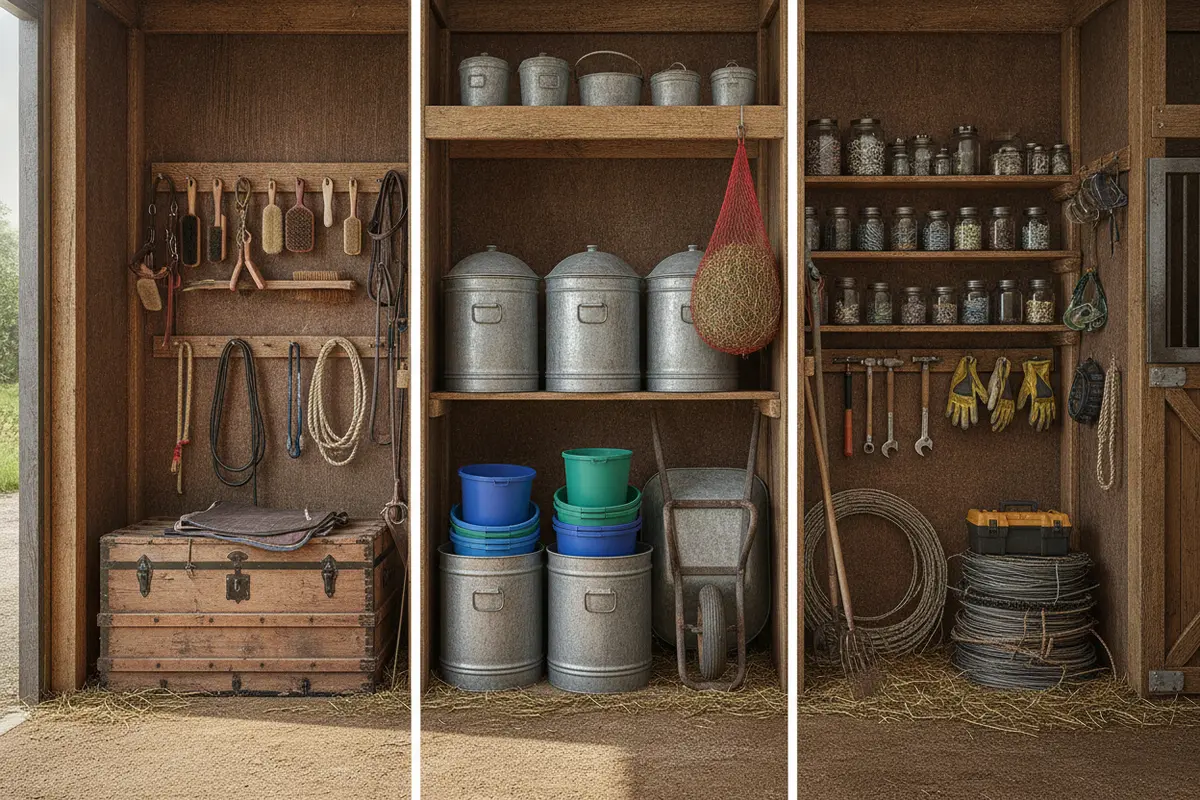
A recurring check helps prevent last-minute searches and reveals equipment that should be cleaned, repaired, or removed from use. The table is a planning aid, not a fixed schedule for every property. Adjust the review to your animals, facilities, equipment instructions, and advice from qualified professionals.
| Supply area | Examples | What to check | Practical review point |
|---|---|---|---|
| Feeding and water | Suitable buckets, feed containers, scoops | Clean condition, cracks, secure placement, fit with the routine | During daily use; inspect regularly |
| Grooming | Brushes, combs, hoof pick | Cleanliness, comfortable grip, damaged or sharp edges | During routine care |
| Handling | Fitted halter and lead rope | Fit, stitching, hardware, wear, appropriate use | Before use |
| Barn upkeep | Gloves, broom, storage containers | Condition, safe placement, separation from feed | Weekly or as needed |
| Emergency readiness | Contact information and supplies selected with a professional | Completeness, condition, and consistency with veterinary guidance | Review regularly and after use |
Think of the schedule as layers. A quick look before use catches obvious damage to a halter or lead rope. A weekly walk-through can reveal a missing tool, a blocked storage area, or a container that needs cleaning. A more thorough monthly inventory gives you time to replenish ordinary consumables and review items whose labels or manufacturer instructions call for special care. Do not assume that every product has the same inspection interval.
Medicines and chemical products require extra care. Keep them in their original containers, follow label storage and use directions, and keep them away from animals and feed. A general supply list is not a treatment plan. For medication questions or health concerns, contact your veterinarian. The U.S. Food and Drug Administration provides animal-health information through its official FDA resources; product labels and veterinary advice remain the right place to check instructions for an individual animal.
How can you choose durable, suitable equipment?
Match the product to the animal, task, dimensions, and conditions. Review construction and care instructions, then consider use frequency and storage.
Durability is not one material or price point. The right choice depends on how often an item will be used, the conditions it faces, and whether it was designed for that task. Start with the product information. Check sizing, dimensions, intended use, care directions, and any compatibility details. When available, examine seams, fasteners, contact surfaces, and other parts that bear wear.
- Match it to the task. A tool intended for occasional home use may not suit intensive daily work. Follow product descriptions and maker guidance.
- Match it to the animal. Confirm sizing and intended use rather than assuming one size or style works for every horse or pet.
- Consider cleaning. Select items you can maintain using the care methods specified by the manufacturer.
- Inspect before use. Set damaged equipment aside until it is repaired or replaced.
- Compare value honestly. Consider expected use, maintenance, and replacement needs, not just the initial cost.
Before buying, make a small comparison note with four questions: What task will this item support? What size or fit information must I verify? How often will it be used? What care or storage does it require? If two options both seem appropriate, compare the answers rather than assuming the most expensive or least expensive option is best. Ask a knowledgeable retailer or relevant professional when a key detail is unclear.
For grooming, for instance, start with the coat-care routine and the job the tool needs to do. If you need a brush for ordinary grooming, compare the product details and handle style, then consider whether the brush can be kept clean and stored near the grooming area. You can explore a horse hair brush as one example of a grooming item, while choosing based on your horse and your routine rather than a general checklist alone.
A practical product check before checkout
Use a short pre-purchase check to catch avoidable mismatches. First, identify the animal and task. Second, compare measurements or sizing guidance with what you know about your animal and equipment. Third, read care and use information, especially where a product contacts the animal or connects to another piece of gear. Fourth, think through where it will live when not in use. Finally, ask whether it fills a real gap or merely duplicates something that already works.
That last question matters when buying for several animals. A household may need separate grooming supplies for each animal, while a broom or storage bin may be shared. Sharing should depend on cleanliness, appropriate use, and the animals' needs, not on a desire to minimize the number of items at any cost. When unsure whether an item can safely be shared, ask a suitable professional.
Set up storage that supports daily care
Good storage makes supplies easier to find and helps protect them from dirt, moisture, pests, and accidental use. Keep feed and animal-care items separate from cleaning products, fuels, and other chemicals. Store products according to their labels and manufacturer instructions. Do not leave ropes, cords, or tools where an animal could reach them, become entangled, or be injured.
Give frequently used equipment a consistent home near the task, while keeping it secure when necessary. Mark storage locations clearly for people, but do not treat a secondary mark as a replacement for the original product label. If several people provide care, agree on where supplies belong and how to report equipment that is damaged or missing.
Think in zones rather than buying a special container for every item. One area can hold clean grooming tools, another can hold feeding equipment, and a separate secured location can hold maintenance supplies. Keep a clear path between storage and the place where the task happens. If space is tight, use a written inventory to record items kept elsewhere. Before adding shelves or bins, measure the available space and check that a new arrangement will not block access, create a snagging hazard, or put supplies within an animal's reach.
For a shared barn, label each zone by purpose and decide who returns items after use. A simple rule such as “clean tools go back to the grooming container” is easier to follow than a detailed system nobody remembers. Keep commonly used supplies visible to caregivers, but store sensitive products and potentially hazardous tools securely. Review the layout after a change in animals or routine, because the old arrangement may no longer make sense.
Build a repeatable inventory routine
Use a short list with each item's location, condition, and next action. Check frequently used equipment as part of care, then set a regular time for a full review.
A compact inventory is more useful than waiting until something is missing. Use four columns: item, location, condition, and next step. For example, “lead rope, tack area, fraying near clip, remove from use and replace” gives a clear action. “Need barn supplies” does not tell you what is wrong, who should act, or whether you already own a suitable replacement.
- Choose a consistent review day, such as the start of each month.
- Check essential equipment for visible wear and confirm that it is stored in the right place.
- Note items to clean, repair, replace, or discuss with a professional.
- Replenish ordinary consumables according to their labels and your established routine.
- After a purchase, update the inventory and keep care instructions accessible.
A worked example can make this easier. Suppose the list shows two usable water buckets, one cracked container, a brush stored in the wrong area, and a worn lead rope. The first action is to take the cracked container and rope out of service if they are not safe to use. Next, replace only what the routine requires, making sure the replacement is suitable. Then move the brush to its assigned location. This sequence addresses safety and access without turning the review into a broad shopping trip.
For consumables, record what needs checking and when, but do not estimate an animal's needs or alter a care regimen based on inventory alone. Follow product labels and ask a veterinarian about feed, medicines, or changes in care. A regular review can make household planning more predictable and reduce duplicate purchases. It also gives every caregiver a shared reference when a property has multiple animals or separate care areas.
Update the list after a move, seasonal change in chores, new animal, or change in who provides care. A move can change where equipment is stored and how it is exposed to moisture or dust. A new animal may require different sizing or dedicated supplies. Reviewing after a change helps you retire assumptions that belonged to the old setup.
When should you ask a professional?
Ask a veterinarian about health concerns, first-aid planning, feed questions, medication, or any change in an animal's condition. Ask a qualified tack fitter or experienced professional when equipment fit or suitability is uncertain. For repairs involving electrical systems, structures, or hazardous materials, use an appropriately qualified person. A supply guide cannot replace advice tailored to your animal and property.
Keep emergency contact information visible and make sure everyone who provides care knows how to reach the veterinarian. Check that supplies are in date where applicable and stored according to their labels. If you are unsure whether an item is safe, set it aside until you can confirm. For ordinary product selection, clear product details can help narrow options; decisions about health and treatment belong with an appropriate veterinary professional.
Frequently Asked Questions
What are the basic farm supplies for a horse?
Start with the equipment needed for the horse's daily feeding, water access, grooming, and safe handling. The exact list depends on the horse, the facilities, and the care plan. Inspect what you already have before buying duplicates.
How often should I inspect horse equipment?
Check equipment before use for visible damage and do a more organized inventory review regularly. Follow any maker instructions for inspection and care. Remove worn, broken, or poorly fitting items from use until they are repaired or replaced.
Can horse and pet supplies be stored together?
They may share a storage area when supplies remain clean, secure, and separated as needed. Keep feed away from chemicals, and prevent animals from accessing tools or products that could harm them. Store each item according to its label and care instructions.
How can I avoid buying unnecessary farm supplies?
Write down recurring tasks, inspect what you own, and identify the specific gap before shopping. Prioritize safety and routine needs over duplicates or rarely used items. A basic inventory with location and condition notes makes the decision easier.
How should I store medicines and chemical products?
Keep products in their original containers and follow their label directions for use and storage. Keep them away from animals and feed. Ask your veterinarian about medication questions, and do not treat a general supply guide as treatment advice.
Where can I find horse supplies for a home barn?
Compare products by intended use, fit, dimensions, and care information. Hooves and Paws is a family-owned online retailer serving horse, dog, and cat owners since 1994, with curated animal-care products and practical buying guidance. Its horse supplies collection is a place to review relevant options.
A thoughtful farm-supply plan starts with your animals' real routines, careful inspection, and safe storage. Review your list regularly so the right essentials are ready when daily care begins.


