

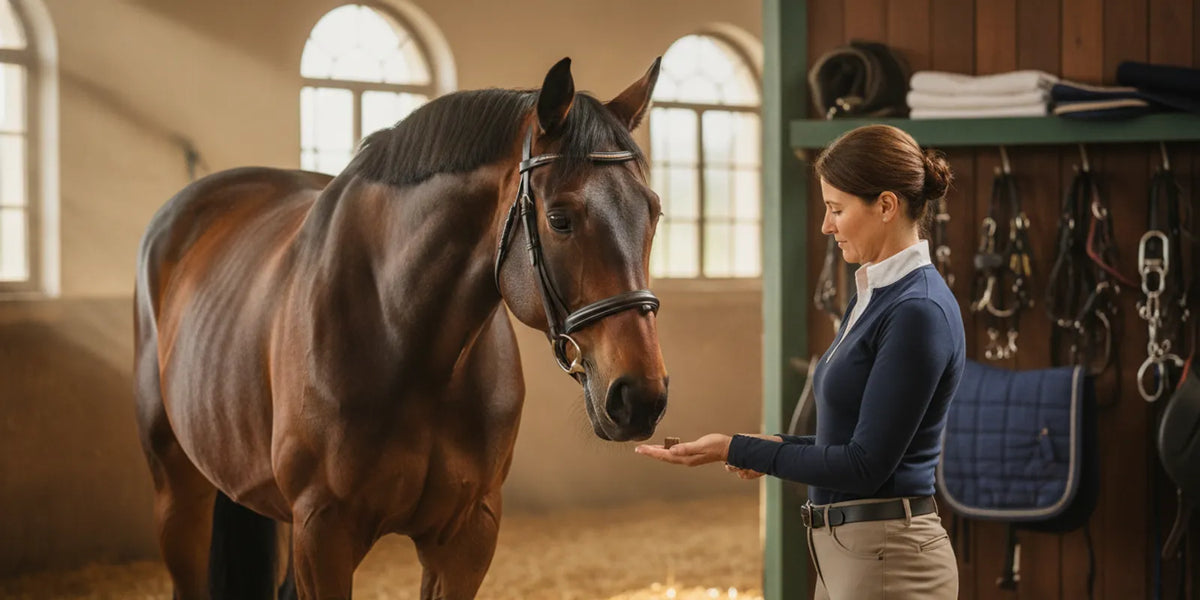
Horse treats can make a useful reward during grooming, handling, or training, but the right choice depends on your horse, your routine, and how much you offer. Use treats as occasional extras, not as a replacement for a balanced ration or advice from your veterinarian. A few simple checks can help you choose horse treats that are practical to store, easy to portion, and appropriate for your animal.
Shop horse treats and supplies
What should a horse treat do?
Quick Summary
A treat is a small, optional reward. Choose one your horse can eat comfortably, offer a modest portion, and keep the horse's overall feeding plan in view.
A treat may mark a moment you want to reward, such as standing quietly for a halter or pausing during a lesson. It can also be a pleasant part of a familiar grooming routine. It does not need to be elaborate. A calm voice, a scratch in a favorite spot, or a brief rest can also reward a horse, and some horses respond better to those options than to food.
Think of the treat as one small part of the horse's day. Hay or pasture and the feed plan set by the owner and equine-care team remain the foundation. Treats should not crowd out regular forage or the horse's usual feed. If your horse is on a controlled diet, has a history of digestive or metabolic concerns, or receives medication in feed, ask your veterinarian before making treats a regular part of the routine.
It helps to decide on a simple rule in advance. For example, agree with everyone who handles the horse on which treat is allowed, when it is offered, and how many pieces count as one reward. This avoids a horse receiving extra portions from several well-meaning people in the same day.
Which kinds of horse treats can you compare?
There is no single best option for every horse. Compare the format, the ingredient information, and how easily you can control the portion. Read the product label rather than relying on a flavor name or front-of-package claim. If a label does not answer a question important to your horse's feeding plan, ask your veterinarian or the product maker before using it.
| Treat type | What may make it practical | What to check |
|---|---|---|
| Commercial horse treats | Often made in a consistent size and easy to carry in a pocket or treat pouch. | Read the full ingredient and feeding directions; check portion size and storage instructions. |
| Small pieces of suitable fresh produce | Can be portioned into small rewards from a familiar food item. | Wash and cut into manageable pieces. Introduce a new food cautiously and confirm it suits the horse's diet. |
| Forage-based cubes or similar products | May fit a routine that favors a simple, dry reward and convenient storage. | Check the product label, texture, feeding guidance, and whether the piece needs to be broken smaller. |
| Non-food rewards | A pause, calm praise, or a scratch can reward a horse without adding food. | Notice what the individual horse finds relaxing, and avoid rewarding behavior that is unsafe. |
This comparison is a starting point, not a nutrition ranking. Product formulas vary, and a treat that suits one horse may not fit another horse's health needs or management plan. When in doubt, a veterinarian who knows the horse can help you decide whether a particular ingredient or treat style is appropriate.
As you compare packages, make a short checklist: Is the product clearly labeled for horses? Can you find the complete ingredient list and feeding directions? Can you break or portion it to match your routine? Does its storage requirement work in your barn or tack room? If an answer is unclear, do not fill in the gaps with assumptions. Contact the manufacturer or choose an option with instructions that are easier to evaluate.
Consider how and where you plan to use the reward. A pocket-sized, dry piece may be convenient during a handling session, while a larger item may be awkward to carry and portion. For a horse that eats quickly, choose a format that can be offered safely in a small piece and avoid tossing several treats into a bucket without accounting for them. If you are shopping for equine supplies along with a treat, browse the horse supplies collection and compare products against your horse's needs, rather than buying solely for a flavor or package claim.
It can also help to keep a simple record when introducing a new option. Note the product, the amount, and the date, then observe whether it fits comfortably into the horse's routine. This is not a substitute for veterinary advice, but it gives you clear information to share if you have a question about diet or an unexpected change. Avoid introducing several new foods at once, since doing so makes it harder to tell which change may be relevant.
How do you choose a treat for your horse?
Start with the horse, not the flavor. Consider age, chewing ability, dental comfort, body condition, workload, known sensitivities, and any dietary instructions from the veterinarian. For an older horse or one that has difficulty chewing, ask for guidance before offering a firm, large, or sticky item. A treat that is hard to break into a small piece may be inconvenient even if its ingredients seem suitable.
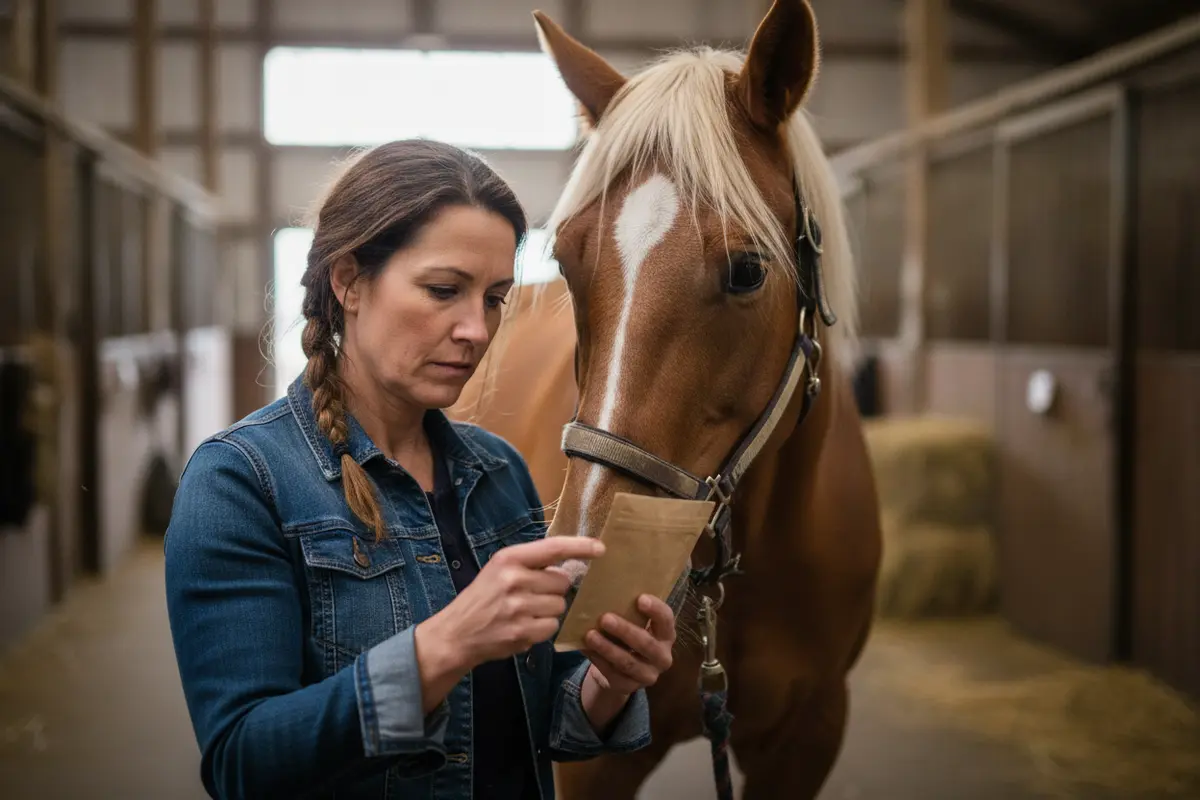
Next, check the label. Look for clear ingredient information, directions for feeding, and storage guidance. Confirm that the product is intended for horses. Avoid guessing about a product based only on its appearance, and do not offer spoiled, moldy, or contaminated food. If the horse has a restricted diet, review new treats with the person who manages that plan.
Portion control matters. Break a larger treat into small pieces when the product allows it, and use the smallest amount that serves the purpose. Smaller portions can make it easier to repeat a training exercise without turning each reward into a large serving. Follow the label's directions, and consider the horse's whole daily ration rather than treating each snack in isolation.
For a horse with a known health condition or a carefully managed diet, do not assume that a treat described as natural, low sugar, or healthy is automatically suitable. Those words do not replace a review of the full ingredient list and the individual feeding plan. Ask your veterinarian for specific advice, especially before changing a regular routine.
When you have decided a treat fits the horse's plan, start with a small amount rather than making it an everyday habit immediately. Keep the rest of the diet and routine steady while you see how the horse accepts it. For a commercial product, use the label as your guide and do not exceed its directions. For fresh foods or any horse with a health concern, first check with the veterinarian who manages the diet. If you need to adjust the feeding plan, make that change with professional guidance.
Choose a routine that is easy to repeat. For example, you might reserve a measured number of small pieces for one training session, then put the container away when the session ends. This makes it easier to keep rewards intentional and to avoid one person offering a handful while another person offers more later. A small notebook or note in the barn's feed area can help everyone follow the same plan.
Before buying, think about what you can use reliably. If you want to browse available equine products, the horse supplies collection offers a place to review options. Check each item's label and directions before adding it to your horse's routine. Selection should come after suitability, not the other way around.
How can you offer treats safely?
Key Takeaway
Offer a small piece only when the horse is settled, keep your hand position consistent, and stop if the horse crowds, grabs, or becomes pushy.
Choose a quiet, familiar place and begin with the horse standing calmly. Keep the reward low-key. If hand-feeding is appropriate for that horse, offer a small piece on a flat, open palm rather than pinching it between your fingers. Stay attentive to the horse's head and body position, and do not put your hand near the mouth of a horse that is anxious, agitated, or likely to bite.
Not every horse should be hand-fed. If the horse mouths clothing, searches pockets, nudges people, or becomes difficult to lead after receiving food, pause the practice. Ask a trainer or experienced handler for help setting consistent boundaries. You can also reward from a bucket or use a non-food reward, depending on the situation and your handling plan.
Make treat delivery predictable. Ask the horse to stand, offer the reward in the same way, and then return to the task. Avoid teasing the horse with food or encouraging it to snatch. If several people handle the horse, explain the same rules to everyone. Consistency helps prevent mixed signals and unplanned extra treats.
For training, use a treat to reinforce a specific response rather than feeding repeatedly without a clear purpose. Keep sessions short enough that the horse remains attentive. If the horse becomes distracted or starts demanding food, put treats away and reset the exercise with guidance from a qualified trainer. Food rewards are optional; they should not make routine handling less safe.
Build a treat routine everyone can follow
A routine is easier to maintain when every handler knows the same simple rules. Write down the approved treat, portion, and situations when it may be offered. Include a reminder not to feed from pockets and to stop if the horse crowds or grabs. Post the note where people can see it, and update it if the horse's diet or care instructions change.
- Choose: Confirm with the person managing the horse's diet that the treat is suitable.
- Measure: Set aside the small portion intended for the activity.
- Offer: Reward a calm, specific behavior using the same safe method each time.
- Put away: Close the package and return it to storage when the session ends.
These steps help prevent duplicate rewards and make it easier to notice when a treat no longer fits the horse's needs. If a new person will handle the horse, explain the plan before the session begins instead of relying on them to guess. When anyone is uncertain, skip the food reward until the question has been checked.
Storage and daily routine
Store treats according to the package directions, in a clean, dry place that the horse cannot reach. Keep bags closed to protect contents from moisture, pests, and barn debris. Do not use a product that has changed in appearance or smell, or that may have been contaminated. Dispose of it rather than trying to salvage questionable food.
Use a small container or pouch for the amount needed in a session, and keep the rest put away. That makes it easier to track portions and keeps a horse from investigating an open bag. If treats are carried in a pocket, check that the pocket is clean and that the horse cannot nip at clothing to get to them.
Make treats part of an agreed daily plan. A note by the feed chart can identify the approved option and portion for each horse. This is especially helpful in a shared barn, where several people may groom, exercise, or handle the same animal. If a feeding plan changes, update the note and check with the horse's care team before reintroducing a previously used treat.
When should you ask your veterinarian?
Get professional advice before adding treats if your horse has a medical condition, a prescribed diet, difficulty chewing or swallowing, or a history of reacting poorly to a food. Ask as well if you are unsure whether a particular ingredient is suitable. For horse-specific health and feeding guidance, consult your veterinarian; the American Association of Equine Practitioners is a professional veterinary association and a starting point for horse-owner resources.
Stop offering a new treat if you notice an unexpected change after feeding it, and contact your veterinarian for advice. Do not try to diagnose a reaction or change a prescribed diet on your own. Seek prompt veterinary care if the horse appears seriously unwell or has trouble breathing or swallowing.
It is also sensible to ask for help when food rewards are creating a handling problem. A veterinarian can advise on health and diet questions, while a qualified trainer or experienced horse professional can help you reshape a safe, consistent routine. Match the question to the professional who can best address it.
Frequently Asked Questions
How many treats can I give my horse each day?
There is no one daily amount that suits every horse. Follow the product label and any veterinary feeding guidance, and account for treats within the horse's overall ration. Keep portions modest and agree on a daily limit with everyone who handles the horse.
Are carrots and apples appropriate horse treats?
Some horses may be offered small pieces of familiar produce, but suitability depends on the individual horse and its diet. Wash produce, cut it into manageable pieces, introduce anything new cautiously, and check with a veterinarian if the horse has a health condition or dietary restriction.
Can I use treats while training?
Yes, food may be one reward in a training routine if it is safe and suitable for the horse. Offer a small piece after a clear response, keep the horse settled, and stop if food leads to grabbing or crowding. Praise, a pause, or another non-food reward may work better for some horses.
What should I do if my horse starts biting for treats?
Stop hand-feeding for now and do not reward nudging or grabbing. Keep food out of reach, use a consistent handling plan, and ask a qualified trainer or experienced handler to help. If the behavior is new or unusual, discuss it with your veterinarian as well.
Should horses with special diets have treats?
Ask the veterinarian who knows the horse before adding a treat to a restricted or medically managed diet. Check the full label and do not rely on terms such as natural or low sugar to determine whether a product fits the plan.
With a little planning, horse treats can be an easy, thoughtful extra: choose a suitable option, offer small portions consistently, and ask your veterinarian when the horse's individual needs are not clear.


