

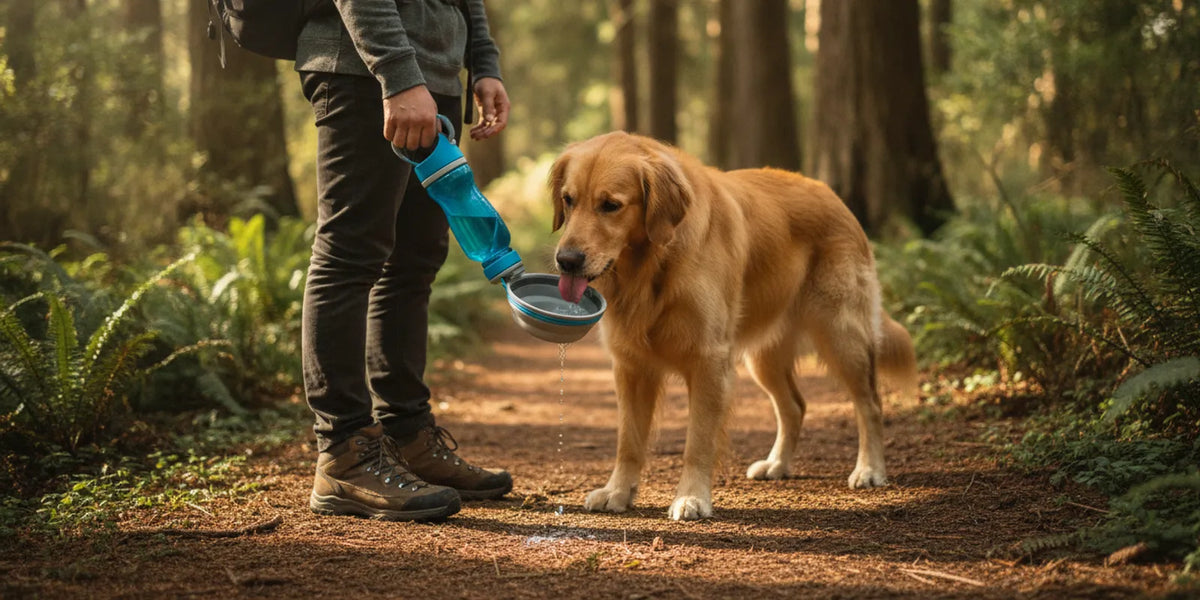
A good pet water bottle makes it easier to offer water during walks, road trips, and outdoor errands. The right choice depends on who will use it, how long you will be away, and whether your pet will drink from its bowl or spout. This guide explains what to compare, how to use a bottle without wasting water, and what to pack for a comfortable outing.
Shop practical dog-walking gear
What should a pet water bottle do?
A travel bottle should let you carry water securely and offer it in a way your pet can use comfortably. Look for a size you can manage, a drinking surface your pet accepts, and parts you can clean and dry.
A portable bottle is a convenience, not a replacement for access to fresh water at home or a plan for longer outings. Many designs combine a reservoir with a drinking bowl. Some have a fold-out trough or a cup-shaped lid; others dispense water through a valve or spout. The best format is the one you can operate smoothly while keeping the water clean.
Think about the actual outing. A short neighborhood walk may call for a compact bottle and a small bowl. A longer hike, a hot day, or a trip with more than one animal may require more water and a larger drinking surface. Your pet’s size, usual drinking habits, and the availability of refill points all matter.
For dogs who enjoy outdoor walks, a comfortable, secure lead is another part of a practical kit. Compare your walking setup with this dog-walking leash, and choose equipment that suits your dog and the way you travel.
Which pet water bottle features are worth comparing?
Compare bottle capacity, how water is released, the shape and size of the bowl, leak control, and ease of cleaning. A feature is useful only if it works for your pet and your routine.
| Feature | What to check | Best fit |
|---|---|---|
| Capacity | How much water it holds, and whether the filled bottle is still easy to carry | Small capacity for short outings; more capacity when away longer or serving multiple pets |
| Drinking surface | Depth, width, stability, and whether the pet can reach the water comfortably | Pets that prefer a bowl or trough rather than drinking from a narrow opening |
| Dispensing control | Whether water flows by pressing a button, tipping, or opening a valve | Owners who want to control the amount poured and reduce spills |
| Leak resistance | Cap seal, locking mechanism, and how it behaves when carried on its side | Anyone packing the bottle in a bag or vehicle |
| Cleaning | Whether the reservoir, valve, and bowl are accessible for washing and drying | Frequent use, warm weather, or bottles that are shared between outings |
| Carrying options | Grip, handle, or clip, plus how securely the lid stays closed | Walks where you want the bottle close at hand |
Capacity and carry weight
A larger reservoir means fewer refills, but also more weight. Consider how long your usual route takes and whether you can refill along the way. If you routinely walk near a source of clean drinking water, a smaller bottle may be enough. If you will be away from refill points, plan for the full trip rather than assuming you will find water.
Remember that the bottle itself takes up space and has weight before it is filled. If you have to carry it for several miles, check that you can hold or stow it comfortably. A bottle that stays at home because it is awkward to carry is not a useful travel bottle.
Bowl design and drinking style
Some pets drink readily from a shallow, open bowl. Others may hesitate at a narrow spout, a deep cup, or a bowl that moves while they drink. If possible, introduce a new bottle at home first. Offer it in a calm setting and let your pet investigate without pressure. You can also bring a familiar travel bowl if the bottle’s built-in drinking surface is unfamiliar.
Look at how the bowl is attached. It should be easy to unfold or remove, stable enough to use, and simple to rinse. A bowl that is too small may be inconvenient for a larger dog, while an oversized bowl can make a compact bottle bulky. Consider your pet’s muzzle and normal drinking posture instead of choosing by appearance alone.
Dispensing, seals, and one-handed use
Read the instructions to understand how water moves from the reservoir to the bowl. Some bottles let you return unused water to the reservoir; others do not. Never assume that leftover water can be poured back safely. Follow the maker’s directions, and if the water has collected dirt, food, or saliva, discard it rather than returning it to clean drinking water.
Check that any button or valve is easy for you to operate and does not open accidentally in a bag. Before leaving, fill the bottle, close it as directed, and briefly test it over a sink. If you will operate it while holding a lead, practice at home so that you can keep your pet secure while dispensing water.
Shop This Post

Featured in this article
Chaqueta para perros Alpine All Weather de Doggie Design - Impermeable, con forro polar y reflectante - Múltiples tallas
$25.00
Shop Now →
How do you choose a bottle for your pet and your plans?
Start with the animal and the outing, not with a list of features. A dog who drinks from any clean bowl may adapt to a simple fold-out design. A cautious drinker may need a familiar bowl or a gradual introduction. If you care for more than one pet, consider whether you want separate bottles or a design that can serve them one at a time without sharing a dirty drinking surface.
Use these questions to narrow the options:
- How long will you be away? Choose enough capacity for the expected outing, with a sensible reserve when there are no convenient refill points.
- Where will the bottle go? A bottle carried in a pack needs a secure closure. A bottle held by hand should be comfortable to grip and easy to open.
- How does your pet drink? Match the bowl shape to a familiar drinking posture. Try a new setup before relying on it away from home.
- Will you need to serve more than one pet? Think about the amount of water available and how you will keep the drinking surface clean between animals.
- Can you wash every part? Check the design for narrow areas, removable pieces, or valves that may need extra attention.
For a dog outing, pair the bottle with a lead and other gear suited to the weather. A light layer can be useful in some conditions, but it should fit the dog and the activity. If you are considering a coat for outdoor use, review the fit and purpose of a dog coat option separately from the water bottle decision.
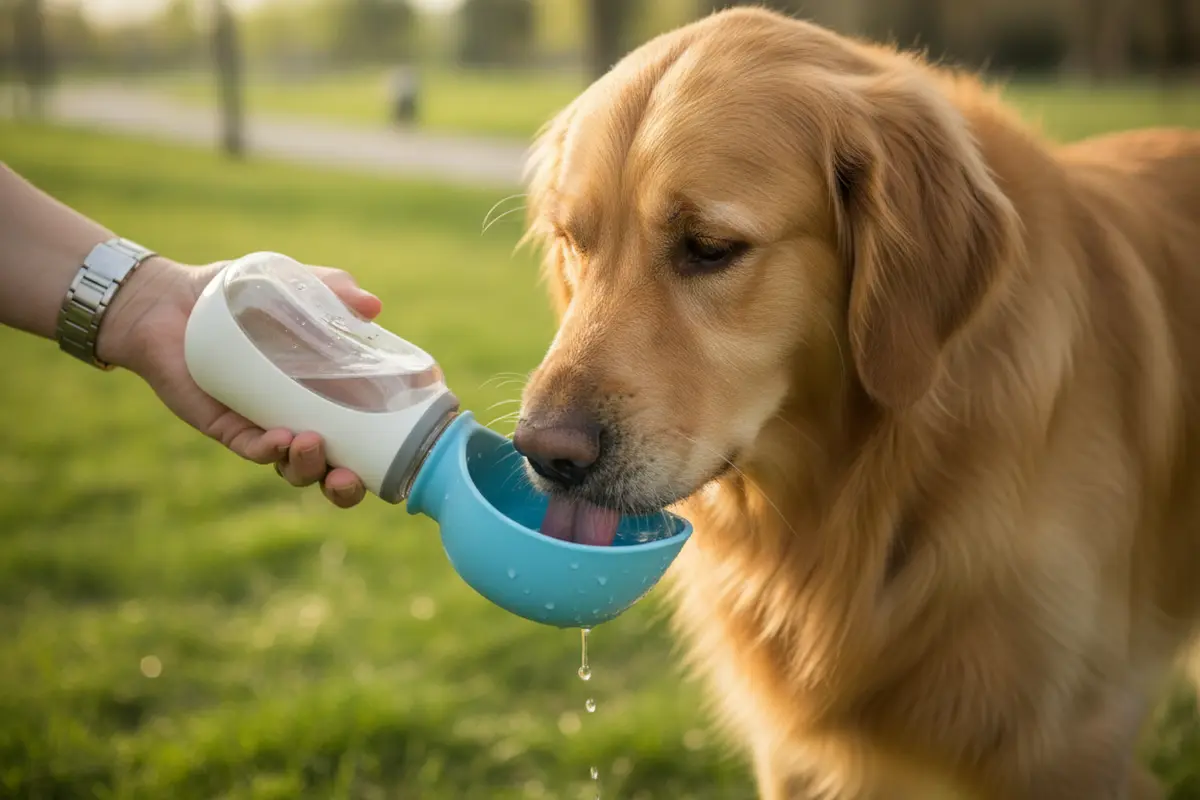
How should you use and clean a travel bottle?
Fill with fresh water, secure the closure, offer small amounts as needed, and clean the bottle and drinking surface after use. Let the parts dry fully before storing them.
- Wash before first use. Follow the product’s care directions. Rinse away any residue and confirm that every removable part is fitted correctly.
- Fill with fresh drinking water. Do not use a bottle that smells unusual or has residue inside. Close it securely and check for leaks before packing.
- Offer water in a calm place. Stop safely, keep control of your pet, and set the bowl on a stable surface when practical. Give your pet time to drink at its own pace.
- Use clean water for each refill. Refill from a source you consider safe for your pet. Avoid dipping the bottle or bowl into standing water that may be dirty.
- Empty and clean after the outing. Wash the reservoir, bowl, cap, and valve as directed. Rinse well and allow each part to dry before storing.
Portable bottles can have narrow valves and hinges that are easy to overlook. Check them as you clean. If food, grit, or residue is stuck in a small opening, use a cleaning method suitable for the bottle rather than forcing an object into the mechanism. Replace or stop using a component if it is cracked, does not seal, or cannot be cleaned properly.
Do not leave a filled bottle in a hot vehicle or assume that water will remain at a comfortable temperature in direct sun. Keep the bottle out of heat when possible and offer fresh water during the outing. If your pet seems unwell, is unusually reluctant to drink, or has a sudden change in drinking behavior, contact your veterinarian for advice. The American Veterinary Medical Association is a professional resource for animal owners seeking veterinary information and care guidance.
What should you pack for walks and trips?
A bottle is only one part of an outing plan. Think through the route, weather, length of time away, and the needs of each animal. A simple checklist helps prevent small problems from becoming stressful once you are on the move.
- Pet water bottle filled with fresh water
- A familiar bowl if your pet does not accept the bottle’s built-in bowl
- Enough water for the expected trip and a reasonable reserve
- Secure lead or carrier appropriate to the animal and setting
- Waste bags for dog walks
- A towel or cloth for spills and wet paws
- Any routine supplies your pet needs, packed separately from clean drinking water
For a car trip, secure the bottle so it cannot roll under a seat or leak into a bag. Offer water during safe stops rather than trying to manage a bottle while driving. On a walk, place the bottle where you can reach it without losing control of the lead. If several people take turns caring for the pet, show each person how the cap or valve works.
Practice the routine before a longer outing
Try the bottle on an ordinary day before making it your only way to offer water during a trip. Let your pet see and smell it, then dispense water into the bowl and give the animal time to approach. Keep the first practice session brief and relaxed. If your pet does not drink, offer the familiar bowl and try again another time. This helps you learn whether the design is acceptable without creating pressure in an unfamiliar setting.
Practice the handling steps too. Set the bottle down, open the lock if it has one, dispense a small amount, and close it securely. If you usually walk with a lead, rehearse keeping the lead controlled while you offer the water. For a car outing, make sure the bottle is easy to retrieve at a safe stop. A little preparation can prevent fumbling with a new mechanism when your pet is eager or distracted.
Outing conditions can change what is practical. A short, shaded route with refill access is different from a long journey with few stops. Consider the forecast and route, and be ready to shorten or change plans if your pet seems uncomfortable. A water bottle helps you provide a drink, but it does not make every activity or condition suitable for every animal. When you have questions about what is appropriate for your pet, ask your veterinarian.
Check the bottle’s design before making it part of your routine
Product photos can make two bottles look similar even when they work differently. Read the use and care directions before choosing. Check whether the bowl folds into the body, attaches as a separate piece, or serves as the cap. Each arrangement has trade-offs. A detachable bowl may be simple to rinse, while a fold-out bowl stays with the bottle but can have joints that need attention during cleaning.
Look closely at the connection between the reservoir and the drinking area. A bottle should be easy for you to open, fill, close, and operate without having to struggle with a tight or awkward part. If it includes a button, lock, or valve, make sure you understand how to use it and whether it can be secured before carrying. The design should not require you to put fingers into the drinking area to dispense water.
Consider the shape of the whole bottle, not just its capacity. A narrow profile may fit a side pocket, while a wider reservoir might be easier to set down but harder to pack. A handle or clip can help with carrying, but it should not replace checking that the cap is closed. Before the first full outing, fill it at home, operate the dispenser several times, and carry it in the way you expect to use it. Check for drips and confirm you can reach the bowl while keeping the pet safe.
Material is another practical consideration. Choose a product intended for carrying drinking water for pets, and follow its cleaning and temperature guidance. Do not assume every bottle is suitable for hot liquids, freezing conditions, or a dishwasher. Avoid using a bottle that has a strong lingering odor, a damaged seal, or a crack that could affect cleaning or carrying. If you cannot tell how to clean a part, consult the product instructions rather than guessing.
Finally, think about where you will refill. On a familiar route with clean water access, a compact bottle may be convenient. For remote outings or travel, plan around the water you can carry and the opportunity to refill. Keep a separate, clean supply for the pet rather than relying on puddles, streams, or other sources whose condition you cannot confirm. Your bottle should make it easier to offer water, not encourage you to take chances with an unknown source.
Common mistakes to avoid
Choosing capacity by appearance. A sleek, compact bottle may not hold enough for your plans. Think about duration, refill access, and the number of animals first.
Assuming every pet will use the same bowl. Some pets are cautious with unfamiliar shapes or materials. Practice with the bottle before a long outing, and bring a familiar bowl if needed.
Skipping the leak test. A lid that seems closed can still open in a pack. Test the bottle over a sink and carry it upright for the first trip until you trust its seal.
Putting used water back into the reservoir. Follow the specific product instructions. If water in the bowl has collected dirt or saliva, do not pour it back into the clean supply.
Storing the bottle while damp. Moisture trapped in a closed container can leave odors and make cleaning harder. Empty, wash, rinse, and dry the bottle and bowl before putting them away.
Frequently Asked Questions
Can I use one pet water bottle for more than one dog?
You can offer water to multiple dogs from one bottle if you have enough clean water and can keep the drinking surface clean. For pets that do not share bowls, or when one pet is ill, use separate drinking surfaces and follow veterinary advice.
How much water should I carry for a walk?
There is no single amount that fits every pet or outing. Consider your pet’s size and habits, the length and conditions of the route, and whether safe refill points are available. Carry enough for the plan and do not rely on finding water unexpectedly.
Can my pet drink directly from the bottle opening?
Only if the bottle is designed for that use and your pet drinks comfortably from it. Many pets find a bowl easier. Check the product instructions, and do not force a pet to drink from an unfamiliar opening.
Can leftover water go back into the bottle?
That depends on the bottle’s design and directions. If the water in the bowl has touched your pet’s mouth or picked up dirt, keep it separate from the clean reservoir and discard it. When in doubt, use fresh water.
How often should I clean a portable pet water bottle?
Wash it after outings and whenever the water or bottle becomes dirty. Follow the manufacturer’s care instructions, paying attention to the cap, valve, and bowl. Let all parts dry completely before storage.
What if my pet will not drink from a new bottle?
Introduce it at home in a quiet setting. Let your pet inspect it and offer water in a familiar bowl as an alternative. Do not wait until a long trip to see whether the new bottle works for your pet.
Choose a pet water bottle that suits your animal, fits your usual outings, and is easy to keep clean, then test the setup before you rely on it away from home.


