


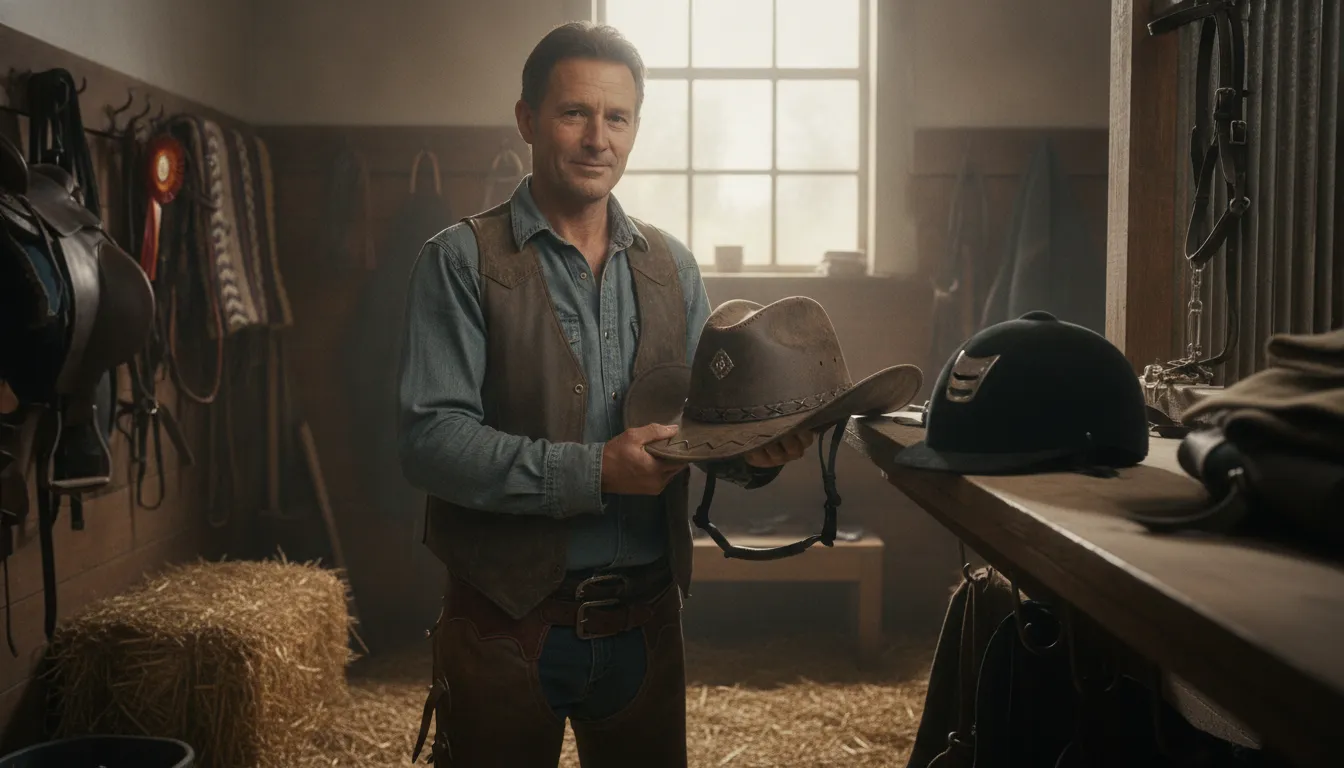
A cowboy hat helmet gives western riders the familiar profile of a cowboy hat while adding the protective structure of a purpose-built riding helmet. That combination can be appealing for trail rides, ranch work, clinics, and riders who simply feel most like themselves in western gear. The important detail is not the silhouette, though. It is whether the helmet is made and labeled for equestrian use, fits your head correctly, and is appropriate for the riding you plan to do.
Shop riding helmets and safety gear for your next ride.
For many riders, a traditional riding helmet remains the easiest choice because it offers a broad range of fits, ventilation designs, and discipline-friendly styles. A western-style helmet can be a good alternative when it provides the same essentials: verified protection, stable fit, reliable retention, and all-day comfort. This guide compares the practical differences so you can choose based on more than appearance.
What is a cowboy hat helmet?
Quick answer: A cowboy hat helmet is a purpose-built equestrian helmet with a western-inspired profile. The right model combines western style with documented equestrian safety labeling, a secure retention system, and a stable fit. It is not a regular cowboy hat or an industrial hard hat.
A cowboy hat helmet is a protective equestrian helmet designed with a western-inspired crown and brim. It is not simply a cowboy hat placed over a helmet, and it is not the same as a western-shaped industrial hard hat or novelty costume hat. A genuine riding model should be sold specifically for horseback riding and carry the safety labeling required for your activity, facility, or competition.
The best short answer is simple: choose a cowboy hat helmet only when its equestrian safety labeling, fit, and intended use are clear. Style can help you feel confident in the saddle, but it should never replace those fundamentals.
Examples of documented western riding helmets
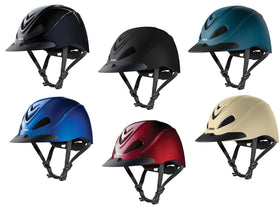
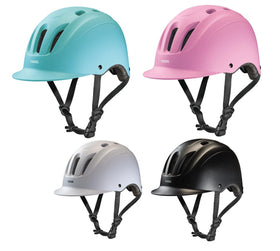
Specific product details make comparison easier. Hooves and Paws carries Troxel western riding helmets such as the Dakota, Liberty, Spirit, Rebel, and Sport 2.0. Their product listings identify ASTM/SEI certification and spell out model-specific fit features, including SureFit Pro or DialFit on selected models. Product availability, features, and prices can change, so verify the current listing before choosing.
Why the product description matters
Online search results can mix riding helmets with motorcycle helmets, hard hats, hat covers, and fashion products. Read the complete product description before buying. Confirm that the manufacturer identifies the item as an equestrian helmet. In the United States, many riders and facilities look for helmets certified to ASTM F1163 through SEI. Confirm the current certification for the exact model, plus its sizing method, retention system, care directions, and replacement guidance. If any of those details are missing, ask the seller or select a model with clearer documentation.
Western style without improvised protection
A separate cowboy hat worn over a helmet may interfere with the helmet's fit or retention unless the manufacturer specifically approves that setup. Likewise, modifying a helmet, reshaping its brim, or adding unapproved attachments may affect how it performs. Use the product as its maker directs. If western appearance is important, select a purpose-built design rather than improvising.
Cowboy hat helmet vs traditional riding helmet
Quick answer: A cowboy hat helmet emphasizes western styling and brim coverage, while a traditional riding helmet usually offers a compact profile and a wider model selection. Either can be appropriate when it carries the required equestrian safety certification, fits securely, and complies with your instructor, facility, or event rules.
Both styles can be practical choices when they are designed for equestrian use and fit correctly. The differences buyers notice most often involve silhouette, brim coverage, ventilation, weight distribution, available sizing, and suitability for a particular discipline.
| Buying factor | Cowboy hat helmet | Traditional riding helmet |
|---|---|---|
| Appearance | Western crown and brim coordinate with western attire | Low-profile sport or classic equestrian silhouette |
| Fit selection | Fewer models may make careful measurement especially important | Broad model range often provides more shape and adjustment choices |
| Brim | Wider western-style brim may offer more shade but changes sightlines | Shorter brim usually keeps a compact profile |
| Ventilation | Varies by model and may be less visible in the design | Many models emphasize visible vents and airflow channels |
| Discipline fit | Often chosen for western riding, trail use, and ranch settings | Common across lessons, schooling, jumping, dressage, and general riding |
| Decision priority | Verified equestrian use, correct fit, comfort, and venue rules come before style | |
Protection depends on more than shape
A broad brim does not make one helmet more protective than another, and a sporty shell does not automatically make a traditional model the better choice. Evaluate the complete product. Look for current, legible equestrian safety labeling; a secure harness; an undamaged shell; and manufacturer documentation. Then make sure the helmet stays correctly positioned when you move your head.
Style can support consistent use
A helmet can only help when it is worn. Riders who enjoy western apparel may be more willing to reach for a helmet that feels natural with their riding boots, jeans, and tack. Comfort and confidence are valid buying factors once safety requirements and fit are satisfied. If a traditional model feels better or is easier to fit, that is an equally sensible choice.
Shop This Post

Featured in this article
Troxel Dakota Western Riding Helmet - Matte Duratec, ASTM/SEI Certified, SureFit Pro - Multiple Sizes
$104.99
Shop Now →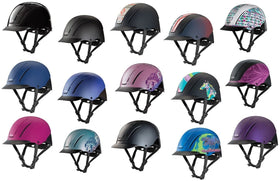
How should a riding helmet fit?
Quick answer: A riding helmet should sit level, make even contact around your head, and remain stable when you turn or gently shake your head. It should feel snug without painful pressure points. Always use the exact model's current size chart because sizing and internal shapes differ among brands.
Helmet sizing is not interchangeable across brands or models. Two helmets marked with the same size can feel different because head shapes, padding systems, and adjustment ranges vary. Whenever possible, try on more than one model and follow its specific fitting instructions.
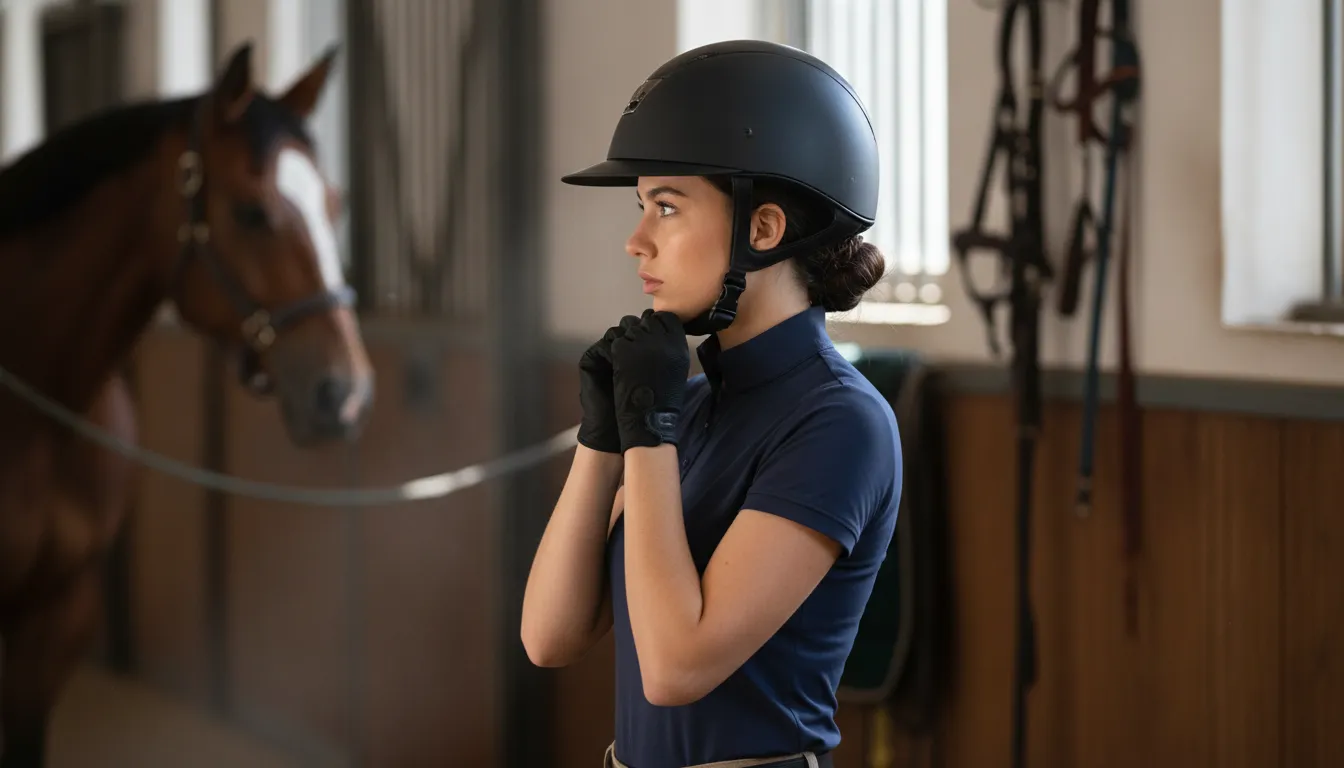
- Measure first. Use a soft measuring tape around the widest part of your head, generally above the eyebrows and ears. Keep the tape level and compare the measurement with the manufacturer's current size chart.
- Place the helmet level. It should sit evenly rather than tipping back or dropping over your eyes. Follow the maker's guidance for the correct position above your eyebrows.
- Check even contact. The helmet should feel comfortably snug around your head without sharp pressure points, painful pinching, or open gaps.
- Test movement. With the harness adjusted, gently move the helmet and turn your head. It should remain stable rather than sliding freely from side to side or front to back.
- Adjust the retention system. Set straps and buckles according to the instructions. They should hold the helmet securely without causing discomfort.
- Wear it for several minutes. Hidden pressure points often become noticeable only after a little time. Try the helmet with the hairstyle, glasses, and accessories you normally use.
Signs that you should try another size or model
Do not settle for a helmet that rocks, shifts as you look around, requires overtightening to stay in place, or causes pain. An adjustment dial can refine fit, but it cannot always correct a mismatch between the helmet's internal shape and your head. A different model may feel dramatically better even at a similar size.
Which helmet suits your riding style?
Quick answer: Choose for your primary riding environment. Western-style helmets can complement trail, ranch, and western pleasure gear. Traditional helmets are common for lessons and multiple disciplines. In every case, check required certification, event rules, visibility, ventilation, weight, and secure fit before making style the deciding factor.
Your riding routine helps narrow the choice. Think about where you ride, how long you stay in the saddle, what rules apply, and which conditions you encounter. A helmet that works well for relaxed winter trail rides may not be your preferred option for hot summer lessons or a formal event.
Western pleasure, trail riding, and ranch settings
A western-style helmet can coordinate naturally with western tack and clothing. Riders may also appreciate the shade of a broader brim. Before choosing one, check visibility in every direction, especially when riding uneven trails or working around obstacles. Consider ventilation and weight for long rides, and confirm that the brim does not distract you in wind or brush.
Lessons, clinics, and competitions
Facilities, instructors, show organizers, and governing bodies may have their own helmet rules. Confirm those requirements before buying for a specific event. Traditional riding helmets are widely used across disciplines and may offer more choices when a conservative look or particular rule applies. Never assume a helmet is permitted only because it is sold for riding.
Everyday riders and multi-discipline households
If you ride in several settings, prioritize versatility. A comfortable traditional helmet may be the most convenient all-purpose choice. A cowboy hat helmet may be worthwhile if most of your riding is western and its fit is excellent. Each rider should have a properly fitted helmet; sharing can make consistent fit difficult.
Comfort details to check before you buy
Quick answer: Compare ventilation, balanced weight, clear sightlines, liner care, and compatibility with your usual hair and eyewear. Comfort supports safety because a helmet that stays cool, stable, and distraction-free is easier to wear correctly for an entire lesson, trail ride, or day of ranch work.
Small comfort details become important after an hour in the saddle. Compare products patiently and imagine real riding conditions rather than judging only the first look in a mirror.
- Ventilation: Check the placement of vents and internal airflow channels, especially for warm-weather riding.
- Weight and balance: A helmet should feel stable and balanced rather than pulling your head in one direction.
- Brim and sightlines: Look up, down, and to both sides. Make sure you can see comfortably while maintaining a normal riding position.
- Liner: Review whether the liner is removable or washable and follow the care instructions provided.
- Hair and eyewear: Try the helmet with your normal riding hairstyle, prescription glasses, or sunglasses.
- Seasonal use: Avoid adding bulky items under the helmet unless the manufacturer approves them, because added layers can alter fit.
Comfort is not merely a luxury. A helmet that pinches, overheats, or constantly shifts can distract you and may tempt you to loosen or remove it. Choose the model you can wear correctly for the full ride.
How to choose a cowboy hat helmet safely
Quick answer: First verify that the exact helmet is intended and certified for equestrian use. Next, match its size and internal shape to your head, inspect the shell and retention system, and confirm it works for your riding setting. Compare appearance and price only after those essentials pass.
Start with a clear checklist, then compare style and price only among products that meet your essential requirements.
1. Verify its intended use and labeling
Confirm that the product is a purpose-built equestrian riding helmet. Review the manufacturer information and find the applicable safety label. Requirements can change by discipline and venue, so check with your instructor, facility, or event organizer when necessary. Avoid products with vague claims or unclear documentation.
Compare curated riding helmet options and sizing details.
2. Match the helmet to your head
Use the current size chart and fitting directions for the exact model. If you are between sizes or feel uneven pressure, do not guess. Ask for fitting help or try another model. The right helmet should feel secure before you begin focusing on the western silhouette.
3. Inspect the complete design
Examine the shell, brim, straps, buckle, adjustment system, liner, and vents. Ask how each feature will work during your typical ride. Check the manufacturer's directions for approved accessories and do not drill, cut, reshape, paint, or otherwise modify the helmet.
4. Buy from a knowledgeable retailer
A specialist retailer can make comparison shopping easier by providing clear product information and a curated selection. Hooves and Paws has served horse and pet owners since 1994, pairing practical equestrian experience with personal service. Browse the riding helmets and safety collection to compare available options, review sizing details, and find riding essentials with free continental U.S. shipping.
When you choose based on verified use, fit, and comfort, the final style decision becomes simple. Pick the helmet that suits your riding life and that you will wear correctly every time.
How to care for your riding helmet
Quick answer: Inspect your riding helmet before every use, clean it only as the manufacturer directs, protect it from crushing and extreme heat, and follow its replacement guidance. After an impact or when you notice damage, stop using it and contact the manufacturer or retailer rather than judging by appearance alone.
Regular care helps you notice problems and follow the manufacturer's intended use. Before each ride, look over the shell, brim, harness, buckle, liner, and adjustment components. If you see cracks, loose parts, unusual deformation, damaged straps, or any other concern, stop using the helmet and contact the manufacturer or retailer for guidance.
Clean and store it as directed
Use only the cleaning methods and products recommended by the maker. Harsh chemicals, high heat, and unapproved alterations may damage materials even when the damage is not obvious. Let the helmet dry as directed and store it where it will not be crushed, dropped, or exposed to extreme conditions.
Know when to replace it
Follow the manufacturer's replacement instructions. After an impact, visible damage, or another concerning event, do not rely on appearance alone to decide whether the helmet is still usable. Seek guidance and replace it when directed. Also keep the product documentation so you can refer to the correct care and replacement advice later.
Frequently asked questions
Is a cowboy hat helmet as safe as a traditional riding helmet?
Helmet shape alone does not determine safety. Confirm that each model is purpose-built and labeled for equestrian use, meets the requirements for your activity, fits correctly, remains undamaged, and is worn according to the manufacturer's directions.
Can I wear a normal cowboy hat over a riding helmet?
Do not add a separate hat or cover unless the helmet manufacturer approves it for that exact use. Extra layers can affect fit, retention, visibility, or performance. A purpose-built western-style helmet is the clearer option for riders who want a cowboy hat look.
Are cowboy hat helmets allowed at horse shows?
Rules vary among organizations, disciplines, venues, and events. Ask the organizer and review the current rules before buying or competing. Confirm both the required safety labeling and any attire requirements.
How do I know whether my riding helmet fits?
A correctly fitted helmet should sit level, feel evenly snug without painful pressure, and remain stable when you move your head. Use the exact model's fitting directions and try another size or internal shape if it rocks or pinches.
Should I choose style or ventilation first?
Start with verified equestrian use and fit. Then compare ventilation, weight, brim, liner, and appearance among suitable products. The best choice is a comfortable, appropriate helmet that you will wear correctly throughout every ride.
Find a helmet that fits your ride
Whether you prefer a western silhouette or a traditional profile, choose the helmet that fits securely and supports the way you ride. Hooves and Paws offers expert-curated equestrian supplies, personal service, free continental U.S. shipping with no minimum, and a 365-day satisfaction guarantee. Complete your riding setup with curated saddle pads and spurs and spur straps.
Shop riding helmets and safety gear to compare practical options for your next ride.


