


A saddle pad is more than a layer of fabric beneath the saddle. The right pad helps cushion the horse's back, manage sweat, reduce friction, and support a stable, comfortable fit. The best choice depends on the saddle, discipline, horse's build, and the work you plan to do.
A saddle pad guide should help you compare Western and English shapes, choose practical materials and thickness, and check the fit before riding. A well-chosen pad can reduce load on the horse's back, but it cannot correct a saddle that does not fit properly.
Start by understanding the pad's basic job. That makes it easier to judge whether a particular design is adding useful protection and cushioning or simply creating extra bulk where your horse does not need it.
What Does a Saddle Pad Do?
A saddle pad creates a protective, cushioned interface between your horse's back and the saddle. It helps limit friction, soften the feel of the equipment, and support a more comfortable ride. A well-chosen pad also contributes to how evenly the saddle's weight and movement are carried across the horse's back.
Protection and pressure distribution
Every horse and saddle combination is different, so the pad should support the fit rather than force it. By adding an appropriate layer beneath the saddle, it can help distribute pressure and reduce concentrated contact in vulnerable areas. A peer-reviewed study found that a well-chosen saddle pad reduced the maximum overall force on a horse's back. Supporting the idea that pad selection can improve the suitability of an otherwise fitting saddle: read the PubMed study.
That evidence does not mean thicker is always better. A pad that is too thick can make the saddle fit too tightly, creating pressure near the withers or spine. A pad that is too thin may not provide enough cushioning for the horse, rider, or discipline. The goal is a stable, correctly fitted combination, not maximum padding.
Moisture management and stability
During work, sweat and movement can make a saddle pad shift or trap heat. Breathable materials, including wool, can wick moisture and help regulate temperature. The right shape and construction can also help the saddle stay centered, while a smooth, correctly positioned pad reduces the risk of wrinkles becoming pressure points. Always pull the pad up into the saddle's gullet channel so the spine remains free of pressure.
A pad may help accommodate a minor, short-term change in your horse's condition, such as modest muscle gain or loss. It cannot correct a poorly fitted saddle or replace professional saddle-fitting advice. If you notice persistent rubbing, soreness, uneven sweat patterns, or resistance under saddle, address the saddle fit before changing pads. When you're ready to compare options for your horse and discipline, browse our saddle pad collection.
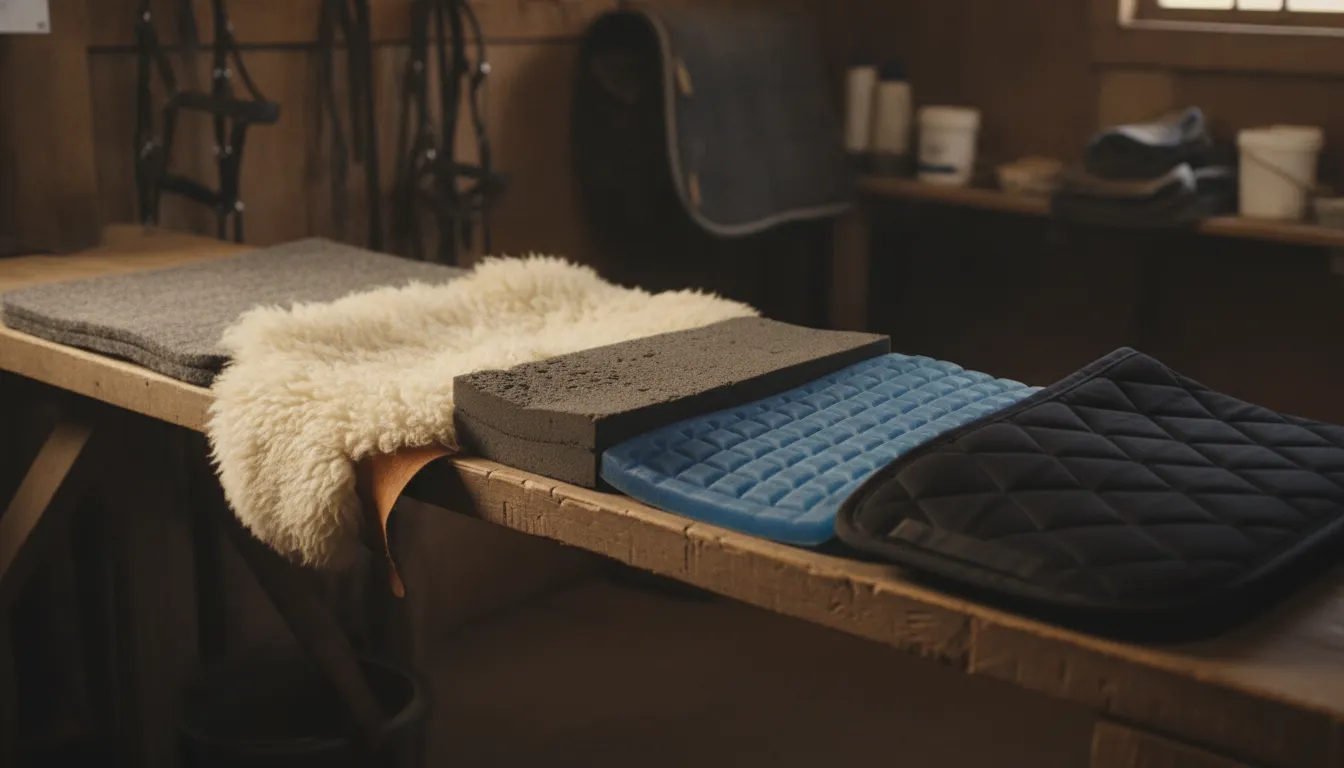
Saddle Pad Materials Compared: Wool, Felt, Foam, Gel, and More
The best saddle pad material depends on your horse, saddle, discipline, and riding conditions. Start with the fit of the saddle, then choose a pad that manages moisture, cushions movement, and stays comfortable through the work. No single material is right for every horse.
| Material | Key Benefit | Best For | Breathability | Durability |
|---|---|---|---|---|
| Wool | Moisture wicking and temperature regulation | Daily riding and horses that run warm | High | High with proper care |
| Wool felt | Natural shock absorption and a dense, stable feel | Western riding and demanding work | High | Very high |
| Foam | Consistent cushioning and shock absorption | Riders seeking additional impact protection | Low to moderate | Moderate to high, depending on construction |
| Gel | Shock absorption and pressure relief | Targeted cushioning under a compatible saddle | Low to moderate | Moderate |
| Sheepskin | Soft contact and pressure redistribution | Sensitive horses and comfort-focused riding | High | Moderate with careful cleaning |
| Synthetic fibers | Easy cleaning and consistent performance | Frequent riders and uncomplicated maintenance | Varies by weave | Moderate to high |
Natural fibers for moisture and sensitive skin
Wool is a practical choice when sweat management matters. Its fibers help wick moisture away from the skin while allowing airflow, which can make a difference during long rides or warm weather. High-density wool felt is especially popular in Western pads because it combines durability, natural shock absorption, and moisture management. For a horse that reacts to synthetic materials, cotton, linen, or wool may also help reduce skin irritation.
Sheepskin takes a softer approach. Its natural loft can redistribute pressure and provide a comfortable surface for horses with sensitive or easily irritated backs. It still needs appropriate care and a smooth, well-fitted saddle, since softness cannot correct a saddle that creates uneven pressure.
Foam, gel, and easy-care synthetics
Foam and gel pads are chosen primarily for cushioning. They can provide strong shock absorption and pressure relief, but their lower breathability means you should pay attention to heat and sweat after work. Synthetics offer a useful alternative when quick cleaning and predictable upkeep are priorities. Look for a construction with adequate ventilation rather than judging the material name alone.
An academic study on saddle pads used reindeer fur as one comparison material and found a significant decrease in maximum overall force at both walk and trot compared with no pad. That result is a useful reminder that material, thickness, and saddle compatibility all influence performance. Treat it as an evidence point, not a reason to choose an unusual material without considering fit and daily care.
When you're ready to compare options, browse our premium collection of saddle pads and match the material to your horse's needs, your discipline, and your maintenance routine.
Shop This Post

Featured in this article
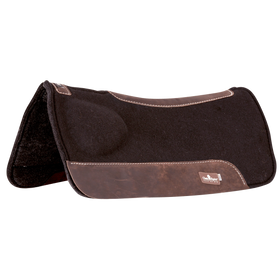
Professional's Choice 100% Wool Felt Contoured Saddle Pad - Steam-Pressed Pressure Relief & Moisture Wicking
$158.99
Shop Now →
Western vs English Saddle Pads: Key Differences Every Rider Should Know
Western and English saddles are built for different disciplines, so their pads are shaped and constructed to support different riding needs. Choosing the right style is not simply a matter of appearance. The pad should complement the saddle, provide appropriate cushioning, and protect the horse's back without creating extra bulk or pressure.
Western pads: broad coverage and substantial cushioning
Western saddle pads are generally thicker and larger than English pads. Their generous surface area matches the broader footprint of a Western saddle and helps accommodate the saddle's weight distribution. Many are made with felt, wool felt, or foam. High-density wool felt is a popular choice because it is durable, naturally absorbs shock, and can help manage moisture during a long ride.
The extra material is useful, but more is not automatically better. A Western pad still needs to sit smoothly and work with the saddle's fit. Some riders also layer a thin liner or under-pad beneath a heavier Western blanket. This arrangement can make the blanket easier to clean and support moisture wicking, while allowing the rider to adjust the layering for the conditions and the horse.
English pads: shaped for close contact and discipline
English saddle pads, often called saddle cloths or numnahs, are typically thinner and less bulky. They are shaped to match the outline of an English saddle, with designs tailored for dressage, jumping, or close-contact use. The shape and flap length matter because the pad needs to provide coverage without interfering with the rider's leg or the saddle's contact.
Many English pads are machine washable, which is convenient for riders who train frequently. Riders can also choose correctional pads with shim pockets. These pockets allow minor adjustments to balance or fit as a horse's condition changes. But shims are not a substitute for a properly fitted saddle or professional saddle-fit evaluation.
Which style should you choose?
Start with the saddle, not the color or pattern. A Western saddle needs a properly sized Western pad with enough coverage and cushioning. An English saddle needs a compatible cloth or numnah that follows its shape and leaves appropriate clearance. Check that the pad lies flat, does not bunch, and does not press into the withers or spine.
This combined Western and English comparison is designed as a broader master guide, rather than another Western-only overview. For help comparing shapes, materials, and sizes, browse our premium collection of saddle pads for both riding styles.
How Thick Should a Saddle Pad Be?
The right thickness depends on your saddle, discipline, horse, and workload. More padding is not automatically more comfort. A well-fitted saddle with an overly thick pad can become tight, create pressure points, and press against the wither or spine. A pad that is too thin may not provide enough cushioning or protection for the work you ask your horse to do.
Thickness guidelines by activity
These ranges provide a practical starting point, especially for Western pads. They are not a substitute for checking the fit of the complete saddle-and-pad combination.
- 1/2 inch: A practical choice for showing and reining when you want protection without adding unnecessary bulk.
- 3/4 inch: A versatile all-around option for daily training and general riding.
- 7/8 inch: Often suited to trail riding, barrel racing, and team penning, where additional cushioning may be useful.
- 1 inch: Appropriate for demanding ranch work, roping, or riding with substantial gear when the saddle has room for it.
- 1-1/8 inches: A specialized, extra-thick option for roping activities such as team roping, calf roping, and steer stopping.
These activity-based ranges are adapted from 5 Star Equine's thickness guidance: their saddle pad selection guide. Use the recommendations as context, not a reason to force a thick pad under a saddle that already fits closely.
Western and English pads require different starting points
Western pads are generally larger and thicker because they accommodate the broader surface and weight distribution of Western saddles. English saddle cloths and numnahs are typically thinner and shaped to match the saddle. Adding Western-style thickness beneath an English saddle can interfere with clearance and balance, while an undersized English pad may not provide adequate coverage.
Before changing thickness, place the saddle on the horse with the pad in position and check the fit at the wither, spine, and weight-bearing areas. The pad should not compress the spinal channel or make the saddle feel unstable. If your saddle fits correctly with one pad, layering another is not automatically an improvement. For discipline-specific options, browse our premium collection of saddle pads and select a design that matches your saddle and intended use.

How to Fit a Saddle Pad for Your Horse: A Step-by-Step Guide
A properly positioned pad supports comfort, stability, and even contact between the saddle and your horse's back. Use these steps every time you tack up, then check the fit again after riding.
- Choose the right shape and size. Select a pad designed for your saddle style and your horse's build. Contoured pads follow the horse's back and saddle more naturally and may help limit shifting, while non-contoured pads can work well when their shape matches the saddle. The pad should extend about 1 to 2 inches beyond the saddle edges, with enough coverage to protect the back without restricting your leg or interfering with movement. Browse our collection of saddle pads to compare suitable designs.
- Place the pad forward, then slide it back. Set the pad slightly forward on the horse's back, in the direction of the mane. Place the saddle over it, then slide the pad back into its final position. This helps the pad's fibers or surface settle in the direction of the coat instead of pushing hair forward and creating friction.
- Clear the spine and saddle gullet. Before tightening the girth or cinch, reach beneath the saddle and pull the pad up into the gullet channel. Create a clear central tunnel so the pad does not press directly along the spine. This step is essential even when the pad appears smooth from the outside.
- Check the withers. Run your hand around the wither area and confirm there is adequate clearance, especially on a high-withered horse. Choose a pad with extra wither contouring when needed, and make sure the front edge is not rubbing or pressing down. A high-wither shape should support clearance rather than forcing the saddle higher than its intended position.
- Smooth every surface. Lift the saddle slightly if necessary and remove wrinkles, bunching, or folded edges from beneath it. Even a small ridge can concentrate pressure and cause rubbing. Check both sides, the spine channel, and the area beneath the panels before mounting.
- Confirm stability and fit after mounting. A non-slip material can help limit movement during intensive work, but it should not replace correct sizing or placement. English correctional pads with shim pockets may allow subtle adjustments for temporary balance changes. Add or remove shims only with a clear purpose and reassess the saddle carefully.
- Watch your horse's response and reassess the saddle. Sweat patterns, soreness, repeated resistance, or rubbing deserve attention. Research has found that a well-chosen pad can reduce load on a horse's back. But a pad cannot fix a poorly fitted saddle or serve as a permanent substitute for professional saddle fitting. If discomfort persists, stop riding in that setup and consult a qualified saddle fitter.
Saddle Pad Care and Maintenance: Keep Your Pad Performing Ride After Ride
A dependable saddle pad does more than cushion your horse during a ride. Its performance depends on consistent care, especially when sweat, hair, dust, and moisture collect in the fibers. A simple cleaning and storage routine helps protect your horse's skin and lets you spot wear before it affects comfort or saddle balance.
Clean away sweat and debris after every ride
Brush or shake out loose hair and arena dust as soon as practical, then follow the care instructions for the specific pad. Dirty material can trap sweat and grit against the horse's back, contributing to rubbing, sores, and skin irritation. Regular washing, done according to the manufacturer's instructions, helps maintain the pad's structure and can extend its useful life. Avoid assuming every pad can be treated the same way. Wool felt, foam, gel inserts, and sheepskin may have different cleaning and drying requirements.
Inspect the padding, not just the cover
Before saddling, run your hands across the pad and check for areas that feel noticeably thinner, lumpy, hard, or flattened. Internal foam and cushioning materials can compress over time. Once they lose their shape, they may no longer absorb shock or distribute pressure as intended. Also look for torn stitching, damaged binding, and areas where the material has become permanently matted. A clean-looking cover does not guarantee that the protective layer underneath is still working.
Dry completely and store with airflow
After a sweaty ride or wash, hang the pad where air can circulate through it. Do not fold or place a damp pad in a closed tack trunk, trailer, or feed room. Lingering dampness encourages mold and bacterial growth, creating an avoidable risk for your horse's skin and the pad's materials. Store the pad fully dry, supported so it keeps its shape, and away from direct heat that could damage foam, adhesives, or synthetic surfaces.
Replace a pad when its cushioning is compressed, its surface stays uneven, or cleaning no longer removes persistent odor and buildup. If your horse develops new sensitivity, rub marks, or back soreness, pause and reassess both pad condition and saddle fit. A well-maintained pad supports comfort, but it cannot correct a saddle that no longer fits properly.
Frequently Asked Questions
What is a saddle pad and what is its purpose?
A saddle pad is a protective layer between the horse's back and saddle. It cushions the contact area, helps manage sweat, and reduces friction and pressure during a ride. It should support a correctly fitted saddle, not compensate for a saddle that does not fit.
How do I choose the right saddle pad material?
Start with your discipline, your horse's skin sensitivity, and the amount of breathability or shock absorption you need. Wool and other natural fibers wick moisture and may be comfortable for sensitive horses, while foam and gel prioritize cushioning but can be less breathable. High-density wool felt is a durable choice for many Western setups.
What is the correct saddle pad thickness for my horse?
Choose the thinnest pad that provides appropriate cushioning without compromising saddle fit. Western pads are generally thicker and larger, while English pads are usually thinner and shaped for the saddle. A pad that is too thick can create pressure points, so use thickness to address the ride and saddle, not as a substitute for professional fitting.
How should a saddle pad be positioned correctly?
Center the pad under the saddle, pull it up into the saddle's gullet channel to keep the spine clear, and smooth every fold or wrinkle. It should extend slightly beyond the saddle edges without restricting the rider's leg or the horse's movement. Horses with prominent withers may need extra wither clearance.
What causes hair wear and pressure points under a saddle pad?
Common causes include an ill-fitting saddle, a pad that shifts, wrinkles or bunches, and abrasive or unsuitable materials. Check the horse's back after riding for soreness, rubs, or uneven sweat patterns. Persistent problems call for a saddle-fit assessment rather than simply adding more padding.
Ready to Find the Right Saddle Pad?
The right pad can help you create a comfortable, balanced setup for your horse, whether you ride English, Western, or both. Consider your saddle shape, riding discipline, material preferences, and your horse's fit before choosing. When you are ready to compare options, Shop Now in the Hooves and Paws saddle pad collection. If you need help narrowing down the choices, contact us and our team can point you toward practical options for your setup.


