


A horse fly mask with ears can give a fly-bothered horse welcome coverage from poll to cheek, but ear covers are not automatically the best choice for every horse. The right style depends on local insects, ear sensitivity, turnout habits, and fit. Compare those factors before buying, and you can choose protection your horse is more likely to wear comfortably all season.
Shop expertly curated fly season protection for your horse
Horse fly mask with ears vs without ears: what is the difference?
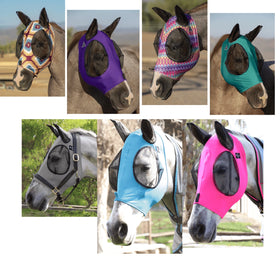
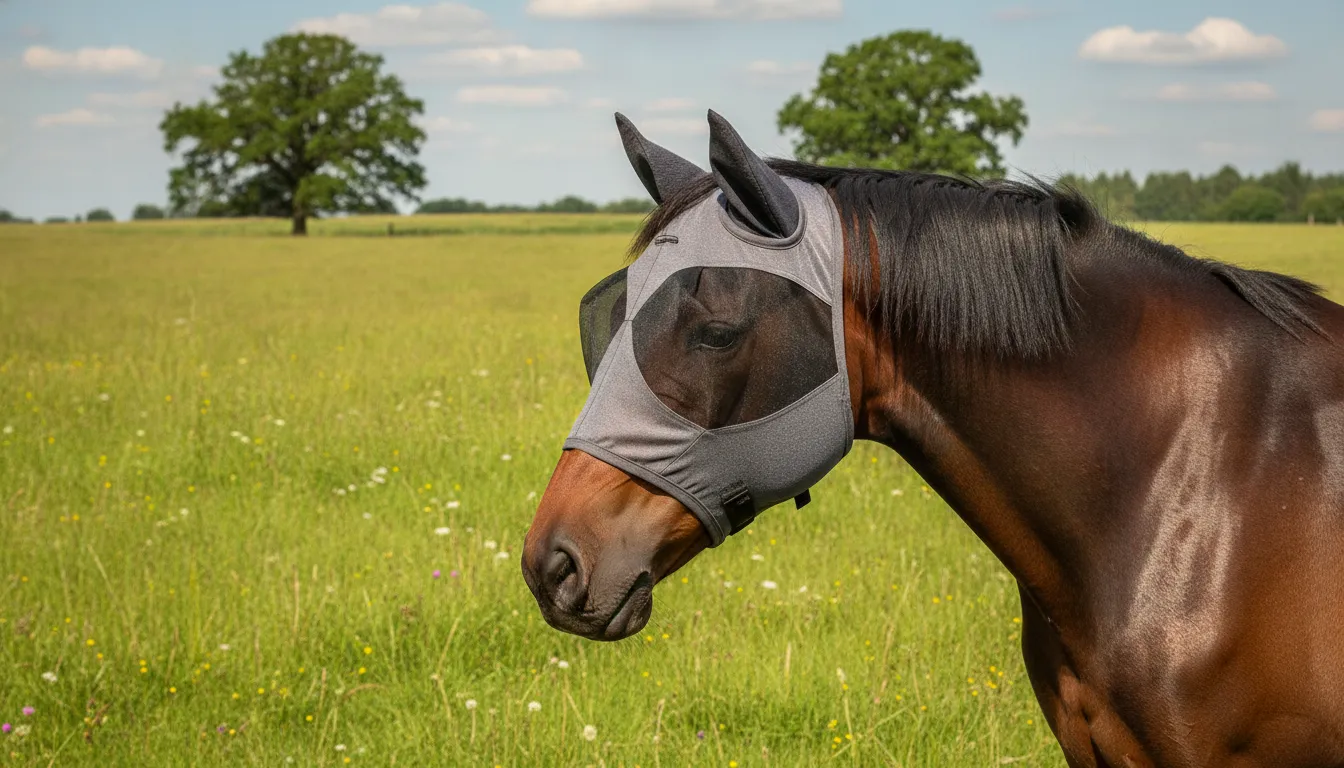
A fly mask with ears covers the eyes and face while adding fabric sleeves over both ears; an earless mask protects the eyes and face but leaves the ears uncovered. Both can be useful, and the better option is the one that fits securely without rubbing or touching the eyes.
Ear covers create an extra physical barrier between insects and the ears. They are especially useful when tiny flying pests gather around a horse's poll and ears, or when a horse repeatedly shakes its head because of insects. Earless masks provide simpler coverage and may be easier for a horse that dislikes having its ears touched.
The difference sounds small, but it can affect how readily a horse accepts the mask and how well the mask stays positioned during grazing, rolling, and social turnout. Start with your horse's behavior rather than assuming that more fabric always means a better result.
Quick comparison
| Feature | Mask with ears | Mask without ears |
|---|---|---|
| Coverage | Eyes, face, poll, and ears | Eyes, face, and poll |
| Best suited to | Horses bothered by insects around the ears | Horses that resist ear handling or need face-only coverage |
| Fit priority | Ear sleeves must allow natural ear movement | Poll edge must remain secure without pressure |
| Potential drawback | Poorly sized sleeves may pull, twist, or rub | Ears remain exposed to insects |
| Daily check | Inspect ear seams, poll, eyes, and closures | Inspect poll, eyes, edges, and closures |
When is a horse fly mask with ears the better choice?
A horse fly mask with ears is usually the better choice when insects consistently gather around the ears, your horse shows irritation from that activity, and the ear sleeves fit without restriction. It is also worth considering for clipped ears, which have less natural hair coverage.
Your horse reacts to insects around the ears
Watch your horse during the times of day when insects are most active. Repeated head shaking, frequent rubbing around the poll, or difficulty settling to graze can indicate that more ear coverage is worth trying. These behaviors can have several causes, so inspect the horse and consult an equine professional if discomfort persists rather than assuming flies are always responsible.
Key takeaway: choose ear coverage in response to a clear need, then confirm that the mask improves comfort without creating new rub points.
The ear sleeves fit naturally
Good ear sleeves should be long and roomy enough for the horse to swivel both ears freely. Fabric that pulls the tips down, twists the mask, or presses tightly at the base of the ears is not a good fit. Soft, breathable ear material can improve acceptance, while strong seams help the sleeves hold up during turnout.
For a closer look at the purpose of ear and face coverage, read the Hooves and Paws guide to a fly mask with full UV coverage. Always verify the stated protection level on the product description because materials and coverage differ by mask.
Your horse has clipped ears
Clipping removes some of the hair that naturally helps cover the ears. An ear-covering mask can replace part of that physical barrier during fly season. The mask should still be removed and checked daily so you can spot trapped dirt, damp fabric, or irritation before it becomes uncomfortable.
Shop This Post

When is a fly mask without ears better?
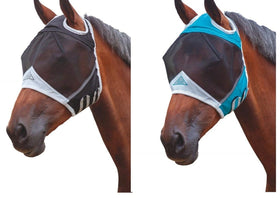
A fly mask without ears is better when a horse strongly resists ear handling, ear covers cause the mask to shift, or local insect pressure around the ears is low. A secure, comfortable earless mask is more useful than a fuller mask the horse constantly removes.
The horse dislikes ear handling
Some horses are sensitive around the ears or have learned to avoid equipment that slides over them. An earless style can make putting on and removing the mask simpler. Work calmly, avoid forcing the mask, and make the routine predictable. If a horse suddenly becomes ear-shy, investigate the change with an appropriate equine professional.
Ear covers disrupt the fit
Ear shape and size vary. If ear sleeves are too short, they can pull the mask upward; if they are too large, they may twist or bunch. Either problem can move the eye mesh out of position. An earless design removes that fit variable and may sit more steadily across the poll.
The horse only needs face and eye coverage
In some locations, the primary annoyance is insects gathering around the face rather than the ears. An earless mask can provide a practical barrier while using less material. Observe your own pasture conditions because pest activity can change with weather, water, manure management, and time of day.
- Choose earless when: your horse accepts face coverage but rejects fabric over the ears.
- Choose earless when: ear sleeves repeatedly pull the mesh toward the eyes.
- Reassess when: insect pressure or your horse's behavior changes during the season.
How should a horse fly mask fit?
A horse fly mask should sit securely around the poll, cheeks, and jaw while keeping the mesh well away from the eyes and eyelashes. It should not pinch, gape widely, restrict ear movement, or shift into the eyes when the horse lowers its head.
Prioritize eye clearance
The eye area is the most important place to inspect. Shaped or structured mesh should maintain space in front of the eyes during normal movement. View the mask from the front and both sides, then watch the horse graze and lift its head. If the mesh collapses inward or a seam sits near an eye, remove the mask and adjust or replace it.
Check edges and closures
Run your fingers along the poll, cheek, and jaw edges to identify pressure, folded trim, or gaps. Closures should be secure enough to keep the mask in place but should not pull the fabric tight against the face. Follow the manufacturer's size guide and fastening instructions, since construction varies by product.
Confirm ear freedom
With an ear-covering style, watch both ears rotate forward, backward, and sideways. The sleeves should move with the ears without tugging on the mask body. Check the ear tips and bases after wear for warmth, dampness, hair loss, or rubbing.
Compare fly masks and complete your horse's fly season setup
Which features matter most before you buy?
The most important fly mask features are stable eye clearance, a horse-specific fit, breathable materials, comfortable trim, reliable closures, and coverage suited to the horse's needs. Extra features only add value when they work with the fit rather than against it.
Structured, breathable mesh
The main face panel should hold its shape during ordinary wear while allowing airflow and visibility. Finer mesh may block smaller insects, while more open mesh may feel lighter. The right balance depends on the product design and your conditions. Inspect visibility before every use because dirt buildup can make any mesh harder to see through.
Comfortable trim and secure closures
Soft edging can reduce friction, but bulky trim may collect debris or make a warm mask feel warmer. Closures should stay fastened during turnout and release as designed when necessary. Look for clean stitching and make sure no hard fastener sits against the skin.
Optional nose and UV coverage
A nose extension can offer more coverage for horses bothered around the muzzle. Some masks also list a UV-protection rating. If UV coverage is important for your horse, check the exact product claim instead of assuming all mesh provides the same protection. Ask your veterinarian for guidance if your horse has a condition that makes sunlight a concern.
Compatibility with other fly gear
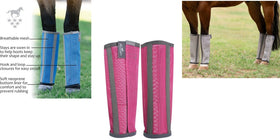
A mask is one part of a broader fly-management routine. For horses that stomp or react to insects around the lower legs, learn how fly boots for horses can complement face coverage. Each item should be checked separately for fit, cleanliness, and wear.
- First priority: mesh stays clear of the eyes in every normal head position.
- Second priority: edges and closures remain secure without pinching or rubbing.
- Third priority: ear, nose, or UV features match a specific need for your horse.
- Final check: the horse can graze, drink, see, and move comfortably.
Match the mask to turnout conditions
Turnout conditions can change which details matter most. In a brushy pasture, a streamlined mask with secure closures may be less likely to shift than a design with loose or bulky sections. In hot, humid weather, breathable materials and frequent cleanliness checks become especially important. In dusty conditions, inspect the mesh more often so buildup does not reduce visibility.
Also consider the horse's normal routine. A horse living in a group may rub against companions, while a horse that rolls frequently may challenge even a well-fitted mask. Watch what actually happens during turnout, then use those observations when comparing styles. A mask that stays positioned in a stall may behave differently during a full day in the pasture.
Plan for easy cleaning and rotation
Before buying, read the care instructions and decide whether the mask will be practical to clean as often as your setting requires. Fine mesh, fleece trim, and hook-and-loop closures can all collect hair or debris. Having two properly fitted masks in rotation can make care easier because one can be washed and dried while the other is in use.
Practical takeaway: durability is not only about tough fabric. A useful mask must remain comfortable, visible, and easy to inspect throughout the season.
How do you introduce a fly mask and check it daily?
Introduce a fly mask in short, calm sessions, then inspect the horse and mask every day it is worn. Daily checks catch shifting, dirt, damage, and rubs early, whether you choose a mask with ears or without ears.
Introduce it without rushing
Let the horse see and investigate the mask, then handle the face and poll gently before fastening it. Start with a brief supervised period in a safe area. Watch the horse walk, graze, and move its ears. Extend wear only when the mask remains correctly positioned and the horse is relaxed.
Use a simple daily checklist
- Remove and inspect: look at the eyes, poll, ears, cheeks, jaw, and nose for irritation or hair loss.
- Clean as needed: remove dust, dried mud, hair, and debris according to the care label.
- Check the structure: confirm the eye mesh has not collapsed and ear sleeves are not twisted.
- Inspect closures: look for weakened fasteners, frayed straps, loose stitching, or sharp damage.
- Refit and observe: watch the horse move before returning it to turnout.
Keep a clean spare available if fly pressure is high. Rotating masks gives a washed mask time to dry fully and prevents the temptation to put damp equipment back on the horse.
Know when to remove or replace it
Remove the mask if it shifts into the eyes, causes rubbing, traps excessive dirt, restricts movement, or becomes damaged. Replace a mask when repairs cannot restore a smooth, secure fit. A horse that suddenly resists a familiar mask may be signaling discomfort, so pause and investigate rather than fastening it anyway.
How do you choose between a fly mask with ears and without?
Choose by matching the mask to your horse's insect exposure, behavior, anatomy, and tolerance, then let daily observation confirm the decision. There is no universal winner: a comfortable earless mask can outperform a poorly fitted mask with ears, while well-fitted ear coverage can be valuable for a horse bothered around the ears.
A practical decision sequence
- Observe the problem: note where insects gather and how the horse responds.
- Assess handling: consider whether the horse calmly accepts touch and fabric around the ears.
- Compare fit: use the size guide and prioritize eye clearance, stable edges, and natural ear movement.
- Test under supervision: watch the horse graze, walk, and shake its head.
- Review daily: keep the style only if it remains comfortable, clean, and correctly positioned.
Hooves and Paws has served horse and pet owners as a family-owned retailer since 1994. Its expert-curated fly season protection collection makes it easy to compare coverage options. Orders include free continental US shipping with no minimum, and eligible orders placed before 2 PM PST ship the same day.
Find the right fly protection for your horse
Frequently asked questions
Is a horse fly mask with ears better than one without?
A mask with ears is better for a horse that needs ear coverage and comfortably accepts well-fitted ear sleeves. A mask without ears is better when ear fabric causes resistance, rubbing, or shifting. The best mask stays clear of the eyes and remains comfortable during turnout.
Are fly masks with ears useful for clipped horses?
Yes, ear-covering masks can be useful for clipped horses because clipping removes some natural hair coverage. Choose sleeves that allow free ear movement, and inspect clipped skin daily for dirt, dampness, or rubbing.
Can a horse wear a fly mask all day?
A horse may wear a properly fitted fly mask for extended turnout when the product is designed for that use, but the mask and horse still need daily inspection. Remove it promptly if it shifts, becomes dirty or wet, causes irritation, or interferes with vision or movement.
Do all fly masks provide UV protection?
No. UV protection varies by material and design, and not every fly mask makes a specific UV claim. Check the individual product details for a stated rating, then ask your veterinarian for guidance if UV exposure is a concern for your horse.


