


How to Choose and Fit a Mini Horse Fly Mask
A well-chosen fly mask helps create a physical barrier between biting insects and the sensitive areas around a miniature horse's eyes, ears, and muzzle. The right mask should remain secure without rubbing, allow clear vision, and leave room for normal chewing and grazing. Because miniature horses have compact proportions, careful measuring matters more than relying on a familiar size label.
Shop fly season protection for your miniature horse.
A mini horse fly mask should match the horse's face measurements, not just a mini, pony, or foal label. Measure the face, jaw, and throat latch, then compare those numbers with the brand's chart. Once fitted, confirm that the mesh clears the eyes, the edges stay smooth, and the closure feels secure without pinching.
This guide explains how to measure, assess fit, compare useful features, avoid common sizing mistakes, and care for a mask throughout fly season. Recheck the fit after every wash and whenever you notice the mask shifting. A few minutes of observation can reveal whether a style works for your horse's face and daily routine.
Why Mini Horse Fly Mask Fit Requires Extra Care
A miniature horse is not simply a full-sized horse scaled down evenly. Minis often have shorter faces, broad foreheads, small jaws, and different distances between the ears and eyes. That is why a pony or foal mask may appear close to the right size but still sit too low, leave gaps, or press against the eyes.
Fit also changes how well a mask performs. A loose lower edge may let insects crawl inside. An overly tight edge can create pressure and friction, especially when sweat and dirt collect beneath it. Eye mesh that collapses inward can touch the lashes or eye area, while a mask that rotates may interfere with vision. The goal is a stable barrier that moves naturally with the horse rather than against it.
Before shopping, think about the areas your horse needs covered and the conditions in which the mask will be worn. A horse bothered around the ears may benefit from ear covers. A horse with a sensitive muzzle may need a nose guard. A mask used for pasture turnout should stay in place while the horse grazes, moves, and interacts with its surroundings.
How to Measure for a Mini Horse Fly Mask
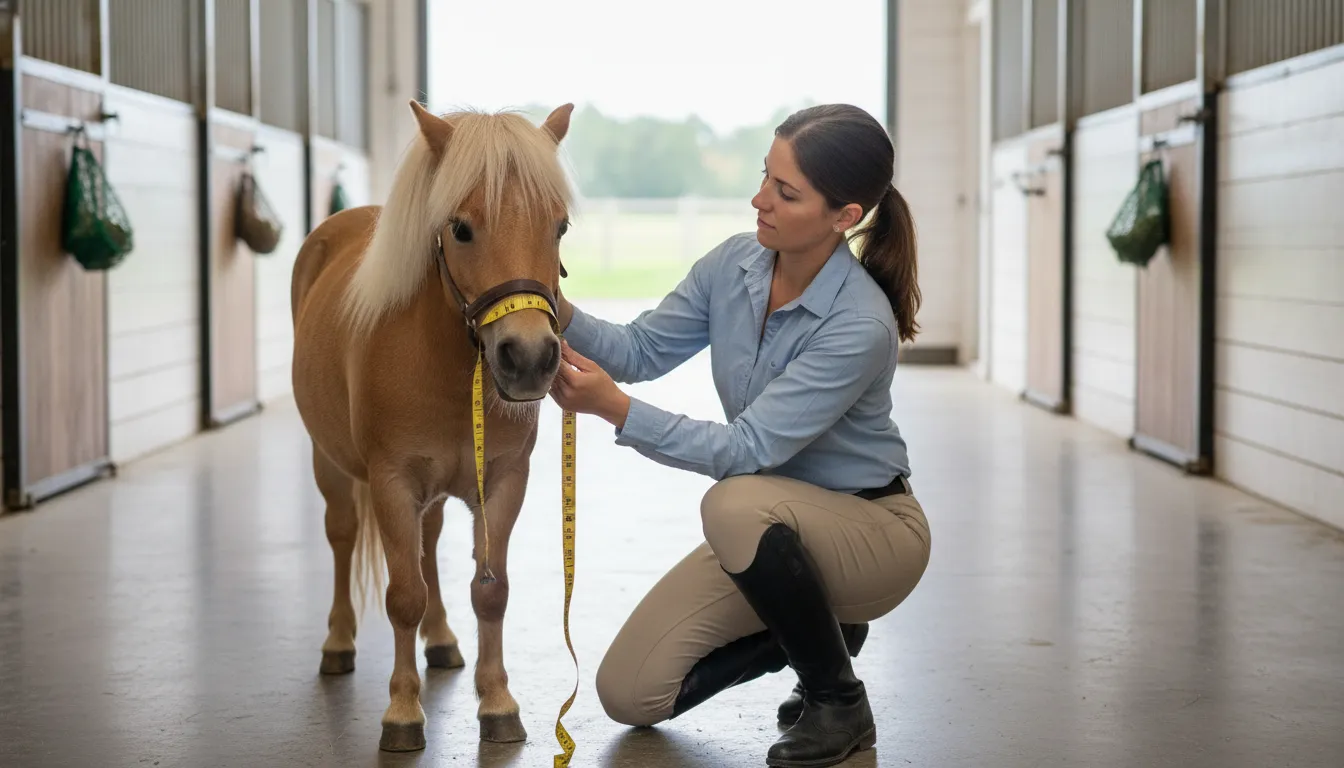
Use a flexible cloth measuring tape and record measurements in both inches and centimeters if possible. Ask another person to hold the horse quietly, and stand to the side rather than directly in front. Keep the tape close to the face without pulling it tight. If the horse is restless, pause and continue when measuring can be done safely.
Measure the face length
Start near the poll at the top of the head between the ears. Run the tape down the center of the face to the point where the lower edge of the mask should rest above the nostrils. This measurement helps identify styles that are long enough to cover the face without interfering with breathing or grazing. For a mask with a nose guard, review the brand's instructions for the correct end point.
Measure the jaw and throat latch
Measure around the widest part of the jaw, then measure around the throat latch just behind the jaw and ears. These numbers help determine whether the lower portion and closure can sit securely. Do not add extra inches unless the brand's chart specifically instructs you to do so. Manufacturers generally build the intended ease into their sizing.
Check brow width and ear length
Measure across the forehead and note the spacing between the eyes. If you want ear covers, measure from the base to the tip of each ear. Ear covers should not bend the tips or squeeze the base. Record any difference between the ears, since an old injury or natural asymmetry may affect which style feels most comfortable.
Compare measurements with the exact product chart
Size names are not universal. One brand's mini may fit differently from another brand's mini, and different styles from the same brand may use different proportions. Use the chart attached to the product you are considering. When measurements fall between sizes, review the product's adjustment range and shape rather than automatically choosing the larger option.
Keep your measurements in the tack room or on your phone. They make it easier to compare replacement masks later, but remeasure periodically. Growth, body condition, coat thickness, and changes around the jaw can alter fit.
What a Proper Fly Mask Fit Looks Like
Put the mask on according to the product instructions, smooth the edges, and secure the closure. Then assess the horse from the front, both sides, and underneath the jaw. Watch the horse walk, lower its head, chew, and graze. A mask can look correct while the horse is standing still but shift during normal movement.
Clearance around the eyes
The mesh must remain away from the eyes and lashes. Structured or darted eye panels help create this clearance, but the shape must match the horse's face. Look from the side and front while the horse moves its head. If the mesh collapses inward, sits unevenly, or touches the eye area, remove the mask and try another size or shape.
Smooth edges with no large gaps
Edges should lie smoothly against the face without digging into the skin. Check under the jaw, beside the cheeks, and around the poll. The mask should not slide freely or leave an opening large enough for insects to enter. At the same time, it should allow the jaw to move normally. Follow the product instructions for closure placement and adjustment rather than using one finger rule for every design.
Comfortable ears and an unobstructed muzzle
For masks with ears, confirm that each ear stands naturally and is not folded inside the cover. The seams should not press into the ear base. If the mask includes a nose guard, make sure it does not cover the nostrils, curl under, or interfere with eating and drinking. Observe the horse for signs of irritation, including repeated face rubbing or unusual head shaking.
Features to Compare Before You Buy
The best feature set depends on your horse, environment, and turnout routine. More coverage is useful only when it fits correctly and the horse accepts it. Compare construction and adjustment details as closely as you compare size.
Eye mesh and visibility
Look for mesh that holds its shape away from the eyes while still allowing the horse to see. Inspect the field of view from several angles after fitting. Very soft mesh may collapse on some face shapes, while overly rigid or damaged mesh can develop uncomfortable edges. Replace a mask if its eye panels no longer hold their intended shape.
Open ears or ear covers
Open-ear masks may suit horses that dislike fabric over their ears. Ear-cover masks add a barrier around an area where insects often gather. The covers should be roomy, breathable, and correctly aligned. If an ear cover continually twists or folds, that style may not match the horse even if the rest of the mask fits.
Nose coverage
A nose guard extends coverage down the muzzle and may offer shade for sensitive skin. It should remain positioned above and around the muzzle without blocking the nostrils. Watch the horse drink and graze during the first fitting. If the guard flips, catches, or rubs, adjust it according to the instructions or choose a different design.
Closures, trim, and adjustability
Closures should fasten securely and offer enough adjustment for a smooth fit. Soft trim can reduce friction, but it must be kept clean because sweat, seeds, and dried mud can make any edge abrasive. Check seams and attachment points for rough areas. A practical mask should be easy for you to remove, inspect, wash, and refit correctly.
Compare fly masks and other fly season essentials.
Common Mini Horse Fly Mask Sizing Mistakes
Choosing by label alone
The words mini, pony, and foal describe broad categories, not standardized dimensions. A foal mask may be too long through the nose, and a pony mask may be too wide or narrow in the wrong places. Always compare the horse's measurements with the exact product chart and adjustment range.
Assuming loose means comfortable
Extra room does not always improve comfort. A loose mask can rotate, sag toward the eyes, or create openings around the jaw. If you tighten every strap to compensate for an oversized face panel, the pressure may become uneven. A different size or design is usually better than forcing the wrong shape to work.
Ignoring eye clearance after movement
A mask may clear the eyes when first fitted but shift after the horse lowers its head or walks. Observe normal activity before leaving the horse unattended. Recheck later the same day, especially with a new mask. Remove it immediately if the mesh touches the eye area or obstructs vision.
Leaving dirt beneath the trim
Even a correct size can cause irritation when sweat, mud, hair, or seeds collect beneath the edges. Groom the face and inspect the mask regularly. For brushes and other tools that support a clean coat and face, browse the horse grooming and coat care collection.
How to Check the Mask During Fly Season
Inspect both the horse and mask at least daily while it is in use. Remove the mask and look around the eyes, ears, cheeks, jaw, and poll. Watch for hair loss, damp areas, swelling, heat, or broken skin. If you see irritation or an eye concern, remove the mask and seek appropriate guidance before using it again. The horse health and first aid collection can help you organize routine care supplies.
- Confirm the eye mesh remains lifted away from the eyes and lashes.
- Remove grass, seeds, dried mud, and loose hair from the trim.
- Check that ear covers are upright and seams are not rubbing.
- Inspect closures for dirt, wear, and secure fastening.
- Look for holes, broken mesh, sharp edges, or frayed trim.
- Observe the horse grazing, drinking, and moving comfortably.
Conditions can change during the day. Rain may add weight, strong wind can move a loose panel, and a muddy roll can clog mesh or closures. A mask that fit well yesterday still deserves a quick check today.
Cleaning, Drying, and Repairing a Fly Mask
Follow the care label because materials and construction vary. Before washing, brush away loose dirt and fasten hook-and-loop closures so they do not snag the mesh or trim. Use the recommended wash method and detergent. Rinse thoroughly so residue does not remain near the horse's face.
Reshape the eye panels while the mask is damp and let it dry fully before use. Avoid heat unless the care instructions allow it, because heat can distort some mesh and synthetic components. Keeping a clean spare mask can be useful while the first one dries or needs repair.
Inspect the entire mask after cleaning. Minor repairs must be smooth, secure, and positioned where they cannot touch the horse's eyes or skin. Replace the mask when the mesh becomes brittle, a closure no longer holds, eye panels collapse, or damage creates a snagging or rubbing risk. A worn mask is not worth stretching through another season if it no longer fits safely.
Match the Mask to Your Mini Horse's Routine
Consider when and where the horse will wear the mask. Pasture turnout may call for a secure, durable style that remains stable through grazing and movement. A horse that spends part of the day in a stall may need different coverage than one outside for long periods. Local insect pressure, available shade, fencing, and the horse's behavior all influence the practical choice.
Introduce a new mask while you can observe the horse. Let the horse investigate it, put it on calmly, and watch for signs of discomfort. Check the fit again after a short period of normal activity. Some horses readily accept ear covers or nose guards, while others are more comfortable with a simpler design.
A fly mask is one part of a broader management plan. Clean surroundings, grooming, and other appropriate fly-control tools may also help. For additional horse and pet supplies selected by a family-owned retailer serving animal owners since 1994, visit Hooves and Paws.
Find a fly season protection setup that suits your mini.
Mini Horse Fly Mask Fit Checklist
Use this checklist after the initial fitting, after every wash, and whenever you notice a change in behavior or position. It brings the most important fit points into one quick review.
- The selected size matches the exact product chart.
- The eye mesh stays away from the eyes and lashes during movement.
- The horse can see, chew, graze, and drink normally.
- The edges lie smooth without pinching, rubbing, or large gaps.
- Ear covers stand naturally without folding or squeezing.
- A nose guard stays clear of the nostrils and does not curl under.
- Closures remain secure and are adjusted according to instructions.
- The mask is clean, fully dry, and free of sharp or damaged areas.
If a mask fails any part of the checklist, remove it and reassess the size, adjustment, or style. The right option should protect the intended areas while allowing the horse to behave normally and comfortably.
Frequently Asked Questions
How do I choose the right size mini horse fly mask?
Measure from the poll to the point where the mask should end above the nostrils, around the widest part of the jaw, and around the throat latch. Compare every measurement with the specific brand's size chart. After putting the mask on, confirm that the eye mesh stays clear, the edges do not pinch, and the closure is secure without being tight.
Are there specific mini horse fly masks for miniature breeds?
Yes. Masks labeled for miniature horses are shaped for their shorter faces and smaller proportions. A pony or foal size may still be too long, too narrow, or poorly positioned around the eyes. Use the product's measurements rather than relying on the size name alone, because sizing can vary by brand and style.
Does a mini horse fly mask with ears provide better protection?
An ear-cover style protects more of the horse's face and can help when flies gather around the ears. It is not automatically the best choice for every horse. The ear covers must be long and wide enough to avoid folding or pinching, and a horse that dislikes covered ears may be more comfortable in an open-ear design.
Why is a nose guard important on a mini horse fly mask?
A nose guard adds coverage where flies may bother the muzzle and can provide shade for sensitive skin. It should lie smoothly without covering the nostrils or interfering with grazing and drinking. Check it regularly, because a guard that curls, shifts, or becomes damaged can create rubbing or obstruct the horse's normal movement.
Choose With Measurements, Then Verify the Fit
A size chart is the starting point, not the final answer. Measure carefully, choose the closest appropriate design, and then watch how the mask sits while your mini horse moves, eats, and drinks. Continue checking the eyes, edges, ears, muzzle, closures, and mesh throughout the season. That simple routine helps you select and maintain a mask that provides useful coverage without compromising comfort.


