


A riding helmet is one piece of equipment you hope never has to do its most important job. Yet every ride includes variables you cannot fully control, from a spook on the trail to a missed distance in the arena. Choosing among horse riding helmets is therefore less about finding the most expensive model and more about finding a certified helmet that fits your head correctly, suits your riding routine, and is comfortable enough to wear every time.
Browse horse riding helmets selected by the Hooves and Paws team.
Quick answer: Choose a current, equestrian-certified helmet that sits level, feels evenly snug around your whole head, and stays in place when you move. Match the ventilation, brim, adjustment system, and finish to how and where you ride. Replace the helmet after an impact or whenever damage, poor fit, or manufacturer guidance indicates it is time.
This guide walks through each decision in practical terms, so you can compare options with confidence rather than relying on looks alone.
How to choose horse riding helmets
Start with three nonnegotiables: an appropriate equestrian safety certification, a secure fit, and a helmet designed for your intended activity. Once those boxes are checked, compare comfort, ventilation, adjustability, brim shape, finish, and price. A stylish helmet that shifts during a ride is not the right helmet. And a highly featured helmet that feels uncomfortable may spend too much time on a shelf.
Use this buying order
- Confirm the certification. Look for the current safety label required by your barn, event organizer, or riding association.
- Measure and assess head shape. A size chart is a starting point, but the fit test determines whether a helmet works for you.
- Try the helmet with your usual hair. A low ponytail, bun, or changing hairstyle can affect fit.
- Check stability before adjusting the chin strap. The shell should stay put as you gently move your head.
- Compare comfort features. Ventilation, removable liners, dial adjustments, and weight matter during long or hot rides.
- Review replacement and care guidance. Know how the maker recommends cleaning, storing, and retiring the model.
For a useful starting point, browse the curated selection of riding helmets and safety gear from Hooves and Paws. Comparing certified options side by side can help you narrow the field before focusing on fit.
Price often reflects differences in materials, ventilation design, finish, adjustability, and added technologies. It should not replace your checks for certification and fit. Set a realistic budget, then choose the helmet within that range that meets your safety needs and feels best on your head.
Understanding riding helmet safety ratings
Safety labels can feel like alphabet soup, but they serve an important purpose. A certification indicates that a helmet model has met the requirements of a defined test standard. Independent rating programs may compare performance beyond that baseline. These two kinds of information answer different questions, and neither makes fit optional.
| What you are checking | What it tells you | How to use it |
|---|---|---|
| Certification label | The model met the tests required by that standard | Confirm it is current and accepted for your riding activity |
| Independent rating | How tested models compared under the program's methods | Use it as another comparison point, not as a substitute for fit |
| Manufacturer instructions | Model-specific fitting, care, and replacement guidance | Follow the manual and labels supplied with the helmet |
| Event or barn rules | The helmet requirements for participating | Verify requirements before a clinic, show, lesson, or competition |
Certification is the starting line
In the United States, shoppers commonly encounter helmets carrying ASTM-related certification information together with a seal from the Safety Equipment Institute. Other markets and disciplines may recognize additional standards. Requirements can change, so check the current rules that apply to your location and activity instead of relying on an old helmet label or a friend's recollection.
A certification applies to the helmet model and standard named on its label. In the United States, ASTM F1163 is the commonly referenced equestrian helmet performance specification, with SEI certification showing that a model has been tested for compliance. Riders may also encounter standards such as PAS 015 or VG1 in other markets and disciplines. Always confirm which current standard your barn, event, or governing body accepts. Certification does not guarantee that every model fits every rider, and an old, damaged, altered, or previously impacted helmet should not be treated like a new one.
What added protection systems mean
Some designs include technologies intended to address particular impact dynamics. You may also see independent equestrian helmet ratings that compare models using a specific test protocol. These can be helpful research tools, especially when comparing two well-fitting options. Read how a rating was produced and avoid treating a single score as the only buying criterion. The best practical choice is a certified helmet that fits securely and is worn consistently.
How should a riding helmet fit?
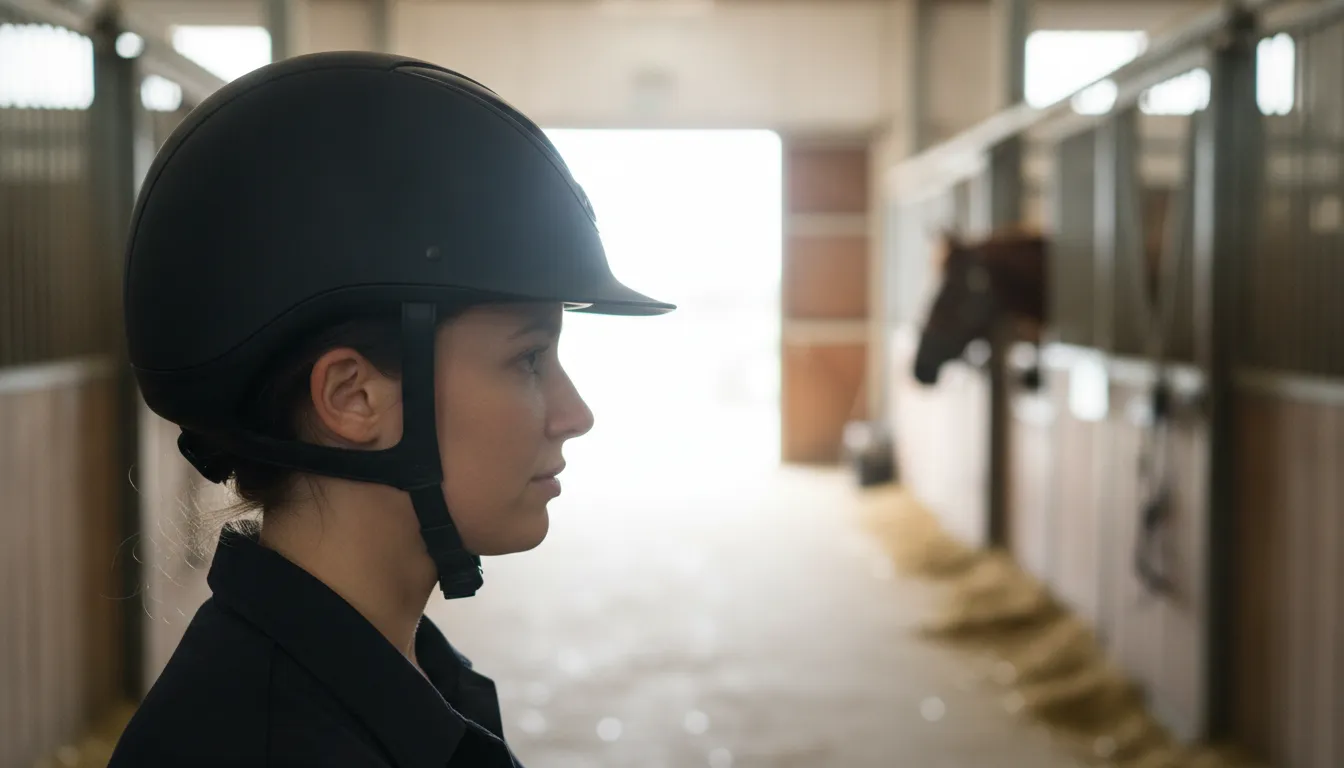
A properly fitted riding helmet should feel snug and even all the way around your head without creating painful pressure points. It should sit level rather than tipped back, and the front edge should generally be positioned above the eyebrows according to the manufacturer's instructions. When you move the brim gently, the skin of your forehead should move with it.
Measure and try on in five steps
- Measure your head. Wrap a soft tape around the widest part, keeping it level and following the placement described in the helmet maker's guide. Record the measurement and consult that brand's chart.
- Seat the helmet correctly. Place it on your head level from front to back. Do not force a helmet that catches painfully or leave one perched high.
- Check even contact. Notice whether pressure is evenly distributed. Gaps at the sides or pressure at the forehead can signal a mismatch between the helmet and your head shape.
- Test movement. Before relying on the harness, move your head gently and nudge the brim. The helmet should not slide freely, rock, or obscure your vision.
- Adjust the harness. Follow the maker's instructions so the straps lie flat and the chin strap is secure without being painful.
Wear the helmet indoors for several minutes while checking fit. Discomfort that builds over time can reveal a pressure point that was not obvious at first. If you are between sizes, do not assume adding thick padding or over-tightening a dial will solve the problem. Compare models and shapes.
Compare riding helmet sizes, fit systems, and styles at Hooves and Paws.
Round, oval, and adjustable fits
Heads with the same circumference can have different shapes. One rider may need a rounder interior, while another needs a more oval profile. Fit systems can fine-tune a compatible shell, but they cannot fully correct the wrong underlying shape. Removable liners may help with comfort and cleaning, yet only use the components approved for that helmet.
Children need especially frequent fit checks because they grow. Do not buy a helmet with significant extra room for a child to grow into. A loose helmet may shift when it is needed most. Recheck fit after growth spurts, hairstyle changes, or any complaint that the helmet suddenly feels different.
Match helmet features to your riding style
Once safety and fit are settled, consider how your riding routine affects comfort and practicality. The right details can make you more willing to put the helmet on for every ride, whether you school several horses, explore trails, or compete.
Schooling and everyday barn rides
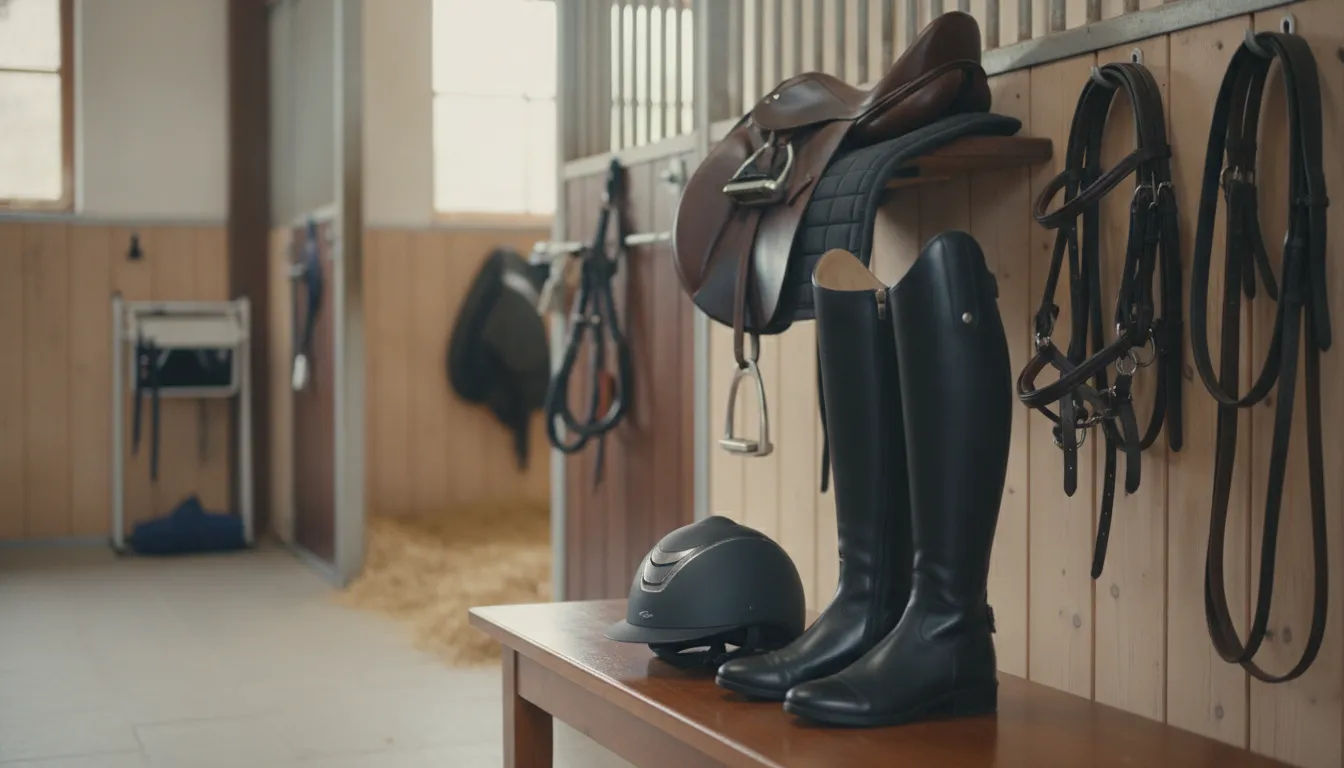
For frequent schooling, prioritize comfort, straightforward adjustment, durable materials, and a liner that is easy to care for. Ventilation can be valuable during warm lessons or long training sessions. A versatile matte finish often transitions easily between daily use and casual clinics. Complete a practical schooling setup with suitable riding boots and a well-fitted helmet.
Trail and western riding
Trail riders may value ventilation, sun coverage, secure adjustment, and easy-to-clean surfaces. Western riders can choose purpose-built riding helmets in profiles and colors that complement their apparel without compromising certification or fit. Riders refining their western setup can also compare spurs and spur straps. Never place a cowboy hat over a helmet unless the complete setup is specifically designed and approved for that use.
Jumping, dressage, and showing
Show rules and traditions differ by discipline and organization. Check current requirements before buying a competition helmet. A low-profile silhouette, conservative finish, or particular brim may suit your turnout, but the helmet still needs to remain secure throughout the ride. If you use one helmet for both schooling and shows, choose a finish you can maintain without applying unapproved chemicals or decorations. A coordinated saddle pad can add style without altering the helmet.
Hot-weather and long-duration riding
Vent placement, moisture management, overall weight, and liner design influence comfort in heat. More ventilation may appeal to a rider in a warm climate, while another shopper may prioritize a different feature mix. Whatever you choose, avoid making unauthorized modifications to create airflow, and follow the maker's cleaning directions after sweaty rides.
Hooves and Paws has served horse and pet owners since 1994. Its horse riding helmet collection makes it easier to compare practical options backed by knowledgeable service, free continental U.S. shipping, and a 365-day satisfaction guarantee.
Shop curated horse riding helmets with help from experienced Hooves and Paws specialists.
When should you replace a riding helmet?
Replace a riding helmet after an impact, even if the exterior appears normal. Impact-managing materials can be affected in ways that are not visible. Retire the helmet rather than selling it or passing it to another rider. If you do not know a used helmet's full history, you cannot know whether it has already taken a hit.
Age-based replacement guidance varies by manufacturer and model. Follow the instructions supplied with your helmet, and replace it sooner if you find damage. Deterioration, a compromised strap or buckle, a changed fit, or any reason to doubt its condition. A helmet involved in a fall is not a keepsake for future riding.
Run a quick pre-ride check
- Inspect the shell for cracks, dents, deep scratches, or deformation.
- Check the harness, buckle, adjustment system, and approved liner.
- Confirm the helmet still sits level and feels evenly snug.
- Ask whether it has fallen from a height, been in an impact, or been stored in damaging conditions.
- Stop using it if anything seems different or unreliable.
Store the helmet where it will not be crushed, dropped, or exposed to excessive heat. Clean it only as directed by the manufacturer. Solvents, harsh products, paint, stickers, drilling, and other alterations may damage materials or affect performance. If you are uncertain, contact the manufacturer before applying a product or making a change. The same pre-ride routine is a useful time to inspect your horse's boots and leg protection.
Common helmet buying mistakes to avoid
One common mistake is choosing by size alone. Two helmets with the same labeled size may fit differently because their internal shapes and adjustment systems differ. Another is prioritizing color, profile, or price before checking certification and stability.
- Buying room to grow: A loose helmet is not an appropriate solution for a growing child.
- Borrowing without checking: A borrowed helmet may have an unknown impact history or an unsuitable fit.
- Wearing it tipped back: This can leave the forehead exposed and indicates the fit or placement needs attention.
- Over-tightening the dial: A dial can refine fit, but should not compensate for the wrong size or shape.
- Ignoring discomfort: Pressure points, headaches, slipping, or rocking all deserve attention.
- Keeping a helmet after a fall: Visible damage is not the only reason to replace an impacted helmet.
It is also a mistake to assume the most expensive model is automatically the safest choice for you. Price can reflect premium finishes and comfort details. Start with an accepted safety standard, then compare fit and features. If you need help narrowing the options, use the size information on each product page and contact an expert before ordering.
Frequently asked questions about horse riding helmets
Are more expensive riding helmets safer?
A higher price does not automatically mean a helmet is the right or safest choice for a particular rider. Compare current certification information, independent test information when available, fit, comfort, intended use, and manufacturer instructions. Premium helmets may add materials, finishes, ventilation, or adjustment features, but a secure fit remains essential.
Can I use a bike helmet for horse riding?
Choose a helmet designed and certified for equestrian use. Different activities involve different impact scenarios and helmet test standards. A bike helmet is not a substitute for a properly fitted equestrian helmet when riding or working around horses where a riding helmet is appropriate.
How tight should a horse riding helmet be?
It should feel evenly snug without painful pressure points. It should sit level and remain stable when you move your head or gently test the brim. The straps should lie flat and be adjusted according to the manufacturer's directions. If the helmet rocks, slides, causes pain, or depends on extreme dial tension, try another size or shape.
Should I replace a helmet after dropping it?
Follow the manufacturer's guidance. The answer can depend on how far it fell, what it struck, and whether anything was inside it. Inspect it carefully and contact the maker if you are uncertain. After a riding impact or fall in which the helmet strikes something, replace it.
Can I buy a used riding helmet?
A used helmet can have an unknown impact, storage, or modification history. Because damage may not be visible, buying new from a trusted retailer gives you greater confidence about its condition and history.
Choose a helmet you will wear every ride
The best helmet-shopping decision is grounded in safety, confirmed by fit, and made practical by comfort. Begin with accepted equestrian certification, try the helmet with care, and select features that make sense for your routine. Then maintain it properly and replace it whenever impact, damage, age guidance, or a changed fit calls its reliability into question.
Shop horse riding helmets selected for riders by the family-owned Hooves and Paws team, and find a comfortable option you can confidently reach for before every ride.


