

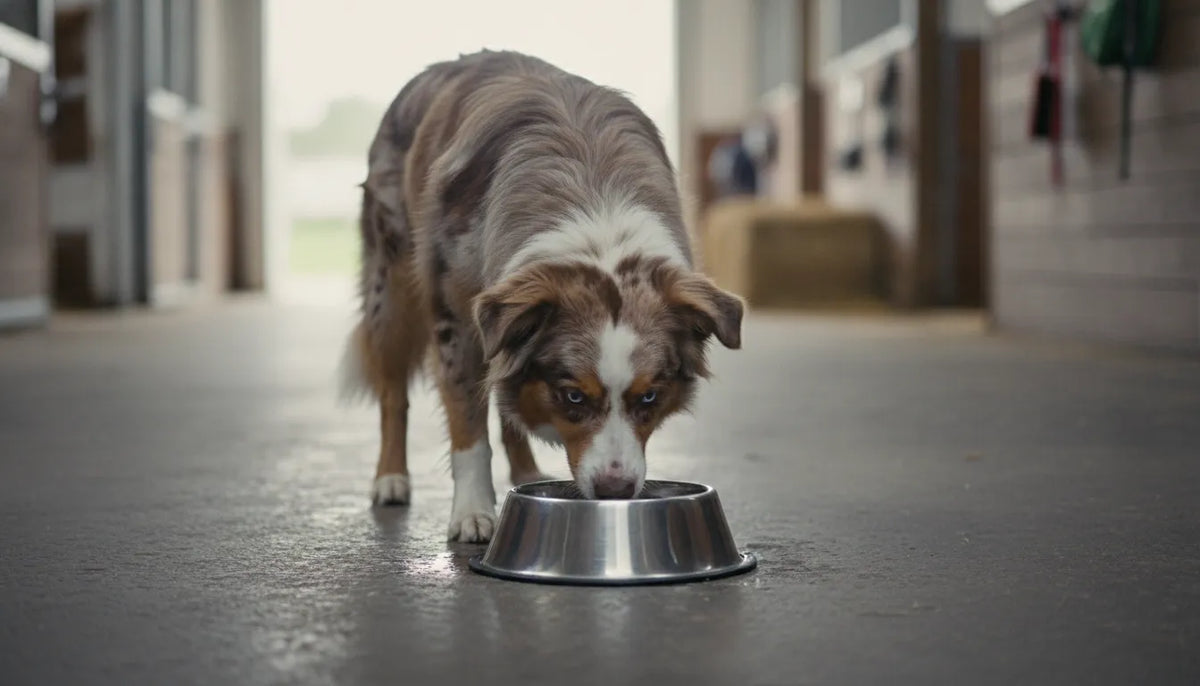
Dog hydration is the daily habit of matching water in with water out. A healthy dog loses fluid by panting, breathing, urinating, and even through the paws, then replaces it by drinking and by eating moisture in food. The American Kennel Club describes dehydration as the point where losses outrun intake, which can reduce blood volume and the delivery of oxygen to organs. A practical target for many healthy dogs is about one ounce of water per pound of body weight each day, then adjusted for heat, work, and what your veterinarian already knows about that dog.
Call (760) 247-5523 to ask about dog health essentials.
This guide answers the question owners actually search: how much water is enough, which changes are early warnings, and which changes mean you stop guessing and call a clinic. It is not a bowl-buying guide. For material, size, and washing, use the separate dog bowl guide. Nothing here replaces an exam. Puppies, seniors, nursing dogs, and dogs with kidney disease or diabetes need a plan from their own veterinarian.
How much water does a dog need each day?
Start with the body-weight estimate, then watch the dog in front of you. One ounce per pound is a planning number, not a prescription. A 40-pound barn dog is near 40 ounces, about five cups. A 15-pound house dog is near 15 ounces, a little under two cups. The AKC dehydration guide uses that same ounce-per-pound figure as a general daily target and tells owners to confirm it with a veterinarian, because weather, exercise, and illness move the number.
Clinic fluid math is a different scale and should not be copied onto a kitchen measuring cup. The Merck Veterinary Manual calculates maintenance fluids for hospitalized dogs, including a formula of 30 times body weight in kilograms plus 70 milliliters per day for patients between 2 and 70 kilograms. That number is for a fluid plan under veterinary care. It includes ongoing losses, medications, and the dog's current hydration status. Use it to understand why a clinic bag looks large. Do not use it to force a set volume at home.
Wet food already contains a lot of water, so a dog on canned meals may drink less from the bowl and still be fine. A dog on dry food has to make up almost all of that moisture at the bowl. Count both. If you switch foods, expect the bowl to look different for a few days and judge the dog, not the empty line alone.
What normal thirst looks like
Normal drinking is spread through the day. The dog visits the bowl after a walk, after a nap, and after a meal, then walks away. Urine is pale yellow, not water-clear all day and not dark orange. Gums are moist and slick, not sticky. Energy matches the dog you know.
A few habits are easy to misread:
- A long drink after a ride in a warm truck is expected. The same long drink every hour while the dog is resting in a cool room is not.
- A dog that laps, walks off, and comes back once is pacing a normal drink. A dog that stands at the bowl and cannot seem to stop needs a note in your log.
- Ice cubes and a splash of low-sodium broth can tempt a picky drinker. They are not a treatment for a dog that is already dull or vomiting.
- Shared barn water that sits in the sun, collects hay, or is used by several dogs is a hygiene problem, not a hydration plan. Offer fresh water the dog does not have to compete for.
Keep a simple three-day baseline before you worry about one odd afternoon. Note roughly how often the bowl needs a refill, the urine color on the first morning walk, and whether the dog ate. That baseline is what you hand a veterinarian if something changes. Memory of "he usually drinks a lot" is hard to use. A refill count is not.
Shop This Post

Which changes mean dog hydration is slipping?
Early changes are small. The dog skips the bowl after a walk that normally sends him straight to it. Urine gets darker. Energy drops a notch. The AKC lists signs owners can actually see. Skin is slow to slide back when gently lifted over the shoulders. The mouth is dry or sticky, saliva looks thick, and the eyes can look sunken or dry. A dry nose, panting, a smaller appetite, vomiting, and lethargy belong on that same list. One mild sign after hard work can settle once the dog drinks and rests in the shade. Two or more signs, or any sign in a puppy or senior, should go to a veterinarian the same day.
The skin check is a clue, not a diagnosis. Gently tent the skin over the shoulder blades and let go. In a well-hydrated dog it usually flattens at once. If it stays tented, call the clinic rather than running the test again and again. Loose skin on a naturally wrinkly breed, and thin skin on a very old dog, can make this test misleading. Gums and attitude tell you more in those dogs.
| What you notice | What to do first | When to call a veterinarian |
|---|---|---|
| The dog drank well after exercise. Urine is still pale and energy is normal. | Offer fresh water and a cool rest. | No call if the dog returns to normal within the hour. |
| Urine is darker, or the dog skipped two usual drinks, but still looks bright. | Refresh the bowl. Offer water by hand and watch the next two hours. | Call the same day if drinking does not resume. |
| Gums are sticky, the skin tent is slow, or the dog seems unusually tired. | Stop work. Move to shade and offer small sips. | Call now, especially for a puppy, a senior, or a short-nosed breed. |
| The dog is vomiting, has diarrhea, collapses, or shows gums that look blue, gray, or brick red. | Do not force large amounts of water. | Go to an emergency clinic now. |
| Thirst is sudden and constant, with large urine puddles. | Do not restrict water. | Book an exam. This can signal disease, not a training issue. |
Do not withhold water to test whether he really needs it. A sudden increase in drinking or urinating can point to kidney disease, diabetes, or another illness. The AKC names those diseases as reasons dehydration shows up. Restricting water hides the clue and can make the dog worse. Measure the change and report it instead.
How do you keep a barn dog drinking through a work day?
Barn days are long, dusty, and easy to misjudge because you are busy. The dog follows the tractor, rides in the truck, and lies in a patch of sun while you finish stalls. That is normal work, and it raises water loss through panting. Build the drink into the routine instead of hoping the dog finds a bucket.
- Fill a clean bowl before chores, in the shade, where horses and equipment will not knock it over. Refill at midday if the day is warm or the bowl has collected debris.
- Offer water before you load up for a ride or a haul, and again when you unload. A dog that travels between barns needs his own water, not a shared hose-end bucket.
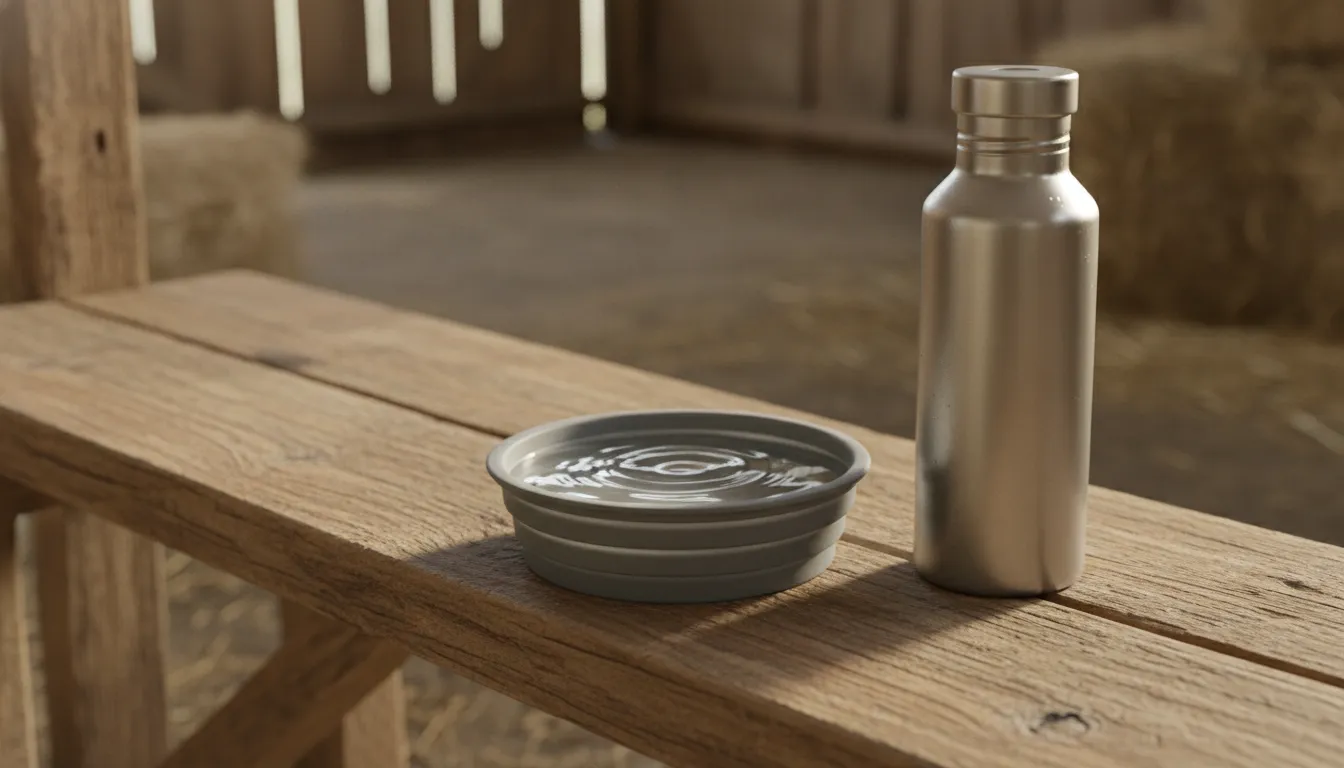
- Pack water for the outing. A portable bowl is the right tool once you leave the aisle. The Terrain D.O.G. collapsible travel bowl is a portable option for trail, camp, and park stops. The Lovewally stainless steel dog water bottle pairs a portable flask with its own bowl when you do not want to carry a separate jug.
- Stop work if panting stays heavy after several minutes of rest, or if the dog lags, drools thick saliva, or seems unsteady. Those are heat-stress signs, not a reason to push through the last stalls.
- At the end of the day, note whether the bowl went down as usual. A dog that worked hard and barely drank needs a closer look that evening, not a shrug until morning.
The AVMA warm-weather guidance is direct: unlimited fresh water, shade, walks in cooler hours, and no time in a parked car. It also flags higher risk for overweight dogs and short-nosed breeds during warm exercise. Ask your veterinarian how to recognize heat stress before the hot season, not during it. If you want the broader set of everyday dog-care supplies around that bowl, the dog health essentials collection is the right shelf. For current delivery details, review the shipping policy before ordering.
When home water is not the fix
Water at home fixes ordinary thirst. It does not fix dehydration that has already changed the dog's mouth, skin, or attitude, and it does not fix vomiting. The AKC notes that serious fluid loss also disturbs electrolytes such as sodium, chloride, and potassium, which is why a clinic may use intravenous or subcutaneous fluids instead of a bowl. Forcing a large volume by mouth into a nauseated or weak dog can cause more vomiting and can be unsafe.
Call a veterinarian the same day if:
- The dog will not drink, or drinks and vomits it back.
- Diarrhea or vomiting has lasted more than a few hours, or the dog is a puppy.
- Gums are sticky, eyes look sunken, or the skin stays tented.
- Thirst and urination jumped suddenly over a day or two.
- You suspect heatstroke: frantic panting, a dazed look, thick drool, a deep red or pale tongue, stumbling, or collapse. Cool the dog with lukewarm water and move to shade on the way, and do not wait to "see if he perks up."
Skip homemade electrolyte recipes and sports drinks made for people. Human mixes can contain sweeteners and sodium levels that are wrong for dogs, and the AKC's advice on electrolyte replacement is to ask a veterinarian for the dose rather than invent one. If your veterinarian has already recommended a specific product for this dog, follow that label. Do not add one because a hot day felt long.
A simple week of dog hydration habits
You do not need a chart on the fridge. You need a bowl you trust and a habit you can repeat when the schedule gets ugly.
- Morning: Empty yesterday's water, rinse the bowl, and refill before the dog goes out. Morning urine should be pale yellow. Dark morning urine for two days in a row is a reason to call, even if the dog seems cheerful.
- Work block: If chores run past an hour in warm weather, bring the dog back to the bowl or carry water out to him. Do not assume a stock tank is an acceptable substitute.
- Meals: Note whether a diet change changed how much he drinks. More moisture in the food should mean a quieter bowl, not a dog who seems thirsty anyway.
- Travel: Fill the portable bottle before you leave. Offer a drink at the halfway point of a haul and again on arrival. Skip communal bowls at shows and trailheads.
- Evening: One last refill, and a glance at whether intake matched the work. Write one line if something was off. Three lines across a week are more useful to a clinic than a long story.
Keep this page for the water question only: amount, warning signs, and the moment a bowl is no longer enough. Bowl shape, material, and washing live in the dog bowl guide linked above, so you do not have to relearn them here.
Hooves and Paws is a family-owned retailer that has served horse, dog, and cat owners since 1994, with a 365-day satisfaction guarantee and free ground shipping in the continental U.S. If you want help choosing a travel bowl or a related everyday essential, call (760) 247-5523.
Call (760) 247-5523 for help choosing dog hydration supplies.
Shop dog health essentials today
Frequently Asked Questions
How much water should a dog drink in a day?
A common planning figure is about one ounce per pound of body weight, so a 40-pound dog is near 40 ounces. Wet food lowers how much the dog needs from the bowl. Heat, hard work, nursing, and illness raise it. Ask your veterinarian for a target if your dog has a medical condition.
How can I tell if my dog is dehydrated?
Watch for sticky gums, thick saliva, darker urine, tiredness, a dry nose, sunken-looking eyes, and skin over the shoulders that is slow to flatten after a gentle lift. The AKC also lists vomiting, panting, and a drop in appetite. More than one of these signs means a same-day call.
Should I give my dog a sports drink or homemade electrolyte water?
No, not on your own. People drinks and homemade mixes can have the wrong sodium and sweeteners dogs should not have. The AKC says to ask a veterinarian before using an electrolyte replacement. Plain fresh water is the right everyday drink.
Why is my dog suddenly drinking so much water?
A hot day or a food change can explain a short bump. Thirst that stays high, especially with larger urine puddles, can be a sign of kidney disease, diabetes, or another illness. Do not limit the water. Call your veterinarian and describe how the drinking changed.
What should I pack so a barn dog can drink away from home?
Bring water you filled yourself and a clean portable bowl. Stop in the shade and offer a drink before the dog is already overheated. Skip shared public bowls. The AVMA also says never to leave a dog in a parked car, even with the windows cracked.
When is dog hydration an emergency?
Treat vomiting that will not stop, collapse, stumbling, a dazed look, or gums that are blue, gray, or brick red as an emergency. Suspected heatstroke is an emergency even if the dog is still standing. Offer no large forced drinks on the way. Cool with lukewarm water and go to a clinic.


