

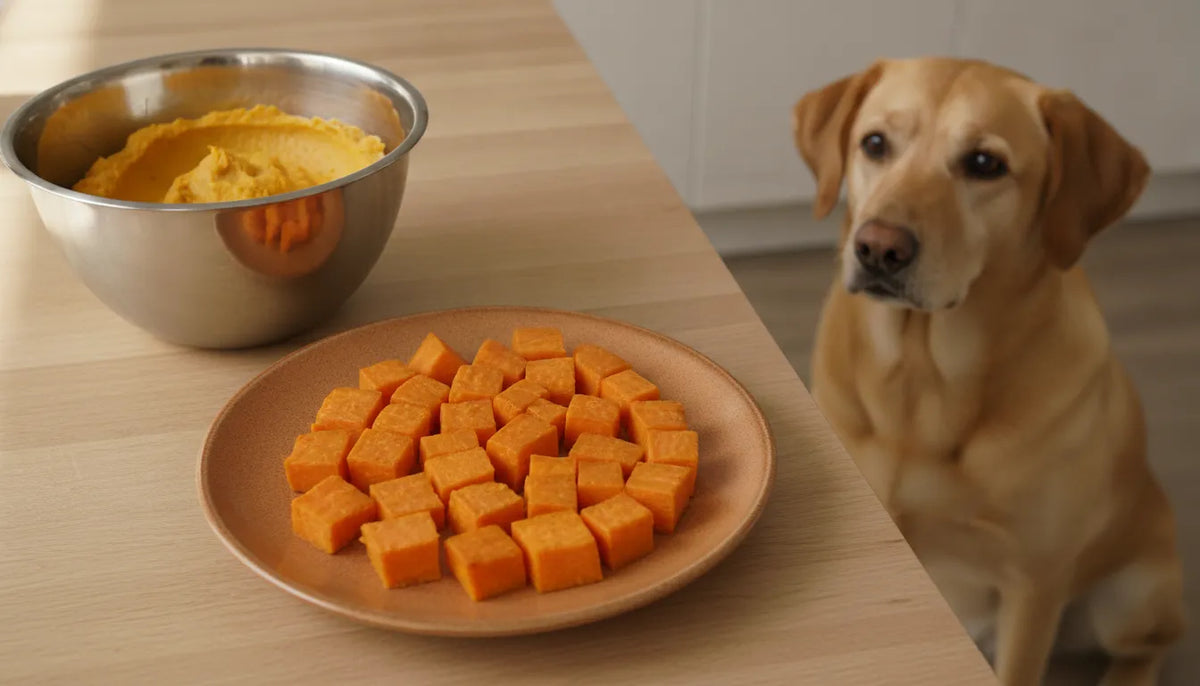
Yes, dogs can have sweet potatoes when the flesh is fully cooked, plain, peeled, and limited to a modest treat. The orange flesh is a familiar carbohydrate in many dog foods, and it brings fiber plus beta-carotene, but the preparation decides whether that serving stays safe. Raw chunks, fries, chips, sugary baby food, and a heaping mash on a full dinner are different questions from a few soft cubes.
Call (760) 247-5523 or shop dog health essentials before you change your dog's bowl.
This guide covers the safe serving, the portions that fit a treat budget, and the forms worth skipping. It is practical feeding advice, not a veterinary diagnosis. If your dog has diabetes, a sensitive stomach, or a heart condition, ask your veterinarian before you add a new food.
Can Dogs Have Sweet Potatoes as a Treat?
Cooked, plain sweet potato is a reasonable occasional treat for many healthy dogs. PetMD, reviewed by a veterinarian, says dogs can eat sweet potatoes when they are fully cooked, plain, and fed in moderation. The same guidance says treats of every kind should stay at or below 10 percent of daily calories. The remaining 90 percent should stay a complete and balanced dog food.
That split matters more than the vegetable itself. A few cubes beside breakfast count as a treat. Replacing a meal with mash, or pouring it over an already full bowl every day, pushes the bowl out of balance. Sweet potato is not a complete diet. It does not replace the protein, fat, or micronutrients a formulated diet is built to supply.
Start smaller than the full serving the first time by offering a teaspoon of cool mash, then watch stool, energy, and itch for a day or two. Gas, soft stool, or vomiting means stop, and call your veterinarian if it continues. Allergy is uncommon, but itching or ear trouble after a new food is a reason to pause rather than increase the portion.
Which Sweet Potato Forms Are Safe?
The search for "can dogs have sweet potatoes" usually hides a second question: which version from the kitchen is actually fine? The cooked flesh is the part worth sharing. Anything salted, fried, sugared, or dried into a chew is a separate risk.
| Form | Safe for dogs? | What to do instead |
|---|---|---|
| Boiled, baked, or steamed flesh, peeled and plain. | Yes, as a small treat. | Cool it, then mash or cube a measured spoonful. |
| Raw chunks. | No. | Cook until soft. Raw pieces are hard to chew. |
| Skin, even after cooking. | Skip it. | Peel first. Skin is tough to digest. |
| Fries, chips, or casserole. | No. | Skip oil, salt, sugar, and butter. |
| Sweet potato baby food. | Only if one ingredient. | Read the label. Skip onion, garlic, and sugar. |
| Jerky or dried chews. | Not a casual kitchen treat. | Use fresh cooked flesh instead. |
Fries and chips fail for straightforward reasons. Oil, salt, and seasoning do not belong in a dog treat, and fried pieces pack extra calories. A sweet potato casserole with butter, brown sugar, or spices is people food, not a topper. Plain means no butter, salt, cinnamon sugar, or marshmallows.
Baby food is the label trap. A jar that lists only sweet potato can stand in for a mash when your dog needs a softer texture. A jar with onion, garlic, broth, or sugar does not. If you would not feed the second ingredient by itself, leave the jar on the shelf.
How to Cook Sweet Potatoes for Dogs
Cooking is what makes the flesh easy to chew and easier on the gut. Raw sweet potato is firm, starchy, and a poor choice. Large raw pieces raise the chance of choking or a blockage, which is why both PetMD and the American Kennel Club say to cook it and remove the skin.
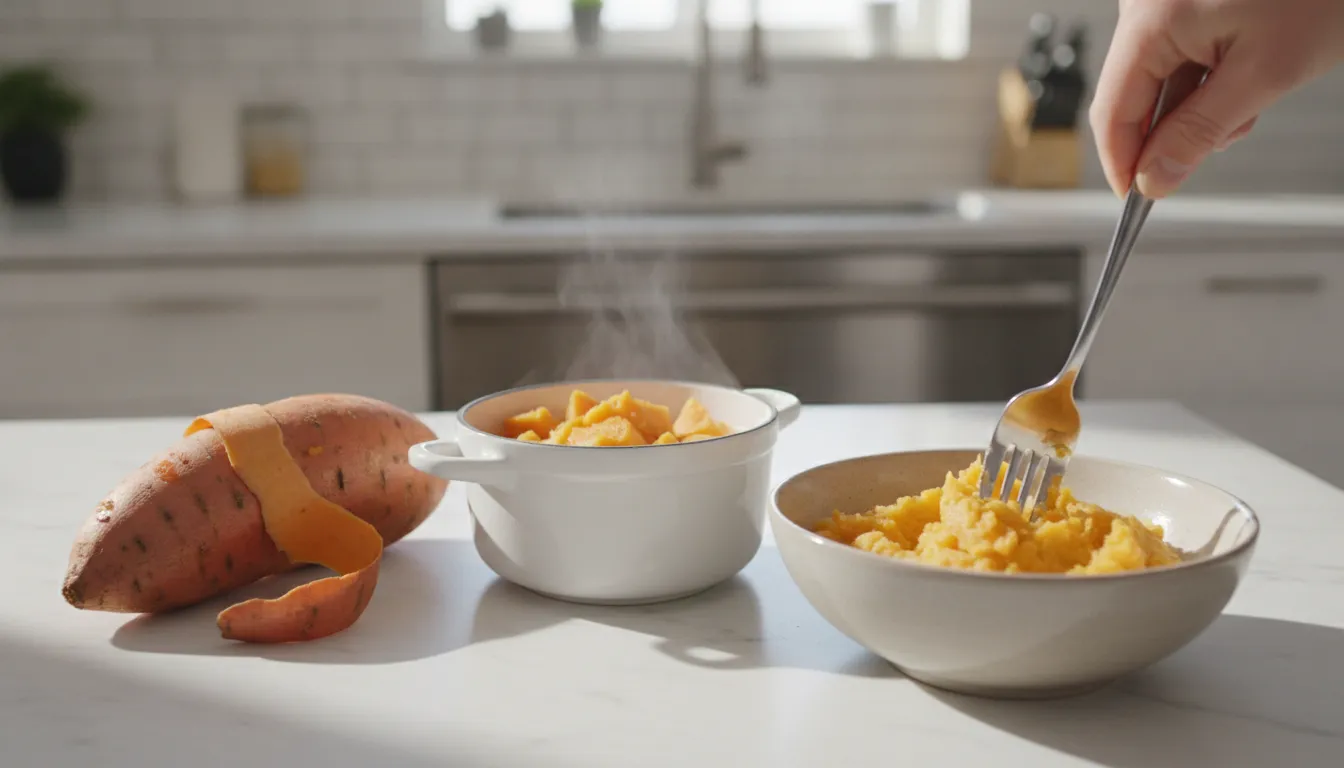
- Scrub the sweet potato, then peel it. The skin is not poisonous, but it is hard to digest and can raise choking risk, especially for a small dog.
- Cut the flesh into chunks. Boil, steam, bake, or microwave until a fork slides through with no firm center.
- Do not add water beyond what the cooking method needs, and do not add salt, butter, oil, sugar, or spices.
- Drain, cool until the pieces are safe to touch, then mash or cut small cubes no bigger than a training treat.
- Refrigerate leftovers in a covered container and use them within a few days. Discard any portion that smells sour or looks moldy.
Mash is the safer texture for puppies, seniors, and dogs that gulp, while soft cubes are fine for a dog that actually chews. Never serve a hot potato straight from the pot, because steam burns a mouth just as easily as it looks harmless.
If you want fiber support without cooking, a shelf-stable pumpkin fiber topper is a different product from a sweet potato serving. Diggin Firm Up! Pumpkin and Apple Fiber is sold as a dehydrated topper with only pumpkin and apple fiber, made to sprinkle on food or mix with warm water. That is a supplement choice for stool consistency, not a reason to skip the rules above when you share a real sweet potato.
Shop This Post

How Much Sweet Potato Can a Dog Have?
PetMD's general treat portions, for cooked sweet potato offered two or three times a week, scale with body weight. These are starting points for a healthy adult, not a prescription. Your veterinarian can adjust them for age, weight goal, and illness.
| Dog size | Cooked sweet potato | How often |
|---|---|---|
| Extra-small, about 2 to 10 pounds. | 1 tablespoon. | 2 to 3 times a week. |
| Small, about 11 to 20 pounds. | 1 to 2 tablespoons. | 2 to 3 times a week. |
| Medium, about 21 to 50 pounds. | 2 to 3 tablespoons. | 2 to 3 times a week. |
| Large, about 51 to 90 pounds. | 3 tablespoons. | 2 to 3 times a week. |
| Extra-large, about 91 pounds and up. | 4 tablespoons. | 2 to 3 times a week. |
A tablespoon is a level kitchen measure of mash or very small cubes, not a heaping scoop. If your dog is already getting other treats, cheese, or food from the table, shrink this portion so the whole treat pile stays near that 10 percent calorie line. Our dog calorie guide is the place to estimate the full day's calories before you stack extras on top.
Every day is usually too often, while a couple of times a week leaves room for the complete diet to do its job. Dogs with diabetes or extra weight need a tighter limit. The AKC notes that sweet potato should be used carefully in diabetic dogs because of its carbohydrate load, and some clinicians describe the glycemic effect differently. Do not guess; ask the veterinarian who manages your dog's glucose plan.
What Nutrition Does the Orange Flesh Offer?
The useful part of a sweet potato for dogs is the cooked orange flesh. PetMD describes it as a source of dietary fiber, complex carbohydrate, beta-carotene that the body can convert toward vitamin A, plus vitamin C, manganese, potassium, and iron. Fiber can support normal stool when the portion stays small. It can also loosen stool or cause gas when the portion is large or the dog is new to it.
Beta-carotene is the plant pigment in the orange flesh, not a vitamin A pill. A spoonful of mash is not a treatment for vision, immune function, or skin disease. Those claims belong in a veterinary plan rather than a treat bowl. The same restraint applies to vitamin C, because dogs synthesize their own and a vegetable serving is not a supplement dose.
Pumpkin comes up in the same breath because both foods are orange and fibrous. They are not interchangeable in every kitchen or every health goal. Plain cooked sweet potato is the food this guide is about. Pumpkin, especially a plain puree or a purpose-made fiber topper, is the food people often reach for during a short bout of loose stool. If that is the problem you are solving, read the pumpkin supplement guide instead of turning sweet potato into a remedy.
A second shop option, if you want a prepared topper rather than a boiled potato, is Diggin Super Snouts Pumpkin Latte. The product page lists five ingredients: whole goat milk, pumpkin, apple fiber, organic agave inulin, and Ceylon cinnamon. It is a digestive topper for dogs and cats, not a sweet potato substitute, and cinnamon in this formula is not permission to sprinkle cinnamon on a potato at home.
Shop Pet Supplements and Wellness
When Should You Skip Sweet Potato?
Most healthy dogs can try a small cooked portion. Some dogs should not, or should wait for a veterinary okay.
- Raw or undercooked pieces. They are hard to chew and can upset the stomach. A firm center is not done.
- Skin, in chunks or in the mash. It is not toxic, but it digests poorly and can contribute to choking or a blockage if a dog swallows a strip.
- Seasoned, fried, or sweetened versions. Salt, oil, xylitol-sweetened products, garlic, onion, and rich toppings do not belong in the bowl.
- A dog that gulps. Mash the portion. A cube race is how a soft food still becomes a choking risk.
- Diabetes, pancreatitis history, or a weight-loss plan. Extra carbohydrate and calories need a specific yes from the veterinarian.
- A dog already in digestive trouble. Do not add a new food during active vomiting or diarrhea unless your clinic told you to.
There is a separate, narrower issue for people choosing a commercial diet, not a spoonful of mash. The FDA has investigated reports of canine dilated cardiomyopathy in dogs eating certain diets, many labeled grain-free, that used peas, lentils, other legume seeds, or potatoes in various forms as main ingredients. The FDA has said those reports do not, by themselves, prove a cause, and it is not a warning that a few tablespoons of cooked sweet potato are dangerous. If you are picking a full dog food built around potato or legumes, that is a diet conversation with your veterinarian. It is not the same decision as sharing a plain treat.
Dried sweet potato chews deserve the same caution as other jerky-style treats. The FDA has long tracked illness reports tied to jerky pet treats, including chicken, duck, and sweet potato jerky, many of them imported. A freshly cooked piece from your own kitchen is not that product. If you do buy dried chews, keep the packaging and call your veterinarian if your dog becomes sick after eating them.
How Should You Add It Without Upsetting the Gut?
New foods fail most often because they show up in a large pile. Use a short ramp even when the food is safe.
- Day one: one teaspoon of cool, plain mash for a medium dog, less for a toy breed. Mix it into the regular meal or offer it alone so you can tell what changed.
- Wait a day. Look for gas, soft stool, itching, or a skipped meal.
- If everything looks normal, move toward the tablespoon range in the table, still only a few times a week.
- Keep the rest of the bowl the same that week. Do not also switch foods, add a new chew, and start a probiotic on the same day.
Barn dogs and traveling dogs often meet new water, new schedules, and leftover human food in the same weekend. That is a poor moment to experiment. If you want a planned fiber topper for those trips, talk with your veterinarian, then look through dog health essentials for products made for digestive support. For the difference between food sources and a packaged probiotic, the probiotic food versus supplements guide stays in its own lane. Sweet potato is not a probiotic.
Puppies can try a tiny taste of plain mash once they are eating solid food reliably, but their calorie budget is small and their stools change quickly. A teaspoon can be plenty, and you should stop if the stool softens. Senior dogs with few teeth do better with a smooth mash than with cubes.
What Should You Do If Your Dog Ate the Wrong Form?
A lick of plain mashed sweet potato is not an emergency for an otherwise healthy dog. The worrying cases are the seasoned pan, the raw chunk, the skin, and the dog that ate far more than a treat.
- A small bite of plain cooked flesh. Watch appetite and stool. No extra serving that day.
- Fries, chips, or buttery casserole. Call your veterinarian or a pet poison line, especially if the dog is small or the portion was large. Fat and salt are the concern, not the potato alone.
- Seasonings that include garlic, onion, or xylitol. Contact a veterinarian promptly. Do not wait for symptoms to decide whether those ingredients matter.
- Raw chunks or peeled skin. Watch for gagging, vomiting, a painful belly, or refusal to eat. Those signs need a clinic, because a blockage does not fix itself at home.
- Repeated vomiting, weakness, or collapse. Seek urgent care. Do not offer more food, oil, or home remedies.
Bring the package or a photo of the ingredient list if a commercial chew or baby-food jar was involved, because that single detail saves guessing.
Call (760) 247-5523 or shop dog health essentials today
Frequently Asked Questions
Can dogs have sweet potatoes every day?
Usually no. A few times a week is a better fit so the complete diet still supplies almost all of the calories. Daily mash adds carbohydrate fast, especially in small dogs.
Can dogs have sweet potatoes raw?
No. Raw sweet potato is hard to chew and harder to digest. Cook it until soft, peel it, and cool it first.
Can dogs eat sweet potato skin?
Skip the skin. It is not considered toxic, but it is tough, easy to swallow in strips, and a poor idea for digestion and choking risk. Peel before you cook.
Can dogs have sweet potato fries or chips?
No. Fries and chips add oil and salt, and many carry seasoning. Offer plain cooked flesh instead, in a small portion.
Is sweet potato better for dogs than pumpkin?
Neither one wins for every dog. Plain cooked sweet potato is a nutrient-dense treat. Plain pumpkin is the more common short-term fiber choice for stool changes. Use the food that matches the job, and ask your veterinarian if stool trouble lasts more than a day or two.
Can dogs have sweet potato baby food?
Only when the ingredient list is sweet potato and nothing else. Skip jars with onion, garlic, salt, sugar, or broth. A plain cooked mash from a whole sweet potato avoids that guess.


