


A pulled shoe can end a ride before it starts. When a horse overreaches, a hind hoof may clip the back of a front hoof, catch a shoe, or strike the sensitive heel area. Well-fitted bell boots for horses add a practical layer of protection around the front hoof without trying to restrict the horse's natural movement.
Shop bell boots and horse leg protection selected for riding, training, and turnout.
The best choice depends on why the horse needs protection, how much impact and abrasion the boot will face, and whether the horse tends to spin ordinary boots. This guide explains those tradeoffs, shows how to check fit, and helps you recognize when a different setup may be better.
What do bell boots for horses protect?
Bell boots protect the front hoof, coronet band, heel bulbs, and shoe from interference caused by a hind hoof reaching too far forward. This movement is commonly called overreaching. A horse may overreach during fast work, jumping, sharp turns, play in turnout, or simply because of its individual conformation and way of going.
The boot's flared shape creates a shield around the hoof. If the hind foot reaches the front foot, it contacts the boot before it reaches the shoe or heel. Bell boots do not replace correct trimming, shoeing, conditioning, or veterinary evaluation. They manage a recurring contact risk while those fundamentals remain in place.
A mark on the boot confirms contact occurred, but it does not explain the cause. Record when damage appears and share recurring patterns with the horse's farrier, veterinarian, or trainer.
Common signs a horse may benefit
- Front shoes are repeatedly loose, bent, or pulled.
- Heel bulbs show small scrapes after exercise or turnout.
- A hind toe makes contact during transitions, jumping, or speed work.
- The horse forges or overreaches as it tires.
- Extra protection is needed while traveling or during active turnout.
Listen for a clicking sound during work, but do not rely on sound alone. Check the horse's feet after riding and turnout. Fresh scuffs on the rear of a front shoe or repeated damage to the same area provide more useful evidence.
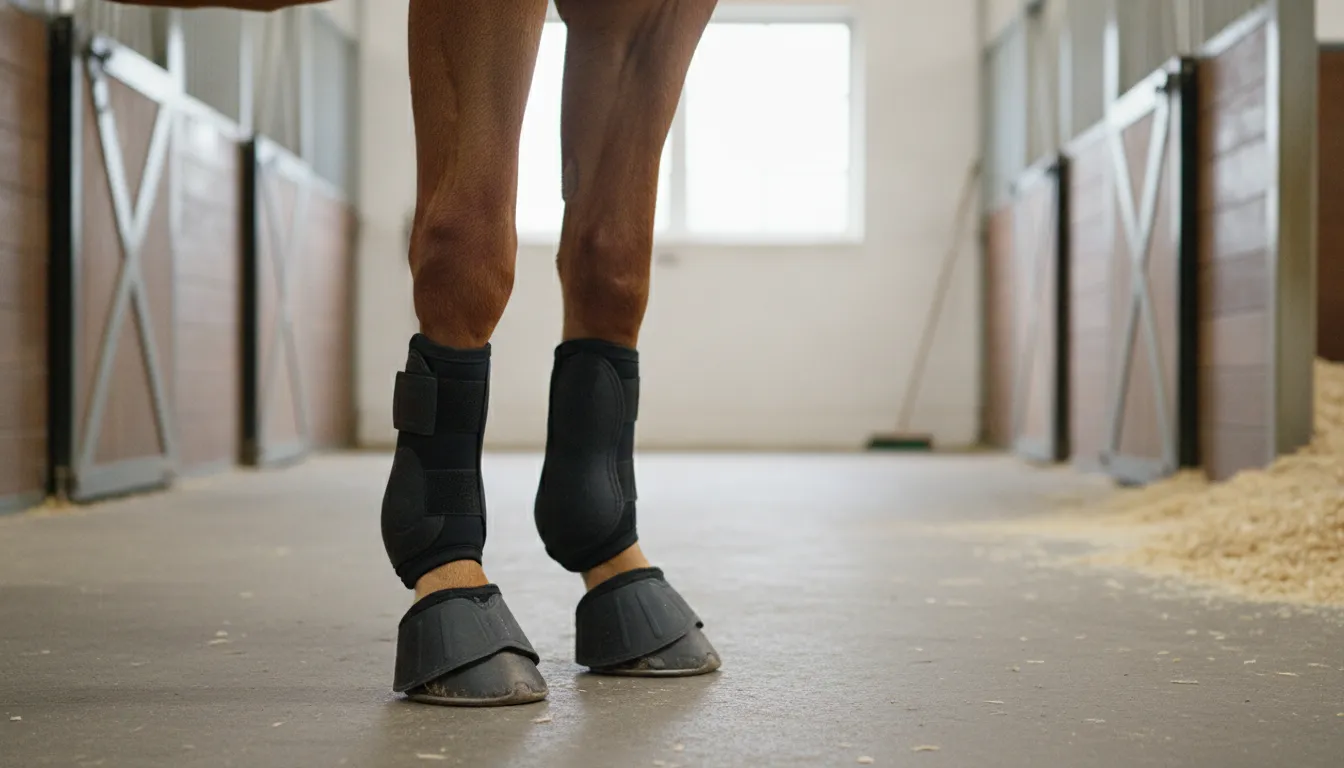
When should a horse wear bell boots?
Use bell boots when the likelihood and consequence of overreaching justify the added protection. Some horses need them only during specific activities. Others repeatedly pull shoes in turnout and benefit from a durable pair during their most active hours.
Turnout
Turnout is unpredictable. Horses accelerate, stop, pivot, and play on changing footing. A horse that routinely comes in with a missing front shoe is a strong candidate for turnout bell boots. Choose a design that tolerates moisture and abrasion, then remove it regularly to clean the boot and inspect the skin.
Riding, jumping, and speed work
Bell boots are frequently used for jumping, barrel work, schooling, and other sessions where the hind legs may reach deeply under the body. A secure closure and stable fit matter because a loose boot can rotate, distract the horse, or leave the vulnerable area exposed.
Travel and temporary protection
Some owners add bell boots for hauling or during a change in workload. Protection should match the actual risk. If a horse begins overreaching suddenly, ask a farrier, veterinarian, or qualified trainer to help identify why rather than treating the new pattern as normal.
How do bell boot materials compare?
Material determines how a bell boot balances durability, flexibility, water handling, weight, and comfort. There is no single best material for every horse. The right choice is the one that holds up in the horse's real environment and stays comfortable through the intended wearing period.
| Type | Best suited to | Main advantage | Watch for |
|---|---|---|---|
| Rubber pull-on | Daily riding and horses that undo closures | Simple construction with no hook-and-loop closure | Requires effort to put on and remove |
| Rubber open-front | Convenient everyday use | Fast to fit and remove | Closure can collect dirt or wear |
| Ballistic nylon | Hard use and abrasive conditions | Strong outer shell resists wear | Inspect stitching and interior padding |
| Neoprene or synthetic | Riding where flexibility matters | Flexible, close fit | Heat, moisture, and trapped grit |
| Fleece-lined | Horses prone to pastern rubbing | Soft edge at the top of the boot | Fleece needs frequent cleaning and drying |
For a horse that destroys lightweight boots in turnout, a tougher ballistic outer may provide better value than repeatedly replacing inexpensive pairs. For a sensitive-skinned horse, edge construction and cleanliness may matter more than maximum toughness.
Hooves and Paws carries options such as no-turn, ballistic, fleece-lined, heavy-duty, and rubber open bell boots from established equestrian brands. Compare the horse boots and leg protection collection by intended use, construction, and size.
How should bell boots fit?
A correctly fitted bell boot covers the heel bulbs and nearly reaches the ground while the horse stands, yet it does not pinch the pastern or hang so low that the horse steps on it. Fit is more important than the size printed on the label because hoof shape, shoe size, and boot construction vary.
- Start with the brand's size guide. Measure or compare against the horse's usual hoof-boot size rather than guessing from height or breed.
- Check heel coverage. The rear of the boot should shield both heel bulbs when the horse is standing square.
- Check ground clearance. The bottom edge should sit close to the ground without folding under the hoof.
- Check the top edge. You should be able to fit a finger around the opening without a tight, pinching band.
- Walk and turn the horse. Confirm the boot stays in position and does not cause an altered step.
- Inspect after use. Look for rub marks, trapped debris, stretched closures, or impact damage.
A standard bell boot may rotate, which is not automatically a problem if it still covers the hoof. No-turn styles use an internal bulb or shaped construction to limit rotation. They can be useful when stable positioning matters, but the internal feature must sit correctly between the heel bulbs.
View bell boots for horses and check each product's sizing guidance before choosing a pair.
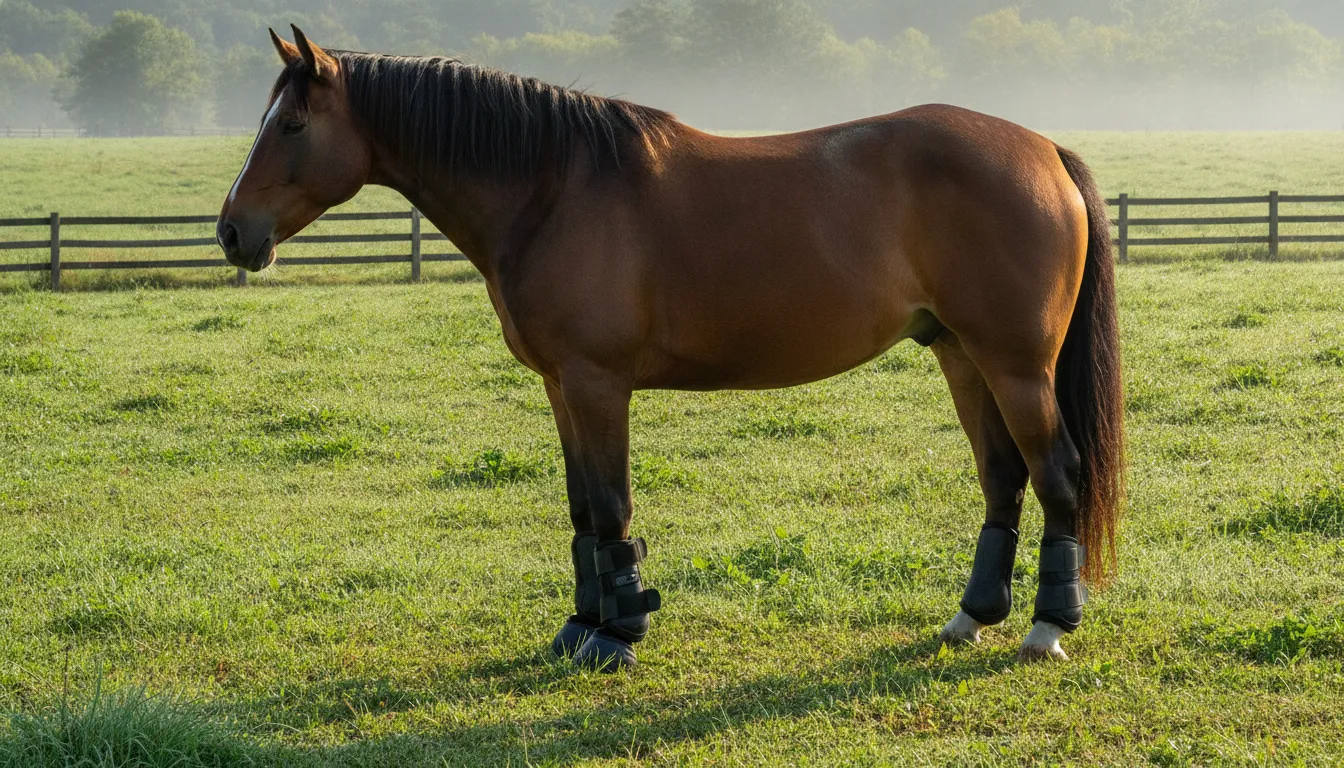
Pull-on vs. open bell boots: which is better?
Pull-on bell boots prioritize a closure-free design, while open bell boots prioritize convenience. Both can work well when their material, length, and shape fit the horse.
Choose pull-on boots when
- The horse frequently catches or opens hook-and-loop closures.
- A simple, closure-free design is preferred for turnout.
- The owner is comfortable stretching the boot over the hoof.
Choose open boots when
- Fast removal and cleaning are priorities.
- The horse needs boots only for riding sessions.
- The horse or handler does not tolerate pulling a boot over the hoof.
To put on a rubber pull-on boot, turn it inside out, stretch the smaller opening over the hoof, then flip the bell down into position. Do not force a boot that is too tight to pass over the hoof. An open boot wraps around the hoof and closes at the front or side, depending on the design. Align overlapping closures fully so exposed hook material cannot collect debris.
How to prevent rubbing, spinning, and lost boots
Most bell boot problems come from incorrect size, an unsuitable shape, worn closures, or dirt trapped against the horse. Solve the cause rather than accepting repeated rubs or lost equipment.
If the boot rubs
Check that the top opening is not tight and that the edge is clean. Remove packed sand, dried mud, and hair. A fleece-lined or softer-edged design may help a sensitive horse, but fleece also holds moisture and grit if it is not maintained. Stop using any boot that creates broken skin.
If the boot spins
Some rotation is normal in standard designs. If rotation leaves the hoof exposed or repeatedly shifts the closure into a vulnerable position, consider a no-turn style. Confirm its internal anti-rotation feature sits correctly and does not create pressure.
If the horse loses boots
Look at length first. A boot that is too long may be stepped on and pulled off; one that is too short may not provide enough protection. Check hook-and-loop closures for embedded hair, weak grip, or damaged stitching. For pull-on boots, inspect for tears around the opening.
If the boot traps moisture
Remove it, clean it, and let both hoof and boot dry. Extended wear without checks can hide rubs or skin irritation. During routine care, inspect the hoof and coronet band, and use appropriate horse grooming supplies to keep the area clean.
How to choose the right pair
Choose for the horse's specific overreach pattern, wearing environment, and maintenance routine. A premium boot that is never cleaned or checked is not a better solution than a simpler boot managed carefully.
- Define the use. Decide whether the boots are for turnout, riding, jumping, hauling, or a combination.
- Estimate the wear level. Frequent impact, mud, and rough footing usually call for tougher construction.
- Prioritize correct fit. Confirm heel coverage, clearance, and top-edge comfort.
- Choose a closure style. Balance convenience against the horse's tendency to catch or undo closures.
- Plan maintenance. Select materials you can clean, dry, and inspect as often as needed.
Bell boots protect the hoof area; they do not provide the same coverage as splint boots, brushing boots, or sports medicine boots. If the horse also interferes higher on the leg, discuss a complete protection plan with a knowledgeable professional. The horse boots and leg protection collection lets you compare complementary options in one place.
Shop bell boots and leg protection from trusted equestrian brands, with free continental U.S. shipping and practical product guidance from Hooves and Paws.
Frequently asked questions
What do bell boots do for horses?
Bell boots help shield the front hoof, coronet band, and heel bulbs when a hind hoof reaches forward and strikes or grabs the front foot. They are designed primarily for overreach protection, not for supporting the tendons or covering the cannon bone.
Should horses wear bell boots during turnout?
Turnout bell boots can help horses that frequently pull front shoes or overreach while playing. They should fit correctly and be removed regularly so the feet, skin, closures, and boots can be checked.
How should bell boots fit?
A bell boot should cover the heel bulbs and nearly reach the ground while the horse stands. It should not pinch the pastern, fold under the hoof, or cause the horse to alter its stride.
Can a horse wear bell boots all day?
Some horses wear bell boots for extended turnout, but regular removal and inspection remain important. Clean away grit and mud, let damp materials dry, and stop use if you find rubbing, heat, swelling, or broken skin.
Protect the hoof without overcomplicating the choice
The right bell boot is the one that covers the vulnerable area, stays comfortable, and survives the work your horse actually does. Start with the reason for use, select a suitable construction, check the fit in motion, and inspect both boot and hoof after wear. Hooves and Paws has helped animal owners choose practical supplies since 1994, with carefully selected equestrian products and personal service.
Find the right bell boots for your horse and build a protection setup suited to riding, training, or turnout.


