


A western saddle pad does more than add cushioning beneath the saddle. Its shape, material, and thickness influence how evenly pressure is distributed, how comfortably your horse moves, and how well the pad holds up through regular rides. Choosing thoughtfully matters even more when you are balancing fit and performance with the practical cost of shipping a substantial piece of equipment.
Browse our premium western saddle pads and find a practical fit for your horse, riding style, and saddle.
The best western saddle pads with free shipping start with a well-fitting saddle, then add the right combination of shape, breathable material, and thickness for your discipline. Hooves and Paws offers free continental U.S. shipping with no minimum order threshold, plus same-day shipping for orders placed before 2 PM PST.
Before comparing wool felt, synthetic options, or specialty shapes. Start with the foundation of every pad decision: protecting your horse begins with a saddle and pad that work together.
Why the Right Western Saddle Pad Protects Your Horse
A western saddle pad is more than a layer of color beneath your tack. It forms the working interface between the saddle and your horse's back, helping cushion contact, manage pressure, and support a comfortable connection during movement. When the pad and saddle fit together correctly, they can help distribute the rider's load across an appropriate area instead of concentrating pressure in one spot.
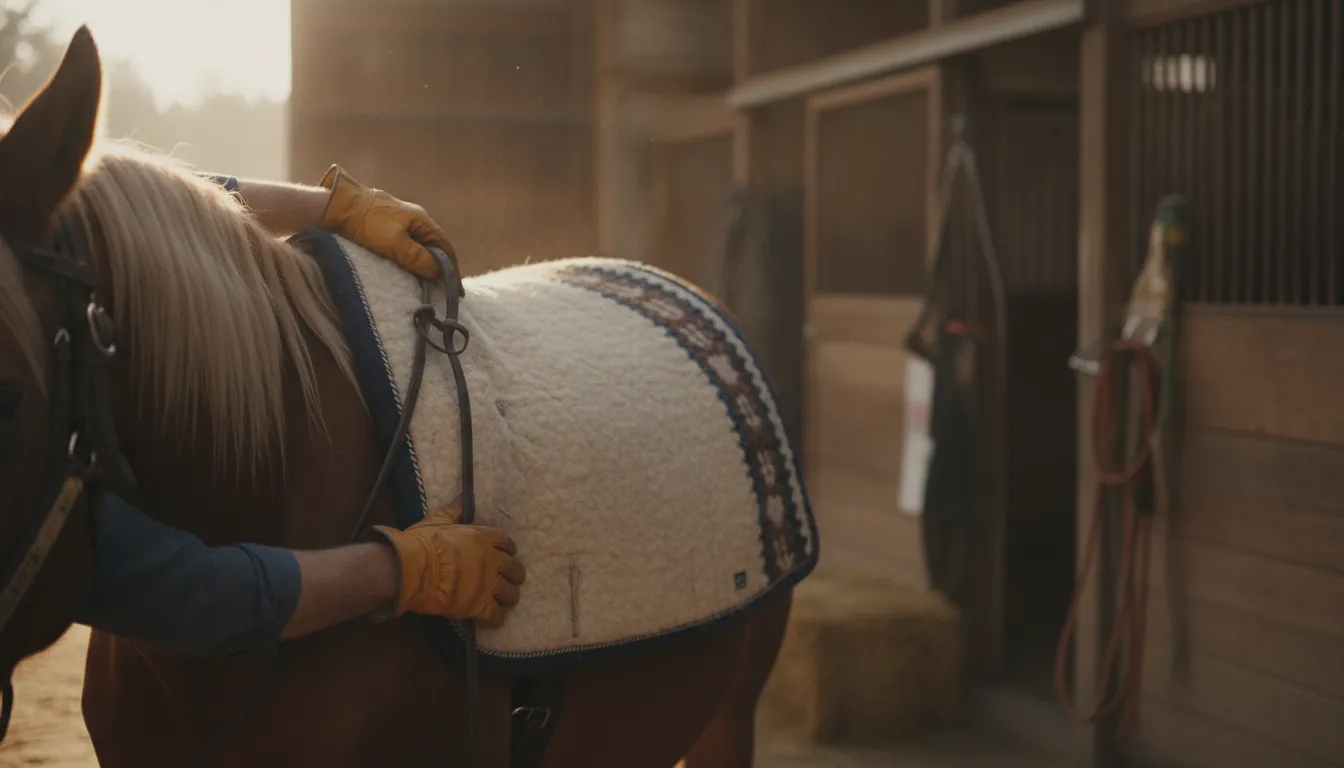
The pad helps distribute pressure
Every ride creates forces between the horse, saddle, and rider. A suitable pad can add cushioning and help spread those forces beneath a saddle that already fits properly. Research summarized by Michigan State University Extension explains that a correctly fitting pad combined with a well-fitting saddle maximizes contact and distributes load and pressure. Helping minimize the risk of sore backs. The pad's material, thickness, shape, and condition all affect how it performs over time.
That protection depends on thoughtful positioning. The pad should sit smoothly without folds or bunching, provide adequate clearance around the withers. And extend far enough to support the saddle without creating pressure at its edges. A pad that shifts during work can create uneven contact, rubs, or heat, even if it looked appropriate when you first tightened the cinch.
A saddle pad cannot repair poor saddle fit
It is tempting to use extra thickness to compensate for a saddle that rocks, pinches, bridges, or lacks appropriate clearance. However, Michigan State University Extension specifically cautions that saddle pads are not meant to fix an ill-fitting saddle. Proper saddle fit for both horse and rider is essential for comfort, safety, and performance, and poorly fitting equipment can contribute to discomfort or injury.
Start by assessing the saddle on your horse's back, ideally with help from a qualified saddle-fitting professional. Then select a pad that works with the saddle tree and your riding discipline. Check your horse before and after riding for unusual sensitivity, dry spots surrounded by sweat, swelling, hair rubs, or changes in way of going. Those signs do not identify one cause by themselves, but they are good reasons to stop and reassess the fit rather than simply adding another layer.
For a pad that supports careful tack selection, browse our premium western saddle pads and compare shapes and materials suited to your horse and saddle.
Match Your Western Saddle Pad to Riding Style
Your horse's job should influence the pad beneath the saddle. A setup that works for a relaxed trail ride may not provide the same stability. Clearance, or freedom of movement needed for fast turns, quick stops, or precise arena work. Western disciplines call for different saddle designs, and the pad should complement that equipment rather than create unnecessary bulk.
Barrel racing places a premium on balance and secure movement through sharp turns. A relatively close-contact pad with dependable grip and moderate thickness can help keep the saddle stable without making the rider feel disconnected from the horse. Look for durable construction and materials that manage heat during intense, short efforts. Extra thickness is not automatically better, especially if it changes the saddle's fit.
Consider the demands of each discipline
Roping saddles are built for substantial, sudden forces, so the pad should provide consistent cushioning and resist shifting under pressure. A dense felt or similarly supportive material may suit horses and saddles that need a stable interface for ranch or arena roping. Check the pad's spine clearance and shape carefully so the added support does not press into the withers.
Cutting requires the horse to move laterally and react quickly while the rider stays centered. A pad with enough structure to distribute pressure, without excessive bulk around the seat, can support that close communication. Equitation emphasizes rider position and presentation, making a neat profile and even contact especially important. Choose a shape that follows the saddle and does not bunch behind the shoulders.
For reining, consider how the pad supports long slides, spins, and transitions. A stable, well-shaped pad with reliable shock absorption can be a practical match, provided it remains compatible with the saddle tree. Trail riding often allows more flexibility, but comfort over changing terrain still matters. Breathable, durable materials are useful when a pad may be worn for longer periods or exposed to dust, sweat, and repeated washing.
These categories are useful starting points, not rigid rules. The Utah State University Extension notes that Western riding includes distinct choices such as barrel racing. Equitation, cutting, and roping, with equipment selected to support the rider's intended work. Review the discipline-specific saddle guidance when comparing your current setup with a new pad.
Before choosing from our collection, identify your primary discipline, saddle tree, horse's back shape, and typical ride length. Then browse our premium western saddle pads with those needs in mind, rather than selecting by appearance or thickness alone.
Shop This Post

Featured in this article
Professional's Choice 100% Wool Felt Contoured Saddle Pad - Steam-Pressed Pressure Relief & Moisture Wicking
$158.99
Shop Now →
Western Saddle Pad Materials Compared
Wool felt and synthetic or neoprene pads can both be useful choices, but they manage heat, moisture, pressure, and daily wear differently. The best option depends on your horse, riding schedule, climate, saddle fit, and how much time you want to spend on care.
Material is important, but it cannot compensate for an unsuitable saddle. Research indicates that different pads can change pressure distribution and forces beneath a well-fitted saddle. So a pad should be selected as part of a properly fitted equipment system. A well-fitting saddle and pad work together to distribute load and help reduce the risk of a sore back. See the guidance from PubMed and Michigan State University Extension for additional fitting context.
| Attribute | Wool felt | Synthetic or neoprene |
|---|---|---|
| Moisture management | Often absorbs and wicks perspiration, helping manage moisture during regular work. It still needs to dry fully between rides. | Usually resists moisture and is simple to wipe clean. Sweat can remain against the coat if the pad is not aired and cleaned regularly. |
| Breathability | Natural fibers can allow airflow and help manage heat when the pad is correctly fitted and not overly thick. | Breathability varies by construction. Look for designs that allow ventilation, especially for hot climates or long rides. |
| Durability | High-quality felt can hold up well under frequent use, though compressed or worn areas should be inspected. | Many synthetic materials tolerate repeated cleaning and barn use. Check seams, edges, and surface wear over time. |
| Pressure distribution | Dense felt can provide consistent cushioning and conform gradually to the saddle and horse. | Foam, rubber, or layered construction can offer cushioning and grip, but thickness and firmness must suit the saddle. |
| Care and maintenance | Brush away hair and debris, air thoroughly, and follow the maker's cleaning instructions. Avoid storing it damp. | Often easier to wipe or rinse, but it must still be dried completely to limit odor and skin irritation. |
Key Takeaway: Choose wool felt when natural moisture handling and a traditional, breathable feel are priorities. Choose synthetic or neoprene when easy cleaning, moisture resistance, and dependable everyday durability matter most. In either case, prioritize a breathable, durable construction and confirm that the finished pad preserves proper saddle clearance.
Inspect any pad before each ride for packed areas, uneven wear, hardened sweat, or damaged binding. A pad that once fit well may no longer distribute pressure evenly after repeated compression. If you are comparing shapes and materials, browse our premium western saddle pads and match the design to your saddle tree, horse's back, and intended discipline.
What Is the Best Thickness for a Western Saddle Pad?
For many horses and western saddles, a pad around 1/2 to 1 inch thick provides a practical starting point. The right choice depends less on chasing the thickest cushion and more on how the pad works with the saddle. The horse's build, and the demands of the ride.
How thickness affects saddle fit
Pad thickness changes the relationship between the horse, pad, and saddle tree. A thin pad may work well when the saddle already fits correctly and the horse has a broad, well-muscled back. A somewhat thicker pad can provide useful cushioning for a more prominent spine, a leaner build, or a rider who needs additional pressure management. The goal is a stable, even contact area, not maximum bulk.
Pay close attention to the pommel, skirts, and withers after the saddle is placed. There should be ample clearance around the withers to help prevent injury, and the saddle should remain balanced rather than tipping backward or pressing unevenly. The Michigan State University Extension guidance on saddle fitting emphasizes that saddle pads are not meant to fix an ill-fitting saddle. If the tree, bar angle, or overall saddle shape is wrong, adding thickness can simply conceal the problem or create new pressure points. Review the saddle-fitting guidance from Michigan State University Extension when evaluating comfort and clearance.
Consider your horse's build and workload
A horse with high withers, a narrow topline, or limited back muscle may need a pad with enough material to cushion without allowing the saddle to pinch. A rounder, heavily muscled horse may need less bulk to preserve stability and avoid a saddle that sits too high or shifts during work. Check the result after riding, not just while the horse is standing still. Look for even sweat patterns, dry spots that suggest concentrated pressure, rubbing, or soreness when you run your hands over the back.
Riding style matters, too. Long trail rides, frequent schooling, and demanding ranch or performance work can change how much cushioning and moisture management you value. Whatever thickness you choose, use a pad that lies flat, matches the saddle's shape, and allows the horse to move freely. If discomfort persists, reassess the saddle fit with a qualified professional instead of adding another layer.
Why Choose Western Saddle Pads with Free Shipping?
Shipping can change the real cost of a saddle pad, especially when you are comparing substantial wool felt, contoured, or multi-layer designs. A pad is not a small accessory that fits neatly into a light parcel. It can be bulky, and the added delivery charge may make an otherwise sensible purchase harder to justify. Hooves and Paws offers free continental U.S. shipping on every order, with no minimum threshold. So you can choose the pad that fits your horse, saddle, and riding discipline without adding a shipping penalty. Browse our premium western saddle pads and compare options based on performance rather than cart value.
That no-minimum policy is a meaningful difference. Some competing saddle-pad retailers advertise free shipping only after an order reaches $75 or $99. Those thresholds can encourage you to add items you do not need, or leave you paying extra when the right pad costs less than the minimum. With free shipping on all orders, you can replace a worn pad, try a different material. Or purchase a single pad for a specific saddle without building an artificial bundle.
Key Takeaway: Free continental U.S. shipping with no minimum helps keep the delivered price of a bulky western saddle pad predictable. Choose for fit, material, and intended use, not to reach a shipping threshold.
What makes the delivery timing useful?
Fast dispatch also matters when your current pad is damaged, your horse's workload changes, or a new saddle requires a different shape. Hooves and Paws offers same-day shipping for orders placed before 2 PM PST, helping you get essential equestrian supplies moving quickly. Shipping time is not a substitute for checking fit, but it can reduce the delay between identifying a need and having the appropriate equipment on its way.
Use the savings where they matter most: selecting a pad with the right length, thickness, contour, and material for your setup. A correctly chosen pad works with a properly fitting saddle to support comfort and even contact. Free shipping simply removes one more cost barrier from making that careful choice.
How to Size and Position a Western Saddle Pad
A well-chosen pad cannot correct an improperly fitted saddle, but careful sizing and placement can help the saddle perform as intended. Before every ride, take a few minutes to check the pad from front to back. Then confirm that it sits smoothly beneath the tree without creating folds or pressure points.
-
Measure the pad against the saddle
Place the pad on a clean, level surface and compare its length with the saddle. Measure from the front edge near the pommel to the back edge near the cantle. The pad should extend far enough beyond both ends of the saddle to protect the horse's back. But it should not project so far behind the cantle that it shifts or catches. Account for the saddle's skirt shape and any contour in the pad rather than relying on a simple rectangular measurement.
-
Center the pad at the saddle tree
Set the pad on the horse first, with the front edge slightly forward. Place the saddle over it, then slide both saddle and pad back together until the hair lies flat. The pad's spine or center seam should follow the horse's topline and align with the center of the saddle tree. Bring the front of the pad up into the saddle's gullet so it is not pressed flat against the withers. Smooth the pad with the direction of the hair, and check that there are no wrinkles under the bars or skirts.
-
Check wither clearance
Stand beside the horse and inspect the space around the withers. There must be ample clearance at the withers to help prevent injury, as noted by Michigan State University Extension. Review its saddle-fitting guidance if the saddle or pad appears to press into this area. Check clearance on both sides, not only at the highest point, because a pad can fold or compress unevenly once the rider is mounted.
-
Recheck after mounting
After tightening the cinch and mounting, look for signs that the pad has moved. It should remain centered, with its front edge lifted into the gullet and its rear edge clear of the horse's hip. During and after the ride, watch for rubbing, damp patches in unusual locations, hair disturbance, or tenderness along the back. A correctly fitting pad paired with a well-fitting saddle maximizes contact and distributes load and pressure, helping minimize sore backs.
Key Takeaway: Choose a pad that extends appropriately beyond the saddle, center it at the tree, lift it into the gullet, and confirm clear space around the withers. If the saddle still rubs, pinches, or leaves uneven pressure, have the saddle fit assessed rather than adding more padding.
Shop Premium Western Saddle Pads with Free Shipping Today
Frequently Asked Questions
What should I look for in a western saddle pad?
Start with compatibility: the pad should match your saddle tree, leave adequate wither clearance, and sit evenly without bunching. Then consider your riding discipline, the horse's back, the material's breathability, and how easy it will be to clean. A pad can improve comfort, but it should not be used to correct an ill-fitting saddle, according to Michigan State University Extension: saddle fit is essential for comfort and safety.
What is the best material for a western saddle pad?
There is no single best material for every horse or rider. Wool felt is a popular choice for cushioning and moisture management, while synthetic and neoprene options may offer easy care and discipline-specific performance. Choose based on your horse's needs, climate, workload, saddle fit, and maintenance preferences. Research indicates that pad design and material can affect pressure distribution beneath a properly fitted saddle: PubMed research.
How thick should a western saddle pad be?
Choose enough thickness to provide appropriate cushioning without creating an unstable or overly tight fit. The right amount depends on the saddle tree, your horse's conformation, the pad's material, and the type of riding. Check clearance at the withers and along the spine, and watch for slipping, dry spots, or signs of soreness after a ride. If the saddle does not fit correctly, adding thickness is not a reliable fix.
Do western saddle pads come with free shipping?
Shipping policies vary by retailer, so check the terms before ordering. Hooves and Paws offers free continental U.S. shipping with no minimum order threshold, including saddle pads, according to its shipping policy. Orders placed before 2 PM PST are eligible for same-day shipping, which can make replacing a worn or unsuitable pad more convenient.
How do I know if my saddle pad is positioned correctly?
Place the pad slightly forward, then slide it back into its natural position so the hair lies smoothly. Center the saddle over the pad, confirm wither and spine clearance, and check that the pad extends evenly beyond the saddle's weight-bearing area. After riding, inspect for shifting, rubbing, uneven sweat patterns, or soreness. A correctly fitting pad and saddle distribute load more evenly and can help minimize sore backs, as explained by Michigan State University Extension.
Ready to choose the right western saddle pad?
The right pad can help you put fit, material, and riding goals into practice with greater confidence. When you are ready to compare options, shop premium western saddle pads now from Hooves and Paws. If you need help narrowing the selection, contact us for practical guidance based on your horse, saddle, and riding style.


