


Rain can soak a large dog quickly, especially around the neck, chest, and back where an ordinary jacket may leave gaps. A well-fitted coat should keep water out without restricting a dog's stride, trapping heat, or sliding out of place during walks and outdoor play.
Shop waterproof dog coats for large dogs with hoods today
The best waterproof dog coats for large dogs with hood combine a genuinely water-resistant outer layer. Generous coverage, an adjustable fit, and a hood or neck flap that helps stop rain from running inside. Look for breathable construction and room for natural movement, then compare the coat's measurements with your dog's chest, back, and neck dimensions.
Choosing the right design is more than finding the largest available size. Your dog's build, coat type, activity level, and tolerance for head coverage all affect which features matter most. A large breed can have a broad chest, a long back, or a dense double coat, and each shape calls for slightly different coverage and fastening. Understanding how a hood and extended neck flap protect the vulnerable collar area, how much ease to allow across the shoulders. And how much ventilation a thick coat needs is the first step toward selecting comfortable, dependable weather gear that your dog will actually tolerate on a full walk.
Why Large Dogs Need a Waterproof Coat with a Hood
Size does not automatically make a dog comfortable in wet weather. A large dog can still become chilled when rain soaks through a short, thin, or lean coat, particularly during a long walk or outdoor wait. Older dogs may also feel the cold and damp more intensely than younger, healthy adults. Colorado State University notes that older dogs and dogs with shorter or leaner fur may experience more discomfort in rainy conditions and are more likely to become cold. Read the source guidance on dog raincoats.
For these dogs, waterproof dog coats for large dogs with hood provide practical coverage rather than unnecessary bulk. A well-designed coat helps keep the back and chest dry while giving your dog more comfort on necessary walks, weekend outings, and damp days in the yard. The goal is not to restrict movement or make your dog tolerate clothing they dislike. It is to choose coverage that suits the dog, the weather, and the activity.
Large dogs with short or lean coats, senior dogs, and dogs that become uncomfortable in rain can benefit from a waterproof coat. An integrated hood or neck flap adds useful protection by helping stop rain from running inside the coat.
Why does the hood matter in steady rain?
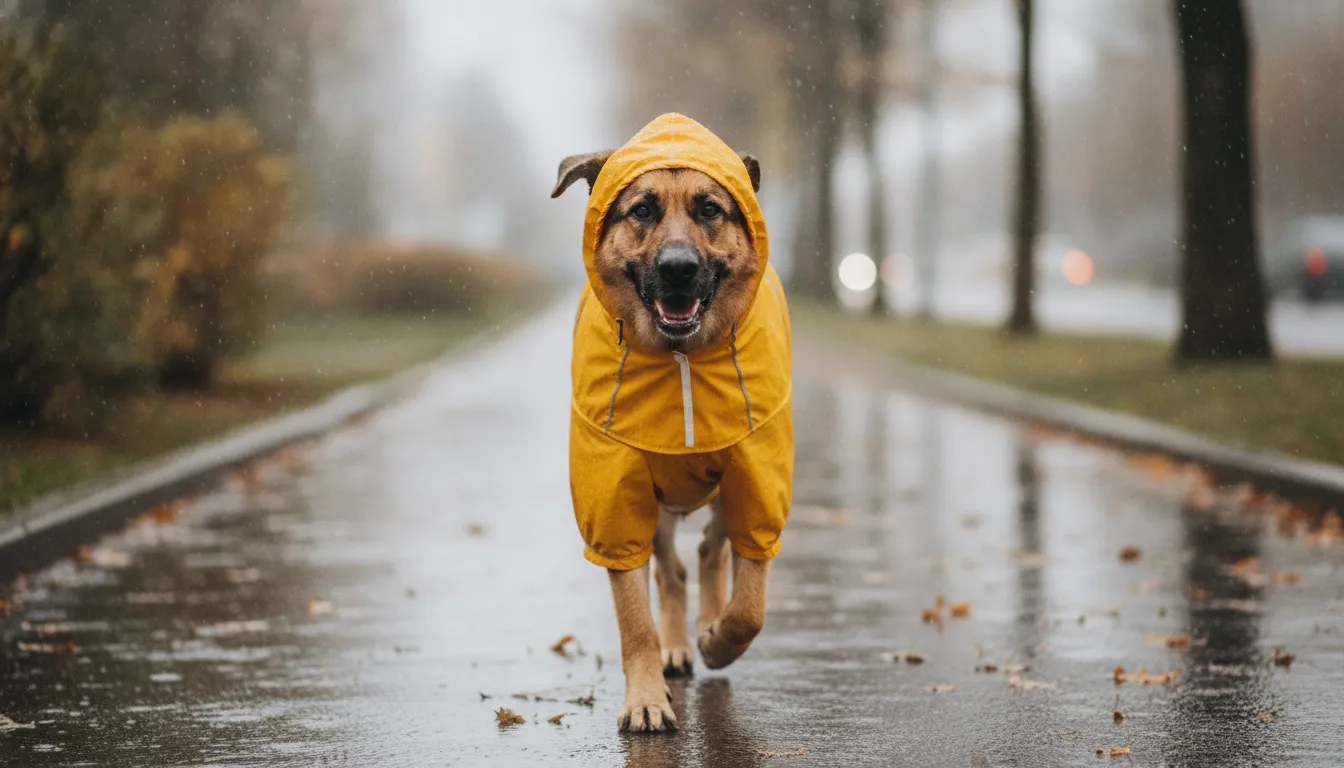
Rain rarely falls only on a dog's back. Water can run from the head and neck toward the shoulders, chest, and inside edge of a coat. That is where a hood or extended neck flap earns its place. The Colorado State University source specifically identifies this flap of fabric as a feature that helps prevent rain from dripping inside. See the cited explanation of hood and neck coverage.
For a large breed, the right design should cover the neck without pressing against the throat or limiting head movement. Some dogs prefer a hood that rests behind the ears, while others tolerate a broader neck flap better than fabric over the head. Look for adjustable closures and a shape that follows your dog's movement. The coat should stay in place when your dog walks, turns, or sniffs, but it should never feel tight across the shoulders.
Comfort matters beyond the rain
A waterproof coat can also make wet-weather routines easier for both of you. Less water on the back and chest may mean less towel drying after a walk and a more comfortable dog during the trip home. Pay attention to your dog's signals. Shivering, reluctance to continue, a tucked posture, or repeated attempts to avoid the rain can indicate that extra protection would help. In warmer, humid conditions, choose a coat with breathable panels or ventilation and remove it when your dog is indoors or fully dry.
How to Size a Waterproof Dog Coat for Large Breeds
A reliable fit starts with measurements, not a guess based on breed or weight alone. Large dogs can have very different proportions, especially across the chest, shoulders, and back. Measure your dog while standing naturally, ideally with a soft tape measure and a helper to keep your dog relaxed.
Take three measurements before you shop
- Back length: Measure from the base of the neck, where the collar normally rests, to the base of the tail. Do not include the tail itself.
- Neck circumference: Wrap the tape around the lower part of the neck. Keep it comfortably close without pulling tight, similar to how a collar should fit.
- Chest circumference: Measure around the deepest part of the rib cage, usually just behind the front legs. This is often the most important measurement for a broad-chested large breed.
Record each number and compare it with the specific coat's sizing chart. A 70-pound German Shepherd, for example, may need a different size than a shorter, stockier dog at the same weight. Research from Colorado State University notes that larger dogs benefit from generous sizing and adjustable features that create a snug fit without restricting movement: read the full raincoat testing guidance.
Use weight as a starting point, then confirm the fit
Weight ranges can narrow your choice, but back and chest measurements should decide between neighboring sizes. The ranges below are a practical starting point for large-breed coats, not a substitute for the manufacturer's chart.
| Size | Approximate weight | Typical fit check |
|---|---|---|
| L | 30 to 60 lb | Confirm back length and chest room |
| XL | 60 to 100 lb | Check shoulder and rib-cage coverage |
| XXL | 100 to 130 lb | Allow room for a deep or broad chest |
| 3XL | 130 to 170 lb | Prioritize back length and adjustability |
Choose the size that accommodates your dog's largest measurement, then use adjustable straps, belly closures, or neck fasteners to refine the fit.
Once fastened, the coat should lie smoothly over the back and cover the chest without pulling across the shoulders. You should be able to slide two fingers under the neck and belly closures. Your dog should walk, sit, turn, and raise the head freely. Too-tight gear can rub or limit movement, while an oversized coat may shift, expose the belly, or let rain enter around the neck.
Hooded designs need one additional check: the hood or neck flap should shield the head and collar area without covering the eyes or pressing against the ears. If you are between sizes, generous cut and adjustability can make the larger option more practical, provided excess fabric does not catch on the legs. Browse waterproof dog coats and compare each product's measurements before ordering. Hooves and Paws' 365-day satisfaction guarantee can also reduce the risk of choosing the wrong size online.
Shop This Post

Featured in this article
Doggie Design Alpine All Weather Dog Parka - Waterproof Fleece Lined Reflective - Multiple Sizes
$25.00
Shop Now →
Key Features to Look For: Materials, Coverage, and Hood Design
The right coat balances water protection with the way your dog actually moves. A large dog who spends rainy walks on pavement may need a different fabric than an energetic dog who hikes through brush. Look beyond the word "waterproof" and check the material, coating, ventilation, coverage, and hood construction.
| Material or option | Strengths | Best fit | Watch for |
|---|---|---|---|
| Polyester | Lightweight, breathable, and less absorbent, so it tends to dry faster. | Everyday rainy walks and dogs that need a lighter layer. | Confirm that the fabric has a waterproof coating, not just water resistance. |
| Nylon | Stronger and more resistant to abrasion than polyester. | Active dogs that hike, run, or play around rough vegetation. | Some nylon coats can feel less breathable, especially for thick-coated dogs. |
| PU or PVC-coated fabric | A coating can provide true waterproofing, with PVC offering especially complete rain protection. | Heavy rain or dogs needing maximum coverage during wet outings. | PVC is not very breathable, so look for ventilation and avoid overheating during strenuous activity. |
Polyester and nylon are common choices for dog coats. Polyester is generally lighter, more breathable, and quicker to dry, while nylon offers useful abrasion resistance for dogs that push through active terrain. However, neither fabric is automatically waterproof. According to Colorado State University's veterinary resource, a PU or PVC coating is typically needed for truly waterproof performance. Read the material guidance from Colorado State University.
Match durability with breathability
For an active large dog, abrasion resistance matters when the coat brushes against branches or rough surfaces. Nylon can be the more practical choice than an unbreathable PVC layer for hiking and rough play. If your dog has a thick coat or exercises in mild weather, prioritize mesh panels, open areas around the legs, and a design that allows heat to escape. A fully sealed coat may block rain well but still be uncomfortable if it traps warmth.
Check the hood, neck, and underside
An integrated hood or neck flap helps stop rain from running inside the coat at the collar. It should cover vulnerable areas without limiting head movement or pressing against the ears. Also inspect the belly and chest coverage. Drainage features can keep water from pooling underneath, which is especially useful for larger or thick-coated dogs. Adjustable closures should create a secure fit without restricting the shoulders, stride, or breathing.
Choose a coated fabric for genuine waterproofing, nylon for active dogs needing abrasion resistance, and polyester when lighter weight and faster drying are priorities. Pair the material with ventilation, drainage, adjustable coverage, and a hood or neck flap that keeps rain out without trapping heat.
Do Hoods Actually Keep a Large Dog Dry?
They can, especially when rain is blowing sideways or running down the back of your dog's neck. An integrated hood or neck flap creates another layer of coverage at the collar, helping prevent water from dripping inside the coat. That detail matters for large dogs with broad shoulders, long necks, or dense coats that can hold moisture close to the skin. Research cited by Colorado State University notes that a fabric flap can help stop rain from dripping inside a dog raincoat: source information on dog raincoat features.
However, a hood is not automatically better for every dog. It should sit close enough to redirect water without pressing against the throat, rubbing the ears, or limiting your dog's ability to turn and look around. For large breeds, look for adjustable closures and generous sizing, then check the fit with your dog standing, walking, and lowering their head. The coat should cover the neck without pulling across the chest or restricting a normal stride.
When a hood is genuinely helpful
A hood or neck flap is most useful during steady rain, wind-driven showers. And walks where your dog will be outside long enough for moisture to work its way beneath the collar. It can also help dogs with short or lean coats that become uncomfortable quickly in wet weather. In these conditions, added neck coverage may keep the coat drier and make the walk more comfortable without requiring a bulky, full-body design.
When a hood becomes more annoying than useful
Some dogs dislike fabric near their ears or face. Others find a loose hood distracting because it shifts as they move. If your dog repeatedly paws at it, shakes their head, or refuses to walk, the feature is not serving its purpose. Try a coat with a fixed neck flap instead, or choose a non-hooded design with a high, weather-resistant collar. A practical coat is one your dog will tolerate for the entire walk.
Before buying, test the hood's adjustment points and inspect the opening around the neck. You should be able to slide two fingers beneath it without creating a gap where water can pour in. If you are comparing waterproof dog coats, prioritize dependable coverage, comfortable movement, and a design your dog accepts rather than choosing a hood simply because it appears on the feature list.
When to Choose a Hooded Waterproof Coat Over a Non-Hooded One
A hooded coat is most useful when rain is falling heavily or blowing sideways. An integrated hood or neck flap helps keep water from running down the back of the neck and inside the coat. Which can make a long walk uncomfortable even when the body fabric is fully waterproof. This added coverage is especially practical for large dogs that spend time outdoors in exposed areas, where wind can push rain beneath a standard collar opening. Research reviewed by Colorado State University notes that a fabric flap can help prevent rain from dripping inside a dog raincoat (Colorado State University source).
Match coverage to weather and coat thickness
Consider your dog's natural coat before choosing the most covered design. A short-haired or lean-coated dog may appreciate the warmth and rain protection of a hooded coat, particularly during cold storms. A dog with a dense double coat may need rain protection without as much insulation or enclosed coverage. Look for a hood that sits securely without blocking the eyes, pressing on the ears, or restricting head movement. Adjustable closures are valuable for large breeds because a coat must stay close enough to shed water while leaving room for the chest. Shoulders, and neck to move naturally.
Choose breathability for active dogs
For dogs that hike, run, or play vigorously, a non-hooded coat with breathable panels may be the better everyday option. The simpler opening can release more heat around the neck, and it makes it easier to check your dog's comfort during activity. Nylon is more resistant to abrasion than polyester, making it a practical material for dogs that move through brush or rough terrain. By contrast, PVC can provide complete rain protection but may not be breathable enough for warmer weather or dogs with thicker coats. These material differences are outlined in the Colorado State University review cited above.
In short, prioritize a hood or neck flap when storm protection and head coverage are the main concerns. Choose a breathable non-hooded design when your dog is highly active, heavily coated, or likely to overheat. Whichever style you select, confirm the size chart and measure your dog's back, chest, and neck so the coat protects without limiting movement.
Shop Waterproof Dog Coats Today
Frequently Asked Questions
How do I choose the right size waterproof coat for my large dog?
Measure your dog's chest at its deepest point, neck, and back from the base of the neck to the tail, then compare those measurements with the manufacturer's chart. Choose a coat with adjustable straps or closures so it fits securely without restricting movement, especially if your dog has a broad chest or deep body.
Are hoods on dog raincoats practical for large dogs?
They can be, particularly when the hood or neck flap sits comfortably and does not interfere with vision, hearing, or leash use. An integrated hood or flap helps keep rain from dripping inside the coat around the neck, while a removable or adjustable design gives your dog more flexibility.
What features should a waterproof coat for a large dog have?
Look for a waterproof coating, full back and belly coverage, adjustable closures, reflective details for low-light walks, and ventilation. Polyester dries quickly, while nylon offers stronger abrasion resistance. For truly waterproof protection, the fabric typically needs a polyurethane or PVC coating, according to Colorado State University.
Should dogs wear waterproof coats in every rainy season?
Not every dog needs one for every outing. A coat is most useful when rain, wind, or cold makes your dog uncomfortable, particularly for senior dogs or dogs with short, thin, or lean coats. Watch for shivering, reluctance to walk, or persistent dampness, and remove the coat if your dog becomes hot or restricted.
What material is best for an active large-breed dog?
Nylon is a practical choice for hiking and rough play because it resists abrasion, while polyester is lighter and tends to dry faster. Whichever material you choose, prioritize breathable construction and ventilation for thick-coated dogs, then match the coverage and hood design to your dog's activity and comfort.
Ready to Find the Right Coat?
A well-fitted waterproof coat with a hood can make rainy walks more comfortable for your large-breed dog, especially when coverage, adjustability, and ventilation all work together. Take the next step by browsing options selected for practical everyday protection and a comfortable fit.


