


Safety in the stirrups starts with horse riding boots that feature a clear heel and a smooth sole. Proper footwear prevents dangerous slips while helping you communicate clearly with your horse through every stride.
Shop horse riding boots for safer, more comfortable rides.
Horse riding boots are essential pieces of safety gear that provide strength and safety for every rider. You need a boot with a one-inch heel to prevent your foot from sliding through the stirrup, which is a major safety risk. English boots offer a sleek, close-contact feel for jumping or dressage, while Western boots use thicker leather and a higher heel for balance in a heavy saddle. For daily barn chores, everyday boots keep feet dry and stay comfy for long hours of walking on hard ground. According to experts, your footwear should be sturdy and fit well for both riding and walking to ensure full control of your horse. Choosing the right pair helps you stay safe and move with ease whether you are in the show ring or on a dusty trail.
Finding the right pair depends on your riding style, budget, and time in the stable. Start with the safety essentials, then compare the fit and construction that suit your everyday use.
Horse riding boots: the quick answer
Picking the right horse riding boots is the first step for any new rider. The main job of a riding boot is to keep you safe and help you stay in control. All safe riding boots share one key part: a small heel. This heel stops your foot from sliding through the stirrup. If your foot slips too far, you could get stuck if you fall. Most pros suggest a heel that is about one inch high. You should shop quality horse riding boots that feel sturdy and have a smooth sole for safety.
Safety features of horse riding boots
Safety is the most vital part of any horse gear. A good boot must have a hard toe to protect your feet if a horse steps on them. The sole should be thin and smooth so it can slide out of the stirrup fast. Boots made for riding also provide support for your ankles. This help is useful when you stand in your stirrups for a long time. High-quality boots use thick leather or tough man-made fabrics to last for many years of use.
A special riding boot heel is a must to lower the risk of falls while you ride. Pros say that horse riding boots must provide stable footing in the stirrup. A smooth sole is best because it will not get caught on the metal of the stirrup. Avoid boots with thick soles like work boots or hiking shoes. Those soles can lock into the stirrup and make it hard to get your foot out in a bad fall.
Boots for English and Western riding
The style of riding you do will change which boot you buy. English riders often use tall boots that go up to the knee. These boots protect your legs from rubbing against the saddle. They also help you give clear cues to your horse. Many English riders also like paddock boots. These are short boots that stop at the ankle. You can wear them with half chaps to get the same feel as a tall boot. Short boots are great for daily work around the barn too.
Western riders usually choose cowboy boots. These boots have a clear look with high shafts and higher heels. The shape of a Western boot heel helps it lock into the wide stirrups used in Western saddles. Some Western boots have pointed toes to help your foot find the stirrup fast. No matter which style you pick, a good fit is key. A boot that is too tight can hurt your blood flow, while a loose boot can cause big blisters.
Everyday and barn boot options
You may also want boots for working in the stable or on the trail. Barn boots are made to handle mud, water, and manure. These boots are often waterproof and easy to clean. They give good grip for walking on wet ground but may not be safe for riding if the sole is too thick. If you plan to ride and work in the same pair, look for a hybrid boot. These boots have a riding heel but also have a sole that is easy for walking.
Picking your first pair of boots is a big choice for your safety and ease. We offer a 365-day satisfaction guarantee on all our gear to help you find the right fit. Our family-owned shop has helped riders find the best gear since 1994. Whether you need boots for a show or for daily chores, picking a trusted brand ensures your gear will hold up over time. If you have questions about sizing, our expert team is always here to help you choose.
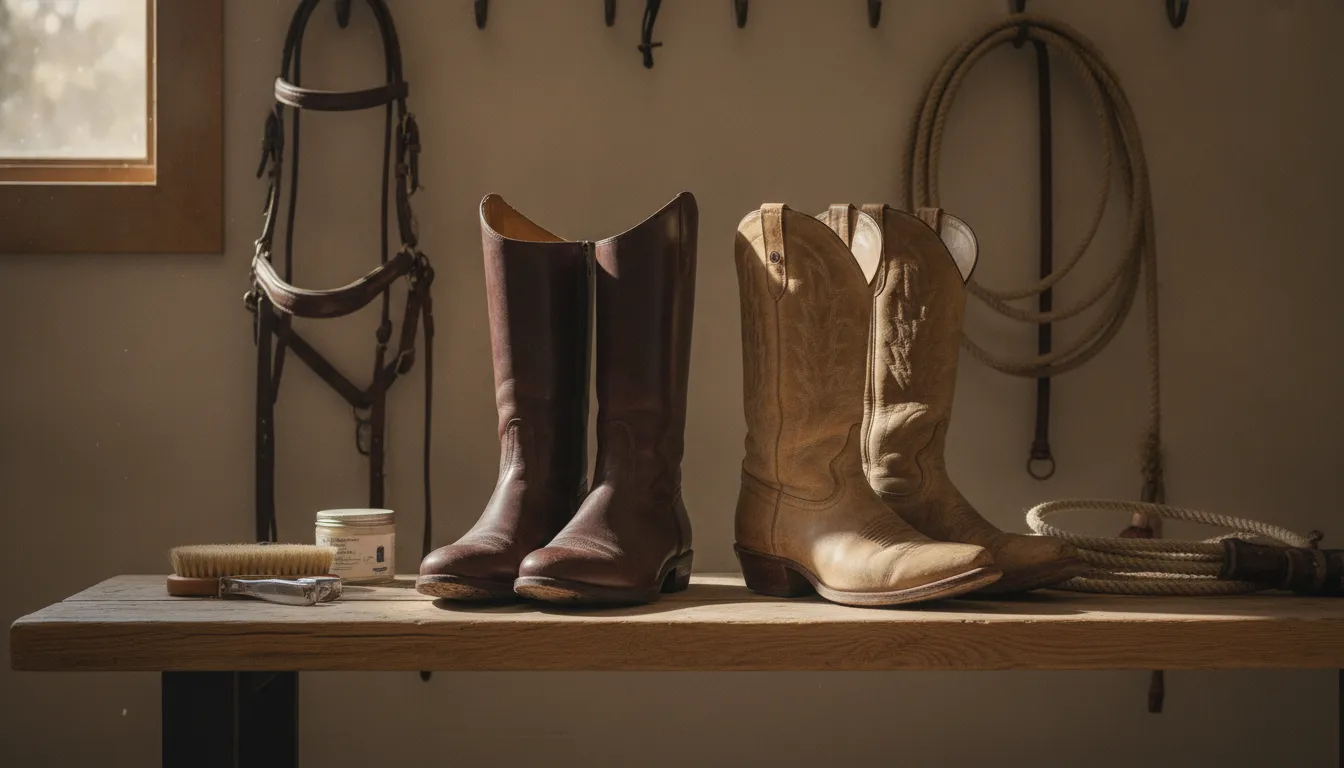
Compare curated horse riding boots for English, Western, and everyday use.
English, Western, and everyday riding boots compared
Choosing the right horse riding boots is about more than just a look. Each style has a clear job to do for your safety and comfort. While you might want one pair for all tasks, most riders find that the right tool for the job is a big win. Whether you ride for sport or fun, your boots are your key safety gear after your helmet.
A good boot must help you stay safe in the stirrups. The main goal is to keep your foot from sliding through the iron. This is why a real riding boot always has a clear heel. Experts say that a heel height of 1 to 1.5 inches is best to stop your foot from slipping. Without this heel, a fall could become much worse if your foot gets stuck.
English boots for close feel
English boots are built to be slim and sleek. This design lets you feel the horse's side more clearly. It helps you give precise cues with your leg. These boots often have a thin, smooth sole. A smooth sole is better for English riding. It lets your foot release from the stirrup fast if you have a fall.
There are two main types of English boots. Tall boots, like field or dress boots, go all the way up to your knee. They protect your skin from rubbing on the saddle. Paddock boots are shorter and stop at your ankle. Many people pair them with half-chaps to get the same safety as a tall boot. You can shop quality horse riding boots in both styles, then complete your safety setup with a properly fitted riding helmet.
| Boot Type | Boot Height | Heel Type | Main Use | Top Perk |
|---|---|---|---|---|
| Tall Boots | Knee-high | Low heel | Shows and sport | Sleek fit |
| Paddock Boots | Ankle-high | Low heel | Work and training | Light weight |
| Western Boots | Mid-calf | High heel | Ranch and trail | High grip |
| Barn Boots | Various | Flat or low | Stable chores | Dry feet |
Western boots for work and grip
Western boots are often built with thick, tough leather. This helps them stand up to hard work on a ranch or long days on the trail. They often have a higher heel than English boots. This taller heel provides great grip in a Western stirrup. It keeps you steady while you work or ride over rough ground.
The shafts of Western boots often have old-style stitch patterns. While these look great, the boots are still tools at heart. The thick leather guards your legs from brush and thorns during trail rides. Some styles use strong leather that can take a lot of wear from mud and dust. They are made to last through years of use in the barn and the saddle.
Stable and barn boots for daily tasks
Sometimes you need a boot that is meant for work on the ground. Barn boots are built for long life and easy care. Many are waterproof to keep your feet dry in wet stalls or muddy fields. Some even have safe toes to protect you if a horse steps on your foot. These are great for daily chores but may not always be safe for riding if the sole is too wide.
If you like to ride and work in the same pair, look for a mixed-use boot. These are made to give you riding safety and walking comfort. They are a top choice for trail riders who may need to get off and lead their horse over tricky spots. No matter which style you pick, check your boots often for wear. Look for loose stitches or thin soles to ensure they stay safe for your next ride.
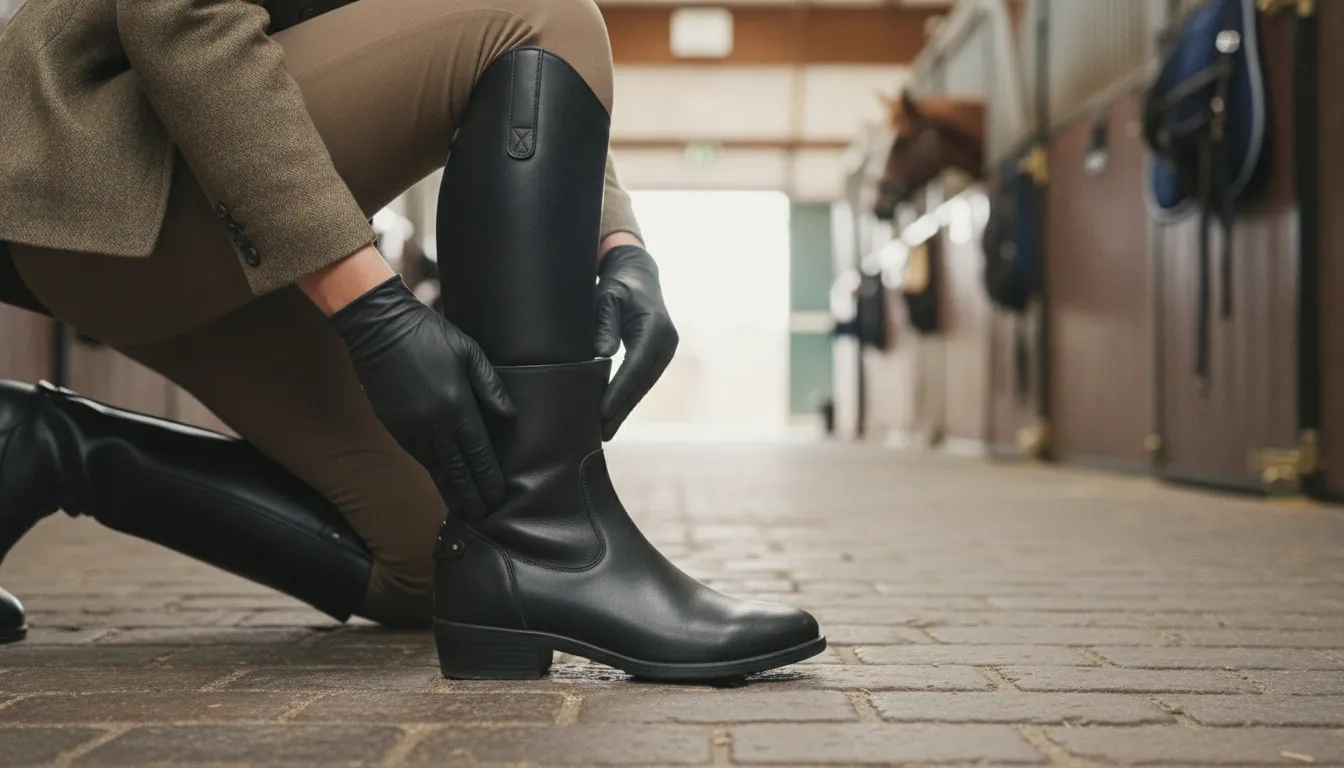
Use our English riding boots guide to compare tall and paddock boot fit.
How should horse riding boots fit?
A proper fit for horse riding boots is vital for both safety and comfort. A boot that is too tight can slow blood flow, while a loose boot may cause sores or let your foot slide in the stirrup. Finding the right balance ensures you can stay safe in the saddle and move with your horse well.
Check the length and width
When you try on new boots, start with the footbed. Your toes should have enough room to move without hitting the front of the boot. Aim for about a half-inch of space between your longest toe and the tip. The width should feel snug but not painful. If the boot is too wide, your foot will slide, which can lead to sores during long rides. For a great fit, it helps to read a guide to English riding boots or Western styles before you buy.
The British Horse Society's footwear guidance also explains that riding boots should be comfortable for both riding and walking. They should not be so tight that they limit your move. Make sure you wear the same socks you plan to use when you ride to get the best feel for the fit.
Test the heel and ankle
Heel hold is another key part of a good fit. When you walk, your heel may lift a bit, but it should not pull out of the boot. If your heel slips too much, the boot is likely too large. You also need to check the ankle flex. Riding needs you to drop your heels, so the leather must be soft enough to allow that move. Stiff boots can make it hard to keep your legs in the right spot while you ride.
Measure tall boot height
If you choose tall boots, the height of the shaft is very important. New boots will often drop about an inch as the leather softens and folds at the ankle. Because of this, tall boots should feel a bit too high when they are brand new. They should sit right in the bend of your knee. If they are too short, they may catch on your saddle flap, which is a safety risk.
- Choose your socks: Always wear the riding socks you use most often. Thin socks or thick winter ones will change how the boot feels.
- Slide your foot in: Your foot should go in with a firm pull. If it slides in too easily, the boot might be too big.
- Check the toe room: Wiggle your toes to make sure they are not cramped against the front or sides.
- Walk around: Take several steps to feel for any rubbing. A good boot should feel secure around your arch and heel.
- Flex your ankles: Sit down or stand on a step to copy the "heels down" pose. The boot should let you flex without a pinch.
- Check the height: For tall boots, stand up straight and check that the top hits the back of your knee bend.
- Use the break-in time: New leather boots will need time to soften. Wear them around the house for short times before you go for a long ride.
What features matter most for riding safety?
Horse riding boots are not just a style choice. They are a vital part of your safety kit. In fact, many experts view them as the most vital gear you own after a well-fitted helmet. The right pair of boots keeps you steady in the saddle and protects you on the ground. When you look for new gear, you must focus on how the boot works with the horse and the stirrup. Your main goal is to keep your foot in the right spot at all times.
The role of the heel and sole
The heel is the most vital safety feature of any riding boot. It acts as a stop to keep your foot from sliding through the stirrup. If your foot slips all the way through, you could get caught if you fall. To stay safe, your boot should have a clear heel between 1 and 1.5 inches tall. This small gap gives enough of a ledge to catch the stirrup bar. If you use boots with no heel, you take a big risk every time you ride. In fact, a set riding boot heel is needed to keep your foot from sliding too far forward.
The sole of the boot also matters for your safety. While you might want a deep tread for walking in mud, big lugs are a risk in the saddle. Deep treads can catch on the stirrup iron and stop a quick release. For English riding, a smooth sole is best because it lets your foot slide out fast during a fall. If you ride Western, a lightly textured sole can offer more grip while still being safe. You should always shop good horse riding boots that balance walking grip with stirrup safety.
Ankle support and toe safety
Riding and barn work put a lot of stress on your feet. Good ankle support helps you stay steady on rough ground. It also keeps your leg in the right spot while you ride. A stiff boot shaft or a snug lace-up design can keep your ankle from rolling. This support is also helpful when you ask your horse for a set move. It gives you a firm base to press against the horse's side without hurting your joints. Good support is key for both safety and comfort in the barn.
Toe safety is more to think about, mostly for barn work. Horses are heavy, and a misplaced hoof can cause a lot of pain. Some boots come with safety toes made of steel or other tough parts. These are great if you spend a lot of time in the stall or moving heavy gear. While you may not need them for show riding, they are a smart choice for daily chores. Always check your boots for wear like thin soles to make sure they still offer full safety. Checking your gear often is vital to keep it in good shape for the long run.
Shaft design and stirrup fit
The height and shape of the boot shaft change how you ride. English tall boots cover the whole lower leg. This design protects your skin from rubbing against the saddle. It also helps you give clear signals to the horse. Western boots have a wider shaft and a different look. They are built to work with Western stirrups, which are often wider and deeper than English ones. The shaft should fit your calf well so the boot does not twist while you move. This close fit helps you stay in control of your horse.
Lastly, your boot must be the right size for your stirrups. If a boot is too wide for the stirrup, it might get stuck. If it is too narrow, your foot might slide too far forward. A good fit makes sure you can move your foot as needed to stay balanced. Our family has helped riders find the right gear since 1994, and we know that a safe fit is key to a fun ride. You can even find a guide to English riding boots to help you pick the best style for your needs. We stand by our gear with a 365-day promise to make sure you get the best fit.
Choose boots for how and where you ride
Choosing the right horse riding boots depends on what you do at the barn. You need boots that keep you safe and help you stay steady in the stirrups. Whether you show in English rings or work on a ranch, your gear should match the job. You can shop quality horse riding boots to find a pair that fits your style. Picking the right footwear helps you stay at ease for hours in the saddle.
English training and showing
English riders often use different boots for lessons than they do for shows. For daily training, paddock boots are a top pick for most people. These ankle-high boots are easy to put on and offer good support. Most riders wear them with half chaps to protect their legs from rubbing against the leather.
This mix is a smart way to get the look of a tall boot for less money. Paddock boots are also great for chores after your ride. Since they are shorter, they feel lighter on your feet than tall boots for daily use. Both lace-up and zip-up styles keep your ankle secure while you ride or walk around the stable.
When you enter the show ring, tall boots are the standard choice. They offer a clean look and help you keep your leg in the right spot. Dress boots are common for dressage, while field boots work well for jumping. Proper tall boots help you give clear cues to your horse during a test or a round. For a more precise tall-boot fit, Equestrian Australia explains how tall boots should fit.
As noted by experts at the University of Kentucky, good boots must have a heel to stop your foot from sliding through the stirrup. This safety feature is vital for riders of all skill levels. You can find more tips in our guide to English riding boots, and browse spurs and spur straps once your boot fit is dialed in.
Western and ranch work
Western boots are built for tough work and long days of riding. They usually have a high heel and a tall shaft to protect your legs from brush or rope. Ranch work needs boots made of thick leather that can stand up to dirt and mud. These boots give you the grip you need when you move in a Western saddle.
Many Western boots also feature bold stitching and bright colors. While these look great, the boots still focus on safety first. The sturdy build helps you stay secure during quick turns or while working cattle. These boots are made to last through years of hard use on the farm.
Safety is key when you pick a Western boot. The heel should be at least one inch high to keep you from getting stuck in the stirrup. Some boots have a square toe, while others are round. The toe shape is often a matter of style, but the fit must be right to keep you safe.
A good fit stops sores and keeps your foot from sliding inside the boot while you ride. If you spend all day on your feet, look for pairs with soft soles. These help cut the stress on your joints while you work. Taking care of the leather will help your Western boots stay strong for many years.
Trail riding and barn chores
Trail riders need boots that work well for both riding and walking. Sometimes you need to get off your horse and lead them over rocky ground. A hybrid boot is often the best pick for these long trips. These boots have a riding heel but also offer the grip of a hiking shoe.
They help you stay safe on steep hills or muddy paths in the woods. For daily barn work, dry boots are a must. You need gear that keeps your feet dry when you clean stalls or wash your horse. Some modern barn boots even have safety toes for extra protection from heavy tools.
Choosing a pair with a 365-day promise gives you peace of mind that your gear can handle the daily grind. Warm boots keep your toes cozy during cold morning rides or late-night chores. No matter where you ride, the right boots make every trip better and safer.
Frequently Asked Questions
What are the best horse riding boots for beginners?
Beginners should focus on safety and comfort over high prices. A good starter boot should have a clear heel to prevent the foot from sliding through the stirrup. According to Safe Riding Guidelines, new riders should pick tough boots that help the ankle. These basic models help riders learn proper foot spots without the high cost of show gear.
Are specific boots required for horseback riding?
While any tough boot can work, real riding boots are much safer for the rider. The main part is a heel that is about 1 to 1.5 inches tall. This heel keeps the foot from slipping all the way through the stirrup, which could trap a rider during a fall. Experts state that proper footwear is the most vital safety item after a helmet.
Can I use everyday boots for horse riding?
You should avoid using regular boots because they often have deep treads or lack a proper heel. Heavy soles can snag on the stirrup, making it hard to release your foot in a fall. Instead, special riding boots have smooth soles and a safe heel height. This design helps you stay safe while riding and lets you step away easily if you need to.
How should horse riding boots fit?
A good pair of boots should feel snug without being too tight. You need enough room to move your ankle, but the boot should not slip as you walk. Poor blood flow or painful blisters can happen if the fit is wrong. As noted by safety experts, a well-fitting boot helps you guide your horse better and stays comfortable for many hours.
Ready to shop for your next pair of horse riding boots?
Using the wrong boots can cause pain and might even lead to a fall if your foot slips out of the stirrup while you ride. When you order your new pair today, you make sure that your gear is ready for your very next lesson or trip to the barn. The right boots give you the support you need to stay safe and help you feel more stable every time you go for a ride. Our team has been helping riders find the best gear since 1994, and you can contact us for any help you need.
Ready to shop horse riding boots? View our collection online to find your fit or talk to our family team for help.


