


Cold rain and deep barn mud can quickly ruin a great ride in minutes. Wet feet lead to cold toes and painful blisters that stop you from doing your work.
Quality waterproof women's riding boots with heel keep your feet dry in wet grass, puddles, and deep mud while keeping you safe in the stirrup. To get the best weather protection, look for boots that combine full grain leather with built in waterproof linings. This design prevents outside moisture from getting in while letting sweat escape. A study on leather water resistance shows how advanced coatings make leather highly repellent to water. Proper ankle support and a snug fit are also important to keep you stable on rough ground. You should also make sure the boots have a solid heel to keep your feet from sliding through the stirrup. With the right pair, you can work in the barn and ride all day in complete comfort.
Before you buy your next pair of boots, it is important to understand how they block out rain and mud. In the sections ahead, we will explore what makes boots waterproof. How ankle support and heel design keep you safe in the saddle, and how to find the right fit for your foot.
Shop the waterproof riding boots collection at Hooves and Paws to find boots that combine a secure heel with a fully waterproof build, so you can ride and work the barn dry all season.
What Makes Riding Boots Waterproof (and Why It Matters)
Equestrian life often means dealing with damp conditions. Wet grass, deep puddles, and mud can quickly soak standard boots. When water gets inside, it makes your feet cold and weakens the boot structure. That is why riding boots must keep water out. They need to protect your feet while keeping you safe and steady in the saddle.
Treated Leather and Modern Coatings
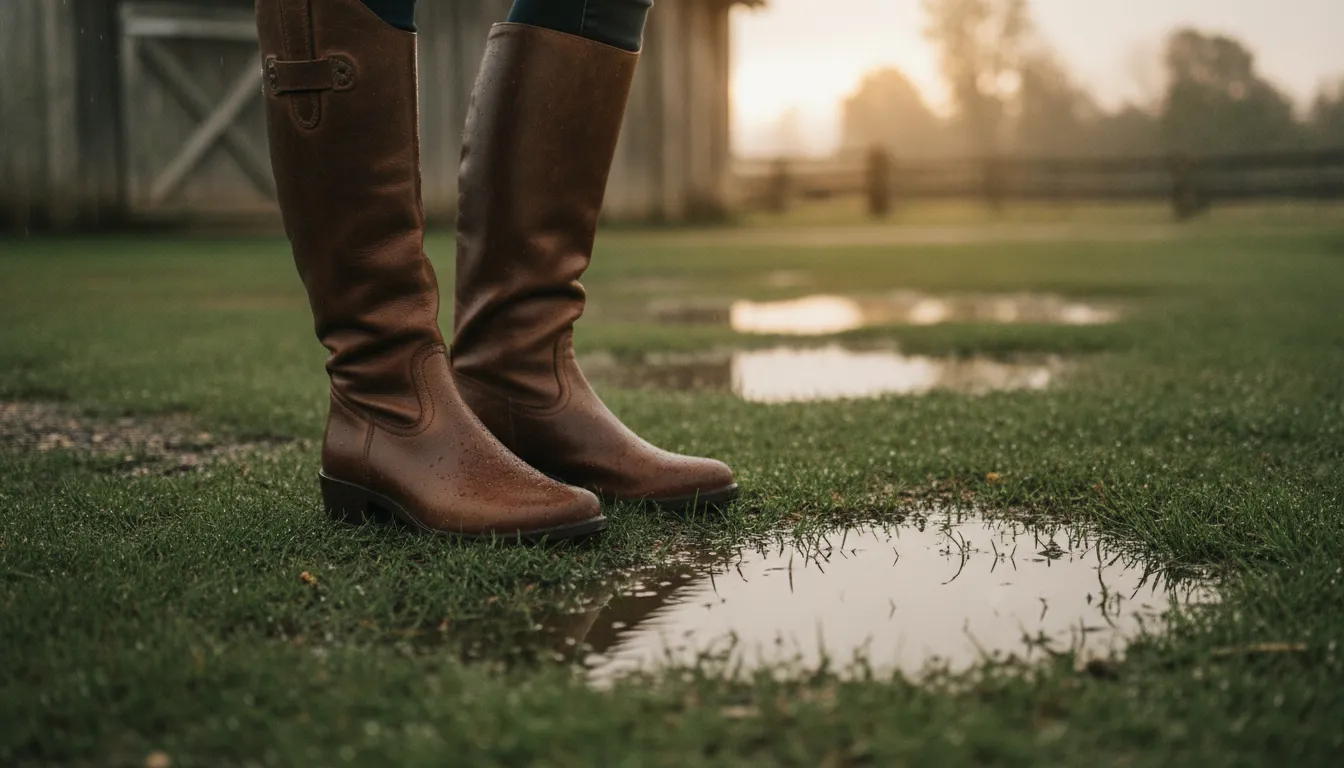
To stop water from soaking in, boot makers start with the outer shell. Raw leather easily absorbs moisture like a sponge. Premium boots use top-grain leather that goes through protective treatments. Research shows that plasma nanocoatings give leather superb water protection. These coatings create a barrier on the surface that makes water roll right off.
There are other modern ways to treat the outer leather. One method uses low-pressure plasma to bond a guard on the leather. Studies show that using hydrophobic coatings with this process improves leather water resistance on footwear. These special treatments keep the leather strong. They prevent the boot from getting heavy and waterlogged during long hours at the barn.
Advanced Breathable Membranes
But treated leather is only the first line of defense. High-quality boots do not rely on outer coatings alone. We recommend boots that feature both genuine, durable leather exteriors and advanced breathable waterproof membranes for all-day comfort. These thin inner liners keep outer moisture out while letting heat and sweat escape. This means your feet stay dry from both rain and sweat.
Many premium brands use their own custom systems to build this defense. For example, some boots feature AquaProtect technology to guard against water, mud, and slush. These boots use sealed seams and treated leathers to block moisture. They ensure that your footwear stays safe and clean even in wet arena soils. This design keeps the boots looking great and working well for years.
If you need a pair that can handle wet weather, you will find excellent options online. You can view our waterproof women's riding boots with a heel to see boots that blend style with technical protection. A good heel is needed for safety in the stirrup, and a waterproof build keeps you dry in any weather. Choosing a trusted pair ensures comfort during long hours in the saddle.
Waterproof versus Water-Resistant
Knowing the difference between waterproof and water-resistant boots is also helpful. Water-resistant boots only delay water entry under light rain or spray. They are not meant for deep puddles or heavy downpours. Real waterproof boots are fully sealed and tested under wet pressure. They keep your feet dry even when you submerge the boot in water.
Ankle Support and Stability in a Waterproof Boot
Why ankle support matters in the saddle
Riders often walk on wet grass, slick mud, and loose ring dirt. Proper ankle support in riding boots is vital for preventing injuries during both riding and walking around the barn. A structured boot helps stabilize your foot and keeps you safe during many horse chores. When your boot has a strong build, it guards your ankles against twists and strains on uneven ground.
The mechanical behavior of leather upper parts is key to boot comfort and long life. Good leather resists water but remains soft enough to flex with your movements. This balance is hard to find in cheap plastic options. Sturdy leather holds its shape over years of hard wear, keeping your heel in place and stopping your ankle from rolling.
Tall boots versus paddock boots
When you choose waterproof women's riding boots with a heel, you will see two main styles. Tall boots and paddock boots give their own levels of ankle support. Tall boots extend up to your knee, which helps keep your lower leg secure against the saddle.
Stiff tall boots, like the Ariat Heritage Contour II Field Zip Tall, hold your ankle in a safe, straight position to reduce strain. These quality tall boots are built with contoured fits that wrap around the ankle joint.
Paddock boots are shorter, ending just above your ankle, which makes them lighter and easier to walk in. A boot like the Ariat Heritage IV Zip Waterproof Insulated Paddock Boot gives great warmth and keeps out water. But short boots do not support your leg as much as tall boots. To get better ankle support, you can pair paddock boots with half chaps while you ride.
| Feature | Tall Riding Boots | Paddock Boots |
|---|---|---|
| Boot height | Extends up to the knee | Ends just above the ankle |
| Ankle support | High, supports the lower leg and saddle contact | Moderate, best paired with half chaps |
| Weight | Heavier | Lightweight and easy to walk in |
| Weather coverage | More leg protection from rain and mud | More ankle exposed |
| Best for | Show, formal riding, and long arena sessions | Daily barn chores and casual riding |
Zippers and laces for a secure fit
The closure system on your boots affects both safety and support. Loose boots allow your foot to slide, which can lead to rubs or loss of balance. You can select the best closure for your riding needs:
- Zippers allow for quick on-and-off access while keeping a sleek, tight profile.
- Laces give an easy fit that you can change to support your arch.
- Buckles offer extra strength around the ankle for tough rides.
A boot with solid construction protects you in wet weather. When choosing durable leather riding boots, look for thick outsoles and strong shank pieces. A steel or plastic shank insert prevents the boot from bending, which keeps your arch stable while you ride. High-quality brands build their footwear to handle the daily stress of muddy barn chores.
Shop This Post

Featured in this article
Shires Moretta Clio Plus Paddock Boots - Black, Child, Lace-Up Equestrian, Gently Used
$29.99
Shop Now →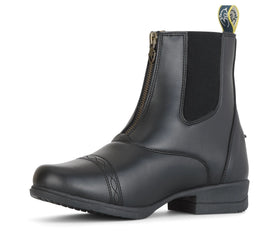
How to Choose the Right Fit for Waterproof Women's Riding Boots with Heel
Finding the perfect fit for your footwear is vital to keep your feet dry and warm in the mud. If you want to buy waterproof women's riding boots with heel options, you must think about both safety and comfort. A boot that is too tight will block blood flow and make your feet cold, while a loose boot can slip out of the stirrup.
The challenge of finding the right size
Waterproof boots use a special inner sock to block mud and wet paths. This barrier takes up some room inside the boot. To find the right fit, you must think about how the leather moves.
Leather flex is key for long-term wear. A study in the National Institutes of Health site shows how leather uppers behave. The flexibility and resistance of the leather are crucial for comfort and long-term wear.
When you look at our riding boots collection, we want to help you find a pair that fits on day one. At Hooves and Paws, we use our thirty years of horse-care work to find the best brands. Our team knows how to guide your search for the right size.
A step-by-step checklist for a proper fit
Follow these key steps to check the fit of your boots before you ride:
- Measure your foot length and instep height while standing up. Use a tape to check both feet, as one foot is often larger than the other.
- Always wear the socks you plan to ride in when trying on new boots. A waterproof membrane needs a small amount of room to breathe.
- Measure your calf at its widest point for tall boots. Check this size against the brand guide to make sure the shaft is not too tight.
- Your heel must stay snug to keep you safe in the stirrup. Make sure the boot heel keeps your foot from sliding forward.
- Allow the inner membrane to sit snug but not tight. A tight fit can pinch your foot and stop the waterproof lining from working well.
Testing your boot before the first ride
Before you head out to the mud, wear your boots around the house for an hour. This simple test is the best way to check your new equestrian riding boots for women before using them in the barn. The leather will soften over time, but the overall length will never change. If you need a different size, our 365-day guarantee has you covered.
We know that finding the perfect fit is just the first step. You also need to know how to clean and care for your new gear. Read our guide on choosing durable leather riding boots to learn how to keep your leather soft and waterproof.
Browse waterproof women's riding boots with a heel to compare tall and paddock styles side by side, each chosen by our experts for ankle support, fit, and real wet-weather protection.
Why the Heel Matters for Riding and Everyday Wear
When you look at waterproof women's riding boots with heel designs, it is easy to focus on style. But in the saddle and around the barn, the heel is a vital safety tool. A proper heel does more than look good; it protects you from real danger.
Stirrup safety and foot placement
The main job of a riding heel is to keep you safe in the stirrup. Most boots have a slight heel that keeps your foot from sliding too far forward. If your foot slips through the stirrup iron, you could get caught and dragged during a fall.
Many riders choose waterproof women's riding boots with a heel to handle daily barn chores. This slight heel is key to keeping the foot in the correct spot. It also helps you keep your weight down. Having your heels down keeps you steady in the seat so you can stay safe.
Everyday traction in wet weather
A riding boot with a heel is not just for the saddle. When you work on wet ground or muddy paths, a flat sole can slip. A modest heel digs into the dirt and gives you better grip on wet grass or slick barn floors.
Working in wet mud puts a lot of stress on your boots. In these wet settings, the mechanical behavior of footwear leather is vital for long term comfort. Good leather must stay soft and bend with your foot while keeping water out.
Choosing the right heel height
When you look at our riding boots collection, you will see many heel styles. A blocky heel of about one inch is the standard for English and Western riding. This height gives you enough grip without adding weight or making it hard to walk.
Choosing the right pair also means choosing durable leather riding boots that can stand up to daily wear. Good boots have strong soles that are stitched, not just glued, to the upper. This makes sure the heel does not pull away when you walk through thick mud.
At Hooves and Paws, we have helped riders find the right gear since 1994. With over 30 years in business, we know that safety in the saddle starts from the ground up. Choosing a boot with the right heel keeps you safe and dry all day long.
Caring for Your Waterproof Riding Boots So They Last
Waterproof riding boots face harsh barn work every day. Mud, wet muck, and arena dust can break down even the toughest leather if left on the surface. Taking time for simple upkeep will extend the life of your boots and keep your feet dry in the saddle.

Clean Off Mud After Every Ride
Do not let wet mud dry on your boots. Dried mud pulls moisture out of the leather, which makes it stiff and prone to cracking. Wipe your boots with a damp cloth or soft brush after each ride to clear away dirt. Watch the seams and the area around the zipper where dirt loves to hide.
Clean leather is the base of good care. The mechanical properties of the leather upper are vital for the comfort and long life of your footwear. When dirt sits on these uppers, it degrades the fiber strength and ruins the flex. A quick wipe takes only a minute but saves the boot structure from early wear and tear.
Condition and Treat the Leather Regularly
Once your boots are clean and dry, they need oil to stay soft. Leather needs care often to keep its natural oils. Use a high-quality leather cream to keep the leather supple and protect its water-repellent layer. Check out our tips on caring for leather riding boots to keep them working well in any weather.
Over time, the first waterproof barrier will wear off. You will need to apply a new water-repelling spray or wax every few months. Water should bead up and roll off the boot surface. If water sinks into the leather and darkens it, it is time for a new spray treatment to protect the leather.
Dry and Store Your Boots the Right Way
Never dry wet boots near a stove, heater, or direct sun. High heat dries out the leather too fast, which leads to cracks and ruins the glue. Let them dry in a warm room with good air flow. You can stuff them with plain paper to help absorb moisture from the inside of the boot.
Store your boots upright with boot trees to keep their shape. This keeps the leather from creasing at the ankle, which can wear down the waterproof membrane. Store them in a cool, dry place out of direct light to keep them in top shape for years. Proper storage keeps the heel and sole in good shape so they stay comfortable for long hours in the barn.
What to Look for When You Shop Waterproof Riding Boots
When you shop for new boots, you must look at key details. Dry feet make long days in the barn much better. You need gear that can stand up to mud, puddles, and heavy rain. Since 1994, our family-owned shop has helped riders find the best gear. We carry over 18,000 curated SKUs to give you many options. With over 30 years of work in the field, we know how to spot a good pair. Let's look at what matters most when you buy a pair of boots.
Key features for dry feet
First, look at the main materials and waterproof tech. Good boots use full-grain leather treated with a water shield. Some boots use a special inner layer to block water but let air pass. Research shows that the durability of upper leather is vital for long-term comfort in footwear (PMC9331295). Next, check the seams and zippers. Sealed seams keep water out of the boot. Zippers should have a wide inner flap to stop sudden leaks.
Ankle support and fit
You also need to think about ankle support and fit. A snug but not tight fit keeps your foot safe and warm during long rides. Think about your intended use before you choose. Tall boots are best for show and formal rides. Paddock boots work well for daily chores around the barn and casual work. If you want a safe and dry ride, you should look for waterproof women's riding boots with a heel. The heel keeps your foot from slipping deep into the stirrup.
Top brands and price ranges
Many top brands make great waterproof boots. Ariat is a major name in this field. They offer the Heritage IV Zip Waterproof paddock boot for about $199.95. They also have tall field boots like the Heritage Contour II for about $379.95. Blondo is another great option for stylish weather gear. Blondo boots use AquaProtect technology to stop rain, mud, and deep puddles.
Ovation is also a trusted name for riders. They make quality paddock boots and tall boots for women. Their top riding boots can cost up to $390.95. Read more about finding the right fit in our guide on equestrian riding boots for women.
We partner with more than 25 premium brands to bring you the best selection. We offer a 365-day guarantee on our items to make sure you are happy. You also get free continental US shipping with no minimum order threshold. Every order before 2 PM PST ships out the very same day. We help you shop with real peace of mind.
View our waterproof riding boots for women now, or contact our team for personal sizing help before your next ride.
Frequently Asked Questions
Why is a heel necessary on women's riding boots?
Classic riding boots must have a heel to keep you safe in the saddle. According to the Hooves and Paws guide, a slight heel prevents your foot from sliding too far forward through the stirrup. Without a heel, your foot could get caught. This heel design is vital for both beginner and expert English or Western riders.
Does a waterproof membrane make riding boots feel tighter?
Yes, boots with waterproof liners can feel snug at first. The extra layer takes up a tiny bit of space inside the boot. To find the right fit, you should wear the same thick socks you plan to ride in when you try them on. The experts at Hooves and Paws suggest doing this so the lining has enough room to breathe.
How do you maintain the waterproofing on leather riding boots?
To keep your boots dry, you must clean off dirt and mud after every ride. Applying wax or spray to block water helps protect the leather over time. Tests published in PMC show that treated leather keeps water out best when cleaned often. Good care also stops the leather from cracking so your boots last longer.
What makes waterproof riding boots comfortable for long hours?
For long days at the barn, look for a boot that has strong ankle support and a soft sole. A strong design helps support your foot while you ride or walk. The team at Hooves and Paws suggests boots with a breathable lining. This inner layer keeps water out but lets sweat escape, which keeps your feet dry and comfortable.
Are tall boots or paddock boots better for wet weather?
It depends on your riding style and the weather you face. Tall boots rise to the knee and give the most lower-leg support, which helps you stay secure in the saddle on long rides. Paddock boots are shorter and lighter, making them easier to walk in, but they leave more of your leg exposed to mud and rain. For heavy wet weather, many riders prefer waterproof tall riding boots, or they pair paddock boots with half chaps for extra coverage and ankle support.
Ready to find your perfect riding boots?
Riding in wet weather with the wrong boots will quickly ruin your day in the saddle and lead to painful, cold feet. Do not wait for the next storm to find out that your old riding footwear leaks, slips on mud, or lacks proper ankle support. Investing in durable, waterproof riding boots today ensures you are fully prepared for wet trails and damp stables on your next trip.
Our family business has helped riders find trusted gear and expert service since 1994. We offer free U.S. shipping with no minimum order and a full 365-day satisfaction guarantee. Ready to find your next pair of boots? Contact us today to shop the waterproof riding boots collection at Hooves and Paws.


