


Western riding helmets have changed: riders can now choose protective headgear that feels secure, stays comfortable through long hours, and works with a western look. The best choice is not simply the helmet with the most features or the lowest profile. It is the certified helmet that fits your head correctly, suits the conditions in which you ride, and feels comfortable enough to wear every time you get in the saddle.
Quick answer: Choose a western riding helmet with a current ASTM/SEI certification label, a level and snug fit, a secure chin strap, and comfort features appropriate for your rides. Try the helmet with your usual riding hairstyle, check that it does not shift when you move your head, and replace it after an impact or according to the manufacturer's care and replacement guidance.
A helmet can only help when it is worn and positioned correctly. That makes fit and comfort practical safety considerations, not optional extras. This guide explains how to compare certification, shell profiles, ventilation, brims, fit systems, and care without relying on vague claims or choosing by appearance alone.
What makes a western riding helmet a smart choice?
A smart western helmet choice combines verified certification, correct fit, reliable retention, and a style that works for the rider's real routine.
Western riding covers many settings, from arena practice and lessons to ranch work and long trail days. The right helmet should match those conditions while keeping its core purpose clear: it is protective equipment designed to manage impact energy. A cowboy hat, cap, or fashion hat does not perform the same job as a certified equestrian helmet.
Start with the certification label
Look inside the helmet for the certification and labeling required by your discipline, facility, or event. In the United States, riders commonly look for helmets certified to the ASTM equestrian helmet standard by SEI. A certification label indicates that the helmet model has been tested against a defined standard. It does not make any rider immune to injury, but it gives you a meaningful basis for comparing purpose-built head protection.
Do not assume that a hard-looking shell, wide brim, or equestrian styling means a helmet is certified. Confirm the label on the exact helmet you are considering. If you compete, also review the current rules for your organization because equipment requirements can vary.
Treat fit as part of protection
A certified helmet still needs to sit correctly. It should remain level rather than tipping back and exposing the forehead. The retention system should be adjusted so the helmet stays in position as the rider looks up, down, and side to side. If it rocks freely, creates sharp pressure points, or shifts over the eyes, another size, adjustment, or head-shape profile may be needed.
Fit can differ even between helmets marked with the same size. Shell shape, liner thickness, and adjustment systems all affect how a helmet feels. Compare the actual fit rather than assuming your usual size will be identical across designs.
Choose for repeated use, not occasional approval
A protective helmet is useful only when it comes along for the ride. Ventilation, weight distribution, liner feel, and an easy-to-use buckle can determine whether a rider wears it consistently. A practical buying decision balances the protective fundamentals with the details that make daily use realistic.
Hooves and Paws is a family-owned retailer serving animal families since 1994. Its riding gear is expertly curated for riders who value quality, personal service, and dependable choices rather than an overwhelming list of look-alike options.
How should a western riding helmet fit?
A western riding helmet should sit level and snug around the entire head, stay stable during movement, and fasten securely without creating painful pressure.
Measure before you shop, but use the measurement as a starting point rather than a final answer. With a soft measuring tape, measure around the widest part of the head, generally just above the eyebrows and ears. Keep the tape level and compare the result with the specific manufacturer's size chart.
Try it with your normal riding setup
Wear your hair as you normally do in the saddle. A change in hairstyle can change fit, especially if a large amount of hair is moved under or out of the helmet. Avoid putting bulky items under the helmet unless its manufacturer explicitly permits them. Anything that changes how the helmet sits can also change its stability.
Place the helmet down onto the head rather than perching it toward the back. The front should protect the forehead while leaving a clear field of vision. Adjust the fit system and chin strap according to the instructions included with that helmet.
Use a simple stability check
Before riding, move your head gently in several directions. A properly fitted helmet should follow the head rather than sliding independently. The skin at the forehead may move slightly with the helmet, but the helmet should not cause concentrated pain. Check that the strap remains secure and that the side straps are positioned as instructed by the manufacturer.
If one size feels loose while the next feels painfully tight, the issue may be the helmet's internal shape rather than its labeled size. Trying another design can be more effective than over-tightening an adjustment dial. For a broader overview of fit and protective features, read the Hooves and Paws guide to equestrian helmet safety, style, and comfort.
Recheck fit over time
Liners can compress, straps can loosen, and a rider's hairstyle or headwear can change. Do a quick check before each ride and a more complete fit review periodically. For growing riders, check especially often. A helmet that fit last season may not fit now.
Ready to compare your options? Browse expertly curated riding helmets, review the available fit and comfort details, and choose the best match for your riding routine.
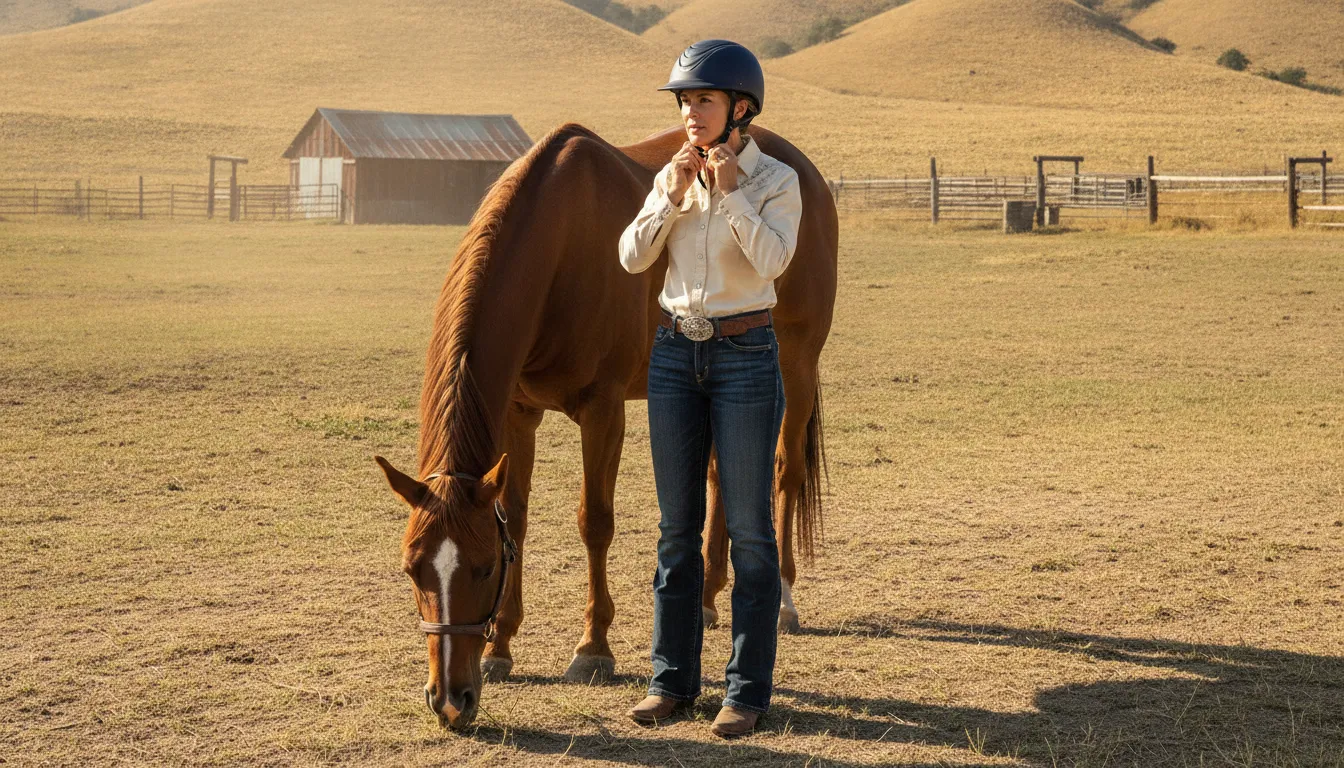
Which western helmet style suits your riding?
The best style is the certified helmet whose profile, brim, ventilation, and finish suit where and how you ride without compromising fit.
Style matters because riders are more likely to reach for equipment they feel good wearing. Still, appearance should come after certification and fit. Begin with helmets that meet your protective requirements, then compare the visual and practical differences within that group.
Low-profile helmets
A low-profile shell sits closer to the head visually and often pairs easily with western shirts, denim, and understated tack. For riders who have avoided helmets because they dislike a bulky silhouette, this can make regular wear feel more natural. The profile alone does not indicate protection or fit, so verify the certification label and complete the same stability checks you would use with any helmet.
Western hat-inspired options
Some riders prefer a wider-brim western appearance. A purpose-built, certified western hat-style helmet may provide that look, but it is important to distinguish one from a standard cowboy hat or a decorative cover. Check the full product description and label rather than judging by the brim. Wide-brim designs can also feel different in wind and may affect peripheral awareness, so assess them in the context of your usual riding environment.
If you are considering the western hat look, see the Hooves and Paws cowboy hat helmet cover guide for additional context on appearance and safety distinctions.
Trail and schooling styles
For frequent schooling or trail riding, practical features often matter more than decorative details. A streamlined visor, easy adjustment, washable liner, and useful ventilation may offer the best everyday value. Trail riders should also think about sun, changing weather, low branches, and how easily a helmet can be cleaned after dusty conditions.
| Style priority | Useful features to compare | Important check |
|---|---|---|
| Understated western look | Low-profile shell, neutral finish | Confirm stable fit, not just silhouette |
| More shade | Wider brim or visor | Confirm certification and clear vision |
| Daily schooling | Ventilation, washable liner, simple adjustment | Check comfort through a full session |
| Trail riding | Secure retention, ventilation, easy-care finish | Consider weather and surrounding terrain |
No single profile is best for every western rider. A rider working in an open arena may prioritize shade and airflow, while someone in a covered arena may care more about a compact shell and easy liner care. The strongest choice is grounded in actual use.
What comfort features matter on long rides?
Ventilation, balanced weight, smooth strap placement, removable liners, and simple fit adjustments can make a helmet easier to wear for an entire ride.
Comfort does not mean a helmet should feel loose. Instead, it should distribute contact evenly without pinching, wobbling, or creating distracting pressure. A comfortable helmet makes it easier for a rider to maintain consistent habits in hot weather, during lessons, and on longer trail outings.
Ventilation and heat management
Compare the number, location, and design of vents rather than assuming any visible opening guarantees strong airflow. Hair, liner design, shell structure, speed, and weather all affect how cool a helmet feels. Riders in warm climates may prioritize ventilation, while those riding in dusty settings may also care about how easily the vents and liner can be cleaned.
A removable, washable liner can simplify routine care. Follow the manufacturer's washing instructions because harsh chemicals, heat, and improper drying can damage helmet materials. Never modify vents or remove fixed components to create more airflow.
Weight and balance
A lighter helmet may feel appealing, but overall balance often matters just as much as the number on a product page. If a helmet feels front-heavy or shifts with movement, the rider may repeatedly adjust it or tilt it back. Try to evaluate how the helmet feels when looking ahead, down, and over each shoulder.
Adjustment systems and straps
A rear dial or similar adjustment system can help refine fit, but it cannot correct a fundamentally wrong shell shape or size. Adjustments should be easy to use and should remain in place during normal movement. Chin straps should lie flat and fasten securely. Check the buckle with the same gloves you wear while riding if you expect to operate it while geared up.
For more discussion of western-specific choices, visit the cowboy helmet guide. It can help you separate visual preferences from the protective and comfort details that deserve priority.
When should you replace a western riding helmet?
Replace a riding helmet after an impact, when damage or fit problems appear, or when the manufacturer says it has reached the end of its recommended service life.
Impact-absorbing materials may be damaged even when the outside looks normal. If a helmet was involved in a fall or significant impact, stop using it and follow the manufacturer's replacement guidance. Do not rely on a quick visual check as proof that it remains protective.
Inspect it before every ride
Look for cracks, dents, separated materials, damaged foam, frayed straps, a failing buckle, or an adjustment system that no longer holds. Confirm that the certification label and care information remain readable. If anything seems different after storage, transport, or a drop, contact the manufacturer for guidance or replace the helmet.
Store it with care
Keep the helmet away from excessive heat, direct sun during storage, moisture, and chemicals. Do not leave it loose where tack, tools, or other equipment can crush or strike it. Transport it in a way that prevents avoidable impacts. Follow the care instructions for the shell and liner, and never apply paint, adhesive, solvents, or decorations unless the manufacturer says they are safe.
Avoid used helmets with unknown histories
A secondhand helmet may have experienced an impact or improper storage that is not visible. Without a reliable history, the buyer cannot confidently assess its condition. A new helmet from a trusted source provides clear labeling, care guidance, and a known starting point.
Replacement timing is not identical for every helmet, so use the instructions for the exact model rather than relying on one universal number. Also replace a helmet that no longer fits, even if it appears undamaged.
How can you choose the best helmet for your budget?
Choose the best-value helmet by prioritizing certification and fit first, then spending on the comfort and style features that improve your real riding experience.
A higher price does not automatically mean a helmet fits your head better. Likewise, a lower-priced certified helmet may be a strong choice when it fits securely and supports the rider's routine. Focus first on non-negotiables, then compare features within the group of helmets that passes those tests.
Use this buying checklist
- Certification: Confirm the exact helmet carries the appropriate current label for your needs.
- Size and shape: Measure correctly, consult the specific size chart, and assess pressure around the entire head.
- Stability: Check that the helmet remains level and follows the head during gentle movement.
- Retention: Adjust and fasten the chin strap according to the manufacturer's directions.
- Ride conditions: Match ventilation, brim, finish, and care needs to your arena, trail, climate, and frequency.
- Maintenance: Review liner washing, storage, inspection, and replacement instructions before purchase.
- Style: Choose a profile and finish you will be comfortable wearing consistently.
Compare value across the full ownership period
Consider how often you ride and which features will genuinely matter. A washable liner may offer more value to a daily rider than a decorative finish. Better ventilation may matter greatly in a hot arena but less during short, cool-weather rides. Paying for features you will use can be worthwhile; paying for features that do not serve your routine is not.
Hooves and Paws has served horse and pet owners as a family-owned business since 1994. The store pairs expert curation with free continental U.S. shipping and a 365-day satisfaction guarantee, helping riders compare trusted gear with confidence. Review the product page and current terms for full details.
Frequently asked questions about western riding helmets
Riders should know that a certified, correctly fitted helmet is the foundation; style, comfort, care, and timely replacement support consistent use.
Can I wear a cowboy hat instead of a riding helmet?
A standard cowboy hat is not a substitute for a certified equestrian helmet. If you want a western appearance, look for a purpose-built helmet that carries the appropriate certification and fits correctly.
Can I add a western hat cover to any helmet?
Not automatically. A cover or accessory can affect fit, ventilation, vision, or performance. Use only accessories that the helmet manufacturer confirms are compatible, and never alter the shell or liner.
Should a riding helmet feel tight at first?
It should feel snug and stable, with even contact around the head, but it should not create painful pressure points. If adjusting the helmet does not resolve discomfort or movement, try another size or internal shape.
Do I need to replace a helmet after a fall?
Yes, if the helmet sustained an impact. Damage to impact-absorbing materials may not be visible from the outside. Stop using it and follow the manufacturer's replacement instructions.


