


Your Western saddle is more than just a piece of tack—it's your most important connection to your horse. To get the most out of every ride, you need to understand its construction. This guide breaks down all the essential Western saddle parts, from the horn to the cantle. Knowing the anatomy of your saddle isn't just for gearheads; it's crucial for your comfort, your horse's safety, and your overall performance. By learning the purpose behind each component, you'll be able to select, use, and maintain the perfect saddle for your specific needs.
What Are the Parts of a Western Saddle?
Understanding western saddle parts is vital for anyone serious about riding, whether for work or leisure. Each piece not only serves a specific function but also plays a role in the overall performance and comfort for both horse and rider. By exploring the unique anatomy of the western saddle, you will gain the knowledge needed to make informed decisions for your own riding experience.
A Quick Look at the Main Components
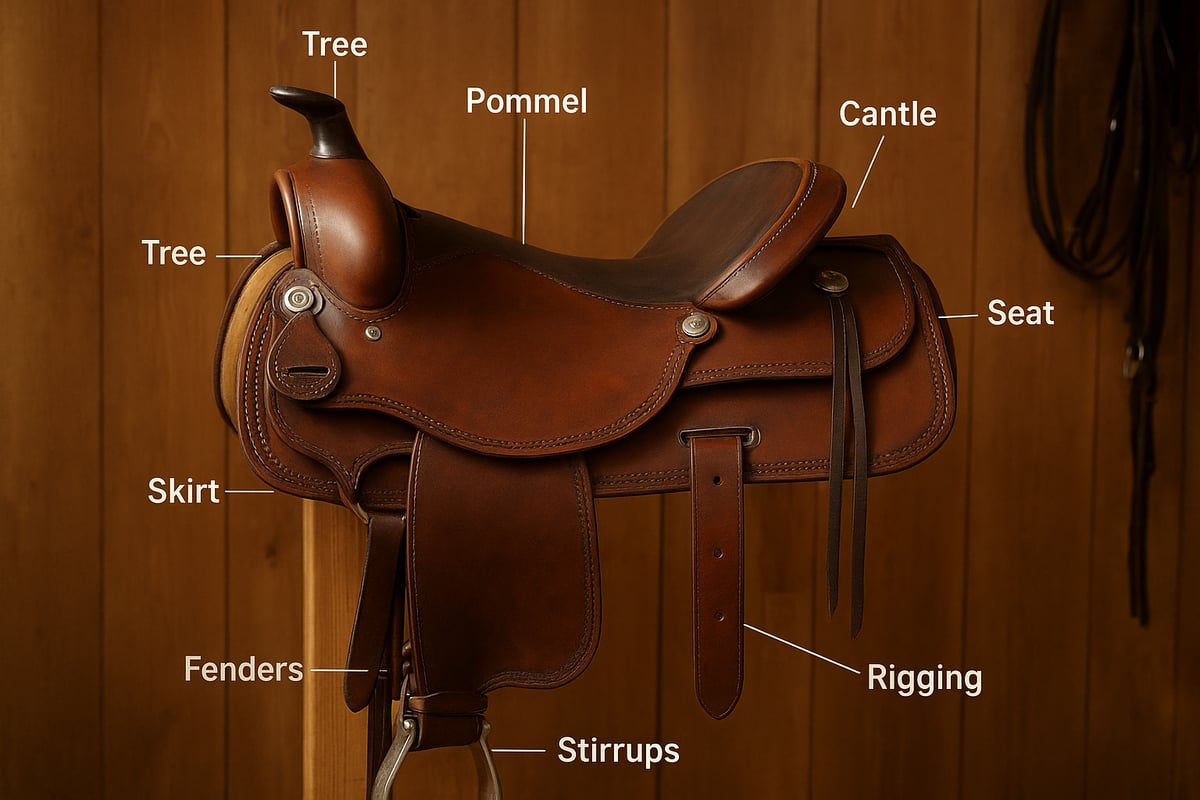
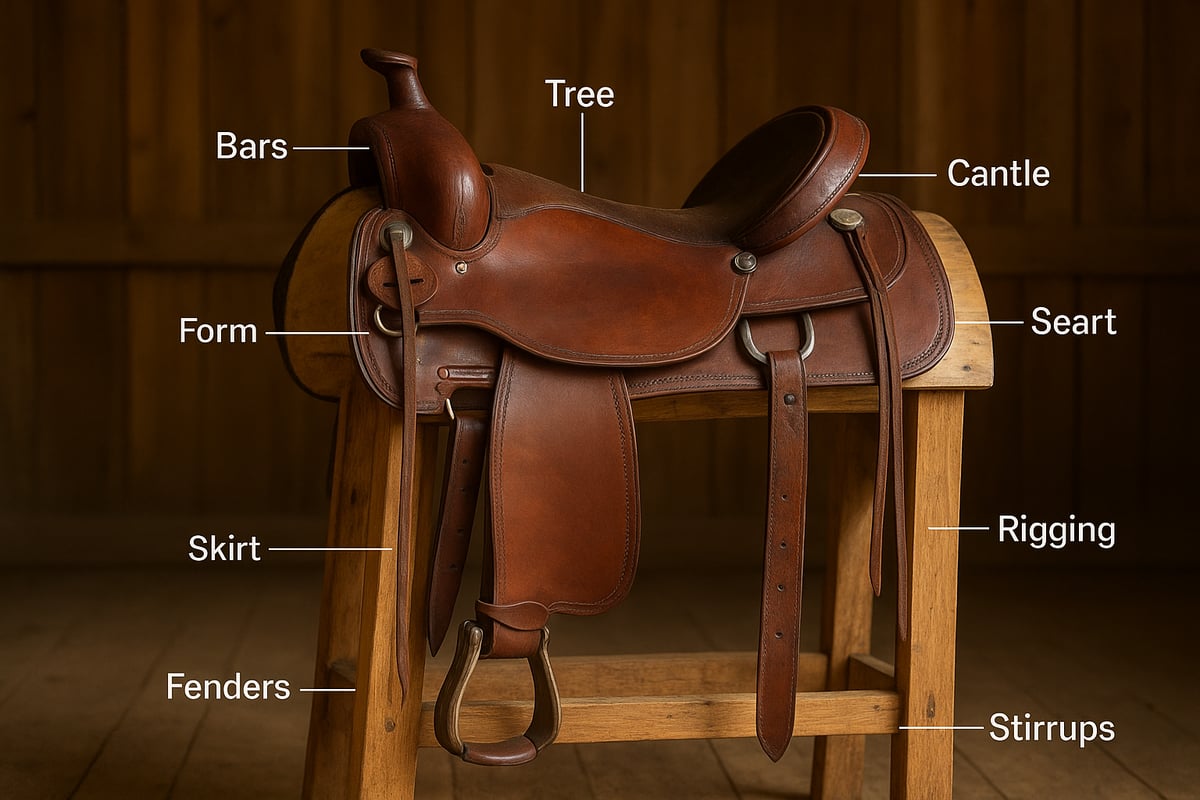
The anatomy of western saddle parts can seem complex at first glance, yet each element has a defined purpose. Here is a breakdown of the core components:
- Tree: The internal framework, typically made from wood or synthetic materials, gives the saddle its shape and strength.
- Bars: Extensions of the tree that rest along the horse’s back, distributing the rider’s weight evenly to prevent pressure points.
- Pommel (Fork/Swell): The raised front area that provides wither clearance and forms the base for the horn.
- Cantle: The rear portion, offering back support and helping secure the rider in the seat.
- Horn: Originally designed as a roping aid, now used for balance and versatility in various disciplines.
- Seat: The area where the rider sits, designed for comfort and stability.
- Skirt: The large leather panels beneath the seat that help distribute pressure and often feature decorative tooling.
- Fenders: Wide leather straps protecting the rider’s legs and connecting the seat to the stirrups.
- Stirrups: Footrests attached to fenders, crucial for balance and rider security.
- Rigging: The system of straps and rings that attach the cinch, keeping the saddle secure on the horse.
These western saddle parts work in harmony to create a secure, comfortable platform for riding. For those seeking an in-depth visual guide, the Parts of a Western Saddle and their variations page offers detailed diagrams and further insights.
Unlike English saddles, western saddles have a horn and a more pronounced skirt, as well as wider fenders and a larger seat, all designed for the demands of ranch work and long hours in the saddle.
A common misconception is that the horn is purely decorative or only for roping; in reality, it now serves multiple purposes, from stabilizing the rider to assisting with gear handling. Remember, every part is interconnected. If the tree is compromised, the entire saddle’s function and the horse’s comfort are at risk.
What Does Each Saddle Part Do?
Each of the western saddle parts is engineered for a specific function, contributing to the overall performance and safety of horse and rider.
- Tree: Acts as the backbone of the saddle, and its material (wood, rawhide, fiberglass, or synthetic) affects fit, durability, and weight. A well-designed tree prevents pressure points and supports even weight distribution.
- Bars: Sit along the horse’s back, contouring to its shape to maximize comfort and minimize soreness.
- Pommel/Fork: Ensures rider security and acts as the anchor for the horn, while also keeping the saddle elevated above the horse’s withers.
- Cantle: Its height and curvature determine the amount of back support and influence posture, which is critical for long rides or competitive events.
- Horn: Varies in size and shape according to discipline; for example, a sturdy, substantial horn is essential for roping, while a smaller horn is preferred in barrel racing for easier maneuverability.
- Skirt: Shields the horse from direct contact with the rigging and helps spread out the pressure from the rider's weight.
- Fenders: Provide leg protection and allow the stirrups to swing, aiding in balance and shock absorption.
- Stirrups: Made from metal, wood, or composites, they help maintain balance and can include safety features for quick release.
- Rigging: Determines how the saddle is cinched, impacting both security and the horse’s freedom of movement.
In show settings, the cantle and skirt might be more ornate, while ranch saddles prioritize ruggedness and utility. Trail riders often select western saddle parts that focus on comfort and adjustability, illustrating how each component adapts to the rider’s needs.
From Cowboy Classics to Modern Designs
The story of western saddle parts is deeply rooted in both necessity and tradition. Over centuries, each component has been shaped by the demands of riders, evolving to meet the needs of ranch work, military use, and sport. Understanding this evolution helps riders appreciate the design and function behind every detail.
A Brief History of the Western Saddle
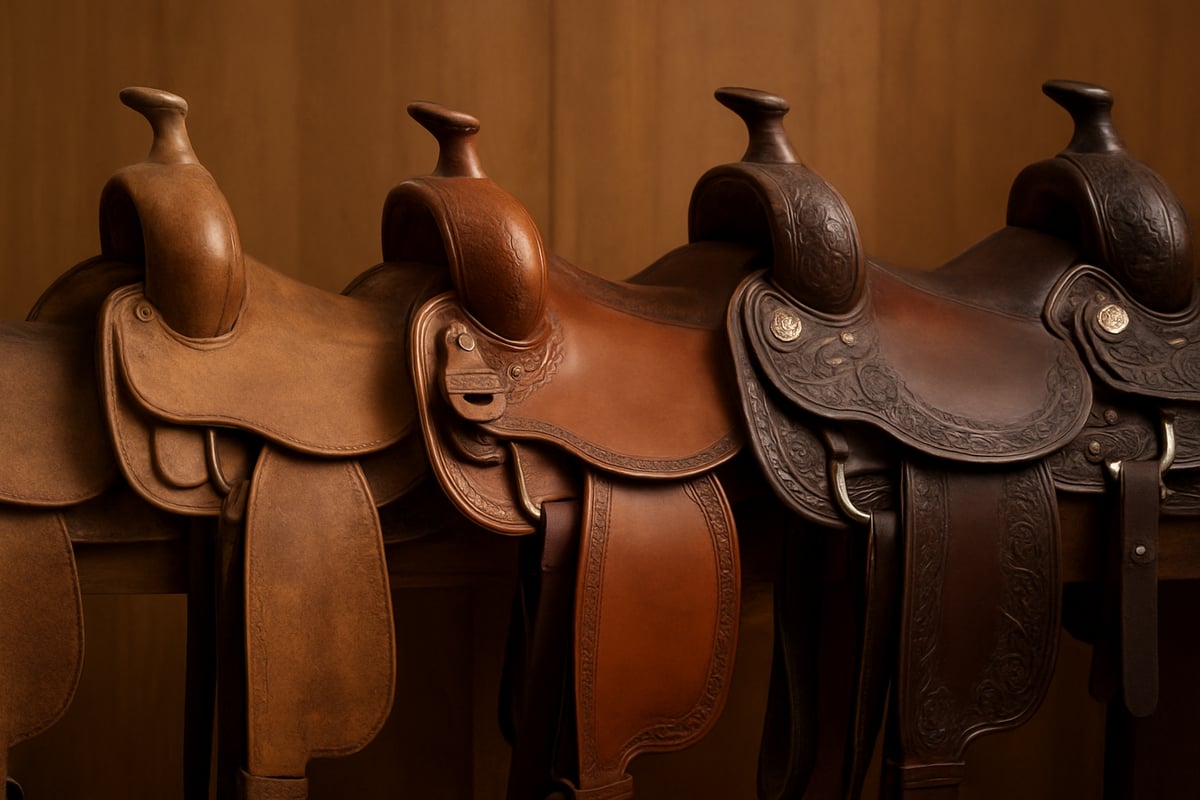
Western saddle parts trace their origins back to the 8th century, when Moorish riders introduced saddles with substantial forks and cantles for stability. These early designs prioritized security and weight distribution, laying the groundwork for future advancements.
By the 16th century, Spanish vaqueros in the Americas began adding horns to their saddles. This innovation enabled efficient roping of cattle, fundamentally changing ranch work. The horn quickly became a defining feature of western saddle parts, symbolizing the practical evolution of design.
In the 1850s, U.S. military needs spurred the creation of the McClellan saddle. Lightweight and durable, it featured minimal skirts and a unique tree, influencing western saddle parts for decades. The Pony Express riders of the 1860s relied on specially crafted saddles optimized for speed, quick changes, and endurance, showcasing how function dictated form.
Modern times have seen the emergence of highly specialized saddles for roping, barrel racing, trail riding, and show events. Each discipline has driven subtle yet significant changes in western saddle parts, from reinforced horns for ranch work to lightweight fenders in barrel racing.
For a deeper dive into the historical development and anatomy of western saddle parts, see the Western saddle anatomy and function resource.
The Vaquero Influence: More Than Just a Horn
The western saddle’s most iconic feature, the horn, wasn’t always part of the design. Its story begins with the Spanish vaqueros of the 16th century, who needed a more effective way to manage cattle from horseback. By adding a horn to the front of their saddles, they created a sturdy anchor point for roping, which completely changed the game for ranch work. This single innovation made their jobs safer and more efficient. The horn quickly became an essential tool, evolving from a simple post into the varied shapes and sizes we see today, each tailored to a specific discipline. It stands as a perfect example of how practical needs have shaped every component of western horse tack.
A Cowboy's Most Trusted Tool
More than just a piece of equipment, a western saddle is a cowboy's most trusted partner in the field. It’s a masterpiece of functional craftsmanship, where every single part serves a critical purpose. The design is a delicate balance, ensuring the rider stays secure and comfortable for long hours while also protecting the horse from injury by distributing weight evenly. This thoughtful engineering is why understanding each component is so important. When you know how the tree, rigging, and fenders work together, you can better appreciate the quality of a well-made saddle and ensure you’re providing the best possible care for your horse. It’s this commitment to expertise that we value above all else in our own family-owned business.
Fun Facts from the Pony Express
The evolution of western saddle parts is full of fascinating stories, including its connection to the U.S. military and the legendary Pony Express. In the 1850s, the military developed the McClellan saddle—a lightweight, durable design with a unique tree and minimal skirts that influenced saddle making for years. Just a decade later, Pony Express riders needed saddles built for pure speed and endurance. Their specialized gear was stripped down to the essentials, allowing for lightning-fast horse changes at relay stations. These historical examples show how function has always dictated form in the world of western saddles, a principle that continues to guide the design of modern riding equipment today.
Finding the Right Saddle for Your Discipline
Throughout history, diverse needs have led to a variety of western saddle types, each with unique features. The Vaquero saddle, for instance, is known for its high cantle and pronounced horn, tailored to traditional cattle work in the American West.
Stock saddles, popular in Australia and the American plains, offer robust construction and deep seats, supporting long days in the saddle. The McClellan saddle stands out for its open seat and lightweight frame, originally designed for cavalry use but still valued by endurance riders today.
The Pony Express saddle prioritized streamlined rigging and minimal weight, enabling rapid changes between horses. Each of these types highlights how western saddle parts adapt to specific jobs and regional preferences.
| Saddle Type | Key Features | Typical Use |
|---|---|---|
| Vaquero | High horn, deep seat | Roping, ranch work |
| Stock | Strong tree, deep cantle | Long rides, cattle |
| McClellan | Open seat, minimal skirt | Military, endurance |
| Pony Express | Lightweight, quick rigging | Speed, mail delivery |
Famous riders often customize their western saddle parts to reflect personal style and performance needs. Decorative tooling, silver accents, and specialized rigging are common ways to tailor a saddle for both function and identity. This customization tradition continues, allowing each rider to express their unique connection to the western riding heritage.
Details That Define: Stock and McClellan Saddles
When you're exploring different types of western saddles, you'll quickly notice that specific designs are tailored for very different jobs. Two great examples are the Stock and McClellan saddles, each with a unique history and purpose. The Stock saddle is a true workhorse, especially popular on the American plains and in Australia. It’s known for its incredibly robust construction and a deep, secure seat. These features are essential for anyone spending long hours riding, whether you're working cattle or covering rugged terrain. This design prioritizes durability and comfort, ensuring both you and your horse can handle a demanding day without issue. Its sturdy build is precisely why it's so valued for long days in the saddle, a detail highlighted by equestrian experts at the Center of the West.
On the other hand, the McClellan saddle has a distinct look born from a different need. Originally designed for military cavalry use, it features a lightweight frame and an open seat. This minimalist approach was perfect for soldiers, and today, it has found a dedicated following among endurance riders. The design allows for greater freedom of movement and reduces weight, which is a huge advantage over long distances. Its unique tree and minimal skirts have influenced western saddle design for decades, showing how a focus on pure function can create a timeless piece of equipment. Understanding these distinctions is key when you're selecting the right horse tack, as it ensures you get the performance and comfort your specific discipline demands.
Shop This Post

Featured in this article
Martin Saddlery Floral Angled Tooled Leather Knife Scabbard - Large 4 7/8in L x 4 3/8in W - Made in USA
$43.06
Shop Now →
Every Western Saddle Part, Explained
Understanding the full range of western saddle parts is essential for any rider aiming for comfort, safety, and optimal performance. Each part is thoughtfully designed and interconnected, ensuring the saddle functions as a secure bridge between rider and horse. Let us examine the core components and their purposes in detail.
The Foundation: Saddle Tree and Bars
The foundation of all western saddle parts is the saddle tree, which shapes the entire structure. Traditionally, trees are crafted from wood and then covered in rawhide, but modern innovations include fiberglass and synthetic composites for lighter weight and increased durability. The tree dictates the saddle's overall fit on the horse and the seat profile for the rider.
Bars are extensions of the tree that rest directly on the horse's back. Their design is crucial for distributing the rider's weight, preventing pressure points, and allowing for free movement. Proper bar contouring is vital, as poorly fitted bars can cause discomfort or even injury to the horse. In recent years, advances in tree technology, such as flexible polymers and pressure-mapping systems, have improved how western saddle parts interact with the horse's anatomy.
A well-designed tree and bars combination ensures stability, durability, and long-term comfort for both horse and rider. For example, rawhide-covered wooden trees found in museum collections highlight the craftsmanship and longevity that define quality western saddle parts.
The Rider's Support: Pommel, Cantle, and Horn
The pommel, sometimes referred to as the fork or swell, forms the front of the saddle and provides a secure anchor for the horn. It also offers essential wither clearance for the horse, enhancing comfort on long rides. The cantle, located at the back, gives critical support to the rider's lower back and helps maintain proper posture, which is especially important in disciplines requiring extended periods in the saddle.
The horn is one of the most recognized western saddle parts, evolving from a roping aid to a multipurpose feature. Horn shapes and sizes vary based on intended use. Roping saddles feature robust, upright horns for dallying a rope, while trail and show saddles may have lower, thinner horns for easy mounting and aesthetics. The synergy between the pommel, cantle, and horn defines the saddle's safety and usability, influencing rider technique and stability during dynamic maneuvers.
In ranch roping, the horn must withstand immense pressure, while in show settings, its design is often more decorative. This versatility in western saddle parts demonstrates how each element adapts to the rider's needs and chosen discipline.
The Gullet Hole: More Than Just Spine Clearance
Let's talk about the gullet—the channel running down the center of the saddle's underside. Its most important job is creating space for your horse's spine and withers, making sure nothing presses down on these sensitive areas. A properly sized gullet is essential for a comfortable fit; it must match your horse's unique build to prevent pinching or soreness. The opening at the front, often called the gullet hole, does more than just provide clearance. It also improves airflow to keep your horse cooler, slightly reduces the saddle's overall weight, and can even serve as a convenient handhold. It’s a perfect example of how every part of a western saddle is designed with both the horse's well-being and the rider's convenience in mind.
Connecting You to Your Horse: Skirt, Fenders, and Stirrups
The skirt is the large, often decorative, piece of leather extending beneath the saddle tree. It helps distribute pressure evenly and protects the horse from hardware contact. Tooling and decorative elements on the skirt often reflect the rider's personal style and regional traditions.
Fenders hang from the saddle's tree and shield the rider's legs from sweat and friction. Their adjustability is crucial for proper leg positioning, especially during fast-paced events like barrel racing or long trail rides. Stirrups, attached to the fenders, provide a stable platform for mounting, balance, and control. Today, riders can enhance comfort with products like Western saddle stirrup cushions, which offer additional shock absorption and reduce fatigue during extended rides.
The design of these western saddle parts significantly affects rider control and comfort. For example, fenders on barrel racing saddles allow for quick leg movement, while trail saddle fenders may be longer for added support. Each part works together to support the rider's performance and safety.
Adjusting Fenders for the Perfect Fit
Properly adjusted fenders are key to a comfortable and effective ride. Think of them as the bridge between your seat and your stirrups; if they aren't set correctly, your entire leg position can be thrown off. The goal is to have your leg hang naturally from your hip, with your heel slightly lower than your toe, directly under your center of gravity. To start, ensure the fender isn’t twisted, as this can cause uncomfortable pressure on your shins. The length should allow your knee to have a slight, relaxed bend when your foot is in the stirrup. This adjustment is crucial for preventing friction and fatigue, especially on longer trail rides where comfort is paramount. Getting this right ensures you can communicate clearly with your horse without fighting your equipment.
Setting Your Stirrups for Safety and Balance
Your stirrups provide the stable platform you need for balance and control, so setting them at the right length is non-negotiable for safety. A common guideline for western riding is to adjust the stirrup so the bottom rests at your ankle bone when your leg is straight. Once you’re in the saddle, you should have a comfortable bend in your knee, allowing your heel to drop naturally. This position helps absorb shock and keeps you secure during quick movements. If your stirrups are too long, you'll struggle to keep your feet in them; too short, and you'll be pushed back into the cantle with your knees bent too much. Fine-tuning this length based on your discipline and personal comfort will make a world of difference in your riding. For a full range of equipment, you can explore a variety of horse tack to find the perfect setup for you and your horse.
Keeping It Secure: Rigging, Cinches, and More
Rigging is the system that secures the saddle to the horse, consisting of rings, straps, and cinches. There are several types of rigging, including single, double, in-skirt, and 3-way, each affecting how the saddle sits and moves with the horse. The placement and material of the cinch, often made from mohair or synthetic fibers, are critical for both security and the horse's comfort.
Accessories such as breast collars, back cinches, and saddle strings add functionality and stability. Breast collars help keep the saddle from sliding backward, while back cinches provide extra security during rigorous work. Saddle strings allow riders to attach gear or accessories as needed, particularly in stock or working saddles.
Selecting the correct rigging and accessories is a vital aspect of understanding western saddle parts. For instance, side strings are invaluable for ranch riders needing to secure ropes or packs quickly. Modern innovations have introduced lightweight materials and ergonomic designs, further enhancing the functionality and safety of these essential components.
Cinch vs. Girth: A Quick Translation
If you've spent time in both Western and English riding circles, you've probably heard both "cinch" and "girth" used to describe the strap that goes under the horse's belly. While they sound different, their job is identical. So, what's the distinction? It's mostly a matter of vocabulary. A cinch is the term for this essential piece of horse tack in the Western world, while a girth serves the exact same purpose for English saddles. Both are designed to hold the saddle firmly in place, ensuring it remains stable and secure throughout your ride. Think of it as a simple translation between two different riding dialects—knowing the right term just helps you speak the language of your discipline.
Regardless of what you call it, this strap is a critical part of the saddle's rigging system. It works with the rigging rings and straps on your saddle to create a secure fit that keeps you and your horse safe. The material of the cinch is also incredibly important for your horse's comfort and to prevent painful chafing or sores. According to experts at the Center of the West, materials like mohair or synthetic fibers are popular because they are chosen for both security and comfort. Choosing the right one ensures your horse stays comfortable on the trail or in the arena, which is just as important as keeping your saddle secure.
What Goes Into a Modern Western Saddle?
The evolution of western saddle parts reflects a blend of tradition and innovation. Riders in 2026 benefit from a rich variety of materials, construction methods, and high-tech enhancements. Understanding these elements is crucial for selecting the right saddle for your needs.
Leather vs. Synthetic: Which Is Better?
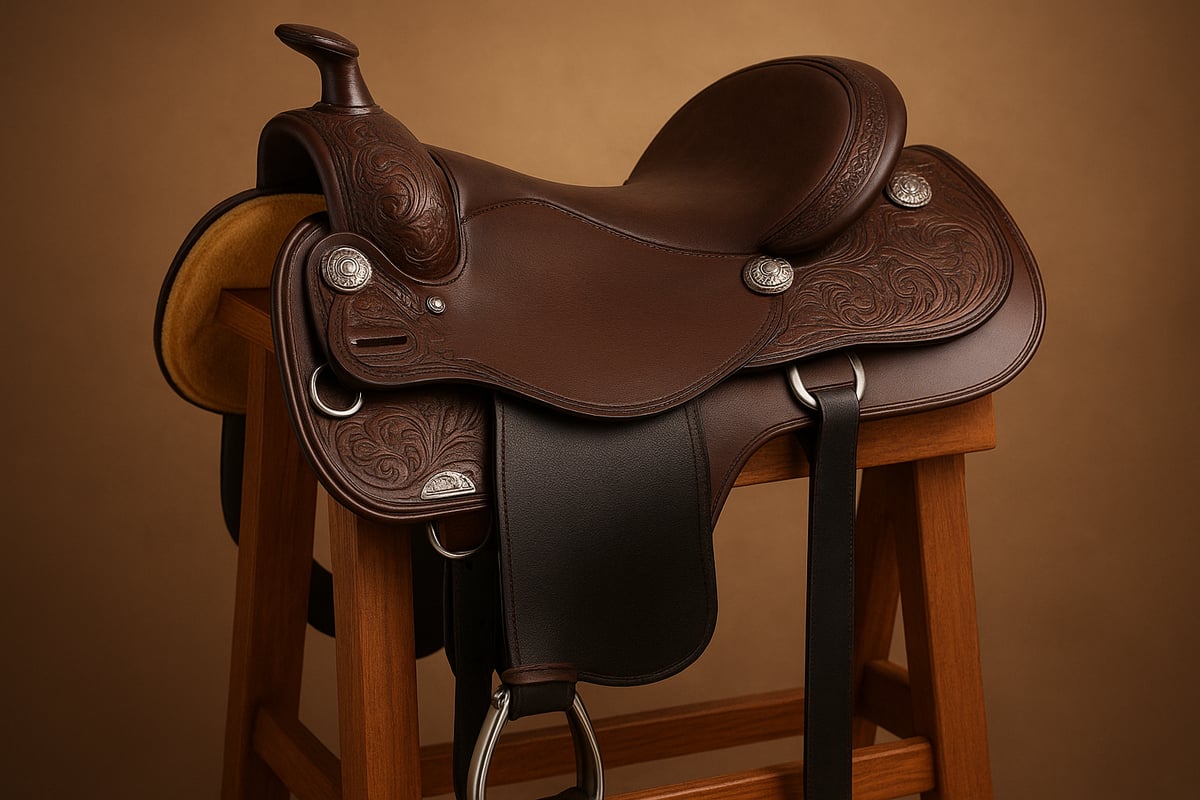
Western saddle parts have long been crafted from premium leather, prized for its durability, flexibility, and classic appearance. Skilled artisans choose hides for strength, then treat and tool them for longevity and beauty. Traditional trees are typically made from wood, often covered in rawhide for extra resilience. Hardware such as stirrup buckles and rigging rings has historically used stainless steel or brass for corrosion resistance.
Today, synthetic materials like Cordura and nylon are becoming common in western saddle parts, offering lightweight alternatives with less upkeep. Modern trees may be constructed from fiberglass or advanced composites, balancing strength with reduced weight. The choice of cinch material also matters. For example, Mohair roper cinches explained highlights the comfort and breathability of natural fibers, which remain a staple in quality saddle construction.
| Material | Traditional Use | Modern Alternatives |
|---|---|---|
| Leather | Saddle body, seat | Synthetic fabrics, vegan |
| Wood (tree) | Foundation | Fiberglass, composites |
| Brass/Steel | Hardware | Aluminum, stainless steel |
| Mohair | Cinches | Neoprene, synthetics |
The diversity in western saddle parts materials allows riders to balance tradition, performance, and personal preference.
How Technology Is Changing Saddles
Recent years have brought remarkable advances to the construction of western saddle parts. Ergonomically shaped seats and skirts are now engineered for both horse and rider comfort, reducing fatigue on long rides. Pressure-mapping technology enables custom-fit saddles, ensuring even weight distribution and minimizing sore spots.
Eco-friendly innovations are on the rise, with manufacturers sourcing sustainable leathers and recycling synthetic components. Smart saddles, equipped with embedded sensors, can now track rider balance, monitor pressure points, and provide data for optimizing fit. These technologies are changing how riders approach saddle selection and maintenance.
Some standout innovations include:
- Custom-contoured trees for unique horse anatomy
- Quick-change rigging systems for discipline versatility
- Removable and washable seat covers for hygiene
- Smart pads that collect and analyze ride data
These advancements in western saddle parts empower riders to achieve greater comfort, safety, and performance than ever before.
Tooling, Silver, and Custom Options
Personalization is a hallmark of western saddle parts, with decorative elements reflecting the rider’s style and heritage. Classic tooling, intricate silverwork, and hand-engraved conchos remain popular for those seeking traditional appeal. In 2026, laser engraving and custom color options are trending, allowing for unique designs that set each saddle apart.
Customization extends beyond looks. Riders can order western saddle parts tailored for their discipline, body shape, and even their horse’s anatomy. Popular options include:
- Personalized seat shapes and depths
- Custom fender lengths for optimal leg position
- Engraved nameplates or logos
- Decorative stitching and colored inlays
Modern western saddle parts offer a blend of artistry and functionality, ensuring every rider can express their identity while maintaining superior performance.
How to Choose the Perfect Western Saddle
Selecting the right western saddle parts is essential for every rider aiming for peak performance, comfort, and safety. The right combination of fit, stability, and care ensures both horse and rider enjoy every ride, whether on the ranch, trail, or in the show ring.
How to Check Saddle Fit for Horse and Rider
Achieving the ideal fit with your western saddle parts starts by measuring your horse’s back and withers. A proper fit distributes weight evenly, preventing pressure points and discomfort. Riders should also consider seat size and shape, as these influence posture and discipline suitability.
The bars of the saddle must conform to the horse’s back, while the gullet provides adequate wither clearance. If the western saddle parts do not align, you might notice behavioral issues, sore spots, or reluctance to move forward. Always check the bar angle and length, as these are key indicators of fit.
For enhanced comfort and to protect your horse’s back, consider using contoured western saddle pads. These pads are designed to complement the shape of modern western saddle parts, offering extra cushioning during long rides.
A well-fitted saddle improves rider security and horse welfare, making it a crucial investment for anyone passionate about Western riding.
Common Saddle Mistakes to Avoid
Safety begins with regular inspection of all western saddle parts. Check rigging, cinches, and hardware for signs of wear, cracks, or looseness. Proper cinch placement is vital, as an insecure saddle can lead to dangerous shifts during movement.
One common error is overlooking the importance of saddle stability. Rigging and cinch systems secure the saddle, but their placement and condition directly affect both rider and horse safety. For an in-depth look, see the explanation of girth and cinch roles in saddle security. This resource details how proper cinch use supports safe riding and healthy movement.
Always mount and dismount with caution, keeping weight balanced and posture correct. Improperly adjusted western saddle parts, such as loose stirrups or misaligned fenders, can increase the risk of falls. The horn and cantle are designed to help prevent accidents, especially in sudden stops or rough terrain.
Why Western Saddles Are Great for Beginners
If you're just starting your riding journey, a Western saddle is an excellent choice. It’s designed to offer more security, thanks to its deep seat and high cantle, which help you feel stable and supported. Many beginners find the horn to be a great confidence builder; while its origins are in roping, it provides a reliable handhold to help you maintain balance as you get comfortable in the saddle. Western saddles are also generally bigger and heavier, which helps distribute your weight more evenly across the horse's back. This design not only improves stability but also adds comfort, making it easier to enjoy longer rides while you build your skills and endurance. It’s a forgiving and secure option that lets you focus on learning the fundamentals of riding with peace of mind.
Saddles in the Show Ring: Know the Rules
When you're ready to enter the show ring, it's important to know that not all western saddle parts are created equal. Most competitions, like those governed by the Western Dressage Association, require you to use a standard American Western stock saddle. This means your saddle must have specific components: swells, a seat, a cantle, a skirt, fenders, and Western-style stirrups. Interestingly, a horn is often optional, and you are usually allowed to add extra padding to the seat for comfort. Remember that functionality and fit are far more important than flashy decorations. A well-made, plain working saddle is always valued over one covered in silver, so focus on quality horse tack that fits both you and your horse correctly.
A Look at Western Dressage Regulations
For disciplines like Western Dressage, the rules are very specific to maintain the integrity of the sport. To ensure you’re compliant, you need to know which saddles are forbidden. According to the Western Dressage Association's guidelines, you cannot use Australian, Baroque, English, McClellan, or Spanish saddles in competition. However, the rules do allow for some flexibility with optional features. You can choose to use a saddle with or without a horn, add extra padding for comfort, and even include bucking rolls for additional security in the seat. Understanding these regulations ahead of time ensures your equipment is appropriate for competition, allowing you to focus on your performance.
How to Care for Your Western Saddle
Maintaining your western saddle parts extends the life of your equipment and ensures ongoing safety. Clean and condition leather regularly to prevent drying and cracking. Synthetic components should be wiped down to remove sweat and dirt.
Inspect stirrups, fenders, and rigging for wear, replacing any damaged components promptly. Store saddles in a dry, cool place to avoid warping and mildew. Schedule professional inspections annually, especially if you ride frequently or notice any changes in saddle performance.
Routine care not only protects your investment but also safeguards the comfort and health of both horse and rider. By making maintenance a habit, you maximize the longevity and reliability of all western saddle parts.
Completing Your Tack Setup
A great saddle is the heart of your setup, but a few key accessories are essential for a safe and comfortable ride. These pieces work with your saddle to ensure stability for you and well-being for your horse. From protecting your horse’s back to securing your saddle on steep terrain, the right additions complete your tack and prepare you for any adventure.
Saddle Pads: The Unsung Hero of Comfort
A quality saddle pad is one of the most important investments you can make for your horse’s comfort. It sits between the saddle and your horse’s back, serving multiple purposes: it absorbs shock, wicks away sweat, and protects the saddle’s leather from dirt and moisture. Most importantly, it provides an extra layer of cushioning and helps distribute pressure evenly, preventing sore spots and friction. With so many materials and styles available, from traditional wool felt to modern therapeutic foam, you can choose a pad that perfectly suits your horse’s needs and your riding discipline, ensuring a better experience for everyone.
Breast Collars: Keeping Your Saddle Secure
A breast collar is a crucial piece of equipment for keeping your saddle stable, especially during demanding activities. This strap runs from the D-rings on your saddle, across the horse’s chest, and connects between the front legs to the cinch. Its main job is to prevent the saddle from sliding backward when you’re climbing steep hills, making quick stops, or performing athletic maneuvers like those in roping or barrel racing. By adding this extra point of security, a breast collar ensures your saddle stays right where it should be, giving you more confidence and keeping your horse comfortable. It’s a simple but highly effective tool for any serious rider’s tack collection.
Bridles and Headstalls: Guiding Your Ride
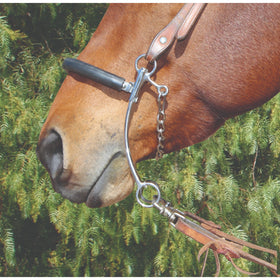
The bridle is your primary line of communication with your horse, making it essential for control and direction. It consists of the headstall, which fits over the horse’s head, the bit that rests in its mouth, and the reins you hold. A well-fitted bridle is critical for clear communication; if it’s too tight or loose, it can cause discomfort and lead to resistance or confusion. A proper fit ensures your horse remains responsive and comfortable, which makes for a much more enjoyable and safer ride for both of you. Taking the time to choose and adjust your bridle correctly is fundamental to building a strong partnership with your horse and is an essential part of a complete saddle setup.
Frequently Asked Questions About Western Saddle Parts
Curious about the unique aspects of western saddle parts? This FAQ section addresses the most pressing questions riders have in 2026, helping you make informed decisions for your riding journey.
Western vs. English Saddles: What's the Difference?
The main differences between western saddle parts and English saddles are found in their structure and intended use. Western saddles feature a horn, deep seat, larger skirts, and fenders for leg protection, while English saddles are lighter, have smaller flaps, and lack a horn. Western saddles are designed for long hours and rugged work, offering greater security and comfort for ranch tasks. In contrast, English saddles prioritize close contact with the horse for jumping, dressage, or flatwork. Understanding these distinctions helps riders choose the best equipment for their discipline.
Why Does a Western Saddle Have a Gullet?
The gullet is a crucial part of western saddle parts, running beneath the fork and over the horse’s withers. Its purpose is to provide clearance for the horse’s spine, preventing pressure and discomfort. A properly sized gullet ensures weight is distributed evenly across the bars, reducing the risk of soreness or injury. Riders should always check that the gullet does not pinch or rest on the withers, as this is a common cause of equine back issues. The gullet is a hallmark of thoughtful saddle design.
Where Did the Western Saddle Come From?
The design of western saddle parts evolved over centuries, but its roots trace back to Spanish vaqueros in the 16th century. These skilled horsemen adapted Moorish and Iberian saddles, adding features like the horn for roping cattle. The western saddle as we know it today emerged as American cowboys modified these designs for ranch work. No single individual invented it, but the western saddle is a product of cultural innovation and necessity on the open range.
What Are Western Saddles Made Of?
Traditional western saddle parts are crafted from high-quality leather, valued for its durability and comfort. However, modern saddles increasingly use synthetics like Cordura or nylon to reduce weight and cost. Saddle trees can be made from wood, fiberglass, or composites, each offering different benefits in strength and flexibility. Hardware is typically stainless steel or brass for longevity. Leather remains the most popular choice, but advances in materials provide more options than ever before.
Which Type of Western Saddle Do I Need?
There are several types of western saddle parts, each tailored to specific riding activities:
- Roping saddles: Built strong, with a reinforced horn.
- Barrel racing saddles: Lightweight and compact for speed.
- Trail saddles: Designed for comfort over long distances.
- Show saddles: Feature elaborate tooling and silver accents.
- Ranch saddles: Heavy-duty, suitable for all-around ranch work.
Each type prioritizes different features to match the demands of the discipline or rider preference.
Key Signs of a Good (and Bad) Saddle Fit
Proper fit is essential for both horse and rider. Signs of a good fit include even contact along the bars, adequate gullet clearance, and no pinching or bridging. Watch for behavioral changes in your horse, such as resistance or soreness, which may indicate poor fit. Always assess fit with a saddle pad and while mounted. Accessories like breast collars for western saddles can help stabilize the saddle, especially on challenging terrain.
What to Look for in Your First Western Saddle
When choosing western saddle parts for the first time, consider:
- Sturdy tree material and solid construction.
- Quality leather or reputable synthetic materials.
- Well-secured stitching and hardware.
- The right seat size for your body.
- Fit for your horse’s shape and intended use.
Consult with experienced riders or saddle fitters before purchasing. Investing in quality ensures safety, comfort, and the longevity of your saddle.
Now that you have a clear understanding of every western saddle part and how each one impacts your riding experience, you are better equipped to make choices that prioritize comfort, safety, and performance for you and your horse. If you are ready to put your new knowledge into action and invest in high quality equestrian gear, I recommend exploring the carefully curated selection at Hooves and Paws. With their longstanding expertise, free US shipping, and flexible payment options, you can confidently find the perfect saddle and accessories for your needs. Take the next step and Buy Now.
Key Takeaways
- Know Your Saddle's Anatomy: Understanding how each component—from the tree to the rigging—functions is key to selecting the right saddle and ensuring both your comfort and your horse's safety.
- Fit is Non-Negotiable: The most important factor is a proper fit for both you and your horse. A well-fitted saddle distributes weight evenly, prevents soreness, and provides the stability you need to ride with confidence.
- Choose the Right Tool for the Job: Different riding disciplines require different saddle features. Match your saddle to your activity, whether it's a lightweight design for barrel racing or a rugged build for ranch work, to get the best performance.


