


Does your horse pin their ears when you tack up or seem reluctant to move forward? It’s easy to label this as a behavioral problem, but these actions are often cries for help. An ill-fitting saddle is one of the most common—and overlooked—causes of discomfort and performance issues. Before you assume the problem is training-related, you must rule out pain. This guide will walk you through exactly how to measure a horse for a saddle, giving you the tools to find the root cause and ensure your equipment isn't the source of the problem.
Key Takeaways
- Accurate measurements are non-negotiable: Learning how to properly take a wither tracing and measure your horse's back length is the foundation for finding a saddle that prevents pain and distributes pressure evenly.
- Saddle fit isn't a one-time task: Your horse's body changes with age and conditioning, so make it a habit to re-check the fit regularly and pay close attention to physical signs like uneven sweat patterns or behavioral changes.
- Know when to ask for help: A professional saddle fitter is an invaluable resource, especially for horses with tricky conformations or when you feel unsure; their expertise is a direct investment in your horse's long-term health and comfort.
Why a Perfect Saddle Fit Matters for You and Your Horse
Think of your saddle as the most important piece of communication between you and your horse. It’s more than just a piece of equipment; it’s the bridge that connects you both. When that bridge doesn’t fit correctly, it can cause a host of problems that affect your horse’s health, behavior, and performance, not to mention your own safety in the saddle.
An ill-fitting saddle can create painful pressure points, restrict shoulder movement, and rub the skin raw. Over time, this discomfort can lead to serious back problems and even long-term injuries. You might notice clear signs like uneven sweat patterns after a ride, dry spots where the saddle is pinching, or patches of white hair. Your horse might also tell you something is wrong through their behavior, such as flinching when you tack up, bucking, or being reluctant to move forward. These aren’t signs of a bad attitude; they’re often cries for help.
This isn’t just about your horse’s comfort, either. A saddle that pinches or bridges will never sit securely, which can throw off your balance and make for an unstable, and frankly, unenjoyable ride. The right piece of horse tack should make you feel secure, allowing you to give your horse clear signals. The serious consequences of a poor fit can impact both of you.
Taking the time to measure properly ensures your horse is comfortable, happy, and willing to work with you. It’s a fundamental step in building a strong partnership and is the foundation for countless safe and successful rides together.
Your Saddle Measurement Checklist: Tools You'll Need
Before you head out to the barn, let's get everything you need in one place. Having the right tools ready will make the measuring process smooth, simple, and much more accurate. Don't worry, you don't need a lot of fancy or expensive equipment. Most of these items are probably already in your home or tack room.
Here’s what you’ll want to have on hand:
-
A Flexible Measuring Tape: A soft, cloth or plastic measuring tape (like one used for sewing) is perfect. You'll use this to measure your horse's back length and find their girth measurement. A rigid metal tape measure won't conform to your horse's curves, so leave that one in the toolbox.
-
A Wither Tracing Tool: This is the most important tool for capturing the unique angle and width of your horse's withers. You have a couple of great options here. You can use a 16- to 20-inch piece of stiff but bendable wire (like soldering wire) that will hold its shape once you mold it. Alternatively, a flexi-curve, which you can find at most art or office supply stores, works beautifully.
-
Paper and a Pen or Pencil: You'll need something to transfer your wither tracing onto. A large sheet of paper, a piece of cardboard, or a notepad will work just fine. This creates a template you can use when comparing your horse's measurements to different saddles. Getting the right fit is a key part of selecting your horse tack, and this tracing is your roadmap.
-
A Helper (Optional, but Recommended): Measuring a horse is much easier with an extra set of hands. Ask a friend to help hold your horse steady while you focus on getting precise measurements. They can also hand you tools and help keep your horse calm and relaxed throughout the process.
How to Prep for a Stress-Free Measurement
Before you even think about grabbing a measuring tape, take a moment to prepare your horse and your space. An accurate measurement depends on a horse that is relaxed and standing correctly. If your horse is tense, fidgety, or standing on uneven ground, their muscles will be engaged differently, which can throw off your numbers and lead to a poor saddle fit. Taking a few extra minutes to create a calm, controlled environment is one of the most important steps in this entire process. It ensures the measurements you take truly reflect your horse’s natural shape, setting you up for success in finding the perfect saddle.
Keep Your Horse Calm and Happy
Your horse is incredibly perceptive and often mirrors your energy. To get a true measurement, you need them to be as relaxed as possible. Start by making sure you are calm and composed. Speak in a soothing voice and offer gentle strokes to provide reassurance. Avoid any sudden movements or loud noises that could startle them. If you approach the task with patience, your horse is much more likely to stand quietly for you. Think of it as a quiet grooming session rather than a formal procedure. This calm connection is the foundation for getting the job done right.
Get the Perfect Stance: How to Position Your Horse
For your measurements to be accurate, your horse must be standing square on a flat, level surface. This means their weight should be evenly distributed on all four feet, with their legs perpendicular to the ground. Their head and neck should be in a neutral, relaxed position, not raised high in alert or lowered to graze. If your horse starts to move or get distracted, don't fight them. Instead, calmly use a direct rein to guide them in a small circle and bring them back to a standstill. Having quality horse tack like a comfortable halter and lead rope can make this process much smoother.
Find a Level, Distraction-Free Space
Where you measure is just as important as how you measure. Choose a location that is familiar and quiet for your horse, away from the hustle and bustle of barn traffic, other animals, or loud equipment. A familiar grooming stall or a quiet part of the arena works well. If you plan to measure at a new location, try to visit it with your horse beforehand so they can get comfortable. The goal is to minimize potential distractions and stressors. A horse that feels safe in its surroundings is more likely to stand still, allowing you to gather precise and reliable measurements for their new saddle.
Finding the Right Fit for the Rider
While we spend a lot of time making sure a saddle fits our horse perfectly, it's easy to forget the other half of the equation: the rider. A saddle that doesn't fit you correctly can be just as problematic as one that doesn't fit your horse. If the seat is too small, you'll feel cramped and perched on top of the saddle rather than sitting securely in it. If it's too large, you'll slide around, struggling to maintain your balance and a stable leg position. This instability doesn't just affect your confidence; it directly impacts your horse. An unbalanced rider means uneven weight distribution, which can cause the saddle to shift and create pressure points, undoing all your hard work in fitting it to your horse's back.
Finding the right fit for you is about more than just comfort—it's about clear communication and safety. When your saddle supports you in a balanced, correct position, you can give subtle, precise aids with your seat and legs. Your horse can understand these signals much more easily than the mixed messages that come from a rider who is constantly fighting to stay in place. A proper fit allows you to be a quiet, effective partner for your horse. The following steps will help you determine your own measurements so you can find a saddle that makes both you and your horse happy, comfortable, and ready to perform your best together.
How to Measure Your Thigh for Saddle Seat Size
Before you can find the right saddle, you need to know your own measurements. The most reliable way to determine your ideal seat size is by measuring your upper leg. To do this, sit in a chair with your feet flat on the floor and your knees bent at a 90-degree angle, as if you were sitting in a saddle. Use a flexible measuring tape and measure the distance from the back of your buttock to the front of your kneecap. This thigh measurement is the best starting point for figuring out what seat size you need. You can then compare this measurement to the sizing charts provided by saddle manufacturers to find your recommended size, whether you're looking for an English or Western saddle.
How to Measure the Saddle Seat Itself
Once you have your personal measurement, you'll need to know how to measure a saddle to see if it's a match. The method for measuring a saddle seat is different depending on whether it's an English or Western model. It’s a straightforward process, but you need to know the correct start and end points to get an accurate number. This is especially important when you're shopping online or considering a used saddle that you can't sit in first. Knowing how to measure the seat yourself gives you the power to assess a saddle's fit for you from anywhere.
Measuring an English Saddle
To measure an English saddle, you'll need your flexible measuring tape. Start at one of the small metal buttons, often called a nail head, located on the side of the pommel (the front, raised part of the saddle). Stretch the tape measure in a straight line diagonally across the seat to the very center of the cantle (the raised part at the back). This measurement, in inches, is the English saddle's seat size. For example, a common size for an average adult is 17 or 17.5 inches.
Measuring a Western Saddle
Measuring a Western saddle is slightly different. Place the end of your measuring tape at the base of the horn, right where it connects to the pommel swell. Pull the tape straight back across the seat until you reach the front edge of the cantle, right where the padded seat material ends and the cantle begins to rise. This distance is the Western saddle's seat size. It's important to keep the tape straight and not let it dip into the curve of the seat to get an accurate reading.
Understanding Key Sizing Differences
Getting the measurement is just the first step. To truly find the right fit, you need to understand a few key differences in how saddles are sized and how they feel. The number on the tag doesn't always tell the whole story, especially when comparing different styles or even different brands within the same style. Details like the discipline a saddle is designed for, the depth of the seat, and even the amount of padding can change how a saddle feels to the rider. Being aware of these nuances will help you make a more informed decision and avoid the frustration of a saddle that measures correctly but just doesn't feel right.
English vs. Western Saddle Sizing
One of the most important distinctions to remember is that English and Western saddles are not sized on the same scale. As a general rule, an English saddle's seat size is about two inches larger than its Western equivalent. For example, if you ride in a 15-inch Western saddle, you would likely need a 17-inch English saddle. This two-inch difference is a crucial piece of information to keep in mind if you ride in both disciplines or are switching from one to the other, ensuring you're always looking for the right size.
Western Saddles: Tree Size vs. Finished Seat Size
When it comes to Western saddles, there can be a slight difference between the size of the internal saddle tree and the final, finished seat size you actually sit on. The padding added to the seat can reduce the usable space by up to half an inch. This means a saddle built on a 16-inch tree might have a finished seat that feels more like 15.5 inches. It's a small but significant detail that can affect your comfort, so it's always best to sit in a saddle if you can.
How Cantle Depth Affects Western Saddle Fit
The shape of the cantle on a Western saddle can dramatically change how the seat feels, even if the measured size is the same. A saddle with a deep, steep cantle will hold you in place more securely, which can make the seat feel smaller and snugger. In contrast, a saddle with a lower, more open cantle provides more room to move and can make the same seat size feel larger. This is largely a matter of personal preference, but it's an important factor to consider when choosing from the wide variety of horse tack available.
Why a Poor Rider Fit Impacts Your Horse
Ultimately, finding a saddle that fits you is another way of taking care of your horse. When you're comfortable and balanced, you can be a better partner. A saddle that is too big or too small forces you into an incorrect position, causing your weight to shift and concentrate in the wrong areas. This can make the saddle panels press unevenly on your horse's back, creating soreness and restricting their movement, particularly in the shoulders. Even a perfectly fitted saddle can cause problems if the rider's instability is making it bridge or rock. A secure, well-fitting saddle for the rider is the final piece of the puzzle, ensuring that you and your horse can move together in harmony.
Shop This Post

Featured in this article
Professional's Choice 2XCOOL Sports Medicine Horse Boots - 4-Pack Neoprene-Free with Kevlar Support & brrr° Cooling
$159.23
Shop Now →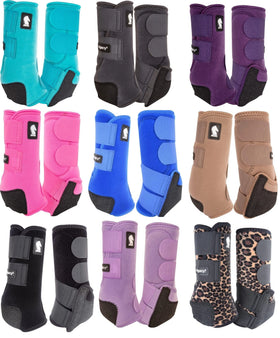

How to Measure Your Horse for a Saddle: A Step-by-Step Guide
Getting the right measurements is the foundation for finding a saddle that feels like it was made for your horse. It’s a process that requires a bit of patience, but taking the time to do it correctly will pay off in your horse’s comfort and performance. These five steps will walk you through exactly what to measure and how to do it, giving you the key numbers you need to choose the perfect piece of horse tack. Let’s get started.
Step 1: Measure the Back Length
First, let's determine the available space for the saddle on your horse's back. Grab a flexible tape measure and place one end at the back edge of your horse’s shoulder blade, just behind the withers. Extend the tape along their spine, stopping at the last rib. You can find the last rib by gently pressing along your horse’s side. It’s important not to measure past this point, as any part of the saddle resting beyond it can put pressure on the sensitive loin area. This measurement defines the maximum length the saddle’s panels or bars can be, ensuring weight is distributed only over the supportive structures of the back.
Step 2: Create a Wither Tracing
Next up is the wither tracing, which helps you understand the angle and width of your horse’s front. You’ll need a flexible ruler, a piece of wire, or even a straightened wire coat hanger for this. Place your tool about two inches behind the shoulder blade, where the front of the saddle tree would sit. Carefully mold it over the withers to match their exact shape. Then, lift it off without changing its shape and trace the inside edge onto a piece of cardboard. This tracing is a template for the saddle’s gullet angle, helping you avoid a fit that’s too tight and pinches the withers.
Getting Key Measurements from Your Tracing
Once you have the tracing on paper, you can pull some key numbers from it. The most important measurement is the gullet width. To find this, measure straight across from one side of the tracing to the other, about three inches down from the top center point. This width directly corresponds to the saddle's tree size—for example, what manufacturers refer to when they label saddles as semi-quarter, full-quarter, or extra-wide. This single measurement is your best tool for preventing a saddle that pinches the withers, which is a common source of pain and resistance. Having this precise number makes it much easier to sort through different pieces of horse tack and quickly rule out saddles that won't work for your horse's specific build.
Step 3: Map the Curve of Your Horse's Back
For a more detailed picture of your horse’s back, a flexi-curve (often found at art or office supply stores) is an excellent tool. This step helps you see the overall contour and any dips or curves along the spine. Place the flexi-curve along your horse’s back where the saddle would sit, molding it from the withers to the last rib. Just like with the wither tracing, carefully lift it and transfer the shape to paper. This "map" is incredibly useful for assessing if a saddle’s panels will make even contact all the way down, preventing pressure points and bridging, which is when the saddle only touches at the front and back.
Taking Multiple Tracings for a Complete Picture
A saddle fitting isn't a one-and-done task. Think of it as an ongoing conversation with your horse. Their body is constantly changing due to age, seasonal weight shifts, and especially conditioning. As you work together, your horse will build muscle along their topline, which can completely alter the shape you traced just a few months ago. A saddle that fit like a glove last spring might be pinching by the fall. To stay ahead of these changes, make it a habit to take a new set of wither and back tracings every few months, or whenever you make a significant change to their diet or exercise routine. This simple practice gives you a clear record of how your horse is developing and helps you catch potential fit issues before they can cause discomfort, ensuring your horse tack always supports a happy, healthy partner.
Step 4: Determine the Correct Gullet Width
The gullet is the channel that runs down the center of the saddle, and its purpose is to provide clearance for the spine. Using the wither tracing you already made, you can determine the ideal width. Measure the horizontal distance between the two ends of your tracing. This measurement corresponds to the gullet size, which is often described in terms like "semi-quarter horse bars" or "full quarter horse bars." A gullet that is too narrow will pinch the withers, while one that is too wide will cause the saddle to sit too low, putting pressure directly on the spine. Getting this right is essential for your horse’s freedom of movement.
Understanding Standard Gullet Widths
While your wither tracing gives you a custom measurement, it helps to know how that number translates to standard saddle sizes. Most manufacturers use a few common gullet widths as a starting point. Generally, a measurement of 5 to 5.5 inches is considered narrow, often fitting horses with high withers like many Thoroughbreds. A width of 6 to 6.5 inches is typical for average to broad horses, including many Warmbloods. If your measurement is 7 inches or more, you’re likely looking for a saddle designed for very wide horses, such as stocky Quarter Horses or draft crosses. Understanding these benchmarks will help you interpret your tracing and narrow down your options when you start looking at different pieces of horse tack.
Step 5: Check the Girth Point
Finally, you’ll need to measure for the girth or cinch, which keeps the saddle stable. Find the girth groove, which is the natural spot for the girth to sit, typically about a hand’s width behind your horse’s front elbow. Using a flexible tape measure, wrap it around your horse’s barrel at this point to get the circumference. This measurement will help you choose the correct size for your cinch. A properly sized girth ensures the saddle stays securely in place without needing to be overtightened, allowing your horse to breathe comfortably and move freely while you ride.
What Do Your Saddle Measurements Actually Mean?
You’ve carefully measured your horse, and now you have a set of numbers and tracings. This is where the real work begins: translating that data into a well-fitting saddle. Think of it as putting together a puzzle. Each measurement is a piece that helps you see the full picture of your horse’s unique shape. A great saddle is a significant investment in your horse’s comfort, health, and performance, so taking the time to understand these specifications is one of the most important things you can do.
Matching your horse’s measurements to a saddle’s specs ensures pressure is distributed evenly, preventing sore spots and allowing for free, natural movement. It also helps you, the rider, maintain a balanced and secure position. Before you start browsing, remember that every number tells a story about how a saddle will sit on your horse’s back. From the length of the panels to the angle of the bars, getting the details right will make all the difference for you and your equine partner.
Decoding Saddle Sizing Charts
If you’ve ever bought a pair of jeans, you know that sizing can vary wildly from one brand to the next. Saddles are no different. A "semi-quarter horse bar" from one manufacturer might not be the same as another's. This is why you should always consult the specific sizing guide for the saddle you’re considering. Most reputable brands provide detailed charts that explain their measurements. Before you fall in love with a particular saddle from our horse tack collection, find its sizing chart and have your horse's measurements ready to compare. This simple step can save you a lot of guesswork.
How to Match Your Numbers to a Saddle
Now it’s time to connect your horse’s numbers to the saddle’s specifications. Your back length measurement helps you choose a saddle with the right skirt or panel length, ensuring it doesn’t extend past the last rib. The wither tracing is your key to finding the correct gullet width and bar angle, which prevents pinching. Don’t forget about your own fit, either. Western saddle seat sizes typically range from 13 to 18 inches, with most adults fitting comfortably in a 15- to 17-inch seat. This is measured from the front of the seat (the swell) to the back (the cantle). Carefully comparing these details will help you find the perfect match among our best-selling products.
Ready to shop? Browse our range of western saddles and tack to find a saddle that fits both you and your horse perfectly.
Putting It All Together: How to Check the Fit on Your Horse
Once you have your measurements, the next step is to see how they translate to an actual saddle on your horse’s back. This is the moment of truth where you confirm if the numbers line up with reality. Before you grab a saddle pad, place the saddle directly on your horse’s back. A pad can mask fitting issues, so you want to assess the fit without anything in between. Position the saddle slightly forward over the withers and then slide it back until it settles into its natural spot, just behind the shoulder blades. This initial placement is your starting point for the three most important hands-on checks.
These checks—wither clearance, levelness, and panel pressure—are your best tools for evaluating how a saddle interacts with your horse’s unique shape. Each one gives you a different piece of the puzzle, and together they create a complete picture of the fit. Taking the time to perform these simple tests can save your horse from discomfort and prevent behavioral issues down the road. It also ensures that the horse tack you invest in will support a strong, comfortable partnership for years to come. Think of this as a final quality check before you tighten the girth.
The Wither Clearance Rule
The first and most well-known check is for wither clearance. With the saddle sitting on your horse's back, you should be able to fit two to three fingers stacked vertically between the underside of the pommel and your horse's withers. This space is crucial because it prevents the saddle from pinching or putting direct pressure on this sensitive area, allowing for free movement of the shoulders. It's important to check this with a rider's weight in the saddle, as this will cause it to settle lower. You can simulate this by gently pressing down on the seat. Too little space is a clear red flag, but too much space can also be a problem, often indicating the saddle tree is too narrow and is perching on top of the withers.
Check if the Saddle is Level
Next, step back and look at the saddle from the side. A well-fitting saddle should sit perfectly level on your horse's back, not tipping forward or backward. The deepest part of the seat should be parallel to the ground. If the saddle tips forward, it can drive the tree points into your horse’s shoulders and put too much pressure on the withers. If it tips backward, it will concentrate the rider's weight over the loins, which is a weaker part of the back. An unlevel saddle not only causes discomfort for your horse through uneven weight distribution but also makes it difficult for you to maintain a balanced and effective position in the saddle.
Checking for Even Panel Pressure
The final check ensures the saddle panels are making consistent contact with your horse’s back. To do this, slide your flat hand under the front of the saddle, between the panel and your horse. Slowly run your hand all the way to the back, feeling for even pressure throughout. You shouldn't encounter any tight spots that pinch your hand, nor should you find any large gaps where you lose contact completely—a sign of "bridging." The goal is for the saddle to distribute the rider's weight across the entire surface of the panels. This even contact is what prevents painful pressure points from developing, ensuring your horse stays comfortable and willing to work.
Is Your Saddle a Bad Fit? Watch for These Red Flags
Even with the most precise measurements, the true test of a saddle's fit happens when it's on your horse. Your horse can't tell you in words if something is pinching or rubbing, but they will give you clues. Learning to spot these red flags is one of the most important skills you can develop as a rider. Paying close attention to both physical signs and changes in behavior will help you catch potential issues early and ensure every ride is a comfortable one for your partner. A poorly fitting saddle can cause long-term damage, so it's crucial to get it right.
Physical Signs of a Poor Saddle Fit
After a ride, take a moment to check your horse’s back. The sweat pattern under the saddle should be even. If you see dry spots, it’s a major red flag for excessive pressure in those areas, which can restrict blood flow and cause tissue damage. You might also notice rubbed hair, sores, or white hairs, which are clear signs of friction and pressure. Pay attention to how your horse reacts when you groom or touch their back; flinching or sensitivity can indicate soreness. A sudden dip in performance or reluctance to perform familiar movements can also point to saddle-related pain. A well-fitting piece of horse tack should never leave these tell-tale signs behind.
Behavioral Clues Your Horse is Uncomfortable
Your horse’s attitude can tell you a lot about saddle fit before you even get on. If they become irritable, pin their ears, bite, or kick when you bring the saddle out, they’re trying to tell you something hurts. During your ride, watch for signs of resistance, like bucking, refusing to move forward, or stumbling. A saddle that constantly slides forward or backward is another indicator of a poor fit, as it can interfere with their shoulder movement or put pressure on their loin. As horse lovers, we know that a sudden change in behavior is often a cry for help, and it's our job to listen and investigate the cause.
Common Saddle Measuring Mistakes to Avoid
Measuring your horse for a saddle can feel like a high-stakes project, and it’s easy to make a few missteps along the way. But don’t worry, knowing the common pitfalls is the best way to avoid them. A saddle that doesn't fit right can cause your horse pain and lead to behavioral issues, so taking the time to get it right is one of the kindest things you can do. Let’s walk through some frequent mistakes and how you can sidestep them for a perfect fit.
Mistake #1: Using the Wrong Tools or Technique
One of the most common errors is simply not using the correct measuring techniques. It might seem straightforward, but small inaccuracies can make a big difference. For example, letting your measuring tape sag, measuring on uneven ground, or misidentifying the last rib can throw off your numbers entirely. To avoid this, always follow a clear, step-by-step process. Make sure your horse is standing square and use tools that are in good condition. A precise measurement is the foundation for finding comfortable and effective horse tack that will keep your horse happy and performing at its best.
Mistake #2: Ignoring Your Horse's Unique Shape
Every horse is different, and a standard measurement doesn't always capture their unique shape. You have to consider your horse’s specific conformation, like the height of their withers, the slope of their shoulders, and the curve of their back. Ignoring these individual characteristics can lead to discomfort, even if the numbers seem right on paper. This is why wither tracings and flexi-curve measurements are so valuable; they create a custom map of your horse’s back. As a family-owned business with decades of experience, we understand that each animal is an individual, and their gear should reflect that.
Mistake #3: Forgetting That Horses Change Over Time
Finding the perfect saddle fit isn't a one-and-done task. A horse’s body changes constantly due to factors like age, diet, and conditioning. The saddle that fit perfectly last spring might be too tight or loose by the fall. A big mistake is assuming that one measurement will last forever. It’s a great practice to re-check your saddle’s fit every few months, especially if your horse’s workout routine or feed has changed. Staying on top of these shifts ensures your horse remains comfortable and supported through every season of life. Regular checks help you provide the consistent care your horse deserves.
Mistake #4: Relying on Pads to Fix a Bad Fit
It’s tempting to think a thick saddle pad can solve all your fitting woes, but this is one of the most dangerous misconceptions in the horse world. While a quality pad is essential for absorbing shock and protecting your horse’s back, it cannot correct a fundamentally poor fit. Trying to use a pad to fix a saddle that’s too narrow is like stuffing thick socks into shoes that are already too small—it only increases the pressure. On the other hand, a saddle that’s too wide will remain unstable, even with extra padding. A saddle that pinches or bridges will never sit securely, which can throw off your balance and lead to an unsafe ride. This approach only masks the root issue and can cause long-term damage.
How Often Should You Re-Measure for Saddle Fit?
Think of saddle fitting as an ongoing conversation with your horse, not a one-time decision. Just like us, horses change shape throughout their lives due to age, diet, and exercise. A young horse will fill out, an athletic horse’s muscles will develop with training, and a senior horse might lose some topline. A saddle that was a perfect match last season might be pinching or bridging today. That’s why it’s a great habit to re-check the fit about once a month. This regular check-in helps you stay on top of any physical changes, ensuring their comfort and preventing potential issues down the road.
This monthly check doesn't have to be a huge production. Simply retaking a wither tracing or using your flexi-curve to map their back can show you subtle shifts you might not notice with the naked eye. Think of it as preventative care. By staying proactive, you’re not just reacting to pain signals; you’re actively working to keep them from ever happening. Catching these small changes early helps you prevent discomfort before it becomes a real problem and gives you a heads-up if it’s time to call your professional saddle fitter sooner than your usual six-month or annual appointment.
Regular checks are one of the best things you can do for your horse’s well-being and performance. A well-fitting saddle allows them to move freely and comfortably, which makes every ride safer and more enjoyable for both of you. A horse that’s comfortable in their tack is more willing and focused, making your training sessions more productive and your trail rides more relaxing. Keeping your horse tack in perfect harmony with your horse’s body is the foundation of a happy, trusting partnership.
When Is It Time to Call a Professional Saddle Fitter?
While measuring your horse yourself is a great way to understand their needs, there are times when calling in an expert is the best decision. If you’re a new horse owner, struggling to find a saddle for a horse with a unique build, or simply feel out of your depth, don’t hesitate to contact a professional saddle fitter. Their trained eye can spot subtle conformation details that are easy to miss, ensuring you make the right choice for your partner. Think of them as a personal tailor for your horse; their expertise is invaluable.
A professional fitter will typically come to your barn, assess your horse’s back, and take a series of precise measurements. Many will also bring a variety of saddles for you and your horse to try out right then and there. This hands-on approach saves you the time and stress of ordering and returning saddles that don’t work. They can also evaluate how the saddle fits you, the rider, which is another critical piece of the puzzle for a balanced and effective ride.
An ill-fitting saddle isn't just uncomfortable; it can cause real harm. Constant pressure and rubbing can lead to painful sores, muscle atrophy, and even long-term back problems for your horse. It can also be the root cause of behavioral issues like bucking, biting, or general resistance under saddle. Investing in a professional fitting is an investment in your horse’s health and well-being, helping you find the perfect piece of horse tack to keep them happy and sound.
Ultimately, getting the fit right from the start prevents future problems and ensures you and your horse can enjoy countless safe and happy rides together. While there is a fee for a fitter’s service, it’s a small price to pay for peace of mind and the confidence that comes from knowing your horse is comfortable and cared for.
How to Take Photos for a Professional Consultation
When you're working with a saddle fitter from a distance, the photos you send are their eyes on your horse. To provide the clearest view, start by positioning your horse on flat, level ground, making sure they're standing perfectly square with their weight evenly distributed. Their head should be up in a neutral position—not down like they're grazing—as this can alter the shape of their back. You’ll need to take several specific shots: a full-body photo from the side, one from directly behind looking over the croup toward the withers, and a close-up of the wither area. A clean, uncluttered background helps your horse’s conformation stand out. Taking accurate photos is the best way to give an expert the information they need to help you find the perfect piece of horse tack.
Related Articles
- The Ultimate English Saddle Guide for 2025
- Saddlery Guide 2025: Expert Tips, Trends & Buying Advice
- How to Achieve Perfect Dressage Saddle Fit
- Saddlery Mastery: The Definitive Guide for 2025
Frequently Asked Questions
Can't I just use a special pad to fix a poorly fitting saddle? While a good saddle pad is essential for comfort and shock absorption, it’s not a magic fix for a saddle that doesn’t fit. Think of it like putting thick socks into shoes that are two sizes too small; the socks might add cushion, but they can’t change the fundamental problem and might even make the pressure worse. A pad can help with minor adjustments, but it can never correct a saddle tree that is the wrong size or shape for your horse’s back.
My horse's measurements seem to fall between two sizes. What should I do? This is a common situation, and it’s always better to err on the side of caution. Generally, it is safer to choose a saddle that is slightly too wide rather than one that is too narrow. A narrow saddle will pinch the withers and restrict shoulder movement, causing definite pain. A slightly wider saddle can often be adjusted with a quality corrective or shimmable pad to create a perfect fit, giving you more flexibility as your horse’s shape changes.
How do I know if the saddle also fits me correctly? Finding a saddle that fits you is just as important for creating a balanced ride. For seat size, you should have about four inches of space between your body and the front swell, and your seat should not be touching the cantle at the back. Your leg position is also key. When your feet are in the stirrups, there should be a straight line from your ear, through your shoulder and hip, down to your heel. An incorrect fit for you can throw off your balance, which in turn makes it harder for your horse to carry you comfortably.
My horse's shape changes with the seasons. How do I manage saddle fit year-round? It's true that a horse's weight and muscle tone can fluctuate, especially between summer pasture and a winter workload. This is why checking your saddle fit regularly is so important. If the changes are minor, a high-quality shimmable pad can be a great tool. These pads have pockets that allow you to add or remove inserts to adjust the fit as your horse gains or loses condition. For more significant changes, you may need to consult a professional fitter or consider a different saddle.
What's the single most important measurement to get right? If you have to focus on one thing, make it the wither tracing. This simple template captures the angle and width of your horse's withers, which directly corresponds to the saddle's gullet and bar angle. Getting this wrong is the most common cause of saddle-related pain. A gullet that is too tight will pinch mercilessly, while one that is too wide will cause the saddle to collapse onto the spine. This one measurement is the key to ensuring your horse has the freedom of movement they need.


