


The best cat water fountain is the one your cat will use and you can keep clean. Flow style and extra features matter, but so do noise, easy disassembly, replacement filters, and a sensible place in your home. This guide compares common fountain types and gives you a straightforward way to choose without assuming that every cat prefers moving water.
What makes the best cat water fountain?
Choose a fountain that is stable, easy to take apart and wash, quiet enough for your home, and sized for the number of pets using it. A fountain is only useful if your cat accepts it and you can maintain it consistently.
Start with your cat and your cleaning routine, not the longest feature list. A cat that avoids a noisy appliance may do better with a quiet, low-flow design. A household with several pets may need more capacity and frequent water checks. If you cannot comfortably reach the pump and basin for washing, a complex fountain may become a chore.
Think of a fountain as one way to offer water, not a replacement for ordinary bowls. Keep fresh water available in a clean bowl as well, especially while you learn whether your cat likes the new setup. Cats have individual preferences. You can offer choices and watch what your cat actually uses.
Which fountain style should you compare?
Fountains vary in how water moves and where it is presented. The designs below are common shopping categories, not a promise that one style is best for every cat. Compare the shape and cleaning access in product details before buying.
| Fountain style | What to consider | May suit | Check before choosing |
|---|---|---|---|
| Top-flow or bubbling surface | Water runs over an exposed top or gently bubbles in a basin. | Cats curious about movement or an open drinking surface. | Whether splashing is manageable and the top is easy to wipe. |
| Spout or stream | Water emerges from a nozzle or short stream. | Cats that investigate a running tap or prefer a distinct stream. | Noise, splash height, and whether the spout removes for cleaning. |
| Low-profile circulation | Water circulates through a shallow basin, sometimes with limited visible flow. | Cats that prefer a low rim or are unsure about a prominent stream. | Water depth, access to the pump, and how much water remains visible. |
| Large-capacity multi-pet model | A wider or deeper reservoir holds more water between refills. | Homes with multiple pets or owners who need a larger refill interval. | Footprint, carrying weight when full, and ease of emptying and washing. |
The table is a starting point, not a substitute for looking at the actual fountain. Some products combine features. A top-flow fountain may also have a stream attachment, for example. Read the instructions and dimensions, and confirm which parts are removable and dishwasher-safe rather than assuming all components can go in a dishwasher.
Match the flow to what you have observed, not to a general claim that cats love fountains. If your cat watches a faucet but backs away from its sound, a prominent stream may not be the right first choice. If your cat drinks from a wide bowl and dislikes narrow rims, prioritize an accessible drinking surface. If you do not know your cat's preference, choose a design with a simple layout and a familiar bowl alongside it. A reversible or adjustable flow feature can be useful only if the change is easy to make and does not add hard-to-clean parts.
Think about how the water lands, too. A fast stream can splash outside the basin, while a gentle surface flow may be less noticeable. Product photos do not always show the sound or splash in a real room. Look for a clear explanation of the flow mechanism and inspect the shape of the drinking area in the product images. Avoid assuming that more visible movement means better hydration or better health; the practical question is whether your cat drinks comfortably and the setup stays clean.
What material and capacity fit your home?
Plastic, stainless steel, and ceramic are common fountain materials. Each can work when the product is intact and cleaned as directed. Stainless steel and ceramic have a solid feel, while plastic models may be lighter to lift. Consider the basin shape, seams, finish, and whether you can reach every surface during washing. Avoid using a fountain with cracked, rough, or damaged surfaces.
Material choice is only part of the decision. A broad, smooth basin can be easier to inspect than a deep reservoir with tight corners, regardless of material. Check whether the finish has grooves, narrow channels, or concealed joints that could catch hair and residue. Also think about handling: a heavy ceramic unit may feel steady in place but be awkward to carry to a sink when full. A lighter fountain can be easier to refill but may need a more stable base so it does not slide when a cat drinks.
Capacity should match the number of animals and the way you manage water. A larger reservoir may mean fewer refills, but it can be heavier to move and does not mean the water can be left unchecked. Check the level daily, refill as needed, and clean on the schedule in the manual. In a multi-cat home, observe whether one pet blocks access or uses most of the water.
When comparing stated capacity, consider how much water is actually available in the drinking basin and how the unit behaves as the reservoir empties. A larger number on a product page does not tell you whether the unit fits your counter or floor, whether it is easy to tip while carrying, or whether your cat can drink without leaning over a high rim. Measure the intended location, then leave enough clearance to lift the lid and remove parts. If you plan to keep it beside a wall, check that you can still reach the plug and clean behind the unit.
Measure the floor space before ordering. Allow room to lift the lid and remove the reservoir, and choose a stable position where a cord cannot become a trip or chewing hazard. A washable mat can help catch ordinary drips. If you shop for different animals in one household, Hooves and Paws carries a broader range of pet and equestrian supplies; use the product details to confirm that each item is appropriate for the animal it is intended for.
How important are filters, pumps, and noise?
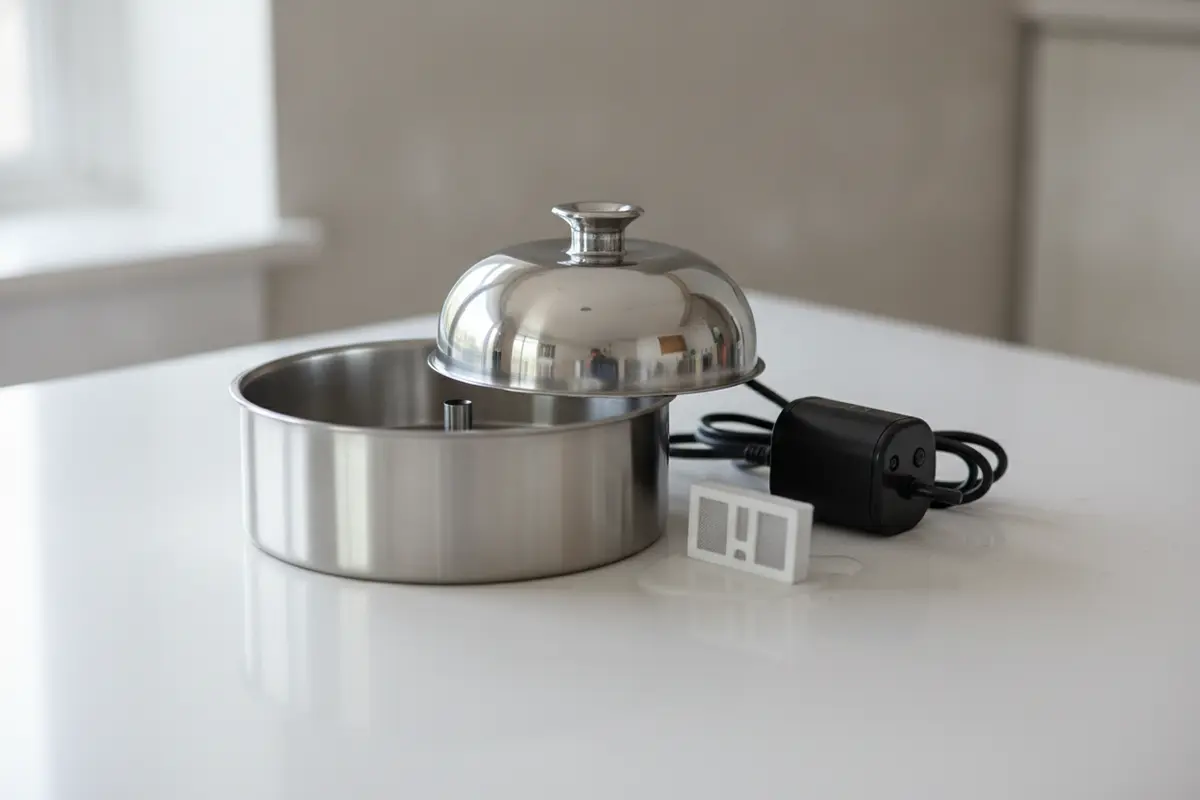
Many circulating fountains use a pump and a filter. The filter may catch debris or help keep circulating water clear, but it does not remove the need to wash the reservoir, clean the pump, and replace the filter according to its instructions. Check how often replacement filters are recommended, whether they are readily available, and whether the cost and replacement routine make sense for you.
Before buying, look for the exact filter type rather than relying on a generic description such as âreplacement filter available.â Confirm how the filter fits, whether it needs preparation before use, and whether the maker gives a replacement interval. If a model uses a proprietary shape or multiple filter pieces, consider whether you can keep compatible replacements on hand. A low purchase price may be less useful if routine replacements are difficult to find or the service steps are unclear. Do not substitute a filter that is not identified as compatible by the manufacturer.
Look for a design that opens without a struggle and has an accessible pump cover or impeller. Hair and small debris can collect around moving parts, so the pump needs periodic attention. Follow the manufacturer's steps for unplugging, disassembly, and cleaning. Never handle the fountain's electrical components with wet hands or operate a pump without the water level specified in the instructions.
Make a quick maintenance test before committing: imagine emptying the fountain, lifting out the filter, reaching the pump, cleaning its small parts, and putting everything back together. Can you tell which part faces up? Does the manual show how the pump cover opens? Are any gaskets or small components easy to misplace? These practical details matter because a fountain that is difficult to reassemble can lead to skipped cleaning or incorrect operation. Keep the manual or care instructions where you can find them, and take a phone photo of the assembled unit before the first disassembly if the parts look complicated.
Noise can affect both people and cats. Product descriptions do not always tell you how a fountain will sound in your room. A low water level, an unsteady base, or a pump that needs cleaning can change the sound. Put the fountain on a flat, stable surface, keep it filled to the recommended level, and check the pump if it becomes louder than usual. If a noise seems to frighten your cat, offer a quiet bowl while you troubleshoot or try a less prominent flow style.
It helps to distinguish a normal hum from a change in sound. When first setting up the unit, note the usual sound at the recommended water level. Later, if it begins to rattle, gurgle, or vibrate, switch it off and check the level, placement, and visible pump area using the maker's directions. A unit that is tilted or touching a hard wall may transmit more vibration. Do not keep running a pump that sounds abnormal or is not moving water as expected. Unplug it and follow the troubleshooting instructions before using it again.
Where should you place a cat fountain?
Place the fountain somewhere calm and easy to reach, on a stable surface, with an outlet and cord arranged safely. Keep it separate from the litter area and give your cat a second water option during the introduction.
Try a quiet location where your cat already feels comfortable. Avoid placing the fountain directly beside a litter box or in a busy passage where people, dogs, or other cats may interrupt drinking. Some cats prefer water away from their food bowl, while others may not mind the distance. Offer options rather than forcing one arrangement.
Check that the cord cannot be pulled, chewed, or caught under furniture. Keep the fountain away from places where it could be kicked or knocked over, and follow the product's electrical and placement instructions. For homes with dogs or children, choose a spot where the fountain will not be treated as a toy. Keep a regular water bowl available until you have seen your cat drink comfortably from the fountain.
In a multi-pet home, think about the route to the water as well as the location itself. A cat should be able to approach and leave without being cornered by a dog, another cat, a doorway, or a noisy appliance. A station tucked behind furniture may look neat but can feel difficult to access. Place it where you can also see the water level during your normal routine. If you are unsure between two locations, try one for several days while keeping the old bowl available, then compare whether the cat approaches and drinks more readily.
Keep food crumbs, litter dust, and loose hair away from the drinking surface as much as practical. A fountain should not sit directly under a food shelf or beside a spot where litter is regularly kicked. If the only available area is a high-traffic room, choose a stable mat and check it more often for debris. Clean the surrounding floor during routine maintenance so spilled water does not make the area slippery.
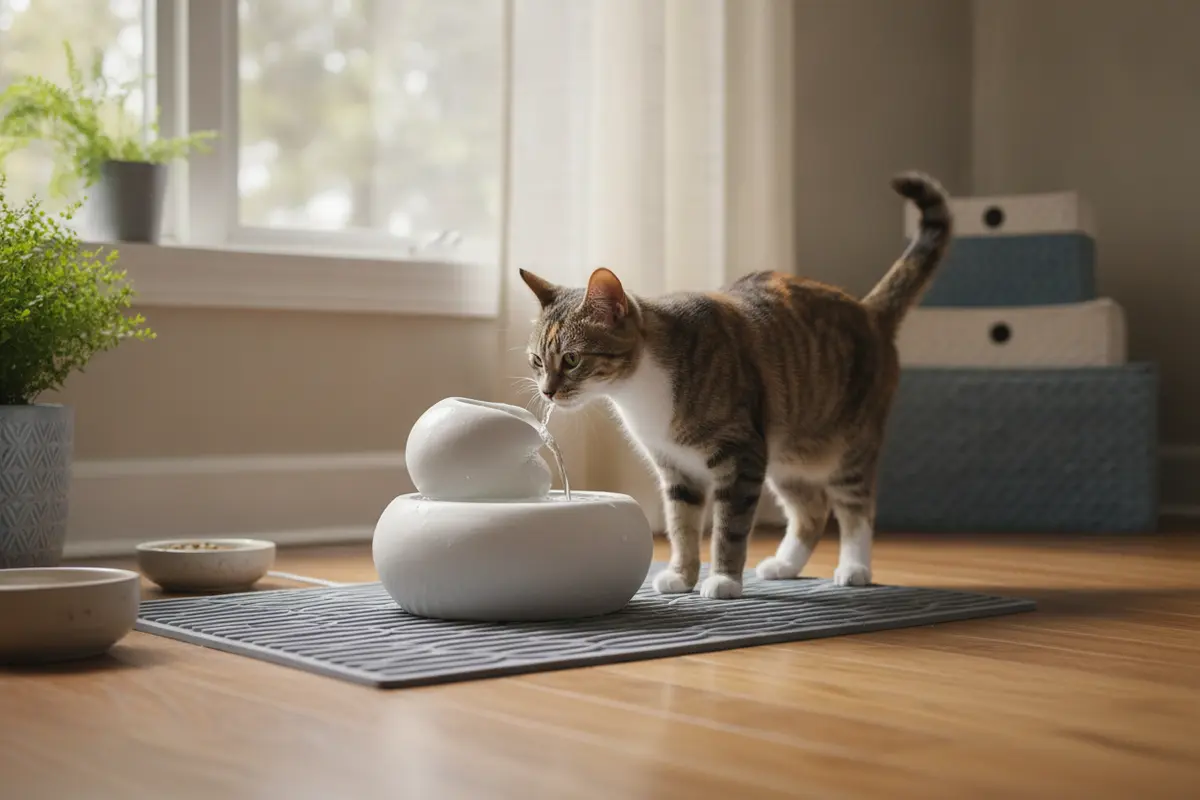
How do you introduce a fountain to a hesitant cat?
Let the fountain become familiar before expecting your cat to drink from it. Set it up unplugged for a short period if the manufacturer allows this, so your cat can inspect its shape without the sound or movement. Keep the old bowl in its usual place. When your cat is relaxed around the fountain, follow the instructions to start it and allow the cat to approach voluntarily.
- Put the fountain in a quiet, accessible location, not in a tight corner where your cat can feel trapped.
- Keep a clean bowl of fresh water available as a familiar alternative.
- Use the fountain's normal water level and begin with the least startling flow option if it has adjustable settings.
- Give your cat time to sniff and observe. Do not carry the cat to the fountain or withhold the bowl to force a trial.
- Watch for regular drinking and refill or clean the fountain as needed. If your cat avoids it, try a different location or return to the bowl.
Make the introduction gradual rather than turning it into a test. Some cats approach immediately, while others need repeated, low-pressure exposure. Keep the fountain switched off only if the manual permits that setup, and do not let an unplugged appliance sit where it can be knocked over or chewed. Once it is running, avoid changing several things at once. If you move it, change the flow, and remove the old bowl on the same day, you will not know which change affected your cat's behavior.
You can observe acceptance without hovering over the cat. Note whether your cat approaches, sniffs, drinks, or walks away. If it drinks only when the room is quiet, try a calmer placement. If it uses the fountain but splashes water, check whether a lower-flow mode or a different position reduces mess. Do not reward an approach by placing the cat's paws in the water or making sudden changes near its face. The aim is an accessible choice, not a forced behavior.
When several pets share the home, make sure each has an easy route to water. A shy cat may avoid a fountain if another animal waits nearby. You might use separate water stations rather than expecting every pet to share one. Keep any snacks or treats away from the fountain basin so crumbs do not become a cleaning problem; for other household shopping, view Hooves and Paws' treats and chews selection and check individual product labeling for the intended animal.
How do you keep a cat water fountain clean?
Check the water every day, wash and dry the components at the frequency in the manual, and clean the pump and replace filters as instructed. A filter does not replace cleaning the fountain.
Cleaning is part of choosing a fountain. Before purchase, check whether the basin, lid, and pump can be separated without special tools and whether the instructions explain how to clean the impeller. A model with several narrow channels may need more careful scrubbing than one with broad, accessible surfaces.
- Check it daily: Look at the water level and remove visible hair or debris. Top up with fresh water as needed.
- Wash on schedule: Follow the manufacturer's cleaning frequency and directions for each component. Unplug the unit before disassembly.
- Clean the pump: Inspect the pump and its parts as directed. Remove buildup carefully, without forcing or damaging small components.
- Replace filters as instructed: Use a compatible replacement and note the schedule in the manual. A filter is not a substitute for washing.
- Rinse thoroughly: Use only cleaning methods and products allowed by the manufacturer, then rinse and reassemble as directed.
A simple routine helps make maintenance predictable. Keep the fountain near the cleaning supplies you already use, but store detergents and small replacement parts safely away from pets. When washing, lay components out in the order they came off so you can see what needs attention and what must be reassembled. Check for trapped fur along seams and around the pump inlet. Let parts dry as the product directions require, and confirm the filter and pump are seated correctly before refilling and plugging the unit back in.
Do not assume that a clear-looking surface means every component is clean. The underside of a lid, filter housing, or pump cover can collect residue that is not visible while assembled. Conversely, do not use abrasive tools or harsh cleaners unless the manufacturer specifically allows them, since they may damage the finish or parts. If buildup returns quickly, review the cleaning frequency, water level, and placement, and check the manual for guidance. A fountain should be removed from service if it is damaged or cannot be cleaned and reassembled safely.
Do not let a low reservoir run the pump dry if the product instructions warn against it. Unplug the fountain before cleaning, and stop using it if the cord, plug, or housing is damaged. If your cat is unwell or you have concerns about its drinking habits, ask your veterinarian for guidance. The American Veterinary Medical Association provides veterinary guidance and resources for pet owners.
Shopping checklist for the best cat water fountain
Use this checklist to compare product pages without getting distracted by features your cat may not need:
- Is the fountain stable, and will it fit the planned location?
- Can you remove and wash the basin and reach the pump?
- Does the flow style suit your cat's observed preferences?
- Is the pump described as quiet, and can you find any available noise information?
- Are filter type, replacement needs, and cleaning steps clear?
- Can you safely route the cord away from chewing, pulling, and foot traffic?
- Is the reservoir comfortable for you to lift, empty, and refill?
- Will you keep a clean water bowl as an alternative?
Use the listing to answer practical questions, not just to collect feature labels. Check the assembled dimensions, reservoir capacity, materials, included components, and care instructions. Confirm what comes in the box and whether replacement filters are sold separately. If the listing does not explain the pump-cleaning process or the compatible filter, look for the manufacturer's instructions before ordering. A product page that answers these questions makes it easier to judge whether the fountain will fit your actual routine.
It can also help to make a short comparison note before you shop. Write down your available floor or counter space, whether your cat tends to avoid noise, how many pets might use the fountain, and how often you realistically want to disassemble it. Then compare two or three models against that list. A design that meets your everyday needs is often a better choice than one with extra settings you do not expect to use. Keep the manual's cleaning schedule in mind when estimating upkeep, rather than assuming a fountain can be left unattended for long periods.
Read the product dimensions and care instructions, rather than relying on a product name alone. If the listing does not answer an important question, contact the retailer before ordering. For households caring for more than cats, you can also browse other animal essentials, including a dog flying disc or horse supplies, and check each item's description for use and care details.
Common fountain problems and practical fixes
If your cat ignores a new fountain, first check whether it is placed somewhere the cat already visits comfortably. Keep a fresh bowl in a familiar location and give the cat time. If the fountain makes a noticeable sound, try a stable surface and verify the water level. If the cat approaches but does not drink, consider whether the rim, basin depth, stream height, or location feels awkward. Change one factor at a time so you can tell whether the adjustment helps.
If the pump stops moving water, switch the unit off and unplug it before inspecting anything. Check the water level and follow the manual's guidance for re-seating the pump, filter, or tubing. Do not reach into an energized unit or open electrical components beyond the steps described by the manufacturer. For leaks, inspect whether removable parts are correctly seated and the fountain is on a level surface. If the housing, cord, or plug appears damaged, stop using the fountain and consult the manufacturer or retailer instead of attempting an improvised repair.
For persistent splashing or wet floors, try moving the unit away from walls and edges, checking that it sits level, and selecting a gentler flow if available. A mat can catch small drips, but it should not conceal a leak or make the base unstable. If you see repeated spills, look for the source rather than simply refilling more often. A cat may be pawing at the water or the fountain may be too light for the location. Choose a position that allows the cat to drink naturally and allows you to spot changes in water level.
Shop cat and pet supplies today
Frequently Asked Questions
Are cat water fountains better than bowls?
Not for every cat. A fountain offers circulating water, while a bowl is simple and quiet. Offer clean water in a bowl and observe what your cat prefers. A fountain should not be the only option until you know your cat uses it comfortably.
What material is best for a cat water fountain?
There is no single best material for every home. Compare the fountain's surfaces, stability, and cleaning access, and avoid damaged or rough components. Follow the maker's instructions for washing and use.
How often should I clean a cat water fountain?
Follow the manufacturer's schedule for the model you buy. Check the water daily, remove visible debris, wash the parts as directed, and clean the pump and replace filters according to its instructions.
Can multiple cats share one fountain?
They may share one if each cat can reach it comfortably, but a single station may not suit every household. Watch for crowding or one cat blocking access, and provide separate water stations when needed.
Why is my cat afraid of a new fountain?
The sound, movement, location, or unfamiliar shape may be putting your cat off. Keep a familiar bowl available, let the cat investigate at its own pace, and consider a quieter location or simpler flow. Do not force your cat to drink from it.
Do fountain filters mean I can clean it less often?
No. Filters have a specific role and replacement schedule, but they do not replace washing the basin and pump. Follow the product manual for both filter changes and cleaning.
What should I do if the fountain becomes louder?
Turn it off and follow the maker's troubleshooting instructions. Check the water level, stability, and accessible pump parts as directed. Do not keep using a damaged or unusually noisy unit.
How can I tell whether my cat accepts the fountain?
Observe from a little distance to see whether your cat approaches and drinks without being prompted. Keep fresh water in a clean bowl as an alternative while you assess the new setup.
Choose a fountain based on your cat's preferences, your home's layout, and the cleaning routine you can sustain, then keep fresh water available while your cat gets used to it.


