


Choosing the best horse shampoo is less about finding one bottle for every horse and more about matching a gentle formula to the coat, the job, and your horse’s skin. A muddy turnout horse, a show horse with a light coat, and a horse with sensitive skin may need different approaches. Use the label, your horse’s response, and sound bathing habits to guide the choice.
What makes the best horse shampoo for your horse?
Start with a shampoo made for horses, then choose based on the coat’s needs. A mild everyday wash is a sensible default; color-enhancing or specialty formulas are for specific jobs, not a substitute for careful use.
Consider three things before you buy: what you need to remove, how often you expect to bathe, and whether your horse has a history of skin sensitivity. A horse shampoo is formulated for equine grooming use. Do not assume a household or human product is a suitable substitute just because it lathers well.
- For routine dirt and sweat: Look for a straightforward horse shampoo with clear directions and a rinse-friendly formula. You usually do not need a specialty product for an ordinary cleanup.
- For a bright or light coat: A whitening or stain-focused wash may help with the appearance of surface discoloration. Follow its directions closely and keep it away from eyes and other sensitive areas.
- For a specific skin problem: Do not try to diagnose or treat persistent itching, scabs, hair loss, or irritation with a cosmetic shampoo alone. Ask your veterinarian what care is appropriate.
Product labels matter more than impressive-sounding claims. Read the directions, intended use, precautions, and rinse instructions. If ingredients are not clearly identified or the label does not explain how to use the product, choose a better-documented option or ask a qualified equine professional before applying it.
A quick label-reading checklist
Before purchasing, pause on the front and back of the bottle rather than relying on color, scent, or a large claim on the package. Confirm that the product is intended for horses, identify whether it is a rinse-off shampoo or a leave-on grooming product, and check whether the directions call for dilution. Look for precautions about eyes, face, broken or irritated skin, and storage. If the label does not answer a question that matters for your horse, do not guess. Ask the manufacturer or your veterinarian, or choose a product with clearer instructions.
It also helps to consider the setting in which you will use it. A large bottle may suit a barn that washes several horses, while a smaller container may be easier to keep clean and manage for occasional bathing. Do not transfer shampoo into an unmarked bottle just to make it easier to carry. Keeping the original directions and product identity available helps prevent confusion later.
Which shampoo ingredients should you look for?
There is no single ingredient that makes a shampoo best for every horse. The useful questions are whether the product is intended for horses, whether its directions fit your planned use, and whether your horse tolerates it. A simple formula with clear use instructions is often easier to evaluate than a long list of claims.
Choose for the task, not the marketing language
Some shampoos are marketed for general cleaning, while others focus on brightening light coats or removing stains. A grooming stain spray can be a separate spot-care tool, not a shampoo replacement. For example, view the Leovet Shiny White Curry Groom Stain Spray if you are comparing options for visible coat stains. Read its own label and use it only as directed.
Be cautious with claims that promise to solve a medical issue or produce a dramatic change. A shampoo can clean hair and skin, but ongoing skin changes need an assessment of their cause. Do not apply products containing ingredients you cannot identify, and do not mix products unless their instructions or your veterinarian say it is appropriate.
When should you be cautious about fragrance or specialty formulas?
Fragrance and specialty ingredients can be a poor fit for an individual horse, especially if the horse has reacted to grooming products before. If your horse is sensitive, choose a product with clear labeling and avoid trying several new products at once. That makes it easier to notice what your horse does or does not tolerate.
For a new product, follow the label’s test and use directions. Stop using it if you notice a new reaction, rinse the area if the label says to do so, and contact your veterinarian for concerning or persistent signs. Never use a product near the eyes, nostrils, or other sensitive areas unless its label specifically allows it.
How can you compare labels without getting distracted by claims?
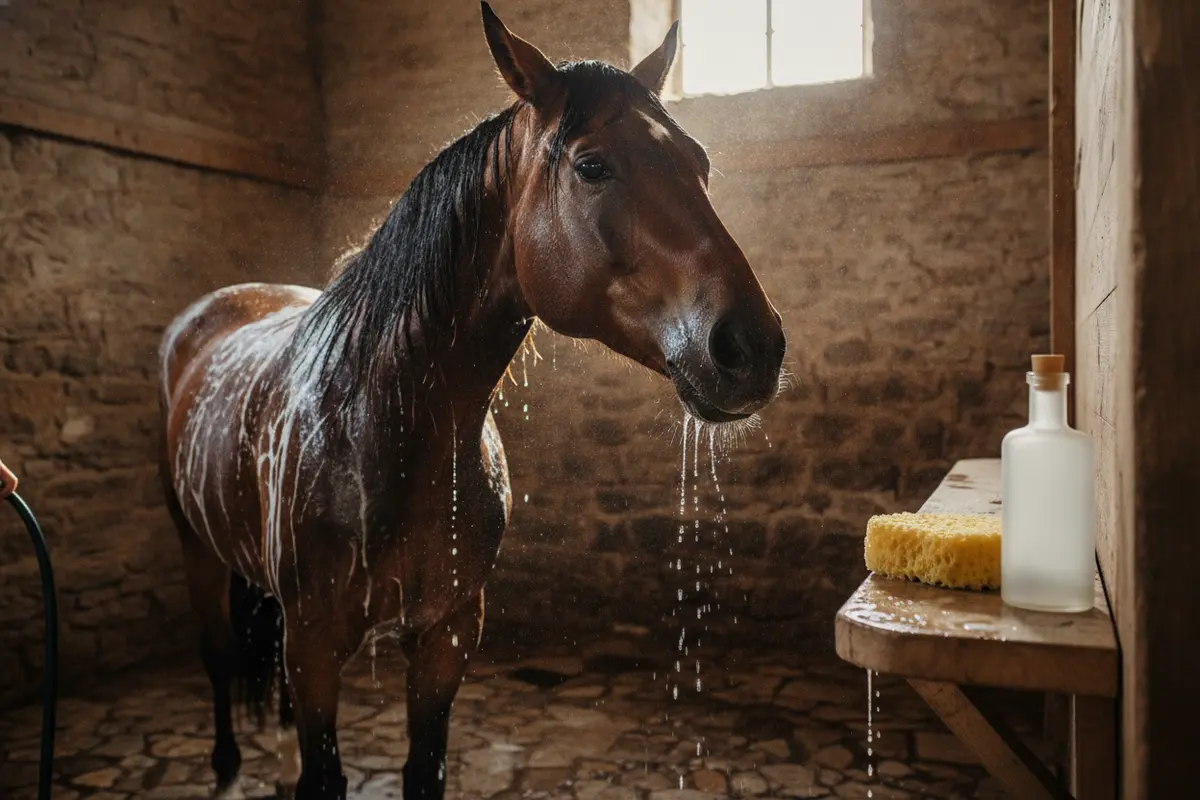
Use a simple side-by-side check. First, confirm that both products are for equine use. Next, compare the job they are meant to do: routine cleaning, whitening, stain care, or another stated purpose. Then read the directions for amount, dilution, contact time if any, and rinsing. Finally, check the cautions and decide whether they suit the area you plan to wash and your horse’s history. This process is more useful than trying to decide whether a product is “stronger” based on scent or lather.
Do not assume that a product described as natural, gentle, concentrated, or color-enhancing is automatically suitable for every horse. Those words do not replace a complete label or a careful first use. If a formula is concentrated, follow the stated dilution exactly. Using extra shampoo does not necessarily clean better, and a stronger mix can make rinsing more difficult.
Shop This Post

Featured in this article
Professional's Choice Pony Paints - 4.4oz Non-Toxic Washable Horse Coat Paint
$22.71
Shop Now →


How do coat type and color affect your choice?
Coat color can affect the type of cosmetic result you want, but it does not change the basics: choose an equine product, read its directions, rinse thoroughly, and watch your horse’s skin.
Light coats: White or gray coats can show dirt and stains more clearly. A coat-brightening shampoo may be useful when appearance matters, but it is not necessary for every bath. Keep the product off the face unless the label specifically permits facial use, and rinse carefully so residue does not remain in the coat.
Dark coats: A regular horse shampoo is generally the practical starting point for routine cleaning. If a product is marketed to enhance dark coats, treat that as a cosmetic feature and follow the instructions rather than assuming it offers a health benefit.
Long manes and tails: Work gently and avoid rough scrubbing that can tangle or break hair. Shampoo only as needed, rinse well, and use a separate mane-and-tail product if you want help managing tangles. Hooves and Paws offers Toklat No Rub Mane & Tail Treatment as a separate coat-care option; check its product directions for appropriate use.
Clipped, short, or fine coats: These coats can make the skin easier to see, so pay attention to how the horse responds during and after bathing. Use a gentle touch and do not scrub harder to remove a mark that may not be ordinary dirt. If the skin looks sore or the change persists, ask your veterinarian before applying more products.
Thick or shedding coats: Shampoo will not replace regular grooming. Brush away loose dirt and hair before wetting the horse so you are not working debris deeper into the coat. Choose a wash based on the actual need, and allow enough time to rinse and dry thoroughly.
Match the plan to the coat in front of you
Think through a real grooming day before choosing. If your gray horse has an isolated manure stain before a lesson, brushing and a label-approved spot product may be more practical than a full bath. If a dark horse is dusty after turnout, grooming first may remove most of the dirt without shampoo. If a horse has a long, tangled tail, detangle gently before washing instead of forcing a brush through wet hair. The goal is to clean the coat while limiting unnecessary handling and product use.
Remember that coat color is only one detail. Weather, available drying time, the horse’s comfort with water, and the reason for the bath may matter more. A brightening formula is an appearance choice, not a requirement for a light-colored horse. A normal equine shampoo can be enough when the aim is ordinary cleaning.
How do you compare common horse shampoo options?
The best choice depends on what you are trying to do. This comparison can help narrow the shelf, but product labels always take priority because formulas and directions differ.
| Option | Best suited to | What to check | Use note |
|---|---|---|---|
| General horse shampoo | Routine removal of dirt and sweat | Equine use, directions, precautions | Use only as often as needed and rinse completely |
| Whitening or stain-focused shampoo | Cosmetic cleaning of light coats or visible stains | Whether it is safe for the coat area you plan to wash | Keep away from sensitive areas unless label permits |
| Mane-and-tail treatment | Managing mane or tail as a separate grooming task | Whether it is a cleanser, detangler, or leave-on treatment | Follow its own instructions; do not treat it as shampoo |
| Medicated or therapeutic wash | A concern for which a veterinarian recommends a specific product | Active ingredients, directions, and veterinary guidance | Do not self-treat recurring skin problems |
Price per bottle does not tell the whole story. Compare the amount needed for one bath, the product’s directions, and whether it suits your horse. Avoid choosing solely by scent, color, or a claim that is not explained on the label.
Try a practical comparison before you buy
Imagine you are preparing for a show weekend and have one light-colored horse with an overall dusty coat and a separate grass stain. You might compare a general horse shampoo with a whitening wash. Ask whether you need to clean the whole coat or only address the stain, whether the directions allow the intended use, and whether there is enough time to rinse and dry the horse comfortably. If spot treatment is appropriate, a separate grooming product may meet the need without turning every stain into a full shampoo bath.
Now consider a horse that is washed only occasionally after especially dirty days. In that case, a general shampoo with straightforward directions may be a more sensible choice than keeping multiple specialty products on hand. A horse with a recurring skin concern is a different situation: do not choose a therapeutic wash based only on a shelf label or another horse owner’s recommendation. Ask the veterinarian which product, if any, fits the problem.
These examples are not product prescriptions. They show how to narrow options by purpose, label, and practical use. If a product requires special handling or has precautions you cannot meet in your wash area, choose another approach.
How should you bathe a horse with shampoo?
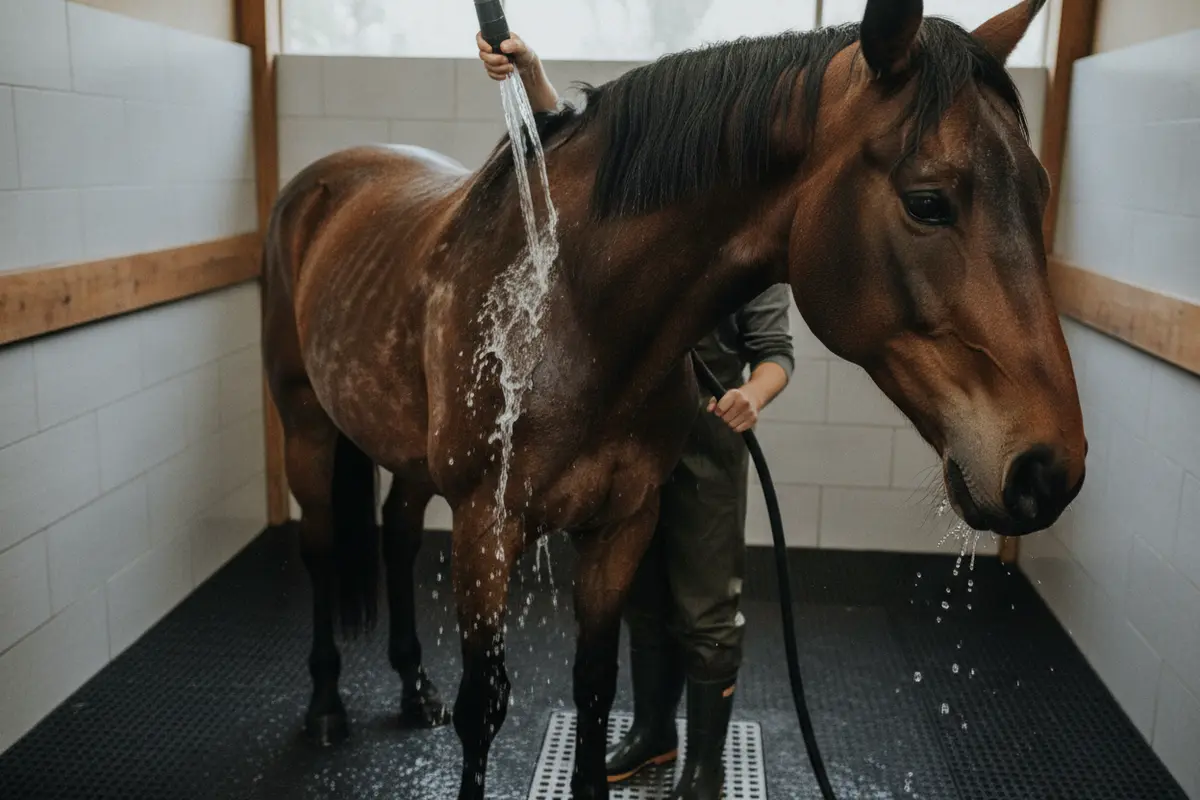
Set up the area before you bring out the shampoo. Choose a safe, non-slippery place with suitable water access, have towels or drying equipment ready, and read the label first. If your horse is uneasy with water or the bathing area, work within its comfort and safety rather than rushing through a full wash.
- Brush first. Remove loose dirt, mud, and shedding hair with grooming tools. A curry comb or brush can help prepare the coat, but use tools appropriate for the horse and area.
- Wet gradually. Use comfortable water and start where your horse is least reactive. Avoid spraying directly into the face, ears, or nostrils.
- Dilute only if directed. Some products call for dilution and others do not. Follow the label, rather than guessing at a stronger mix.
- Apply gently. Work a manageable section at a time. Use a sponge or your hands and avoid aggressive scrubbing, especially over bony areas or sensitive skin.
- Rinse thoroughly. Residue can be uncomfortable. Rinse each section until the coat feels clean and no suds remain, following any product-specific directions.
- Dry and check. Remove excess water with a sweat scraper where appropriate, then allow the horse to dry in a safe, comfortable place. Check the coat and skin for any unexpected response.
Make bathing calmer and more manageable
Prepare in the order you will use things: brushes first, then water, then the shampoo mixed or measured only if the label instructs it, and finally towels or drying gear. This reduces the chance of leaving a tied horse unattended while searching for supplies. Keep the hose and bucket positioned so they do not become a trip hazard, and maintain a secure hold appropriate to your horse and facility.
For a horse that is unsure about bathing, break the task into small steps. Let the horse become comfortable with the area and water before attempting a full wash. A sponge may give you more control than a spray nozzle on sensitive areas. Stop if the horse becomes unsafe to handle; a partial clean or another day is preferable to forcing a stressful bath.
As you work, clean one section at a time and keep the rest of the horse comfortable. Avoid leaving shampoo to dry on the coat unless the product directions specifically call for that method. Check under the mane, around the girth area, and between the legs for residue, but use care around sensitive skin. The rinse is complete when you have followed the label and no visible suds remain.
A clean, dry cooler can be useful in a grooming routine when conditions call for one. Explore a Shires Deluxe Tech Cooler or the Bucas Power Cooler Classic, and follow each product’s care and use instructions. A sheet is not a substitute for checking that the horse is comfortable and drying appropriately.
Common bathing mistakes to avoid
- Using more than the label calls for: Extra product can make rinsing harder and does not guarantee a cleaner coat.
- Skipping the pre-bath brush: Loose dirt and hair can turn into a muddy film when wet, making the wash less efficient.
- Leaving residue behind: Rinse methodically, paying attention to areas where suds collect in dense hair or folds.
- Trying multiple new products together: If the horse reacts, it becomes harder to work out which product was involved.
- Bathing when drying conditions are poor: Plan around the weather and available time so the horse can dry in a safe, comfortable place.
A bath should have a clear purpose. Routine brushing, a damp cloth, or a careful rinse may be enough for some cleanups. Save shampoo for occasions when it is useful, and adjust the plan if the horse is uncomfortable or the skin seems abnormal.
How often should you shampoo a horse?
There is no fixed bathing schedule that suits every horse. Base baths on visible dirt, activity, season, coat condition, and your grooming goals. Frequent shampooing may not be necessary for a horse that can be cleaned with brushing and spot care. Between baths, remove mud when practical and keep grooming tools clean.
Use a damp cloth for small areas when a full bath is unnecessary, provided the horse tolerates it and the product directions allow the approach. For post-exercise care, a rinse may be enough in some situations, but consider weather and drying time. Do not leave a wet horse chilled or unattended in an unsafe area. If a horse has a skin condition or special care needs, get veterinary advice on bathing frequency and suitable products.
Build a routine around need, not the calendar
A practical routine can begin with regular grooming and a quick coat check. After riding or turnout, decide whether the horse needs brushing, a localized cleanup, a rinse, or a shampoo bath. A dusty coat without stuck-on dirt may respond to grooming alone. A muddy patch may call for waiting until it dries enough to brush away rather than spreading wet soil through the hair. A special event may create a cosmetic reason to wash, but allow time for the complete rinse and drying process.
Keep a brief note if your horse has sensitive skin or has reacted to a product. Record the product name, where it was applied, and what you observed. That information can help you avoid repeating an uncomfortable experience and give your veterinarian a clearer history if a concern appears. Do not treat a note as a substitute for veterinary care when signs persist.
After using a grooming product, clean and store the bottle as directed. Keep products labeled and out of reach of animals and children. Do not pour leftover shampoo into a container that once held another product, since that can lead to mix-ups.
When is a shampoo choice a veterinary question?
Persistent itching, hair loss, sores, scabs, unusual odor, or an expanding patch of irritated skin deserves more than a change in shampoo. Many different issues can look alike, so a cosmetic product may delay finding the cause. Stop adding new products and contact your veterinarian for guidance, especially if the signs are spreading, painful, or accompanied by a change in your horse’s general condition. The American Association of Equine Practitioners is a professional resource for horse owners; your own veterinarian is the right person to advise on your horse’s symptoms and treatment.
When you speak with the veterinarian, be ready to describe when the signs began, where they appear, whether they are changing, and which products have been used. A clear description can be more useful than trying another shampoo before the appointment. If a veterinarian recommends a particular wash, ask how to apply it, how long to leave it on if relevant, how often to use it, and what signs should prompt a follow-up. Keep following the clinician’s directions and the product label.
If you want to round out your coat-care routine, browse the Shires Tempest Plus Lite Stable Rug and check its product details for its intended use. Choose any additional gear based on your horse, conditions, and the manufacturer’s instructions, not as a substitute for diagnosing a skin concern.
Shop a horse coat-care option today
Frequently Asked Questions
Can I use human shampoo on a horse?
Choose a product labeled for horses rather than assuming a human shampoo is suitable. Read the horse product’s directions and ask your veterinarian if your horse has sensitive skin or a skin concern.
Should I use whitening shampoo on every horse?
No. Whitening formulas are cosmetic options for particular coat colors or stain concerns. A general horse shampoo may be more appropriate for routine cleaning, and every product should be used as its label directs.
Can shampoo treat itching or flaky skin?
Do not rely on ordinary grooming shampoo to diagnose or treat persistent itching, flakes, sores, or hair loss. Contact your veterinarian to identify the cause and ask whether a specific wash is appropriate.
How do I know if a shampoo is irritating my horse?
Watch for a new or worsening skin response after use. Stop applying the product, follow its label for rinsing or other immediate steps, and ask your veterinarian if the reaction is concerning or does not settle.
Do I need a separate mane and tail product?
Not necessarily. A mane-and-tail product can be useful for a separate grooming goal, such as managing tangles, but it is not a replacement for shampoo. Check the product type and directions before using it.
What is the safest way to choose the best horse shampoo?
Match the product to the task, choose one clearly labeled for equine use, follow its directions, and observe how your horse responds. Ask a veterinarian before using a medicated product or trying to manage a recurring skin issue.
The best horse shampoo is a clearly labeled equine product that suits your horse’s coat and your grooming goal, and that you can use and rinse exactly as directed.


