

Saddle Pads for High Withers
Filter and sort
10 products

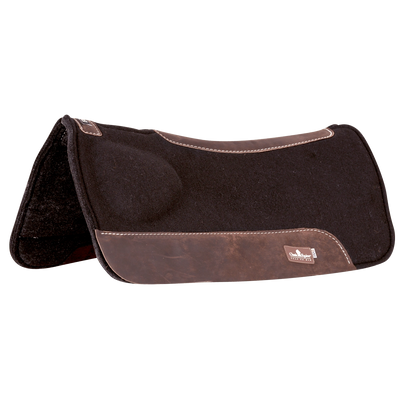

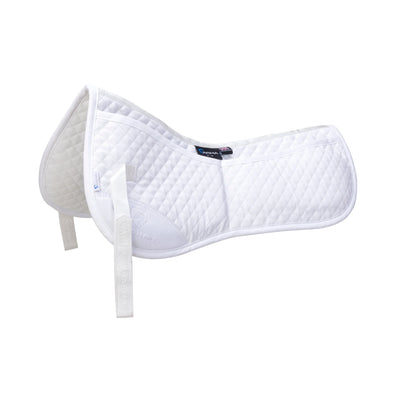
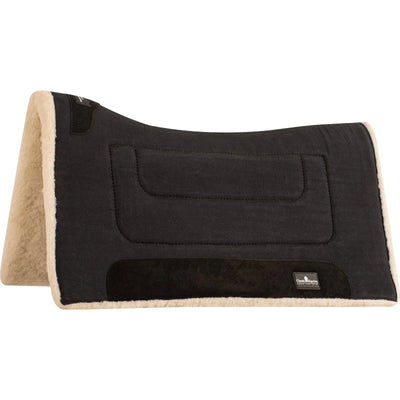

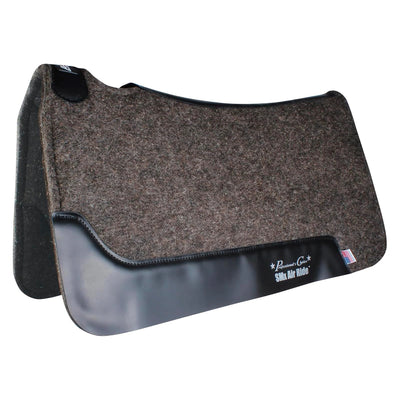

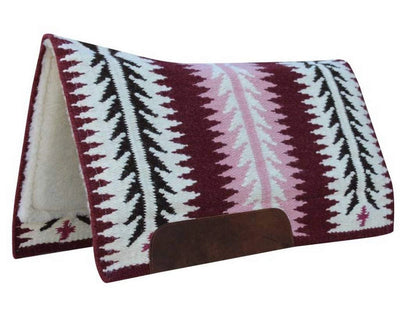

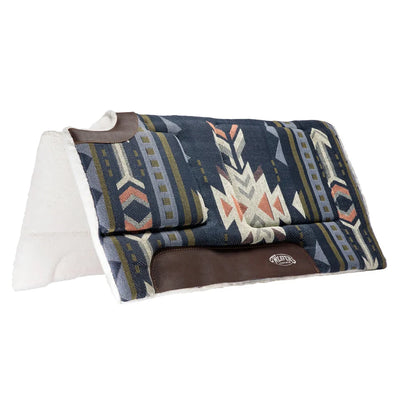

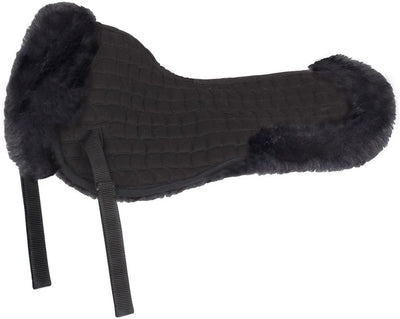
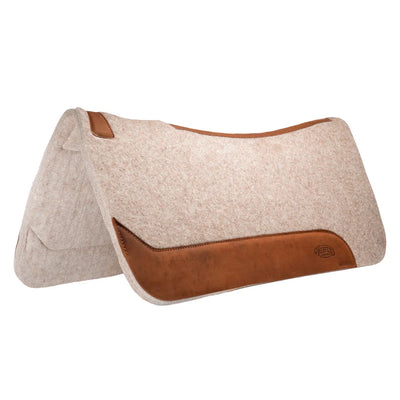

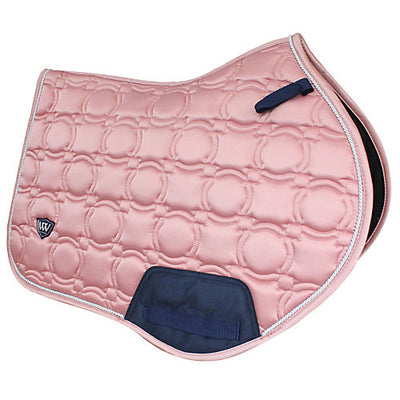

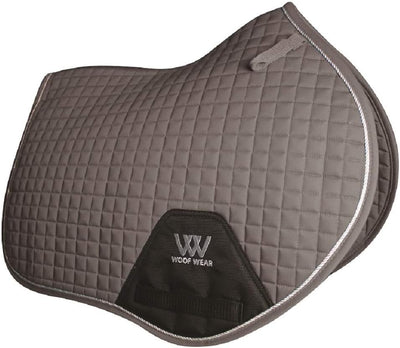
Two pads can both promise wither relief and mean completely different things. One has a curved topline that follows the withers; the other has a real slit or keyhole so nothing touches the spine at all. Riders have been grumbling about that wording for years, and with good reason — a curve helps a moderate wither and does very little for a shark fin.
What Riders Are Actually Asking
What is the difference between wither relief and a wither cutout?
Relief normally means shape. The topline of the pad is curved upward so it rises with the withers rather than cutting straight across them. A cutout means an actual opening, a slit or a keyhole, so there is nothing between the wither and the gullet of the saddle. Catalogs use the two phrases interchangeably, which is why people end up disappointed. Before you buy, look at the photo of the pad lying flat: if you can see daylight through the top of it, that is a cutout. If the top edge is simply a smile shape, that is relief.
Can a pad fix a saddle that pinches the withers?
Mostly no, and this is the honest answer even though it sells nothing. If the tree is too narrow, adding a pad wraps more material around an already tight space and makes the pinch worse, the same way a thick sock makes a tight boot tighter. A pad can help in one specific case: the saddle is a shade wide, it settles down onto the wither, and a front shim lifts it back into balance. That is a fitting problem you are managing, not solving. A saddle fitter with a flocking tool solves it.
How much wither clearance should I actually have?
The old rule is two to three fingers stacked between the pommel and the wither with the girth done up and nobody in the saddle. The number that matters more is what is left after ten minutes of trot with your weight in it, because pads compress and the saddle settles. Girth up, ride, then get off and check again before you pull the tack. Clearance sideways counts too. Slide a hand down each side of the wither; if the saddle is touching there, no amount of pad on top will help.
Wool, felt or foam shims — which should I use?
Riders genuinely split on this and the evidence is thin either way. Wool and wool felt shims mold to the horse over a few rides, breathe well and can be flocked or trimmed by a fitter, but they pack down unevenly and you cannot easily undo that. Closed-cell foam shims rebound to the same shape every ride, cost less and come standard in most shimmable half pads, but they hold heat and take a compression set after a couple of seasons. If you want repeatable and cheap, take foam. If you want the pad to learn the horse, take wool.
Will a half pad make the wither clearance better or worse?
It can go either way, which is why half pads have a mixed reputation. Under a saddle with room to spare, a shimmed half pad lifts the front, restores clearance and takes pressure off the spine. Under a saddle that is already close at the pommel, the same half pad steals the last half inch you had and the horse tells you about it within a week. Fit the half pad the way you fit a saddle: girth up, look at the gullet, and if the clearance dropped below two fingers, take it off.
How to Choose the Right Saddle Pad
- Look for a slit, not a smile: A curved topline is relief. An opening you can see through is a cutout. For a truly prominent wither you want the opening.
- Check clearance with the girth done up: Pads compress. Two to three fingers loose on the stand can become nothing once the girth is tight and you are aboard.
- Buy the pad for the saddle you own: A western pad shaped for a bar tree does nothing under a close contact saddle, and the reverse is worse.
- Shim the front only if the saddle sits low in front: Shimming a saddle that already tips back drives the cantle down and pinches at the loin instead.
- Read the sweat pattern after every ride: Dry spots the size of a hand mean pressure, not luck. That is your fit test, and it is free.
What This Page Is Not For
This page is about pads that clear a wither. It is not a saddle fitting service and it will not tell you your tree width — for that you want a fitter with a wither tracing and time to spend on your horse. It also does not cover western pad thickness, therapeutic claims about impact gel or ceramic linings, or bareback pads.
Brands Riders Trust
Weaver Leather covers the widest range here, from plain contoured felt marked wither relief to built-up fleece pads made specifically for high withers. Shires does the shimmable end with the ARMA corrective half pads. Professional's Choice brings the wool and felt western pads, Toklat handles the shaped English side through the Woof Wear line, and Classic Equine sits in between with wool felt performance pads.
Everything on this page is in an American warehouse, ships in two days, and is covered by our 365-day guarantee. If the pad does not suit the horse, send it back. Happy Tails, Happy Trails.
