

Spurs for Beginners
Filter and sort
9 products

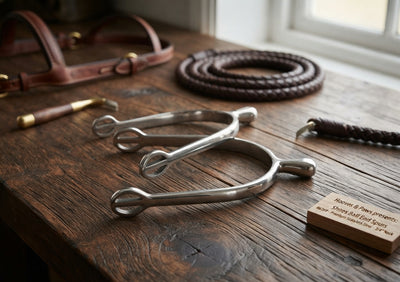

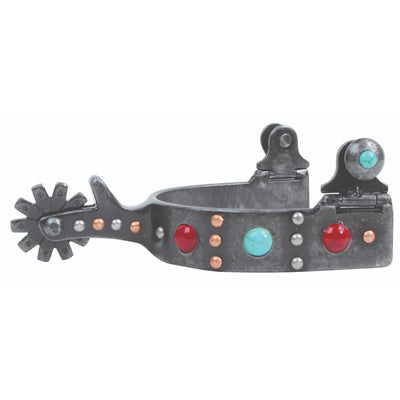

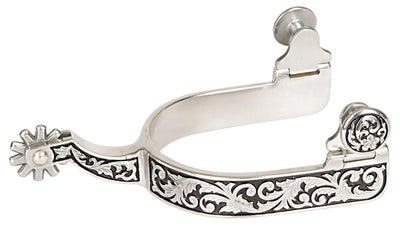

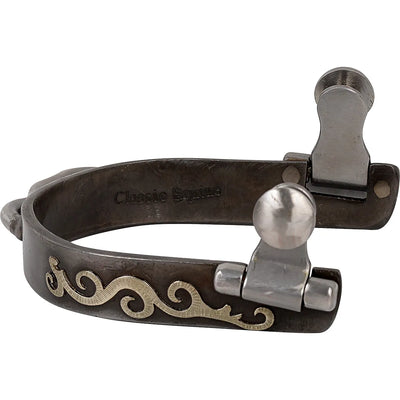

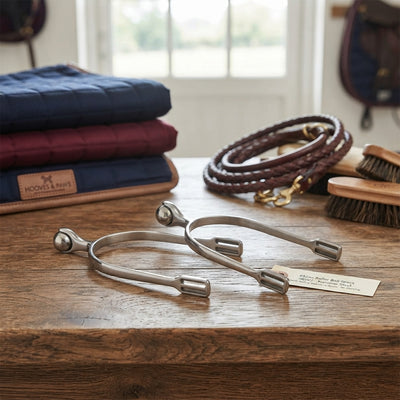

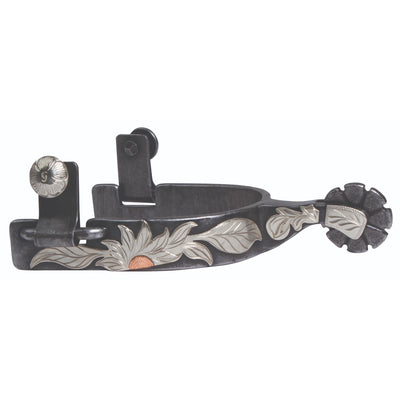
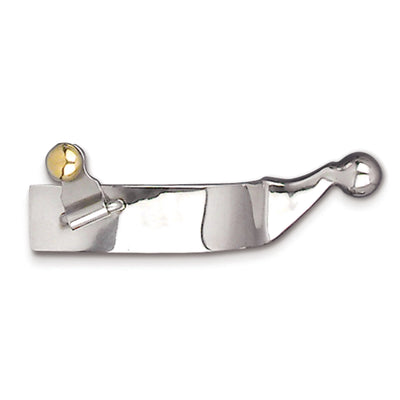

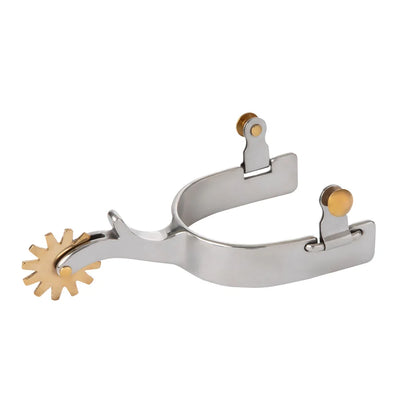
A spur is not a bigger kick. It is a smaller, more precise version of the leg aid you already give, landing on a patch of skin about the size of a thumbprint. That is why the first pair most riders should own has a rounded or rolling end and a shank well under two inches. The goal is clarity, not force, and the wrong first spur teaches a horse to brace instead of listen.
What Riders Are Actually Asking
How do spurs attach to boots?
The band wraps around the back of your boot and a strap runs through the slots on each arm to hold it there. Three things decide whether it works. The shank points backward and slightly down, never up. The buckle sits on the outside of your ankle so nothing rubs between your boot and the horse. And the band rests on the spur rest, the small ledge above the heel counter on most riding and cowboy boots, so it cannot creep down onto the heel. Snug it until one finger slides under the strap with a little effort.
How do spurs actually work?
The shank sits just behind and below your calf and does nothing while your leg lies quietly against the horse. Rotate your toe out a few degrees and the tip contacts a small area behind the girth, so the pressure per square inch jumps compared with the flat of your calf. That concentration is the entire mechanism. It buys you a quieter, more specific aid, not a stronger one, and it only works on a horse that already answers a plain leg. On a dull horse a spur usually deepens the dullness.
How do I know I am ready for spurs?
The test is your lower leg, not the number of years you have been riding. Post and sit the trot without your heel swinging forward or back, carry weight in the heel without bracing against the stirrup, and get through a lesson without gripping with knee or thigh. If your leg still travels with the horse's motion, a spur makes contact you never asked for, and the horse learns either to ignore it or to tighten against it. Most instructors want to see a clear forward aid followed by the leg coming off.
Which spur end is the mildest?
Roughly in order: a ball end or roller ball, then a blunt nub such as a Prince of Wales, then a bumper spur with almost no shank, then a many-pointed blunt rowel. A rowel that turns freely rolls along the coat rather than dragging across it, so a ten or twenty point blunted rowel can be milder in use than a short fixed nub used badly. Point count and whether the rowel spins matter far more than the word rowel itself. Few sharp points belong on experienced ranch horses.
Will the spurs I buy be legal to show in?
Check your division before you spend money, because the limits are specific. USEF dressage requires metal English-style spurs with a smooth inside arm, the shank pointing straight back or curved downward, and any rowel blunt and free to rotate. Maximum length is 5.08 cm, two inches, including the rowel in most classes, and blunt metal spurs no longer than 3.5 cm with no rowel for FEI Pony Rider and Children tests. Western breed divisions and 4-H clubs each publish their own rules, so ask before the first show.
How to Choose the Right Spur
- Start at the mild end: Ball, roller ball or blunt nub first. You can add spur later; you cannot easily un-teach a horse that learned to brace against one.
- Keep the shank short: Under about an inch and a half for a first pair. A long shank finds the horse before your leg has finished asking.
- Count the rowel points: More points, blunted, spread the pressure across more skin. Few sharp points concentrate it in one place.
- Fit the band to the boot: The arms should hug the boot and sit above the heel counter. A band wider than the boot rotates, and the shank ends up aimed at the ground.
- Read the rulebook first: Dressage, hunter and western divisions cap length and shape differently. Confirm at home, not at the in-gate.
What This Page Is Not For
This page is mild spurs for riders new to using them. It is not a guide to long-shank western show spurs, rodeo or bull-riding spurs, or the sharp rowels some ranch work still uses. It also does not cover spur straps, which have their own page. Most spurs here ship without a strap, so check before you order.
Brands Riders Trust
Shires makes the two English patterns we hand new riders most often, the Roller Ball 6267 and the Ball End 6269. Toklat covers the gentle western end with the Wes humane spur and a canted Tom Thumb with a rubber-covered neck. Professional's Choice blunts the rowels across most of its ladies and youth patterns. Weaver Leather does children's sizes properly rather than shrinking an adult spur, and Classic Equine makes a bumper spur with barely any shank at all.
Everything here ships in two days from an American warehouse and carries our 365-day guarantee, so a pair that turns out to be more spur than you wanted can come back. Happy Tails, Happy Trails.
