

Safety Stirrups Compared
Filter and sort
9 products

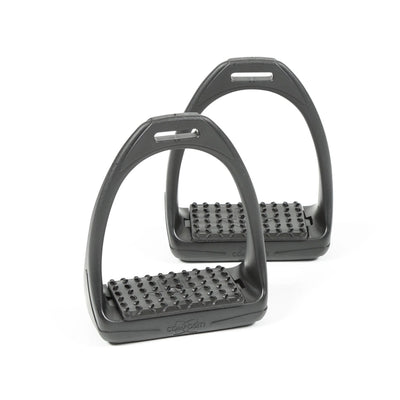

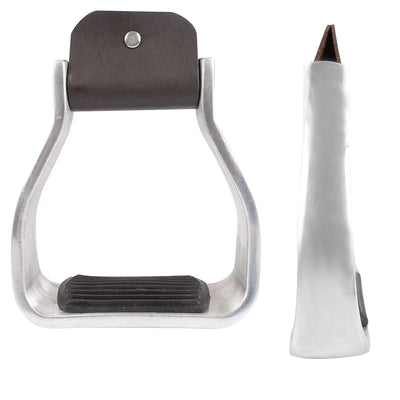


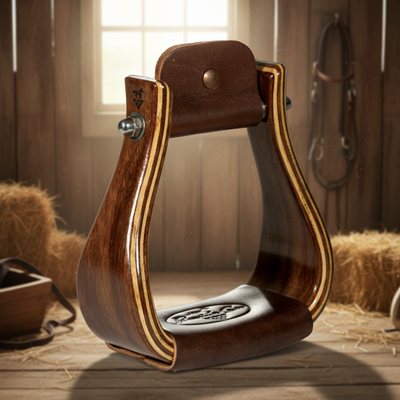

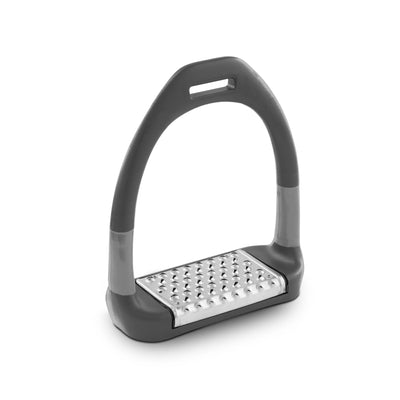

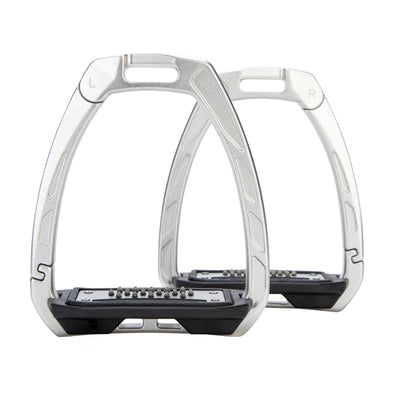
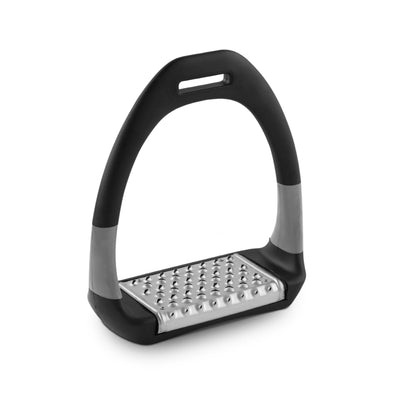

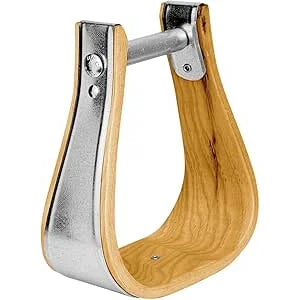
What hurts riders is not falling off. It is not getting all the way off. A safety stirrup is any design that makes a boot harder to jam in the tread and easier to leave, and there are four different ideas sold under that one name. They are not equally effective, and in 2025 the American rulebooks changed which ones you are allowed to show in.
What Riders Are Actually Asking
What actually makes a stirrup a safety stirrup?
Four separate ideas share the label. A bow or curved outer branch gives the foot a ramp to slide off. A bent or forward-angled arm widens the exit. A hinged or flexible outer branch gives way under load. Magnetic designs let the outer arm detach entirely. Sitting underneath all of that is plain sizing and tread width, which is what prevents most jammed feet in the first place. Worth saying plainly: a shock-absorbing or joint-relief iron is not by itself a release mechanism.
Are peacock stirrups still allowed?
Not in the two organizations most American riders compete under. United States Pony Clubs banned peacock, or hook-and-loop, stirrups effective January 1, 2025, after reports of riders being injured by the upward-pointing hook while dismounting. USEF rule GR801.6 took effect December 1, 2025 and prohibits any equipment attached to a saddle with a rigid upward-pointing projection or hook capable of catching a rider, stirrups included. The 2026 season is verbal warnings only, with full enforcement from December 1, 2026.
How do I check whether my stirrups are USEF compliant?
USEF publishes a stirrup resource page listing models it has reviewed, and you want to check your exact model rather than trusting the brand. The rule language is specific: a compliant stirrup has closed branches, or an outside branch with a gap no wider than 1.5 cm that lies flush with the outside plane of the stirrup, or an outside branch sitting inside that plane. That list is updated as models are reviewed, so check your exact model against the current version before you enter rather than relying on anything written here.
What size stirrup iron should I buy?
Measure the widest part of the boot you actually ride in, then allow roughly half an inch of clearance on each side. Common English sizes run 4.25, 4.5, 4.75 and 5 inches, suiting boots up to about 3.75, 4, 4.25 and 4.5 inches wide. Too narrow pinches and can trap the foot. Too wide is the more dangerous error, because the whole foot can pass through. Remeasure when you change boots, since a winter boot or a thick sock moves you up a size.
What do western riders use instead?
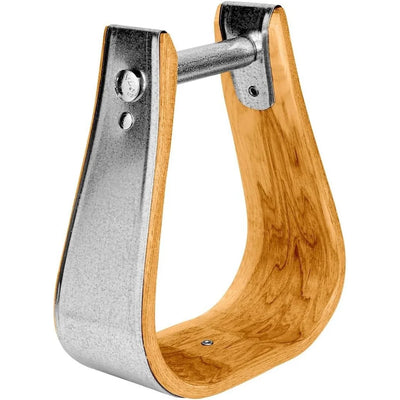
Western safety runs on tread width and boot design rather than a release mechanism. A wide, flat tread lets the foot leave sideways, and the defined heel on a cowboy boot is what stops it sliding forward to begin with. The classic wreck is a bulky pac or work boot wedged in a narrow stirrup, which is exactly the problem overshoe and three-step stirrups were built to solve. If you ride in winter boots, size the stirrup to those, not to your summer pair.
How to Choose the Right Stirrup
- Decide what you want it to do: Release under load, or simply refuse to trap the boot. Those are two different products at two different prices.
- Size to the boot you ride in: About half an inch of clearance each side, remeasured whenever your boots change.
- Check the rulebook before the show: GR801.6 is in force and the reviewed-model list is published. Do not assume a brand is fine.
- Do not confuse comfort with release: Flexible and shock-absorbing branches exist for knees and ankles. They do not open to let a foot out.
- Look hard at the tread: Grip and width keep the foot placed where you put it. A worn, slick tread is a problem long before anyone falls.
What This Page Is Not For
This page compares stirrups we stock. It does not cover magnetic or detachable-arm designs such as Freejump, Ophena or Tech Stirrups, and it does not cover stirrup leathers or the safety bar on your saddle. Peacock stirrups are deliberately left off it. None of this replaces reading your own division's rulebook, which is the only version that counts at a show.
Brands Riders Trust
Toklat covers the English side with the Perfect Flex and Sport Flex, flexible-branch irons built for joints rather than for release. Shires makes the Compositi Reflex, a wide-tread shock-absorbing polymer iron, alongside the Karben Ultra Grip. Weaver Leather owns the overshoe end for winter and work boots, Professional's Choice does the wide western treads including a bell-bottom Monel, and Martin Saddlery builds an extra-wide aluminum with a rubber tread.
Everything on this page ships in two days from an American warehouse and is covered by our 365-day guarantee. If the iron turns out to be the wrong size for your boot, send it back. Happy Tails, Happy Trails.
