

Gentle Bits for Sensitive Mouths
Filter and sort
10 products

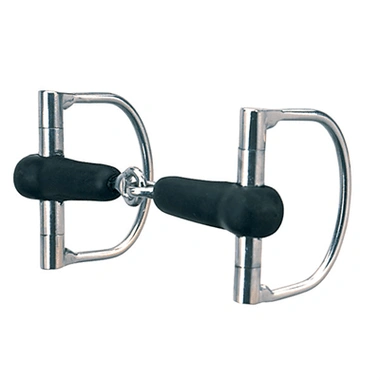

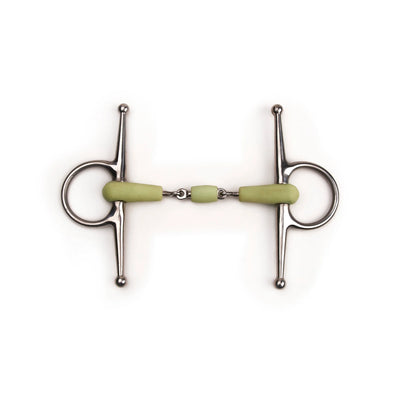

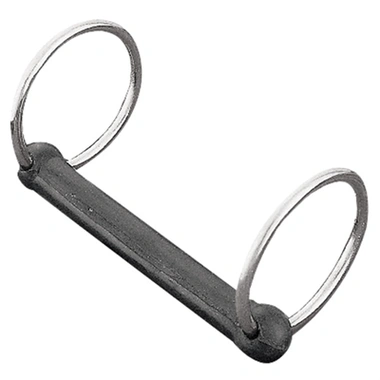

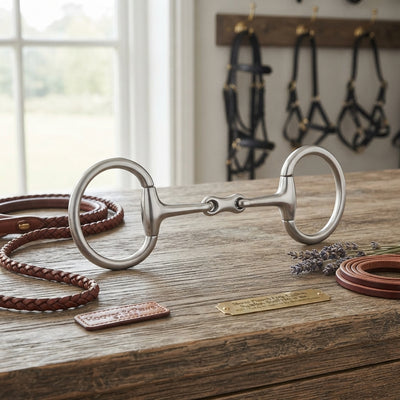
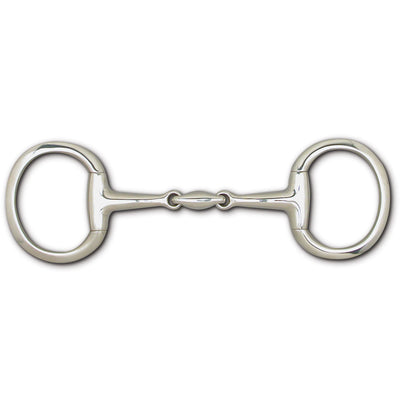


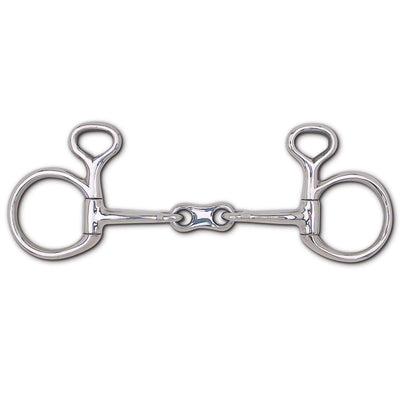

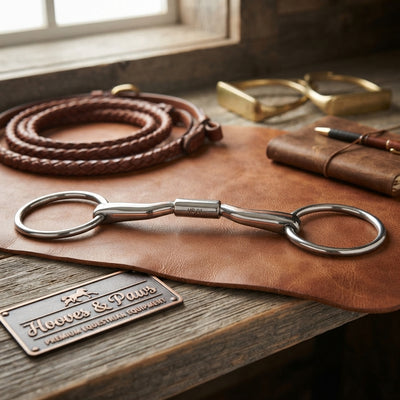

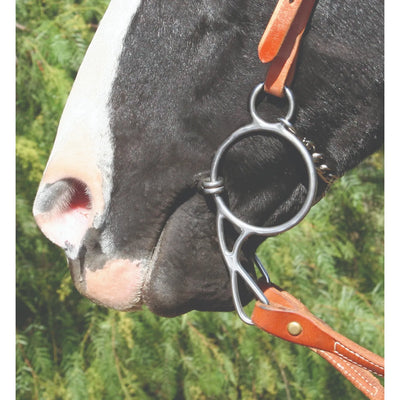


Search for the softest bit and you get a list. What you rarely get is the reason one shape sits quieter than another, or the admission that a mild mouthpiece in busy hands is still a hard ride. Here are the mouthpieces that spread pressure instead of concentrating it, and the fit checks that decide whether any of it reaches the horse.
What Riders Are Actually Asking
What is the gentlest bit for a horse?
There is no single answer, but there is a mechanism. Pressure is force divided by area, so a mouthpiece resting across a broad span of tongue is milder at the same rein tension than one loading a narrow edge. That points to smooth mullen and mullen-barrel shapes, and to double-jointed mouthpieces with a rounded lozenge in the middle. Radiographic work by Hilary Clayton found the tongue fills the oral cavity with no empty space above it, so every bit displaces either tongue or palate. The gentle ones simply spread that displacement over more surface.
Is a thicker bit always kinder?
No, and this is where the usual advice falls apart. A thick mouthpiece spreads load only if the horse has room to close around it. Clayton measured hard palates from 71 to 86 mm long and 33 to 44 mm high, and found no relationship between those numbers and the size of the horse, so a 16 mm bit that suits a 15 hand Quarter Horse can crowd a 17 hand warmblood. A horse with a fleshy tongue or a shallow palate often goes better in a 10 to 12 mm mouthpiece than in a fat one.
Single joint or double joint, which is actually softer?
Riders will tell you a single joint acts like a nutcracker into the palate. The fluoroscopic work of Clayton and Lee found the picture is less tidy than that: the bit does not simply fold in half, its angle shifts with rein tension, and the tongue carries much of the load. Benoist and Cross showed in 2018 that single and double jointed bits rotate differently under the same rein force. So judge the center piece rather than the joint count. A rounded lozenge lies flat across the tongue; a flat plate stands on its edge.
How should a mild bit sit in the mouth?
Half a wrinkle to one wrinkle at the corner of the lip is the working target, and it moves with lip thickness rather than being a fixed number. Width matters more than most people expect. A fixed cheek bit, eggbutt or full cheek, should just brush the corner of the lip with no gap. A loose ring wants no more than an eighth of an inch of clearance each side, because anything wider lets the mouthpiece slide and the ring hole catch skin. A mild mouthpiece in the wrong width still rubs.
Do rubber and synthetic mouthpieces really help?
Often, for two reasons that have nothing to do with kindness in the abstract. Synthetic mouthpieces sit warmer than steel on a cold morning, and they are usually built thicker, around 18 to 20 mm, which spreads load for a horse with room to take it. The cost is durability. Check the mouthpiece every few weeks, because once a horse has chewed grooves or a ridge into it the edges are sharper than the steel bit you replaced. A determined chewer will go through one a season.
How to Choose the Right Bit
- Match the shape to the tongue, not the reputation: A fleshy tongue and a shallow palate want a low-profile mullen or a slim double joint. A roomy mouth can take the fat comfort barrel everyone recommends.
- Measure before you shop: Mouth width decides more than mouthpiece design does. A piece of string and a ruler across the bars costs nothing and saves a return.
- Look at the center link: A rounded lozenge lies flat. A flat plate stands on edge and concentrates the same rein force into a narrow strip of tongue.
- Rule out the teeth first: Sharp points, a retained cap or an erupting wolf tooth make every bit feel severe. A dental exam inside the last twelve months is the honest starting point.
- Change one thing at a time: New bit, new noseband and a new instructor in the same week tells you nothing about which one helped.
What This Page Is Not For
This page is smooth, mild mouthpieces for riding. It does not cover leverage bits with shanks, gag or elevator bits, bitless options, or bit guards, and it is not a rulebook check for dressage or breed show classes. If your horse is running through the bridle, a milder bit on its own is rarely the fix.
Brands Riders Trust
Shires Equikind and Equikind Softie cover the synthetic and peanut link end cheaply. Toklat builds the English lozenge and baucher pieces we ship most of. Myler is the name people arrive asking for, and their comfort snaffle mouthpieces are curved rather than straight. Professional's Choice Equisential covers the smooth western snaffle, and Weaver Leather makes the rubber-covered D-ring.
All of it ships in two days from an American warehouse and carries our 365-day guarantee, so a bit that does not suit can come back. Happy Tails, Happy Trails.
