


The right cat grooming brush should suit your cat’s coat, feel comfortable against the skin, and be easy for you to handle. A long-haired cat that tangles may need a different tool from a short-haired cat that sheds. Start with gentle, brief sessions and let your cat’s response guide the pace.
What should a cat grooming brush do?
A useful brush helps you work through loose coat without pulling or scraping. The best choice is the one your cat tolerates and that suits the coat you are grooming, not the tool with the most pins or the biggest claims.
Brushing can lift loose fur and help you notice changes such as tangles, flakes, or tender areas. It is also a chance to handle your cat calmly and check how the coat looks. It does not replace veterinary care, and a brush cannot resolve a skin or coat problem on its own.
Think of the brush as one part of a simple routine. You need a tool suited to the coat, a calm place to groom, and a way to stop before your cat becomes distressed. If the coat is badly matted, avoid pulling at it with a brush. Ask a veterinarian or a qualified groomer how to proceed.
Which brush works for your cat’s coat?
Coat length is a helpful starting point, but texture and your cat’s sensitivity matter too. A brush that feels fine on one cat may be unpleasant for another. Check the product description for the intended coat and use, then test gently on an easy-to-reach area.
| Tool type | Often useful for | What to check | How to start |
|---|---|---|---|
| Soft-bristle brush | Many short coats and cats that prefer a light touch | Bristles should feel gentle and should not scratch when used with light pressure | Make a few short strokes in the direction the fur lies |
| Rubber grooming mitt or brush | Some short coats and cats that accept petting more readily than a handled brush | Choose a comfortable fit and a surface that is not harsh on the skin | Let the cat sniff it, then try a brief stroke while the cat is relaxed |
| Slicker-style brush | Some medium or longer coats when used carefully | Look for fine pins with protected tips; use a very light hand | Work on a small section and stop if the skin is pulled or your cat objects |
| Wide-tooth comb | Checking longer fur and easing through small loose tangles | Teeth should move through the coat without catching or tugging | Hold the fur near the skin and work gently from the ends of a tangle |
These are starting points, not fixed rules. A short-haired cat may dislike a stiff brush, while a long-haired cat may relax with a soft tool. If you are unsure, compare a few tools in person when possible, or ask your veterinarian or groomer for a suggestion based on your cat’s coat and tolerance.
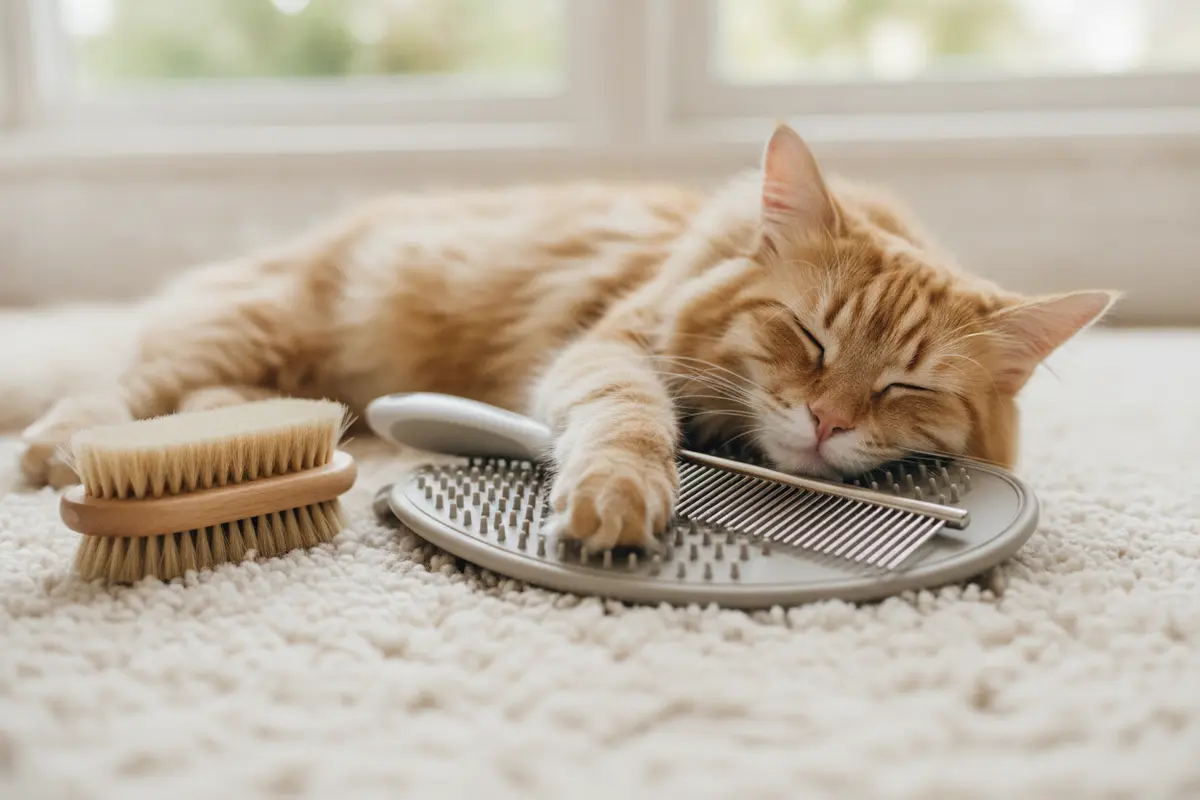
Short coats
A soft-bristle brush or rubber grooming mitt is often a sensible first option for a short coat. The goal is comfortable contact and gentle removal of loose fur. Try a few strokes, then inspect the coat and your cat’s reaction. If the tool catches, scrapes, or makes your cat tense, switch tools or stop.
Medium and long coats
Longer fur can tangle, especially where it rubs or folds, such as around the legs, chest, and behind the ears. A wide-tooth comb can help you check these areas, while an appropriate brush can help with routine coat care. Avoid forcing a comb through a knot. Pulling can hurt and may make grooming harder next time.
If you see a tight mat close to the skin, do not cut it out with household scissors. Cat skin can be difficult to see under dense fur, and an accidental cut can be serious. Ask a veterinarian or experienced groomer for help with mats that cannot be eased out gently.
How to compare cat grooming brushes before buying
Before choosing a cat grooming brush, compare the parts that affect day-to-day use rather than relying on a product name alone. Read the intended coat type, inspect the shape and material of the bristles or teeth, and consider whether the handle will be easy to control. A tool can look sturdy but still be too firm or awkward for your cat.
Check the brush surface and construction
Look for bristles or pins that are securely set and evenly spaced. Protected tips may help reduce scratch risk on some pin-style brushes, but they do not make rough or forceful brushing safe. For a comb, examine whether the teeth are smooth and whether their spacing suits the coat you need to work through. For a mitt, consider whether it fits your hand well enough to let you use a light touch.
Think about cleaning before you buy. Fur that is easy to remove makes routine cleanup simpler. Check product details for instructions about washing and drying, especially if the brush has a wooden handle or a cushion. Do not assume every grooming tool can be soaked or put in a dishwasher. If care instructions are unclear, ask the retailer or manufacturer before using a cleaning method that could damage it.
Match the tool to the task
Ask what you want the tool to do. Are you making brief, routine passes over a short coat? Checking a longer coat for loose tangles? Helping your cat accept gentle handling? One tool may not do every job equally well. A brush that is intended to smooth the topcoat may not be the right choice for working carefully through longer fur, and a comb that helps inspect fur is not a reason to pull at a tight knot.
When a description lists several coat types, treat that as a starting point, not a promise that the brush will suit every cat. Individual cats can be sensitive to touch, and the same tool may feel different depending on pressure and technique. If possible, choose a retailer with clear product details and a way to ask questions before purchasing. Check any return or satisfaction terms directly before ordering rather than assuming a used grooming tool can be returned.
Consider handling and storage
A good handle should let you make short strokes without gripping hard. If you have limited hand strength or plan to groom a wiggly cat, a bulky handle may be harder to control than a simple, lightweight design. For a grooming mitt, check whether it can be secured comfortably without squeezing your hand. Keep your cat’s safety ahead of convenience: if you cannot keep the tool steady, pause and choose a different approach.
Finally, consider where the tool will live. A brush stored in a dry, reachable place is more likely to be checked and cleaned regularly. Keep it away from the cat’s food, litter, and other animals’ grooming equipment. If the brush has detachable pieces, confirm they fit securely and store them together. A simple tool that is clean, intact, and comfortable to use is a better everyday choice than a complicated one you avoid reaching for.
How can you choose a comfortable, safe brush?
Inspect the brush before each use. Choose smooth edges, secure bristles or pins, and a handle you can control. Use light pressure, and stop when your cat shows discomfort.
Run your fingers over the brush before it touches your cat. Check for sharp edges, bent pins, loose parts, or bristles that have worn unevenly. A tool in poor condition can snag fur or irritate skin. Clean away accumulated hair so you can see the brush surface clearly.
Consider your own grip as well. A comfortable handle makes it easier to use short, controlled strokes rather than pressing down. If you have more than one cat, keep each cat’s grooming tool clean and in good repair. Do not share a brush if it has visible debris or if a veterinarian has advised separate grooming tools.
Use the brush only for its intended purpose. Do not substitute a human hairbrush, a flea comb, or a tool made for another animal without appropriate guidance. A product intended for a horse or dog is not automatically suitable for a cat. The same care applies to sprays and other grooming products: check the label and ask a veterinarian if you are unsure whether an item is appropriate for your cat.
How do you brush a cat without making it stressful?
Choose a quiet moment when your cat is settled. Let the cat inspect the brush. Begin with one or two gentle strokes on an area your cat usually enjoys, such as along the back, while avoiding sensitive areas at first. Keep the session short and stop while your cat is still calm.
- Prepare the space. Pick a stable surface where your cat can leave if it wants to. Have the brush ready and keep the environment quiet.
- Let your cat investigate. Place the brush nearby and allow a sniff. Do not chase or restrain the cat just to begin.
- Start lightly. Brush with the direction of hair growth and use gentle strokes. Avoid pressing the bristles into the skin.
- Watch the response. Pause if your cat turns away, flattens its ears, swishes its tail sharply, tenses, vocalizes, or tries to leave. These are reasons to stop, not to hold the cat in place.
- End on a calm note. Finish after a few strokes if that is what your cat accepts. A short, comfortable session is more useful than pushing for a long one.
Over time, you can gradually offer brushing in small increments if your cat remains relaxed. Do not assume every cat will enjoy being brushed all over. Some cats accept brushing only in certain areas or for a few moments. Respect that preference, and ask for professional advice if grooming is difficult or the coat needs more care than your cat will tolerate at home.
How often should you brush your cat?
There is no single schedule that fits every cat. Coat length, shedding, tangling, age, health, and tolerance all influence how often brushing is useful. Check your cat’s coat regularly and adjust to what you actually see. A long coat that tangles may need more frequent attention than a short, low-maintenance coat, but comfort still comes first.
Use a simple routine: inspect the coat, brush gently where needed, and note any change from what is usual for your cat. If frequent brushing seems necessary to manage repeated mats, or the coat becomes difficult to maintain, ask a veterinarian or groomer for an individual plan. The ASPCA’s cat grooming tips also recommend checking coat condition before brushing and choosing an approach suited to the cat’s coat.
Cleaning and caring for your brush
Remove trapped fur after each session or when it builds up. Follow the manufacturer’s instructions for washing the tool, and let it dry fully before storing it. Do not soak a brush if its handle or construction is not designed for that. Replace a tool if pins bend, tips become rough, parts loosen, or the surface is difficult to clean.
Store the brush where it stays dry and clean. Keep it separate from grooming products or tools used for other animals. In a mixed-animal household, make the intended animal clear so a cat brush is not confused with equine grooming gear. For readers caring for horses as well, Hooves and Paws carries horse-specific mane and tail care; it is a separate product category and should not be used on cats.
What should you avoid when brushing a cat?
- Do not brush over a painful or irritated area. Stop and seek veterinary advice if your cat reacts as though an area hurts.
- Do not force out mats. Tugging can hurt the skin. Leave tight mats to a veterinarian or qualified groomer.
- Do not use excessive pressure. A brush should move through the coat without scraping or dragging skin.
- Do not ignore behavior. Struggling, repeated attempts to leave, or clear distress means the session should end.
- Do not rely on brushing to diagnose a problem. Persistent coat changes or skin concerns need professional assessment.
Brushing can help you notice a change, but it does not tell you what caused it. If you see a new lump, sore, hair loss, unusual flaking, or a change in your cat’s comfort, contact a veterinarian rather than trying a stronger brush or grooming product.
Grooming in a multi-pet household
When cats, dogs, and horses share a home or barn routine, keep grooming tools and products clearly separated. A brush for a cat should be chosen for the cat’s coat, and animal-specific directions matter. If you also shop for your dog, browse the separate dog apparel and accessories selection for dog gear, not cat grooming tools. For dog play supplies, the store also has interactive dog toys. These are for dogs and do not replace a cat’s grooming brush.
For broader pet care browsing, the pet supplements and wellness collection is separate from grooming equipment. Supplements are not a substitute for brushing or veterinary care. Keep the distinction clear when shopping, and follow product labels and veterinary guidance for each animal.
Hooves and Paws is a family-owned retailer serving horse and pet owners since 1994. Its selection includes pet and equestrian supplies, so keeping tools species-specific helps make shopping and everyday care clearer. Choose a cat brush by your cat’s needs rather than by what works for another animal.
Shop pet wellness supplies today
Frequently Asked Questions
What kind of brush is best for a short-haired cat?
A soft-bristle brush or a comfortable rubber grooming mitt can be a good place to start for many short-haired cats. Use light pressure and watch how your cat responds. If the brush catches or irritates the skin, stop and try a gentler tool.
Can I use a slicker brush on my cat?
Some cats with medium or longer coats may tolerate a slicker-style brush when it is used gently. Check that the pins are in good condition and do not press them against the skin. Stop if the brush pulls or your cat shows discomfort.
Should I brush my cat every day?
Not every cat needs the same schedule. Check the coat and consider its length, tangling, and your cat’s tolerance. Ask a veterinarian or groomer for guidance if you are unsure how often your cat needs brushing.
What should I do if my cat has a mat?
Do not yank at a tight mat or cut close to the skin with scissors. If it does not loosen easily with gentle handling, contact a veterinarian or qualified groomer for help.
How can I get my cat used to a grooming brush?
Let your cat see and sniff the brush, then try a few soft strokes during a calm moment. Keep the session brief and stop when your cat wants to leave. Gradual, low-pressure practice is safer than restraining a cat to finish a grooming session.
When should I ask a veterinarian about grooming?
Ask for advice if brushing appears painful, your cat has a persistent coat or skin change, mats keep returning, or you are uncertain how to groom safely. A veterinarian can assess health concerns and help you decide whether professional grooming is appropriate.
A comfortable cat grooming brush is one your cat can tolerate, that suits the coat, and that you can use with a gentle hand. Keep sessions calm, maintain the tool, and seek help when a grooming concern goes beyond routine brushing.


