


Understanding equine anatomy helps horse owners describe what they see, handle equipment thoughtfully, and notice changes worth discussing with a veterinarian or farrier. This practical guide to equine anatomy moves from head to hoof, explains what each region does in everyday terms, and shows how to observe your horse without trying to diagnose a problem at home.
Explore horse tack and saddles
What does equine anatomy include?
Key Takeaway
A horse's body is a connected system of bones, joints, muscles, tendons, ligaments, organs, skin, and hooves. Learn the main regions and their normal relationships, then use observation to communicate clearly, not to self-diagnose.
Anatomy is the study of body structures and how they are arranged. For horse owners, it is useful to know the names of visible regions and how they relate to movement, grooming, tack placement, and routine care. It is not a substitute for veterinary training. A horse can look comfortable while a problem is developing, and a visible difference does not tell you its cause by itself.
A helpful starting point is to think in broad systems. The skeleton supports the body and provides attachment points for muscles. Joints connect bones and allow movement. Muscles create force, while tendons attach muscles to bones and ligaments connect and support structures. The nervous, respiratory, digestive, circulatory, and other internal systems do work that cannot be assessed simply by looking at a horse from the outside. The equine anatomy overview from ScienceDirect Topics provides a scholarly introduction to the breadth of the subject.
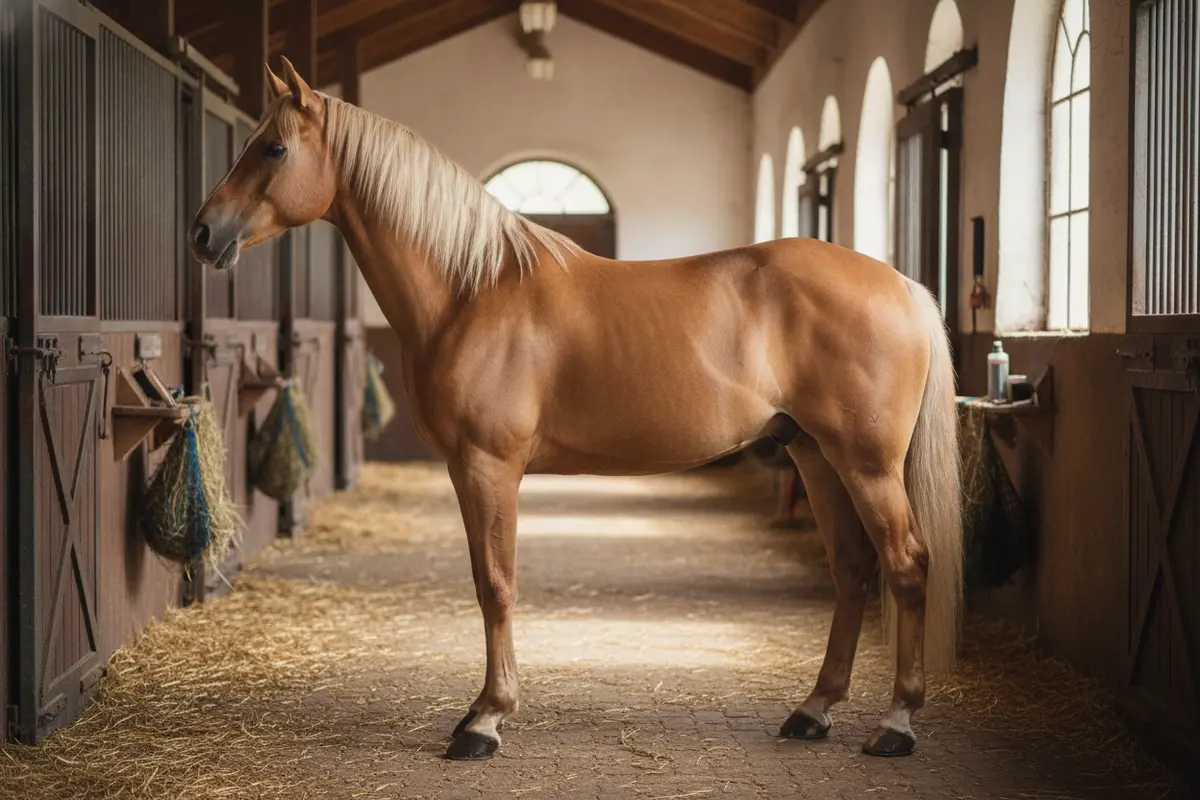
For a practical visual orientation, picture a horse standing squarely. The front is the forehand, the rear is the hindquarters, and the topline runs along the back. The underside includes the chest, belly, and area between the front and hind legs. These everyday landmarks help you describe a location accurately, but they do not explain why a horse is sensitive or moving differently.
How can you recognize the major body regions?
Learning a few common terms makes conversations with a veterinarian, farrier, trainer, or tack professional more precise. When describing a concern, combine the region name with what you observed, when it happens, and whether it changes. Avoid using anatomical vocabulary to guess at an injury.
| Region | Everyday landmarks | Useful observation | Owner's practical focus |
|---|---|---|---|
| Head and neck | Poll, ears, muzzle, throatlatch, crest | Position, expression, symmetry, and response to handling | Check halter and bridle fit; note changes in eating, breathing, or behavior |
| Shoulder and forelimb | Shoulder, elbow, knee, cannon, fetlock, hoof | How the horse stands and moves, and any new swelling or heat | Inspect legs and feet during routine grooming |
| Back and barrel | Withers, back, loin, ribs, flank, belly | Coat and skin condition, posture, and comfort during grooming or tack-up | Check that saddle and girth sit appropriately; ask a qualified fitter about concerns |
| Hindquarters and hindlimb | Hip, croup, stifle, hock, cannon, fetlock, hoof | Compare both sides and observe the horse walking on a safe, level surface | Notice a change in stance or willingness to move and contact a veterinarian |
| Hooves | Hoof wall, sole, frog, heel, coronary band | Cleanliness, shoe condition if shod, and changes from the horse's usual appearance | Pick out and inspect feet; maintain a regular farrier schedule |
These categories are a learning aid, not a scoring system. Horses vary in build, age, condition, and conformation. A horse that looks different from a drawing or another horse is not automatically unhealthy. Focus on your own horse's normal appearance and behavior, and record changes in concrete terms.
What should you know about the skeleton and movement?
Quick Summary
Bones give the body structure, joints allow controlled movement, and soft tissues support and move the skeleton. A change in movement is an observation to share with a professional, not enough information to identify a specific structure or condition.
The skeleton gives the horse a framework. The skull protects the brain and supports the structures of the face. The vertebral column runs from the neck through the back and tail. The ribs form a protective cage around the chest, and the pelvis anchors the hindlimbs. The limbs contain a sequence of bones and joints that work together as the horse stands and moves.
Owners often learn joint names because they appear in everyday conversations. In the front leg, the knee is the carpal joint; the fetlock is lower down, where the cannon bone meets the long pastern region. In the hindlimb, the hock is a prominent joint above the cannon. The stifle is higher, near the body. These familiar names are useful for pointing to a location, but a joint name alone does not identify the source of discomfort.
Movement comes from coordinated action across the whole body. Muscles shorten and relax, tendons transmit force, and joints move within their range. A horse may alter its stride for many reasons, including footing, workload, tack, environment, or a health issue. Do not force a horse to continue exercise to test a theory. If you notice a sudden or persistent change, stop the activity and seek veterinary guidance.
Safe observation starts with a calm setting. Watch the horse at rest before asking it to move. If it is safe and appropriate, observe it walking straight on level, non-slip ground with a capable handler. Do not provoke a reaction, manipulate a painful area, or attempt a flexion test. Report what you saw in plain language, such as “shorter steps on the left front after turning,” rather than naming a suspected diagnosis.
How do the muscles and soft tissues fit together?
Muscles cover and connect different parts of the skeleton. Some are easy to see beneath the coat, while others lie deeper. Their shape varies with genetics, conditioning, age, nutrition, and work. A photograph or a single look cannot tell you whether a horse's muscles are functioning normally.
Tendons and ligaments are not interchangeable. Tendons connect muscle to bone and help transfer the force that creates movement. Ligaments connect bones and help stabilize joints. Both are soft tissues, but their roles differ. This distinction can make a conversation with a veterinary professional more understandable; it does not make home diagnosis safer.
Skin, hair, and the tissues beneath them also matter in daily handling. During grooming, use a calm, consistent routine and watch for new sensitivity, a wound, swelling, or an area that looks different from usual. Avoid repeatedly pressing a tender spot. A horse may react for more than one reason, so note the location and circumstances, then ask a veterinarian what to do.
Good tack habits support observation without making medical promises. Check equipment for wear, debris, and fit before use. A saddle should be selected and fitted for the horse and rider together; adding a pad cannot correct every fit problem. For example, a contoured felt saddle pad is a piece of equipment to compare by its design and intended use, not a replacement for a knowledgeable saddle-fit assessment. If your horse develops soreness, rubs, or a new reaction under tack, pause and get appropriate help rather than changing multiple pieces at once.
Why do the legs and hooves deserve regular attention?
Horse legs carry and move a large animal through a range of activities. Their visible structures include joints, tendons, ligaments, skin, and the hoof. Each leg has its own shape and history, so compare the horse with its own usual baseline rather than relying on a generic picture.
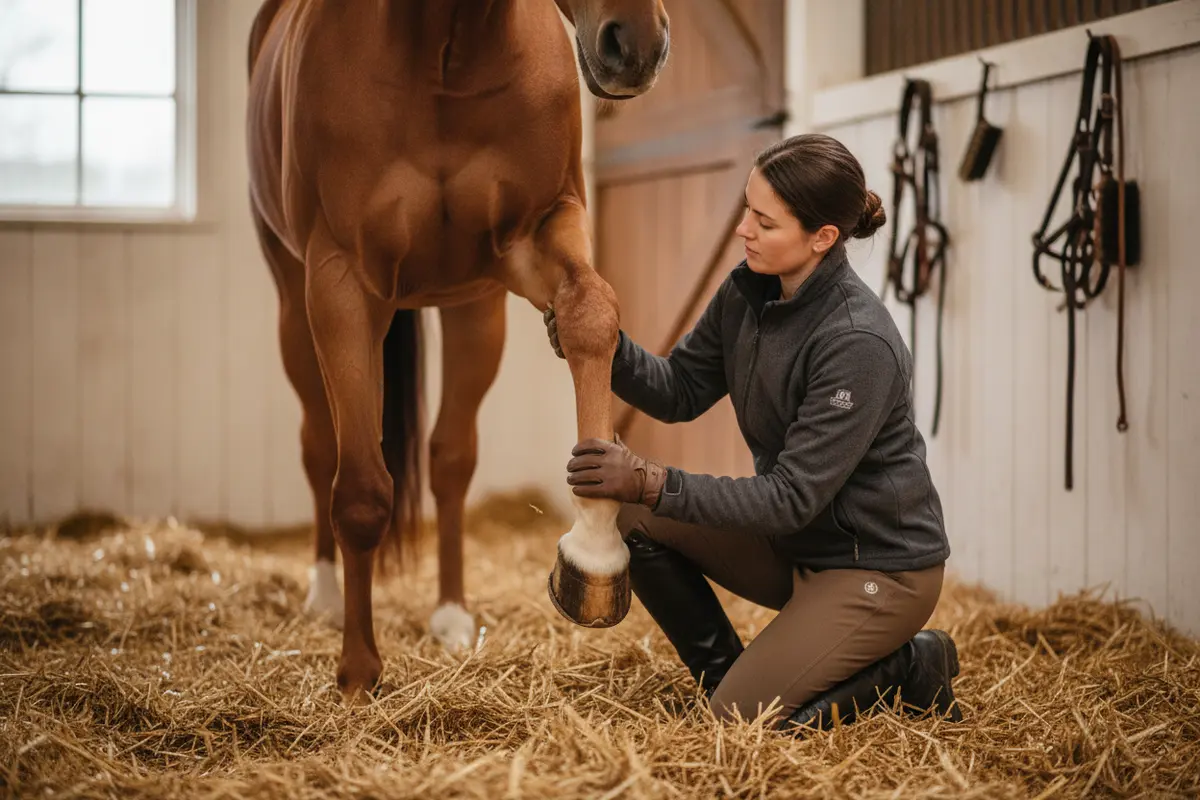
A simple routine can make changes easier to spot. Before and after work, look over each leg in good light. Notice cuts, swelling, heat, discharge, or an unusual stance. Clean dirt away gently when needed. Pick out each hoof and check for trapped material, changes in shoeing, or an unpleasant odor. Do not probe deeply or dig at a suspected problem. If you are unsure, call your farrier or veterinarian.
Hooves are living structures, and routine attention matters even when the horse is not ridden every day. The hoof wall, sole, frog, and heel are terms owners commonly hear from farriers. A hoof pick can help remove packed dirt and manure as part of ordinary cleaning. A hoof pick for routine cleaning is a tool, not a treatment for lameness or hoof disease. Ask your farrier about a care interval that suits your horse's needs and living conditions.
Leg protection also needs to match the activity, fit the individual horse, and be applied according to the manufacturer's directions. Boots or wraps that are too tight, too loose, dirty, or poorly placed can create problems. Learn to put them on correctly and check the skin afterward. A brushing boot option can be compared as riding equipment, but no boot makes every activity risk-free or replaces careful handling.
How does anatomy help with tack and equipment choices?
Key Takeaway
Use body landmarks to communicate where equipment sits and where a problem appears. Choose by the product's fit, intended activity, instructions, and your horse's needs, and seek a qualified professional when fit or comfort is uncertain.
Anatomy gives you a shared vocabulary for discussing where a bridle, saddle, girth, breast collar, or boot sits. It does not provide a shortcut to fitting. Horses differ in their head shape, shoulder, withers, back, barrel, and limbs. Tack that looks suitable on one horse may not suit another, even when both are similar in height or discipline.
When checking a bridle or halter, observe the contact points and the horse's response while the equipment is handled. Keep straps clean and in good condition, and follow product sizing guidance. For saddles, involve a qualified fitter if you are uncertain about balance, clearance, stability, or pressure. A new pad, girth, or adjustment should not be treated as a cure for a horse that shows discomfort.
Bits also interact with the mouth and the rider's hands, so selection and use require care. Consider the horse's training, mouth, discipline, and the experience of the rider, and consult a knowledgeable trainer or professional when needed. Browse performance bit options as equipment choices, not as a diagnosis or guaranteed behavior solution. Any persistent resistance, mouth injury, or sudden change in response deserves a professional assessment.
Before choosing equipment, check four things: the correct size range, the stated purpose, the materials and care instructions, and whether a knowledgeable person can help verify fit. Read the product details and measure according to the maker's guide where provided. If the item is intended for a specialized activity, confirm that it is appropriate for that use. Keep a record of any adjustment and how the horse responds, so you can avoid guessing about what changed.
How can you observe your horse safely?
Routine observation is useful when it is calm, consistent, and non-invasive. Choose a familiar time, such as grooming or turnout preparation. Stand where you can see the horse without blocking its movement or placing yourself in a kick zone. If the horse is anxious, in pain, or difficult to handle, stop and get experienced help rather than trying to complete a checklist.
- Look at the whole horse first. Notice posture, alertness, appetite, and willingness to interact compared with that horse's normal behavior.
- Observe both sides. Look for a new difference in stance, coat, swelling, or equipment contact. Some asymmetry is normal, so report changes rather than judging from appearance alone.
- Check from head to hoof. During familiar grooming, inspect the face, neck, body, limbs, and feet. Use a gentle touch only where the horse is comfortable.
- Describe what happened. Note the location, when you first saw the change, what the horse was doing, and whether it has repeated.
- Call the right professional. Contact a veterinarian about health concerns and a farrier about hoof-care questions. If a concern is urgent or the horse appears severely distressed, seek veterinary help promptly.
Keep a simple log if you are tracking a recurring issue. Write down date, activity, surface, equipment used, and what you observed. A short factual note is more useful than a guess about anatomy. Photos or video can help a veterinarian understand a change when they can be made safely, but do not delay urgent care to record one.
Which signs call for professional advice?
An anatomy guide cannot define what is normal for every horse or determine the cause of a symptom. Contact a veterinarian when a horse has a sudden change in movement, significant swelling, an open wound, breathing difficulty, signs of severe pain, or a persistent change in eating or behavior. When in doubt, call and describe what you see. Follow professional instructions rather than applying a product or medication based only on an online description.
For routine hoof concerns, your farrier can advise on trimming and shoeing, while a veterinarian should assess health problems or lameness. Some situations involve both. Do not pull a shoe, wrap a limb tightly, or administer medication unless a professional tells you to do so. If the horse may injure itself or a handler, prioritize safety and ask for help.
Good communication is specific. Instead of saying “the leg looks wrong,” say which leg, what changed, when it began, and whether the horse is bearing weight or moving differently. Share relevant changes in work, footing, turnout, tack, or handling. Clear details help a professional decide what questions to ask and what examination may be needed.
Shop horse tack and saddles today
Frequently Asked Questions
What are the main parts of equine anatomy?
Commonly described regions include the head, neck, forehand, back, barrel, hindquarters, limbs, and hooves. Internally, horses also have skeletal, muscular, digestive, respiratory, circulatory, and other systems. A basic guide helps with vocabulary, but a veterinarian evaluates health concerns.
What is the difference between a tendon and a ligament?
A tendon connects muscle to bone and helps transmit force. A ligament connects bone to bone and helps support or stabilize joints. Knowing the distinction can help you understand professional explanations, but it cannot tell you which structure is affected when a horse is sore.
How can I learn the names of horse leg joints?
Start with visible landmarks such as the knee and fetlock on the forelimb, and the stifle and hock on the hindlimb. Use a reputable anatomy reference and ask your veterinarian or farrier to point out structures on your own horse. Do not press or manipulate a painful area to identify it.
Can I tell if my horse is injured by looking at its anatomy?
No. Looking over the horse can help you notice and describe a change, but appearance alone does not establish its cause or seriousness. Seek veterinary guidance for new, persistent, or concerning changes, and follow the professional's advice.
Does a saddle pad correct poor saddle fit?
A pad is not a universal fix for saddle fit. Horses and saddles vary, and extra material can change how equipment sits. Ask a qualified saddle fitter to assess the fit instead of relying on a pad to resolve soreness, slipping, or pressure concerns.
How often should I check my horse's legs and hooves?
Include a visual leg check and hoof cleaning in regular handling, and inspect equipment before and after use. The right farrier schedule depends on the horse and its circumstances, so ask your farrier for individual guidance. Contact a veterinarian if you find a concerning change.
Use anatomy knowledge as a communication tool
Learning the major body regions gives you a clearer way to describe what you see during grooming, tack-up, and everyday handling. Pair that vocabulary with calm observation, appropriate equipment checks, and regular professional care. When something changes, report the facts and let a veterinarian or farrier guide the next step.


