


Best Hoof Hardener for Horses: How to Strengthen Weak Hooves
Soft, crumbly, or frequently chipping hooves can make everyday care feel like guesswork. The right hoof hardener may provide topical support for weak hoof material, but it should never be used to hide pain or replace a farrier's assessment. A useful plan begins with the hoof's condition, the horse's environment, and the exact surface named on the product label.
Shop horse hoof health supplies today
Quick answer: A hoof hardener is a topical product intended to help some soft or fragile hoof material tolerate moisture and wear. It does not diagnose lameness, repair every crack, cure infection, or replace routine farrier and veterinary care. Choose a formula for a defined problem, apply it only as directed, and reassess the hoof regularly.
This guide explains what a hoof hardener can do, when to discuss one with your care team, how to compare formulas, and how to apply it safely. It also covers common mistakes and the daily hoof-care habits that matter more than any single bottle.
What Does a Hoof Hardener Do for a Horse?
A hoof hardener is designed to provide topical support to hoof material that is softer, weaker, or more easily worn than desired. Depending on its formulation, it may help the outer hoof wall better tolerate repeated moisture exposure, abrasion, and chipping. The intended benefit is improved durability while new hoof grows and the horse receives regular professional care.
The word hardener can create unrealistic expectations. One application does not transform an entire foot, correct conformation, rebalance a trim, or resolve every cause of poor hoof quality. Hoof growth and strength are influenced by environment, diet, workload, trimming, shoeing, health, and genetics. A topical product addresses only one part of that picture.
Hoof wall, sole, frog, bulbs, and coronary band are different structures. A product intended for the wall should not automatically be spread over the whole foot. Read the package directions and confirm the approved application area. If the hoof is painful, changing rapidly, or showing signs of disease, ask a farrier or veterinarian before applying anything.
Why moisture balance matters
Healthy hoof care is not about removing every trace of moisture. Hoof horn needs an appropriate balance for the horse's conditions. Prolonged soaking, wet bedding, muddy turnout, frequent bathing, and repeated wet-to-dry cycles can make some feet more vulnerable to softening and wear. Excessive drying may contribute to brittleness in some horses. The best response depends on the individual hoof and its environment.
Use a hardener because a qualified professional believes targeted support makes sense, not simply because a product promises an especially strong result. A more aggressive formula is not automatically a better formula. The goal is a sound, functional hoof, not an unnaturally dry surface.
When Should You Use a Hoof Hardener?
A hoof hardener may be worth discussing when hoof wall or sole material remains unusually soft, chips repeatedly, or wears faster than it grows. It may also be considered during extended wet turnout or changing ground conditions when a farrier identifies moisture-related weakness. The product should fit a defined purpose and a reasonable reassessment plan.
Before using one, inspect the hoof and consider what has changed. Is the horse standing in wet bedding? Has turnout become muddier? Is the horse working on abrasive ground? Has the trimming or shoeing interval changed? Is there a new crack, odor, discharge, heat, or lameness? These questions help distinguish a management issue from a problem requiring prompt diagnosis.
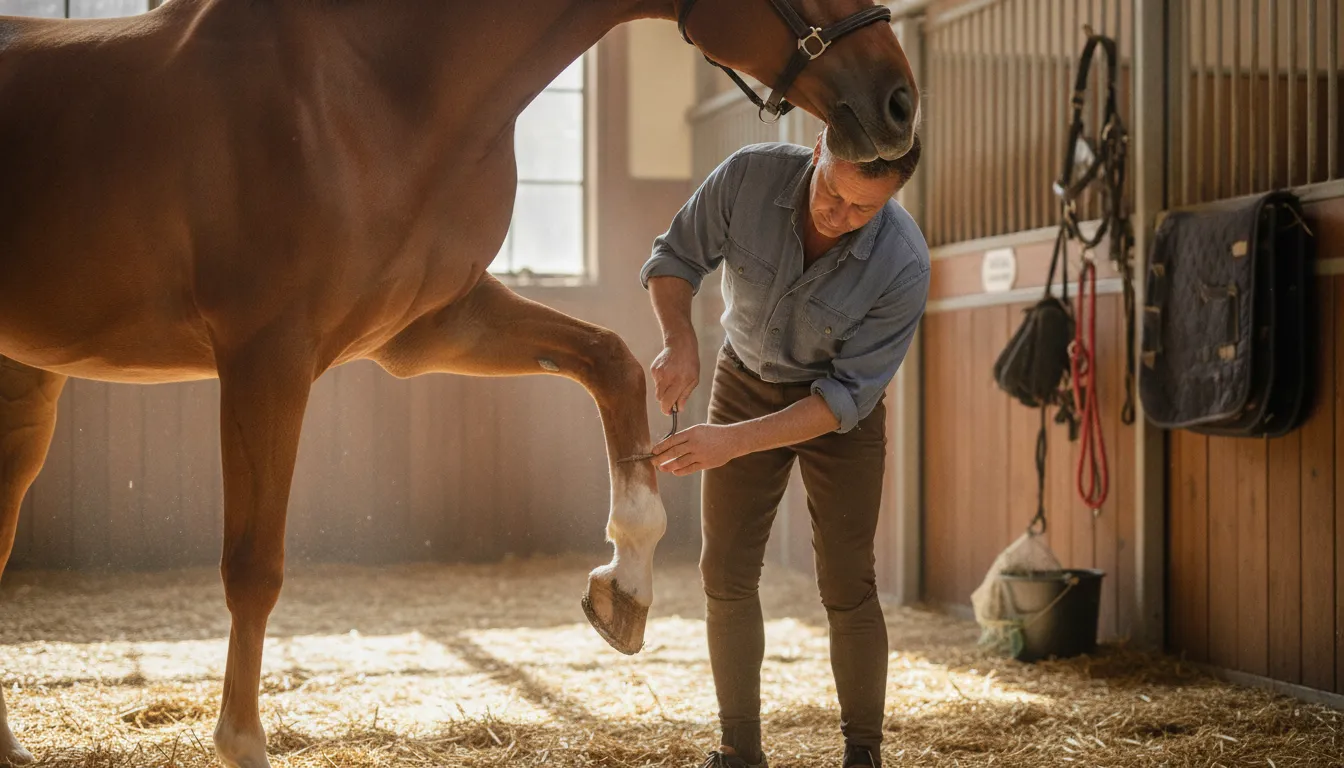
Signs that justify a professional conversation
- The hoof wall stays soft despite consistent cleaning and appropriate management.
- The hoof edge chips or flakes repeatedly between scheduled farrier visits.
- The horse has experienced extended wet turnout, muddy footing, or frequent soaking.
- The hoof wears unusually quickly compared with the horse's workload and normal growth.
- Your farrier recommends a topical product as part of a broader plan.
These signs do not prove that a hardener is needed. Discuss the hoof's condition with the person responsible for trimming, shoeing, and soundness. If a horse is suddenly lame or the foot is hot, swollen, draining, foul-smelling, or deeply cracked, seek professional assessment before testing products.
When is a hardener not the next step?
Do not use a topical hardener to mask pain or self-treat a suspected abscess, infection, severe separation, deep crack, or rapidly deteriorating hoof. A horse with sudden lameness may need a veterinary examination. A hoof with persistent odor or compromised frog tissue may need a different treatment plan. A poorly balanced hoof may need farrier work rather than a topical coating.
Stop using a product and request advice if the horse develops irritation, increased sensitivity, redness, swelling, pain, or worsening hoof changes. A hardener is supportive care, not a substitute for diagnosis or routine care. For related first-aid and hoof-care shopping, visit the horse health and first-aid collection.
How Do You Choose the Right Hoof Hardener?
Begin with the problem, then compare the product to that problem. A formula intended for a soft hoof wall is not interchangeable with a conditioner for dry-looking horn, a thrush treatment, or a dietary supplement. Read the full label before purchase and confirm that the product is intended for horses and for the surface you plan to treat.
| Product category | Primary purpose | Do not expect it to replace | Label details to review |
|---|---|---|---|
| Hoof hardener | Topical support for soft, weak, worn, or crumbly hoof material. | Farrier work, diagnosis, infection treatment, or a complete care routine. | Active ingredients, approved surfaces, application frequency, drying time, and warnings. |
| Hoof conditioner or oil | Routine moisture management for hoof horn that appears dry. | Diagnosis of a weak or painful hoof, treatment for thrush, or structural correction. | Intended use, surfaces, frequency, and whether it is a maintenance product. |
| Thrush or antimicrobial product | Support for a condition involving compromised frog tissue or microbial concerns. | Veterinary or farrier assessment when infection, pain, or deeper involvement is possible. | Target condition, cleaning directions, contact precautions, and stop-use warnings. |
| Dietary support | Nutrition-based support when the overall ration needs review. | Topical protection, treatment of an active hoof problem, or a balanced diet evaluation. | Ingredient amounts, feeding directions, interactions, and professional nutrition advice. |
Which active ingredients should you look for?
Active ingredients vary by product, so the package label is the authoritative source. Some hardener formulas use ingredients intended to improve the resistance of hoof material, while others have a different purpose. Do not assume that a familiar ingredient appears in every product or is appropriate for every horse.
Compare the ingredients with the intended use, safety warnings, and application instructions. Do not choose solely by ingredient name or the strongest marketing language. Ask your care team about a formula if your horse has sensitive skin, open cracks, a history of reactions, or an undiagnosed hoof condition. Use only the amount and frequency the manufacturer specifies.
What else belongs in the comparison?
Review the application surface first. Some products are designed for part of the hoof wall and should be kept away from the coronary band, frog, bulbs, sole, or surrounding skin. Check whether the hoof must be clean and dry, whether ventilation is recommended, whether gloves are required, and how long the product must dry before turnout or bathing.
Practical details matter. A product that fits your handling routine is more likely to be used consistently and correctly. Record the date, surface treated, amount used, turnout conditions, and changes you observe. This gives your farrier or veterinarian a clearer picture than a vague impression that the hoof is better or worse.
If the concern is primarily dryness rather than persistent softness, compare the horse grooming and coat-care collection with your care professional's recommendation. Hoof-care products should match the condition instead of being chosen by appearance alone.
How Do You Apply Hoof Hardener Safely?
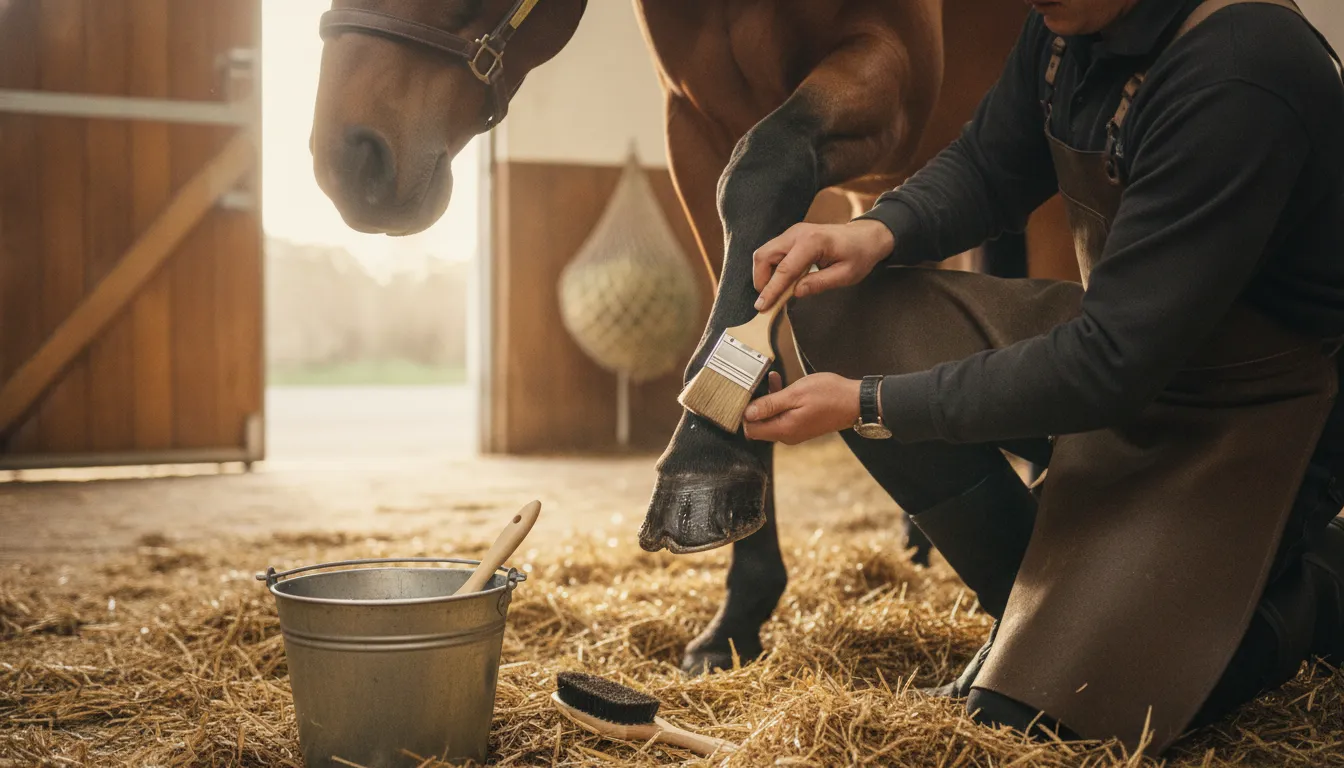
Safe application is a simple process, but small details matter. Start with inspection, prepare the approved surface, follow the label, and monitor the horse after use. Never copy an application schedule from another product, social media post, or another horse's routine.
- Pick out and inspect each hoof. Remove mud, manure, and loose debris with a hoof pick. Look for heat, tenderness, odor, discharge, cracks, separation, bruising, or a change in shape. If the horse is painful or suddenly lame, stop and seek professional guidance.
- Clean the intended surface. Follow the label's preparation directions. Do not aggressively scrape healthy tissue or open a crack to make the hoof look cleaner. Cleaning should remove debris and make the approved surface visible.
- Allow the hoof to dry as directed. Many products require a clean, dry application area, but requirements vary. Do not assume that a wet hoof is suitable simply because the product is liquid.
- Protect yourself and the horse. Read warnings and first-aid information before opening the container. Use recommended gloves, eye protection, and ventilation. Avoid breathing vapors.
- Apply only to approved structures. Use the manufacturer's brush, applicator, or method. Do not spread the product over the frog, sole, bulbs, coronary band, open cracks, or irritated skin unless the label expressly permits it.
- Use a controlled amount. More product is not automatically more effective. Apply an even coat where directed and prevent contact with skin, eyes, or other sensitive tissue.
- Respect drying and turnout instructions. Wait the full labeled period before bathing, turnout, or handling the foot in a way that could remove the product. Avoid layering other products unless your label or care professional supports the combination.
- Follow the schedule and reassess. Some formulas have an initial schedule and a later maintenance schedule. Record applications and observations, and coordinate the plan with farrier visits.
Stop and ask for help if the horse becomes uncomfortable, the skin becomes irritated, cracks worsen, or new heat, swelling, odor, or discharge appears. Keep the product container available so your farrier or veterinarian can review the exact ingredients and directions.
Common Hoof Hardener Mistakes
Even a suitable product can create problems when used without a clear plan. Avoid these common errors.
Applying it to a dirty or soaking-wet hoof
Mud, manure, and standing water can make coverage uneven and hide changes that deserve attention. Clean the foot, inspect it, and follow the product's drying directions before application. Daily picking is not just preparation for a product. It is a basic way to notice hoof changes early.
Coating every structure
Do not treat the entire foot because the wall looks soft. The sole, frog, bulbs, coronary band, and surrounding skin have different functions and sensitivities. Follow the exact label and keep the application limited to approved areas.
Using more or using it more often
Increasing the amount or frequency because improvement seems slow can irritate tissue and make the response harder to assess. Use the labeled schedule. If the hoof is not improving, ask why rather than simply applying more.
Changing several products at once
Adding a hardener, oil, supplement, and antimicrobial treatment at the same time makes it difficult to identify what helped or caused irritation. When possible, make one meaningful change at a time and give your care team a complete list of products in use.
Ignoring the underlying cause
A topical product cannot correct a poor trim, unsuitable footing, nutritional imbalance, infection, abscess, or other disease. If the same problem returns, arrange a professional review of the horse's environment, diet, workload, trimming or shoeing, and overall health.
Build a Complete Hoof-Care Routine
Hoof hardener works best when the basics are consistent. Pick out the feet regularly, inspect them in good light, maintain a farrier schedule, and keep bedding and turnout conditions as clean and practical as possible. Note changes in wall quality, cracks, chips, odor, heat, and comfort.
Nutrition deserves a measured approach. Hoof growth reflects the horse's overall health and diet, but supplements should not be added automatically. Ask a veterinarian or qualified nutrition professional to review the full ration when poor hoof quality persists. A topical hardener does not compensate for a significant nutritional or health issue.
Work with your farrier to connect the product plan to trimming or shoeing. The professional can assess balance, flare, breakover, wall separation, and the amount of hoof being lost between visits. If the horse is lame, the veterinarian should guide diagnosis and treatment. Keep labels and application notes available at appointments.
For additional horse supplies that support a consistent stable routine, browse the horse supplies collection. Hooves and Paws is a family-owned retailer serving horse, dog, and cat owners since 1994, with curated supplies and personal service for animal families.
Use the horse health and first-aid collection for related care products, and return to the horse grooming and coat-care collection when your routine also includes cleaning and coat maintenance. The most useful purchase is the one that fits the horse's identified need and your established care plan.
Shop horse hoof health supplies today
Frequently Asked Questions
What is hoof hardener used for?
Hoof hardener is used as topical support for hoof material that is unusually soft, weak, worn, or prone to chipping. It is not a universal treatment and should be selected for the condition and surface named on the label. Routine care and professional evaluation remain essential.
Can hoof hardener fix a cracked hoof?
It may support surrounding hoof wall in some care plans, but it cannot repair every crack or identify why the crack developed. A deep, spreading, painful, draining, or repeatedly returning crack needs farrier or veterinary assessment. Follow professional instructions rather than sealing over a problem blindly.
How often should you apply hoof hardener?
Use the frequency printed on the specific product label or provided by your farrier or veterinarian. Formulas differ, and an initial schedule may differ from maintenance use. Applying it more often than directed can irritate tissue and does not guarantee faster improvement.
Can hoof hardener be used on the sole and frog?
Do not assume it can. Many products are intended for particular hoof-wall surfaces, while the sole and frog have different structures and care needs. Apply it to the sole or frog only if the exact label expressly approves that use and your care professional agrees.
Is hoof hardener a substitute for a farrier?
No. A hardener cannot trim or balance the foot, diagnose pain, treat an abscess, or replace routine farrier care. It should be one possible part of a plan that includes regular professional assessment and appropriate maintenance.
When should a veterinarian examine the hoof?
Contact a veterinarian promptly for sudden lameness, significant heat, swelling, marked tenderness, discharge, foul odor with deteriorating tissue, a deep crack, or any rapid change you cannot explain. Do not rely on a hardener to conceal symptoms or delay diagnosis.


