


A horse ear bonnet can help cover a horse’s ears during riding, but the right choice depends on fit, intended use, and the horse’s comfort. Some owners choose a bonnet for insect coverage, while others want a neat look for schooling or competition. This guide explains how to compare styles, check fit, and use one thoughtfully.
What is a horse ear bonnet used for?
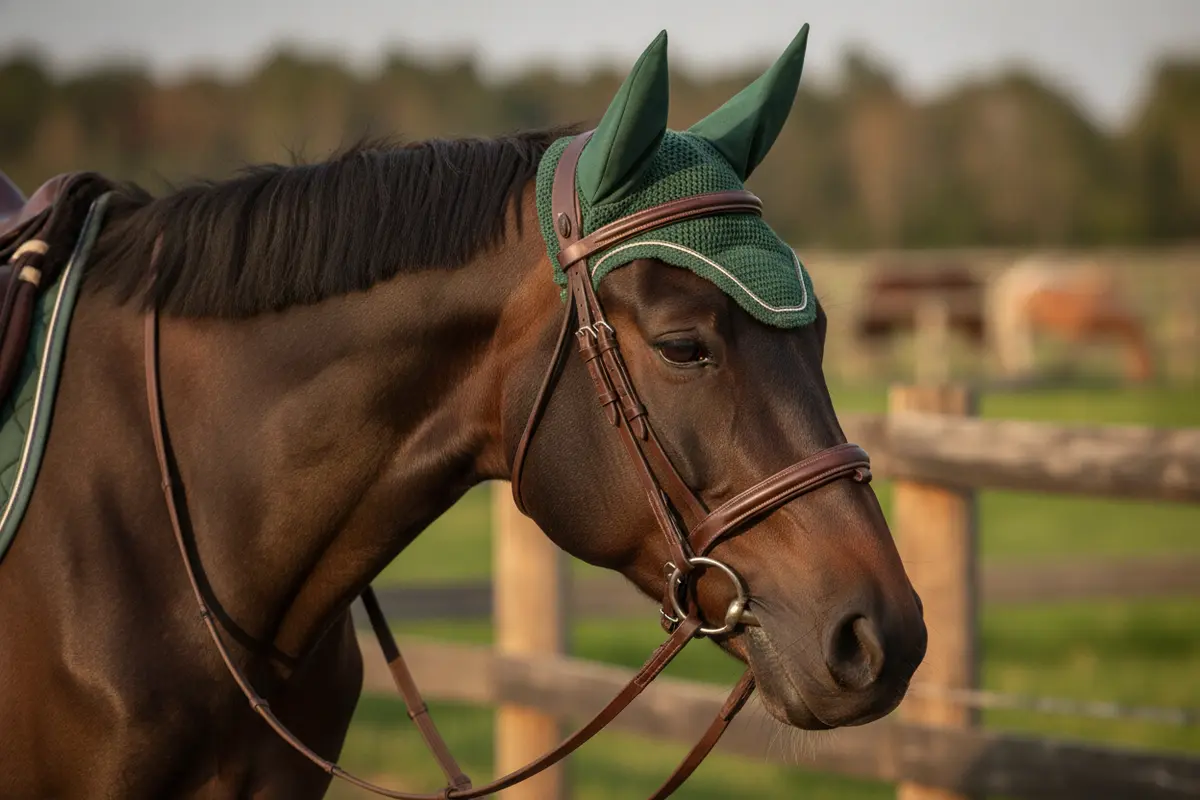
An ear bonnet is a fabric cover that sits over a horse’s ears and usually connects across the poll. It is worn beneath the bridle. Designs vary: some have open, stretchy ear sections, while others use more structured fabric or decorative trim. Always check the product description for construction and intended use rather than assuming every bonnet offers the same coverage.
Owners most often consider a bonnet for a few practical reasons:
- Coverage from insects: A fabric ear section may help keep flies away from the ears while the horse is being ridden. It does not replace a turnout fly mask or other protection when the horse is in the pasture.
- A comfortable layer: Some horses are bothered by insects or touch around the ears. A suitable bonnet may provide a simple barrier, but it should never be used to force a horse to tolerate discomfort or to conceal a possible ear problem.
- A tidy appearance: Ear bonnets are also used as part of a coordinated riding outfit. Decorative details should not interfere with the bridle, vision, or the horse’s movement.
Do not assume that a bonnet blocks sound or makes a horse calmer. Materials, design, and competition rules differ, and a fabric cover is not a substitute for addressing a horse’s sensitivity or training needs. If a horse suddenly becomes head-shy, shakes its head, or resists having its ears handled, pause and investigate the cause instead of simply covering the area.
Key Takeaway
Choose a bonnet for a clear purpose, such as light ear coverage or a show-ready look. Its design should sit comfortably under the bridle and should not be expected to solve sound sensitivity or replace turnout protection.
Which horse ear bonnet style should you choose?
Start with the job you want the bonnet to do. A simple schooling bonnet may be enough for everyday riding. A more decorative design may suit a show outfit, provided it is allowed in the discipline and does not compromise comfort. Lightweight or open-knit fabrics may feel different from denser materials, so consider the climate, the horse’s preferences, and the manufacturer’s care directions.
| Style or feature | What to consider | Best starting point |
|---|---|---|
| Plain, close-fitting bonnet | Simple shape and fewer embellishments. Confirm the ears have enough room and the fabric does not pull at the poll. | Everyday schooling or a low-key riding setup. |
| Open-knit or lightweight fabric | Check how the fabric stretches and whether it holds its shape after washing. Mesh is not automatically suitable for every horse or condition. | Riders who prefer a lighter-feeling style and can inspect it for wear. |
| Decorative or trimmed bonnet | Look at trim placement, stitching, and how it sits beneath the bridle. Check show rules before using it in competition. | A coordinated appearance when decoration remains secure and unobtrusive. |
| Bonnet with added design claims | Read the product details carefully. Do not infer sound reduction, medical benefit, or a specific level of insect protection from appearance alone. | Buy only when the construction and permitted use are clearly described. |
Think about the whole bridle setup, not just the bonnet. A thick seam, stiff edge, or excess fabric can create a pressure point where the headpiece, browband, or cheekpieces sit. If you are also reviewing other tack, browse the English horse tack selection and compare how each item fits into your normal riding setup.
Match the style to where and how you ride
For a short schooling session, a plain bonnet with a familiar fit may be practical. For a longer ride, prioritize stable positioning and comfortable fabric over decorative detail. If insects are the main concern, consider when the horse is exposed and whether a bonnet’s coverage is appropriate for riding. A bonnet generally covers the ears only, so it will not protect other exposed areas. Use purpose-made turnout products for turnout, and follow their instructions rather than adapting riding gear for another job.
For a show, think through both appearance and compliance. A color that coordinates with the horse’s tack does not establish that the style is allowed. Check rules early enough to choose another option if needed. For a lesson or clinic, ask the organizer if you are unsure about local expectations, but keep the horse’s comfort as the deciding factor. If the horse dislikes a particular material, seam, or fit, a less elaborate design may be the better choice even if it is less visually coordinated.
It can also help to note what happens during each trial: whether the bonnet stayed in place, whether the horse moved its ears normally, and whether any rubbing appeared afterward. These simple observations make future sizing and style comparisons more useful. Change one feature at a time when testing another bonnet, so you can tell whether the difference in fit or material affects the horse’s response.
Shop This Post

How should an ear bonnet fit?
A useful fit is secure without being tight. The bonnet should stay in place as the horse moves, but it should not squeeze, twist, pull the ears into an unnatural position, or press hard beneath the bridle. Because shapes and sizing labels vary by maker, use the specific product’s sizing guidance and measure as directed rather than relying on a single universal size chart.
- Begin with a clean, calm check. Examine the horse’s ears and poll before putting the bonnet on. Look for irritation, swelling, cuts, discharge, or unusual sensitivity. Do not cover a sore area; ask a veterinarian for advice when you see a health concern.
- Check the size and construction. Compare the manufacturer’s measurements and instructions with your horse. Look at the depth of the ear pockets, stretch, seams, and the length of the connecting section over the poll.
- Place it gently. Set the bonnet over the ears without forcing them into position. Smooth the fabric and make sure it lies flat. If the horse pulls away or becomes distressed, stop and reassess rather than rushing.
- Fit the bridle over it. Put the bridle on as usual and check that the headpiece and browband do not drag the bonnet backward or bunch material. The bonnet should not interfere with the bridle’s normal adjustment.
- Recheck in motion. Before a full ride, observe the horse walking and turning. Look for slipping, rubbing, repeated head tossing, pinned ears, or a change in behavior. Stop and remove or readjust the bonnet if it seems uncomfortable.
During the first few uses, keep the trial brief and supervise closely. A horse may tolerate a bonnet at a standstill but react differently once the bridle is adjusted or the horse begins to move. Check beneath the edges after riding for dampness, friction, or hair rubbed out of place. Stop using the bonnet if it causes rubbing or the horse shows persistent discomfort.
Quick Summary
The right fit stays put without squeezing or shifting under the bridle. Compare measurements with the maker’s size guidance, then inspect the bonnet and the horse’s response before, during, and after use.
Bonnet fit checklist before you ride
- The bonnet is the size recommended for the horse by its maker.
- Both ear sections sit smoothly, without twisting or pulling.
- There are no hard seams or bulky folds beneath the bridle.
- The horse can move its ears naturally and shows no new sign of distress.
- The bonnet stays in place during a short, supervised check.
- The fabric is clean, dry, intact, and free of loose trim or damaged stitching.
- The bonnet is appropriate for the setting and current competition rules, if applicable.
Use the checklist both before the ride and after the first few outings. Before mounting, confirm the bonnet has not shifted while you adjusted the bridle. Once mounted, continue to notice whether the horse moves its ears normally and responds as usual. Afterward, take the bonnet off and inspect the skin and hair along its edges. A single fit check at the tack room is not enough if the fabric moves once the horse starts working.
Keep a note if the same problem appears more than once. For example, repeated slipping may point to a size or shape mismatch, while rubbing in one place may mean a seam or bridle contact needs attention. Do not try to solve either problem by tightening the bonnet or adding a makeshift fastener. Recheck the manufacturer’s instructions, try a better-fitting design, or stop using the item if a comfortable fit cannot be achieved.
Choosing material, care, and a sensible product match
Material affects feel, maintenance, and durability. A stretchy knit may be easy to put on, but it still needs to fit the horse correctly and retain its shape. A denser or decorative fabric may need more careful washing and inspection. Follow the maker’s washing instructions, since heat or rough handling can affect stretch, seams, and trim.
After each ride, remove the bonnet and check it for sweat, dust, loose threads, stretched openings, and damage. Let it dry fully before storing it. Keep it with clean tack, not in a damp or dirty place. Replace it if an ear pocket loses its shape, a seam opens, or trim becomes loose enough to catch on other equipment.
Product recommendations are most useful when they match the horse and the intended routine. Before buying, confirm the listed size range, fabric, care directions, intended use, and return or exchange details. If a product page does not answer a fit or construction question, contact the retailer before ordering instead of guessing from a photo.
Introducing a bonnet to a horse
A horse that has never worn an ear bonnet may need time to accept the feel of fabric around its ears. Work in a familiar, quiet place and keep the first introduction short. If the horse is already comfortable with routine grooming and bridling, present the bonnet calmly and allow it to investigate before you put it on. Do not trap, restrain, or force the ears through the openings. If the horse becomes anxious, stop, remove the bonnet if safe to do so, and try another day or ask an experienced professional for help.
When the horse is relaxed, place the bonnet gently and reward calm behavior in a way that suits your normal handling routine. Leave it on only briefly at first. Observe the horse’s expression, ear movement, and overall behavior. If it stays relaxed, progress to fitting the bridle and taking a few steps in hand. Increase the time gradually over more than one session, rather than introducing the bonnet for the first time immediately before a demanding ride or show.
Acceptance during a quiet introduction does not guarantee that a bonnet will feel comfortable once the horse is working. Check for slipping and rubbing after movement, and remove the bonnet if discomfort appears. If the horse repeatedly resists ear handling, do not interpret that behavior as a simple equipment problem. Pain, sensitivity, or a learned fear may be involved. Pause use and seek advice from a veterinarian or qualified trainer when the response is persistent, sudden, or severe.
Product details to compare before ordering
Read the product description closely, then compare the details that affect real use. Look for the maker’s sizing method, fabric composition, stretch, seam placement, wash instructions, and any limits on intended use. If the bonnet has decorative elements, check how they are attached and whether they could catch on tack. Clear product information helps you decide whether the item fits your routine, but it cannot replace a careful fit check on your horse.
- Measure consistently: Follow the maker’s instructions and use the same approach each time you compare products. Breed labels or a horse’s usual blanket size are not reliable substitutes for a bonnet-specific size chart.
- Consider your bridle: Think about where the headpiece and browband rest, and whether they could push the bonnet out of place. If you are reviewing the full tack setup, explore the English tack selection as a separate part of your comparison.
- Plan for cleaning: Consider how often you ride and whether you can wash and dry the fabric as directed. A bonnet that stays damp or dirty between uses is not ready to go back on the horse.
- Check the return terms: Confirm the retailer’s current return or exchange policy before removing tags or washing a new item. That is especially useful when size or shape is uncertain.
It can help to write down what you need before you shop: intended riding use, measurements, material preference, and any show restrictions. This keeps the decision focused on comfort and suitability rather than decoration alone. If you are also checking how to store your bridle between rides, review the bridle storage option, while keeping the bonnet clean and dry on its own.
Buying Tip
Match the bonnet to your horse’s actual measurements and use case, not just the color or trim. A correctly fitting plain style is a better choice than a decorative option that shifts or rubs.
Bonnet selection is only one part of safe tack preparation. Check your bridle and other equipment regularly, and make sure the rider’s helmet is properly fitted and appropriate for the activity. You can compare options in the riding helmet collection. For organized storage of bridle equipment between rides, see the bridle bag product details. These are separate equipment choices, not substitutes for checking the bonnet itself.
Riding and competition use
Rules can depend on the discipline, event, venue, and current rulebook. A style permitted in one setting may not be permitted in another, especially when a bonnet includes unusual materials or design features. If you plan to compete, check the current rules for the exact class and organization before the event. The United States Equestrian Federation is a useful starting point for riders checking U.S. equestrian organization information, but confirm the applicable current rule rather than relying on a general product description.
For ordinary schooling, keep the same comfort checks in place. Make sure the bonnet does not cover the eyes, restrict the horse’s natural ear movement, or interfere with bridle adjustments. Do not use a bonnet to hide a behavior change. If your horse reacts strongly to ear coverage, consult a qualified trainer or veterinarian as appropriate and choose a different approach until you understand the response.
Common horse ear bonnet buying mistakes
- Choosing by appearance alone. Color and trim do not tell you whether the shape fits. Check measurements and construction first.
- Assuming every bonnet has the same purpose. Materials and coverage vary. Read product details and avoid claims not supported by the maker’s information.
- Buying too small for a snug look. Tightness can cause pressure and discomfort. The bonnet should lie smoothly without forcing the ears or pulling at the poll.
- Ignoring the bridle interaction. A fit that looks fine without a bridle may shift or bunch once the headpiece is in place.
- Skipping inspection after use. Sweat, friction, and loose stitching can go unnoticed unless you remove and examine the bonnet.
- Assuming a show rule from a photo. Check current rules for your discipline and event. Ask the show office or governing organization when details are unclear.
Hooves and Paws is a family-owned online retailer serving horse, dog, and cat owners since 1994. When comparing riding supplies, focus on practical fit, clearly described product details, and the needs of the animal using them.
Frequently Asked Questions
Can a horse wear an ear bonnet for every ride?
Not necessarily. Use one only when it fits comfortably and suits the riding conditions. Check the horse’s response each time, and follow competition rules when riding at an event.
Does a horse ear bonnet block noise?
Do not assume it does. A bonnet’s material and construction vary, and a product should not be treated as sound protection unless its maker clearly describes and substantiates that function. It is not a substitute for addressing sound sensitivity with appropriate professional help.
Can a bonnet replace a fly mask?
No. An ear bonnet is typically worn under a bridle while riding. It is not a replacement for turnout protection, and it may not cover the face or eyes. Choose gear for the specific use and check that it is designed for those conditions.
How do I know if the bonnet is too tight?
Look for ears being pulled or compressed, fabric that digs in, pressure from seams, shifting beneath the bridle, or signs such as repeated head tossing or distress. Remove it and reassess if the horse seems uncomfortable. Use the maker’s fit guidance rather than trying to stretch a poor fit into place.
Should I wash a horse ear bonnet after every ride?
Follow the manufacturer’s care instructions. Inspect it after each use and clean it when sweat or dirt builds up. Let it dry fully before storage, and do not use it if washing has damaged the seams, shape, or trim.
Are ear bonnets allowed in horse shows?
It depends on the discipline, class, organization, and current rules. Check the rulebook and event guidance before competing, especially if the bonnet has unusual materials or features. When in doubt, ask the show organizer or relevant governing body.
A well-chosen horse ear bonnet should serve a clear purpose, fit comfortably beneath the bridle, and stay in good condition. Take time to measure, inspect, and observe your horse so the final choice supports a comfortable ride.


