


Choosing Nutrena horse feed calls for more than matching a bag to a broad label such as senior, performance, or complete. The right choice depends on the horse’s age, condition, workload, forage, current ration, and health history. This practical guide explains how to compare products, what to check on the tag, and how to make a useful feeding plan with your veterinarian or equine nutrition professional.
What should guide a Nutrena horse feed choice?
Start with the horse and its whole ration, not the product name. Identify the feed’s role, compare the current label, and get individualized advice when the choice involves a health concern or substantial change.
Nutrena is a brand with different products and feeding directions, not a one-size-fits-all plan. A horse that holds steady condition on forage may have different needs from a horse in regular work, a growing youngster, or an older horse that has trouble maintaining weight. The same product may also be used differently depending on what else the horse eats. Do not assume that a feed is appropriate just because another horse appears to do well on it.
Before shopping, define the question you are trying to solve. Are you assessing whether the present ration fits a change in workload? Are you looking for a product that complements the forage available? Has a veterinarian recommended a dietary adjustment? A clear purpose helps prevent switching feeds in response to a vague impression, such as a dull coat or a difficult ride, when the underlying cause may be something else.
Write down the horse’s age, approximate body condition, daily work, and current diet. Include hay or pasture, concentrates, supplements, treats, and any medication or veterinary dietary advice. Note recent changes in weight, appetite, behavior, or routine. These details help a professional consider the complete picture rather than evaluating one bag in isolation.
How do you read a horse feed tag?
The tag is the starting point for comparing a specific product. Formulas and directions can change, so read the current label on the exact feed you are considering rather than relying on an old bag, an online summary, or a memory of the brand. The AQHA guide How to Read a Horse Feed Tag offers an overview of label details. Use the product’s own current tag for its directions, and ask a qualified professional to explain anything unclear.
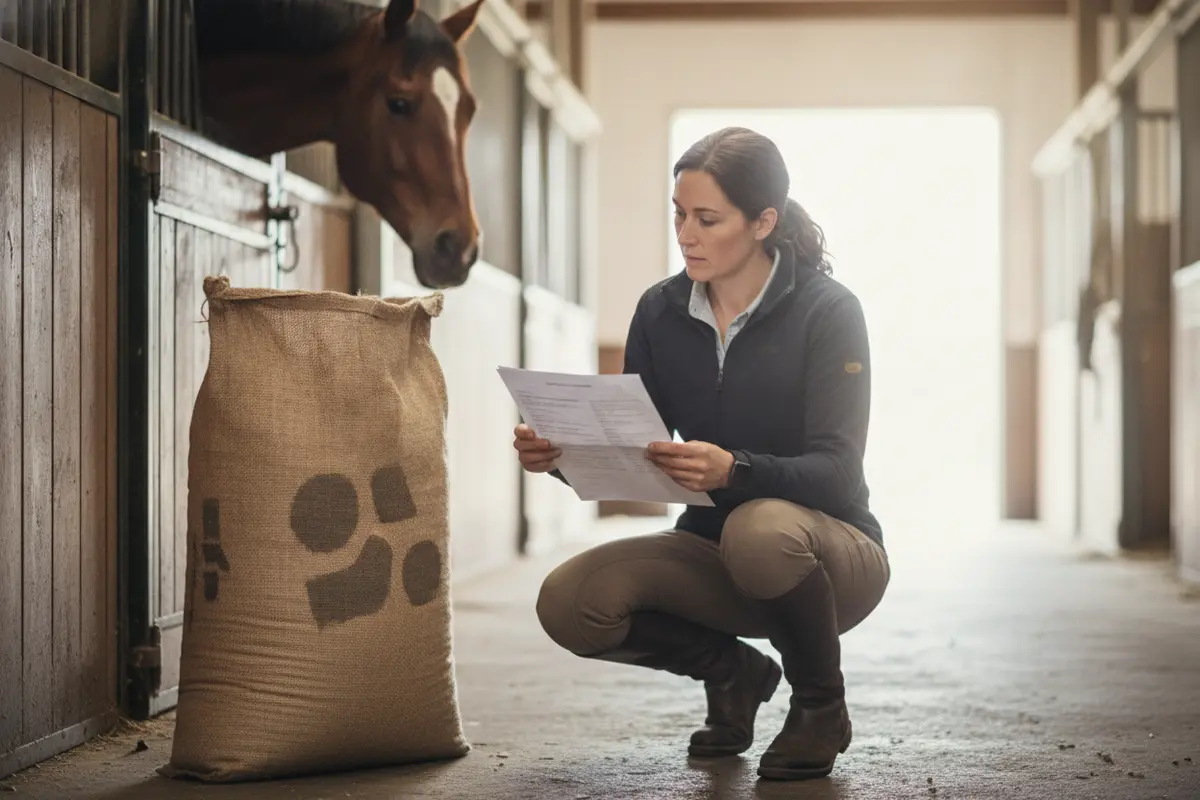
Label details worth comparing
- Intended purpose and horse class: Look for the type of horse or feeding role described on the tag. Check that it corresponds with the horse and the plan under consideration, rather than relying on a familiar product name.
- Feeding directions: Review the recommended amount, any conditions that accompany it, and whether the directions refer to forage or other ration components. Measure the portion consistently. A scoop can hold different weights depending on the feed and how it is filled.
- Guaranteed analysis: Compare listed nutrients only in context. A number by itself does not tell you whether the product meets an individual horse’s needs, and labels should not be treated as interchangeable simply because one figure looks higher.
- Ingredients and cautions: Read the ingredient list and any warnings or special instructions. If the horse has a known dietary restriction, disease, or medication, have the person managing its care review the full tag.
- Storage and freshness: Follow the printed storage advice. Check packaging for damage and the feed for moisture, pests, or an unusual odor. Keep feed protected and use it in line with its storage instructions.
Keep a photo of the tag or the full product name and label details when asking for advice. That small step helps distinguish products with similar names and makes it possible to discuss the current formulation. If you compare two bags, lay out their intended use, directions, analysis, ingredients, and cautions side by side instead of trying to recall them later.
How do common feeding situations differ?
The comparison below is a way to organize questions, not a recommendation for a particular Nutrena formula or amount. The horse’s full diet and current product tag matter in every case. A veterinarian or equine nutrition professional can help interpret the situation and identify the right next step.
| Situation | What to review | Useful next step |
|---|---|---|
| Maintaining condition on forage | Forage amount and quality, body condition, routine, and what else is being fed | Ask whether the forage and existing ration meet the horse’s needs before adding or changing a feed |
| Regular or changing workload | Work frequency and intensity, recovery, body condition, and total ration | Compare the current and proposed product purposes and directions with professional guidance |
| Growing or older horse | Life stage, growth or weight-maintenance concerns, ability to eat comfortably, and health history | Discuss an individualized ration rather than choosing by age-related wording alone |
| Known health concern | Veterinary diagnosis, medication, restrictions, current diet, and exact label | Ask the veterinarian to review the whole ration and the specific feed under consideration |
| Unclear change in condition | Timing, appetite, weight or behavior changes, recent management changes, and dental or health concerns | Seek professional assessment before using a feed change to try to solve a symptom |
Compare the whole ration, not just the bag
Forage is part of the feeding picture, even when a concentrate is the product you are shopping for. Write down the type of forage, approximate amounts, and how it is offered. Include pasture access and whether the routine changes by season or turnout schedule. If forage quality is uncertain, ask a qualified professional whether testing or other information would help. Do not assume that the feed alone will compensate for unknowns in the rest of the ration.
Next, list every other item the horse receives. Include supplements, treats, and any feed given by another caretaker. A product may contribute nutrients already present elsewhere in the ration. Bring the labels for those items to a consultation so that the person advising you can assess the combination rather than just one ingredient or brand. Avoid stacking products based on overlapping claims without checking whether the combination makes sense.
Then make the goal specific and observable. “Improve condition” is a start, but write down what has changed, over what period, and what you have measured or observed. Is the horse losing condition, maintaining it, or gaining more than desired? Has work increased or decreased? Is there a change in forage, turnout, or appetite? Clear notes can help a professional decide whether nutrition is the right issue to address or whether another evaluation should come first.
For example, imagine a horse whose workload has recently increased while its forage and measured feed have stayed the same. Rather than selecting a product based only on a performance label, record the new schedule, current amounts, body condition, and recovery. Compare the current feed tag with any proposed product and ask how the total ration should be reviewed. This example does not establish that a higher-energy product is needed; it shows which facts make the conversation more useful.
Build a practical comparison before buying
Set up a simple two-column worksheet for the current feed and the product you are considering. Record the full names, intended purposes, directions, guaranteed analyses, ingredients, cautions, and storage instructions from the current tags. Then add the horse-specific context: forage, other feed, measured daily amounts, workload, life stage, body condition, and any relevant veterinary instructions. The worksheet makes unanswered questions visible and avoids choosing based on a single number or package claim.
Consider this hypothetical comparison: one horse maintains its condition on forage and has a light routine, while another in the same barn is working regularly and has a different body condition. A feed that seems convenient for one should not automatically be shared with the other. Each horse needs an assessment of its own ration and current label directions. Keeping separate feeding records also reduces the chance that a caretaker confuses portions or assumes the horses have identical needs.
For a horse with a diagnosed condition, keep the veterinarian’s guidance at the center of the decision. Share the full label and list everything else the horse eats. Ask what the professional wants you to monitor and when to check back. A retailer or manufacturer may be able to clarify product information, but advice about a particular horse’s medical needs belongs with the veterinarian who understands its case.
Hooves and Paws is a family-owned equestrian and pet supply retailer serving animal owners since 1994. For related care items, the horse health and first-aid collection is a separate shopping resource. It is not a substitute for feed selection or veterinary guidance. Keep your product research focused on the exact feed label and your horse’s feeding plan.
Make any feeding change methodically
Document the starting ration, confirm the plan and label, measure consistently, and monitor the horse. Get professional direction for the transition, especially if a health issue is involved.
- Record a baseline. Note the current forage, feed, supplements, treats, portions, schedule, workload, and general condition. Use the same measures consistently so later observations can be compared with the starting point.
- Confirm the proposed choice. Review the tag for the specific product and discuss the full ration with a veterinarian or equine nutrition professional when the choice is uncertain or the horse has a health concern.
- Measure rather than guess. Use a consistent method that reflects the label directions. Do not assume that an identical scoop volume means identical feed weight across different products.
- Plan the transition with guidance. Avoid abrupt changes to the ration. Ask a professional how to move from the current feed to the proposed one, taking into account the specific products and horse.
- Observe and document. Keep notes on appetite, manure, behavior, routine, and body condition. Record the date and any change so you can describe what happened clearly if you need advice.
- Reassess when circumstances change. Workload, forage availability, health, turnout, and body condition can shift. Review the plan when those facts change rather than assuming a past amount remains right indefinitely.
Do not use a feed change to diagnose or treat illness. Sudden appetite loss, signs of colic, or another urgent concern calls for veterinary advice, not a trial of a different bag. If an observation is worrying but not urgent, contact the appropriate professional and share the timeline, current ration, and product labels. A concise record can help them decide what information or examination is needed.
Keep records that make follow-up easier
A feeding log does not need to be complicated. Use a notebook or a simple digital record with the product name, date purchased or started, amount offered, feeding schedule, forage notes, and the person who measured it. Add observations that matter to your horse, such as appetite or changes in routine. Keep a copy of each current label with the record, especially when more than one person feeds the horse.
Use the log to notice patterns, not to make a diagnosis. A change that coincides with a feed adjustment is useful information to share, but it does not prove the feed caused it. Note other changes too, including work, pasture, turnout, weather-related routine, or a new supplement. When you seek advice, these details help keep the discussion grounded in what actually changed.
Store feed according to the manufacturer’s directions and keep labels legible. Check containers and bags regularly for damage, moisture, pests, or signs that the product is not in good condition. Do not combine old and new feed in a way that loses track of the product or date. If you have concerns about freshness or storage, pause and ask the supplier or manufacturer how to handle that specific product.
Alongside feed records, keep routine care information where it is easy to find. The horse health and first-aid supplies can support a prepared barn, while veterinary care remains the right source for health questions. Maintain a clear distinction between equipment and supplies for routine care and decisions about what a horse should eat.
Questions to ask before choosing Nutrena horse feed
- What role should this product play alongside the horse’s forage?
- Does the horse’s life stage, workload, condition, and health history fit the product’s stated purpose?
- How should the label directions be interpreted for this horse and the complete ration?
- Could other feeds, supplements, or treats overlap with what this product provides?
- What transition plan and observations should I follow?
- Which changes would mean I should stop and contact the veterinarian?
Bring the exact product tag, current ration details, measured amounts, and a short timeline of any recent changes. If someone else handles feeding, include their routine too. Ask the professional to distinguish what is known from what still needs assessment. This makes the answer more practical than asking whether a brand is generally “good” or requesting a recommendation without describing the horse.
If you are comparing products as part of shopping, keep the buying decision separate from the health assessment. Verify the name, current tag, intended use, and storage instructions before purchasing. For non-feed barn and care supplies, you can browse the horse care and first-aid collection, but use the relevant feed label and qualified advice to decide what belongs in the ration.
Shop Horse Care Supplies Today
Frequently Asked Questions
Is Nutrena horse feed right for every horse?
No. A suitable feed depends on the individual horse, its forage, life stage, workload, body condition, and health. Read the current tag for the exact product and get professional guidance when the choice is uncertain.
How do I compare two Nutrena products?
Compare intended purpose, feeding directions, guaranteed analysis, ingredients, cautions, and storage instructions. Then consider how each product fits the horse’s full ration. Ask a qualified professional to review questions that depend on the horse’s health or needs.
Can I change feeds suddenly?
Avoid an abrupt ration change without guidance. Ask your veterinarian or equine nutrition professional how to transition from the current feed to the proposed product, since the appropriate plan depends on the horse and the feeds involved.
Should I follow the amount printed on the bag?
Use the current label directions as important product guidance, but do not assume a general direction accounts for every horse’s full diet and circumstances. Confirm how the directions apply to your horse, and measure consistently.
What should I bring to a feeding consultation?
Bring current labels for the feed and supplements, a record of forage and other ration components, measured amounts, the horse’s workload and condition, and relevant veterinary history. A short timeline of recent changes is also helpful.
What if my horse has a medical condition?
Ask the veterinarian managing the condition to review the exact feed label and complete ration. Do not rely on a general brand recommendation or a feed change to manage a diagnosed condition.
How can I tell whether a change is helping?
Agree on what to monitor with the professional advising you, then record observations consistently. Note appetite, routine, and body condition as appropriate, and report concerning changes. Do not treat a change in one observation as proof that a feed is the cause.
A thoughtful feeding choice begins with a clear picture of the horse, its full ration, and the current product tag, followed by advice that fits its individual needs.


