


Paw balm for dogs can help you protect dry paw pads and build a simple care routine, but it is not a fix for every crack, cut, or sore spot. The best choice depends on what your dog’s paws need, the ingredients and directions on the label, and whether there are signs that call for veterinary care. Here is how to compare options and use a balm carefully.
Call with a dog-care product question
What should paw balm for dogs do?
Quick Summary
A paw balm is a topical product intended for the surface of a dog’s paw pads. Choose one clearly labeled for dogs, follow its directions, and use it only on paws that do not have a wound or other concerning change. Balm cannot replace veterinary assessment when your dog is painful or injured.
Paw pads meet rough ground, heat, cold, moisture, and household surfaces every day. A balm may be useful as part of routine paw care when the pads look dry or when you want a product designed to coat and condition the surface. Products vary, so read the label rather than assuming that every balm has the same ingredients, texture, or intended use.
Think of balm as one small part of care, not a shield against every hazard. A topical product does not make unsafe ground safe, prevent every injury, treat infection, or correct an underlying skin problem. Keep walks appropriate to conditions, check paws after outings, and stop using a product if your dog seems uncomfortable or the skin changes.
How do you choose a balm for your dog?
Start with the intended animal and the directions. Pick a product explicitly labeled for dogs and read the full ingredient list, cautions, and application instructions before opening it. If the label is unclear, the product is not specifically intended for dogs, or your dog has a known sensitivity, ask your veterinarian before use.
Consider these points as you compare products:
- Clear labeling: The package should state that it is for dogs, identify its ingredients, and explain how and where to apply it.
- Simple use: Choose directions you can follow consistently. Check whether the product calls for a thin layer, a particular application schedule, or another precaution.
- Your dog’s habits: Some dogs lick their paws soon after application. Ask your veterinarian whether a particular product is appropriate if your dog is likely to lick it, and follow the label’s advice about licking and drying.
- Your dog’s skin history: A dog with recurring irritation, allergies, or a current skin condition may need a veterinarian’s input before you add a topical product.
- Practical packaging: A container that is easy to close and apply neatly can make regular checks less messy. Avoid touching the applicator to irritated or dirty areas.
Do not assume that a product is suitable because it is described as natural, unscented, or made for people. Those descriptions do not establish that it is right for your dog. Avoid improvising with household creams, oils, or other topical products unless your veterinarian confirms they are suitable. If you are uncertain about any ingredient or your dog has licked a product, contact your veterinary practice for advice and have the package available.
Compare paw-care options by the problem you see
Different paw concerns call for different responses. This comparison is a starting point, not a diagnosis. If a paw is painful, bleeding, swollen, or suddenly looks different, do not rely on a balm to sort out the cause.
| What you notice | Possible next step | When to seek veterinary advice |
|---|---|---|
| Pads look mildly dry, with no open areas and no change in your dog’s walking | Review a dog-labeled balm and follow its directions, while keeping up routine paw checks | Ask your veterinarian if dryness persists, spreads, or returns often |
| Dirty paws after an outing, with no visible injury | Gently clean and dry the paws, including between the toes, then inspect them | Contact a veterinarian if cleaning reveals a cut, tenderness, or an unusual change |
| A limp, repeated licking, obvious pain, bleeding, or a visible wound | Pause topical products and limit activity while you seek professional guidance | Contact a veterinarian promptly; urgent or severe signs need immediate help |
| Repeated irritation or a change that does not settle | Keep notes on when it began, where it appears, and any products or conditions involved | Arrange a veterinary assessment instead of repeatedly switching balms |
The table is meant to help you decide what to do next, not to tell you what condition your dog has. A paw can look dry for more than one reason. Treating the surface without understanding a recurring problem may delay the right care.
Shop This Post

Featured in this article
Musher's Secret Paw Protection Wax - All-Season 100% Natural Dog Paw Balm for Snow, Ice, Salt & Hot Pavement
$30.99
Shop Now →

A careful application routine
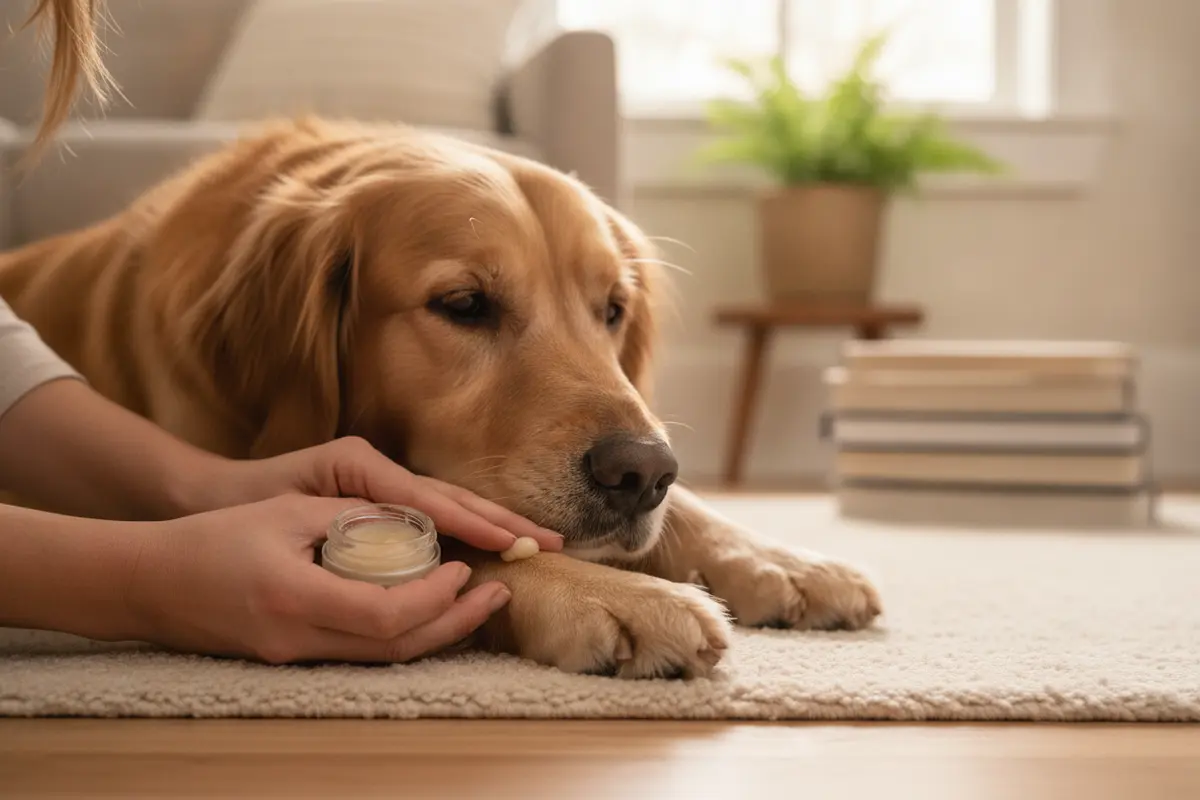
If your dog’s paws look healthy and the product label fits your situation, keep the first application calm and controlled. Choose a time when your dog is relaxed, and let them sniff the closed container before you begin. If your dog resists, stop rather than forcing a prolonged handling session.
- Inspect first. Look at the pads and between the toes. Check for cuts, stuck debris, redness, swelling, or tenderness. Do not cover a wound or unexplained irritation with balm.
- Clean when needed. If the paws are dirty, gently clean them in a way that suits your dog and dry them thoroughly. Follow the product label about whether the paw should be clean and dry.
- Read the directions again. Use only the amount and frequency stated by the manufacturer. More product is not automatically better, and a thick coating may make floors slippery or encourage licking.
- Apply a small amount as directed. Keep the product on the intended area and avoid getting it in the eyes, mouth, or other areas not named on the label.
- Observe your dog. Follow any label instructions about letting the product absorb or dry. Watch for licking, discomfort, or a new skin reaction. Discontinue use and ask your veterinarian if you notice a problem.
For a dog that dislikes paw handling, work gradually. Start with a brief touch to a shoulder or leg, reward calm behavior, and end the session before your dog becomes worried. At another time, practice a quick paw touch without applying anything. A familiar toy can be part of a relaxed routine: for example, keep a plush dog toy nearby as an option after handling, if your dog enjoys that kind of play. A toy is not a paw-care treatment and should not distract you from checking the skin carefully.
Keep paw checks part of everyday care
A simple check after walks can help you notice a change early. Look over all four paws, including the spaces between the toes and around the nails. Remove loose dirt gently and dry wet feet. If your dog pulls away, limps, or repeatedly focuses on one paw, stop the check and assess whether professional advice is needed.
Think about the route and conditions as well as the product. Avoid surfaces that are uncomfortably hot, sharp, or otherwise unsafe. Give your dog a chance to rest when needed. Balm does not make a hazardous surface safe, and you should not use it to justify a longer walk on ground that may hurt your dog’s paws.
Make the routine easy to repeat: keep the dog’s labeled product with other grooming supplies, check the directions each time you use it, and note when you apply it. If you are tracking recurring dryness, record the date and what you observed. This information can help you explain the pattern to your veterinarian.
Observe how your dog responds
Quick Summary
After you use a product, watch your dog’s comfort and follow the label. If you see a new reaction, stop using it and ask your veterinarian what to do next.
For the first use, choose a quiet time when you can keep an eye on your dog. Follow the label’s instructions about application and drying, then notice whether your dog walks normally and leaves the paws alone. Do not let a product’s texture or scent persuade you that it has worked. A dog’s behavior and the condition of the skin matter more than how the balm looks on the surface.
If your dog starts licking more than usual, pulls away, seems uncomfortable, or develops a new skin change, stop applying the product. Check the packaging for the product name and ingredient list, and ask a veterinary professional for advice. If the dog has licked a large or unknown amount, do not wait for symptoms before contacting a veterinary practice for guidance. Keep the container available so you can answer questions about what was used.
Also consider the surface where your dog rests after application. A thick or greasy layer may transfer to flooring or bedding, so follow the product directions and keep your dog on a safe, clean surface while it settles. Do not wrap the paw or add another product unless the label or your veterinarian instructs you to do so.
Plan around conditions, not just the product
Paw care starts before you open a balm. Check the route and conditions and adjust the outing when the ground may be uncomfortable, very hot, icy, sharp, or otherwise unsuitable. If the dog begins to limp or repeatedly lift a paw, stop and move to a safe place. Do not apply balm over a problem and continue the same activity.
After walks in wet or dirty conditions, a gentle clean and thorough drying can make it easier to inspect the feet. Pay attention between the toes, where debris or moisture may be missed during a quick glance. If you find something stuck, cannot clean an area comfortably, or see a wound, avoid digging or rubbing at it and ask a veterinarian what to do.
Build a short check into the routine rather than waiting for a problem to become obvious. Before an outing, notice whether your dog is walking normally. Afterward, look at the pads and between the toes, then note anything new. A balm may have a place in routine care, but sound decisions about surfaces, activity, and follow-up are just as important.
Positive, low-pressure handling can also make routine checks easier. Keep a familiar reward available after a calm inspection. For some dogs that may be a favorite squeaky plush toy; for a dog who enjoys fetch, a durable flying disc can be saved for play later, provided the dog is moving normally and the outing is appropriate. Choose activities your dog already likes, and skip play if you notice pain or limping.
When should you call a veterinarian?
Seek veterinary guidance when you see bleeding, an open wound, swelling, marked redness, discharge, significant tenderness, a sudden limp, or a dog who will not let you examine a paw. Also ask for help if your dog’s paws are repeatedly irritated, the problem is getting worse, or a new product appears to cause a reaction. Do not keep applying balm to hide a symptom or delay care.
If the issue seems mild but does not improve, or you are unsure what you are seeing, call your veterinary practice and describe the change. Mention when it began, whether one or more paws are affected, any change in walking or licking, and the name of any product used. If your dog may have swallowed balm, tell the veterinary team the product name and approximate amount if known. Follow their guidance rather than trying a home remedy.
The American Veterinary Medical Association is a professional veterinary resource; your own veterinarian is the right person to advise on your dog’s individual symptoms and care. If signs are severe or your dog is in substantial distress, contact an emergency veterinary service.
Choose a product, then keep the plan simple
For routine care, the useful choice is not necessarily the product with the longest list of claims. Look for clear dog-specific labeling, readable directions, and ingredients you can review. Check the paws before using it, follow the label, and watch how your dog responds. A balm should fit into safe handling and sensible walks, not replace either one.
If you are comparing supplies for your dog, make the choice based on your actual routine and your dog’s preferences. A familiar toy can help make a calm handling session feel predictable, but it does not protect or heal paw pads. For a dog who enjoys fetch, consider a dog flying disc for play at a suitable time, and keep the balm decision separate from toys and other unrelated supplies.
Call to discuss dog-care supplies today
Frequently Asked Questions
Can I use human lotion on my dog’s paws?
Do not assume a human lotion is suitable for dogs. The ingredients, intended use, and likelihood of licking matter. Use a dog-labeled product according to its directions, or ask your veterinarian before applying something else.
How often should I apply paw balm?
Follow the specific product label. There is no single schedule that applies to every balm or every dog. If you think your dog needs frequent applications, or the dryness keeps returning, discuss it with your veterinarian.
What if my dog licks the balm?
Check the product label and contact your veterinarian for advice if your dog has licked it, especially if you do not know how much was swallowed or your dog seems unwell. Keep the package so you can share the ingredient list.
Can paw balm treat a cut or a limp?
No. Balm is not a substitute for assessment of a wound, bleeding, pain, or a limp. Avoid applying it to an injury unless your veterinarian specifically tells you to, and contact a veterinary practice for guidance.
Should I use balm before every walk?
Use it only as directed on the product label. A balm does not make unsafe ground safe or prevent every paw problem. Check the route and conditions, inspect your dog’s feet, and choose a different plan if the surface may cause discomfort.
A dog-specific balm can be one practical option for routine care, as long as you choose carefully, follow the directions, and let your dog’s comfort guide the next step. When a paw looks injured or the problem persists, a veterinarian can help you decide what care is appropriate.


